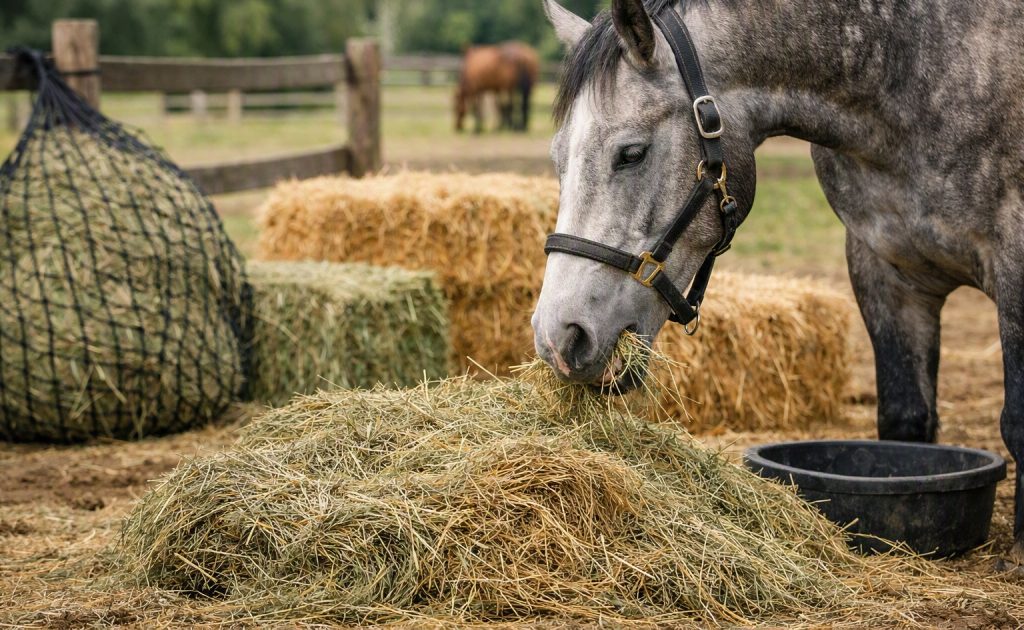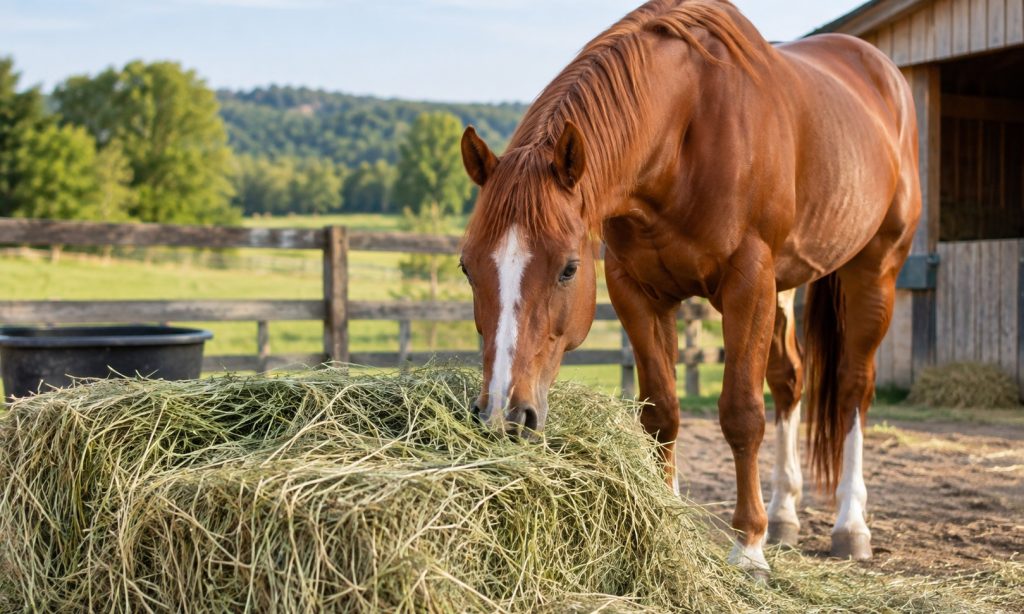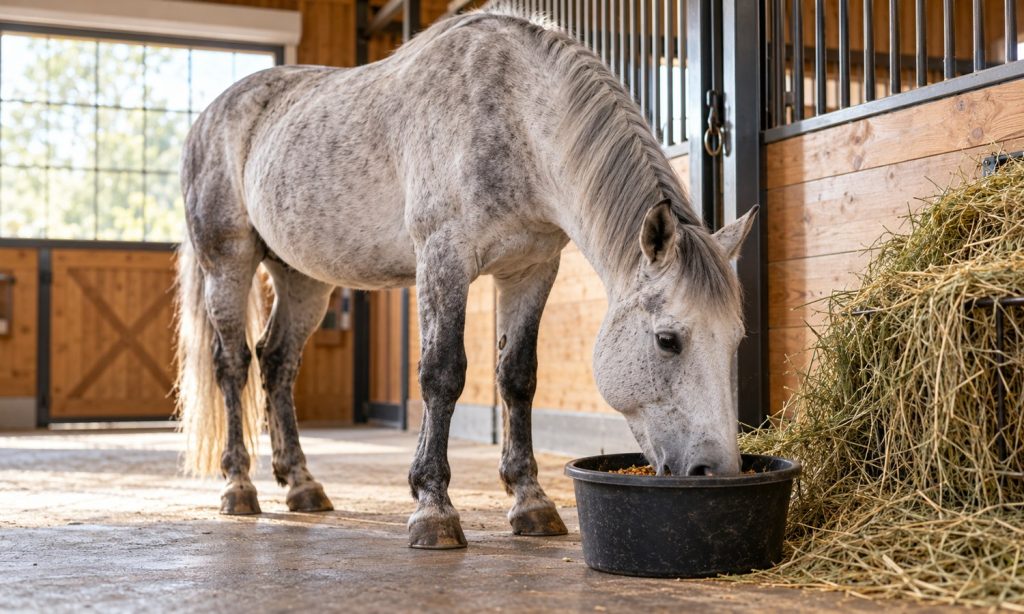
Adding fat can raise the energy density of a horse’s ration, but it is not automatically the right way to improve weight, stamina, or coat condition. Before choosing a fat supplement for senior horses, consider why the horse needs more calories, what it already eats, and whether an underlying health or dental issue is limiting intake. A mature horse can be overweight, underweight, or in good condition, and age alone does not determine the best ration. This guide explains what to review before adding fat, how to introduce a change gradually, and when to ask an equine veterinarian or nutrition professional for help. The aim is to make a measured diet change that fits the individual horse rather than adding calories by guesswork.
What dietary fat can do
Fat is a concentrated energy source. In some feeding plans, adding fat increases calories without relying solely on larger grain meals. That can be useful for a horse with higher energy needs or one that has trouble maintaining condition, but extra energy can also contribute to unwanted weight gain. Fat does not replace forage, protein, minerals, vitamins, water, dental care, or a veterinary workup when a horse is losing weight.
Fat ingredients vary. Oils, stabilized rice bran, and formulated high-fat feeds are examples, but their nutrient profiles and feeding directions differ. A product may also add protein, fiber, phosphorus, or other nutrients along with calories. Compare the full label and the amount fed, not just a front-of-bag percentage.
Start with the reason for adding calories
Check body condition and weight trend before changing the ration. Use a weight tape or scale consistently and record body condition at the same landmarks over time. If a horse is losing weight, look for causes such as dental pain, trouble chewing, social competition at feed, poor forage quality, parasites, or illness. Senior horses may need more frequent dental checks, and some cannot chew long-stem hay effectively. A veterinarian can help distinguish a nutrition shortfall from a health problem.
Review the horse’s workload, turnout, forage access, and total feed intake. A horse that is not gaining may be consuming less than expected because another horse pushes it away or because it drops feed. Conversely, a horse that receives several calorie-dense feeds may not need an additional fat product. Assess the whole ration before adding a single ingredient.
Review the current ration and forage
List the type and measured amount of hay, pasture, concentrate, treats, and supplements the horse receives. Weigh feed portions when possible; scoops vary, and estimates can obscure how much is being fed. A forage analysis can help identify energy, protein, and mineral content, especially when the horse’s needs are unusual or the ration is being carefully balanced.
Check whether the current commercial feed already provides added fat. If so, a separate supplement could duplicate calories or nutrients. Read the guaranteed analysis and feeding directions, and note whether the label recommends a minimum amount to provide the intended vitamin and mineral balance. Feeding below the recommended rate may require a different plan rather than simply adding more fat.
Do not assume a senior-branded feed is automatically necessary or appropriate. Dental condition, body weight, ability to chew forage, activity, and medical needs matter. A veterinarian or equine nutritionist can help decide whether to change the base feed, provide a forage alternative, or add a fat source.
Choose a product for the job
Define the goal with a professional: maintain body condition, support a particular workload, or provide a ration component the current feed lacks. Then compare the product’s ingredient list, calorie contribution at the intended amount, nutrient balance, storage needs, and ease of feeding. An oil can be energy dense, while a fortified feed may supply other nutrients as well. These options are not interchangeable by volume or weight.
Consider whether the horse has a condition that affects diet decisions, such as insulin dysregulation, a history of laminitis, or a prescribed low-starch plan. Fat content alone does not tell you whether the product is suitable. Ask the veterinarian or nutrition professional to evaluate the complete ration and the horse’s medical history.
If the horse competes, check the relevant medication and feed rules. Ingredients or contamination risks may matter under a competition organization’s policies. Keep the product label and lot information, and follow current event rules rather than assuming a supplement is automatically permitted.
Introduce the change gradually
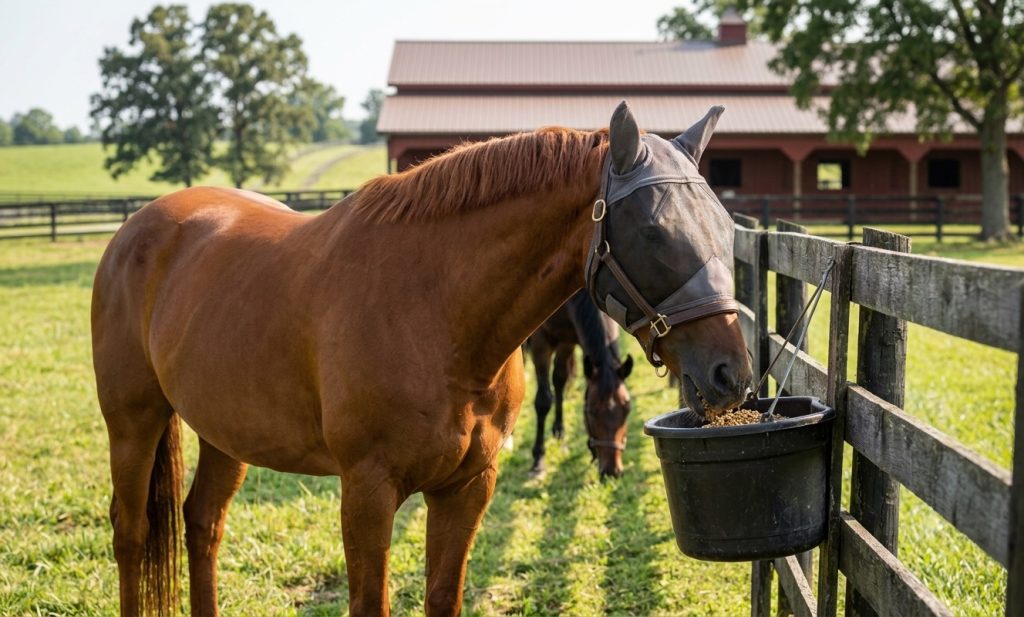
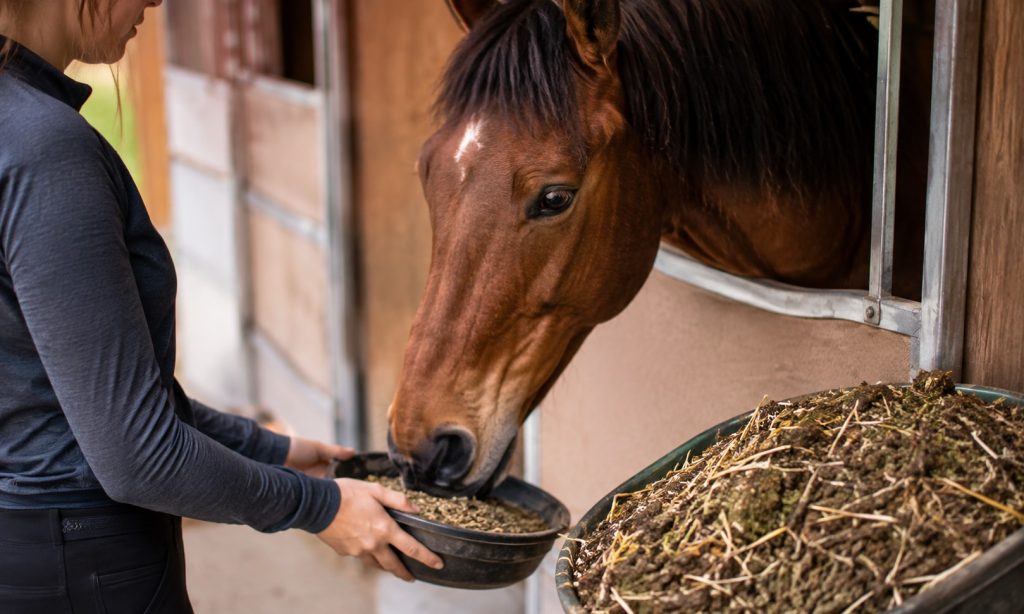
Follow the label and your professional’s directions, and increase the amount gradually rather than making a sudden change. A gradual transition can help the horse accept a new flavor and lets you watch for changes in appetite, manure, or body condition. Mix it evenly into a measured meal and ensure the horse actually consumes the full portion. Do not exceed label directions in an attempt to produce faster weight gain.
Monitor the horse after the change. Record weekly weight estimates, body condition, appetite, manure consistency, and workload. If the horse gains more weight than intended, reduce energy with veterinary or nutrition guidance. If weight continues to fall, contact the veterinarian instead of continuing to add products without knowing why.
Store oils and feeds as directed to maintain freshness, protect them from moisture and pests, and discard rancid or moldy products. Keep supplements secured so a horse cannot access a large quantity at once. Provide clean water and adequate forage as part of the overall feeding plan.
When professional guidance is especially useful
Ask for veterinary advice before changing the ration if the horse has unexplained weight loss, poor appetite, difficulty chewing, recurrent colic, laminitis risk, metabolic disease, or a history of feed-related problems. A senior horse with visible ribs, muscle loss, or a sudden change in appetite deserves assessment rather than a quick calorie boost. The vet can check dental health and decide whether additional diagnostics are warranted.
For horses in good health, a qualified equine nutrition professional can help balance forage and concentrate, identify nutrient gaps, and estimate the energy added by a product. Share accurate amounts and labels; a complete inventory gives better advice than a product name alone.
Frequently Asked Questions
Does every senior horse need a fat supplement?
No. Some mature horses maintain weight on forage and a balanced ration, while others have specific energy or chewing needs. Base the decision on body condition, health, feed intake, and workload.
Can adding fat help a horse gain weight?
It can add calories, which may support weight gain when the horse needs more energy, but weight loss can have medical, dental, or management causes. Check those factors before relying on a supplement.
Should I switch from grain to a fat supplement?
There is no universal swap. Feeds differ in energy, protein, fiber, vitamins, and minerals. Review the whole ration with an equine professional before replacing one feed with another.
How quickly should I introduce a new fat source?
Follow the product label and your veterinarian or nutritionist’s plan, introducing it gradually. Monitor appetite, manure, and body condition as the ration changes.
Can a horse with metabolic concerns eat a high-fat feed?
Suitability depends on the complete nutrient profile and the horse’s diagnosis. Ask the veterinarian to review the specific product and ration rather than judging by fat percentage alone.
Final Words
Before choosing a fat supplement for senior horses, identify the reason for adding calories and review forage, current feeds, dental function, body condition, and medical history. Measure portions, check the full product label, transition gradually, and track the horse’s response. Seek veterinary help for unexplained weight loss or health concerns, and use nutrition guidance to balance the whole ration. A focused plan can support the horse’s needs without adding unnecessary calories or duplicating nutrients.