A fly trap can catch some adult flies around a barn, but it works best as one part of a broader control plan. Before choosing a fly trap for a horse barn, identify which flies are present and where they gather. Sticky traps, ultraviolet traps, and baited traps target different species, and no device will eliminate flies breeding in manure, wet bedding, spilled feed, or neighboring sites. Placement also matters: a trap within reach of a horse can become a hazard or contaminate feed and tack. This guide covers how to choose a trap type, position it safely, maintain it, and know when to use other controls. Follow the product label and local guidance for the specific device you install.
Identify the fly problem first
Notice whether flies are biting horses or clustering near doors, lights, feed, manure, or damp organic debris. Stable flies bite and often rest on nearby surfaces, while house flies commonly gather around buildings and food. Horse and deer flies behave differently and often breed in wetland habitats beyond the stable. A trap designed for one group may do little for another.
Watch horses for tail swishing, stomping, skin twitching, or repeated attempts to move away from flies. Those behaviors can show that insects are bothering them, but they do not tell you which trap to use. If flies are biting, also consider physical protection and turnout management where appropriate. A veterinarian can advise on health concerns, while Extension or a pest professional can help with identification and control options.
Choose the trap for its target
Sticky traps and some ultraviolet electrocution traps can capture house and stable flies, while baited traps commonly target house flies. Traps for horse and deer flies have different designs and placement needs. University of Minnesota Extension notes that traps may catch only a small fraction of flies near horses and have not been shown to improve protection from mosquito-borne viruses. A trap should not be presented as a full substitute for sanitation or fly protection.
Read the product label before installation. Confirm the intended insect, location, distance from animals, bait type, replacement schedule, and disposal instructions. If a device uses bait, keep it away from horse feed and water. Do not use improvised attractants or chemical baits around animals unless the label specifically allows that use.
Place traps where they cannot harm horses
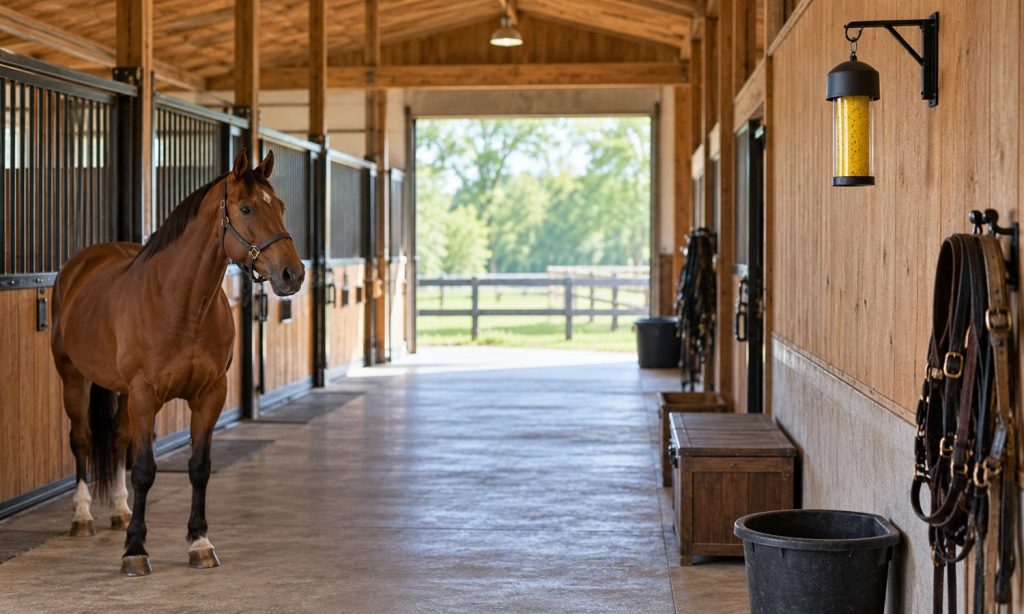
Choose a stable location out of reach of horses, foals, dogs, children, and wildlife. Keep sticky surfaces, cords, electrical parts, and bait away from stalls, feed rooms, waterers, hay, tack, and grooming supplies. Do not hang adhesive traps above a horse or in a position where a horse could rub against them. Secure the device so wind, a door, or equipment cannot knock it down.
Position it according to the label and the target fly’s behavior. Some traps need to be near a fly pathway; others are designed to lure insects away from horse areas. Horse and deer fly traps may need a sunny, unobstructed location away from buildings, and animals should not be able to interfere with them. Placement guidance for these outdoor biting-fly devices is not necessarily the same as for a barn sticky trap.
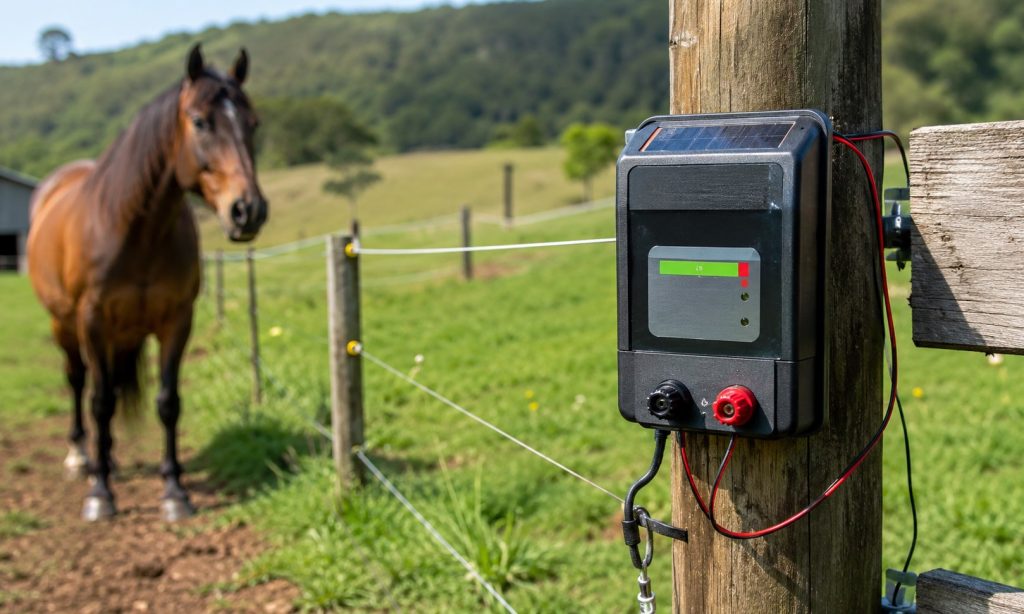
Keep all electrical traps dry and plugged into a suitable protected outlet as directed. Do not use them where water can splash, cords can be chewed, or flammable dust and materials are present. If the device is damaged, unplug it safely and stop using it until repaired or replaced according to the manufacturer’s instructions.
Check and maintain traps
Inspect traps on the schedule stated on the label. Replace full sticky boards or bait when required, empty catch trays safely, and clean or service the device only as directed. Wear protective gloves if recommended and wash your hands afterward. Do not let dead insects, old bait, or sticky residue accumulate where horses can reach them.
Record where each trap is installed and what it catches. If it catches few flies, verify that the trap is appropriate for the species and correctly placed before assuming the whole property has low fly pressure. Move or adjust it only within label directions. Keep a map or note so staff do not accidentally place a trap near feed or remove it during cleaning.
Traps work less well when manure, wet bedding, decaying hay, or spilled feed provide breeding sites. Remove these materials regularly and manage manure storage so it stays as dry as practical. For more on choosing options, review our guide to a fly trap for a horse barn, then match the device to the insects and layout you actually have.
Use traps as part of integrated fly control
Clean stalls and high-use areas often, remove spoiled feed and waste hay, fix leaks, and keep waterers in well-drained locations. Use screens or netting where suitable and select horse repellents or fly wear according to labels and fit checks. If considering premises insecticides, use only products labeled for the site and follow precautions for horses, people, food, water, and beneficial insects.
Some flies may come from sources off the property, and horse or deer flies can travel from wet habitats. If control remains poor, identify the species and consult an Extension educator, pest professional, or veterinarian about a coordinated plan. Do not place more traps indiscriminately if the current traps are catching few insects or attracting them closer to horses.
Make a quick weekly walk-through part of barn chores. Check whether doors, windows, drains, and manure-storage areas have become new congregation points, and note any changes in trap catches. This simple record can reveal whether flies are arriving from a new source or whether a trap’s placement needs a label-compliant adjustment. Review the setup whenever stall use, manure handling, or seasonal conditions change.
\n
Frequently Asked Questions
Do fly traps protect horses from all flies?
No. Trap designs target different species, and some biting flies are not effectively controlled by common barn traps. Use traps alongside sanitation and suitable physical or topical protection.
Where should I hang a sticky trap?
Follow the label and place it where horses, people, feed, tack, and water cannot contact it. Keep adhesive surfaces out of the horse’s reach and away from areas where they could fall.
Can I use baited traps inside a stall?
Only if the label permits that placement and the trap can be secured safely. In general, keep baits and captured insects away from horse feed, water, and bedding.
How often should I replace or empty a trap?
Use the schedule on the product label and inspect it regularly. Full or dirty traps may stop working effectively and should be serviced or replaced as directed.
Why are flies still present when traps are installed?
Traps catch only some adult flies and may not address breeding sites or off-site sources. Check species, placement, sanitation, and other control measures.
Final Words
Choose a trap for the fly species you are targeting, place it securely beyond horse reach, and keep it away from feed, water, tack, and people. Follow the label for power, bait, cleaning, and replacement. Remove manure and damp debris as part of the same plan, since traps alone will not stop breeding. If you are comparing a fly trap for a horse barn, use the product category as a starting point and confirm that the design and placement fit your facility and target flies.