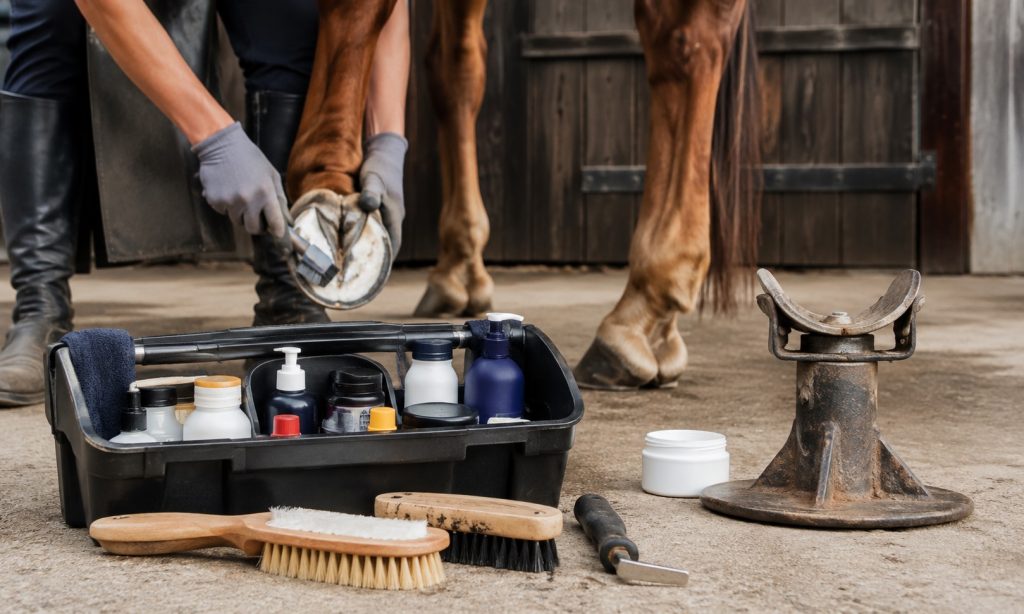
Hoof-care items range from brushes and picks to moisturizers, dressings, and products marketed for specific hoof problems. Choosing among hoof care products for horses starts with the purpose: routine cleaning, moisture management, or a concern identified with a farrier or veterinarian. A topical product cannot correct poor trimming, an unbalanced diet, or a painful hoof condition by itself. Before applying anything, read the label, check whether the product is intended for the hoof wall, sole, frog, or surrounding skin, and use it only as directed. This guide covers safe handling, product selection, application, and signs that deserve professional attention. Routine observation and regular hoof care remain the foundation.
Identify what the hoof needs
Start with a clean, well-lit look at each foot. Notice cracks, chips, odor, heat, swelling, discharge, tenderness, changes in shape, or a new reluctance to bear weight. Compare the feet and note whether a change is new or has been present for some time. Do not dig into a crack or probe a painful area to investigate on your own.
Ask your farrier or veterinarian which problem you are trying to address. A dry, brittle hoof may call for different management than a soft, wet foot, a crack, thrush, or lameness. The same product is not appropriate for every condition, and a topical dressing should not delay an exam for pain, foul odor, discharge, or sudden lameness.
Some hoof products are cosmetic or conditioning products; others are marketed with treatment claims. Check whether the label identifies intended use, application site, precautions, and any need to keep the horse away from people or other animals while the product dries. Do not use a product on a wound or open tissue unless the label and veterinarian say it is appropriate.
Read the label before opening the container
Confirm the product is intended for horses and for the part of the hoof where you plan to use it. Follow the directions for amount, frequency, preparation, ventilation, storage, and protective equipment. If instructions say to avoid skin or eyes, take that seriously; the hoof is next to sensitive skin, and products can run or splash.
Check ingredients if the horse has known sensitivities, if the product may contact a bandage or hoof boot, or if the horse competes under rules that restrict certain substances. Keep the original label and do not transfer chemicals into an unmarked bottle. Store containers closed and away from feed, children, and animals that could chew them.
Do not mix products or layer dressings unless a veterinarian, farrier, or label specifically recommends the combination. Mixing can change how a product behaves, create irritation, or make it harder to determine what caused a reaction. If the horse has a known allergy or a product causes redness, swelling, or discomfort, stop use and seek advice.
Prepare safely and apply only where intended
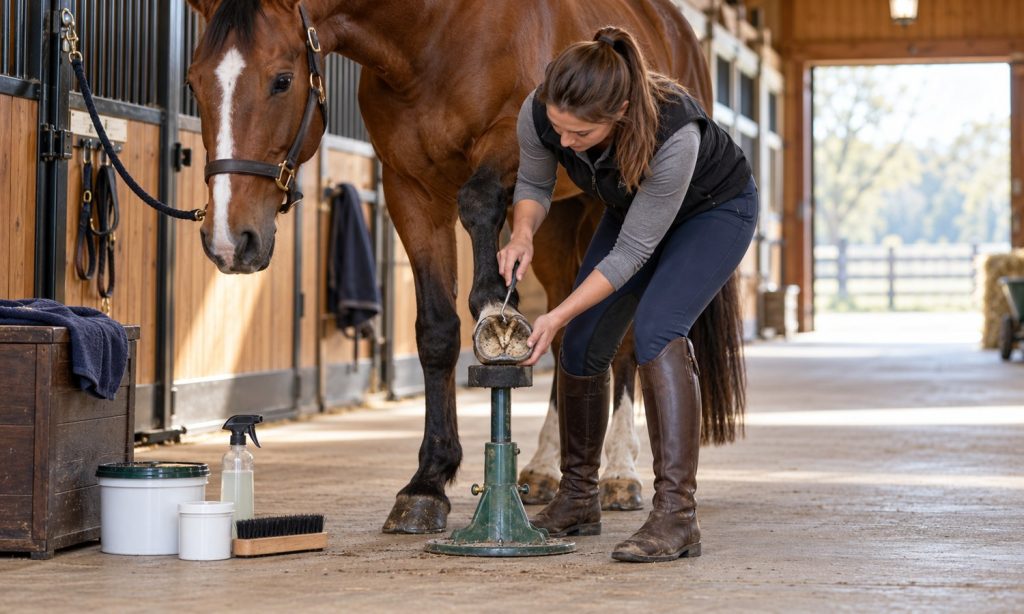
Choose a calm, non-slip area and handle the horse in a way you can control. If you are unfamiliar with safely lifting a hoof, ask an experienced handler or farrier to demonstrate. Secure the horse appropriately, use a stable stance, and keep your face and hands clear of the hoof’s path. Never force a painful horse to hold up a foot.
Remove loose dirt with a hoof pick or brush as appropriate, working carefully and avoiding sensitive tissue. Use the product only on the labeled surface. Apply a thin, even amount when the label calls for it; more is not necessarily more effective. Keep products out of the horse’s eyes, mouth, nostrils, and skin unless specifically directed. Allow the hoof to dry or set for the stated time before turning the horse out, putting on a boot, or walking on a surface where the product could make footing slippery.
Wash your hands after use and clean tools as directed. Avoid applying products where they can contaminate water, soil, feed, or bedding. Dispose of empty containers and leftover product according to the label and local rules; do not pour chemical residues into drains or onto the ground.
Match care to the environment
Wet and dry conditions can both affect hoof quality. Persistent moisture, mud, and wet bedding may soften the foot, while dry weather or repeated wet-to-dry cycles may contribute to brittleness and cracking. A product alone cannot correct the environment. Keep turnout and stall areas as clean and dry as practical, provide regular movement, and maintain a consistent trimming or shoeing schedule with a qualified farrier.
University of Minnesota Extension notes that hoof moisturizers may be used during dry weather or when hooves are brittle or cracking, while nutrition and regular trimming also matter. Ask your farrier or veterinarian whether a product is appropriate for the horse’s current hoof and conditions. Some dressings can make the surface slippery, so apply them where the horse can stand safely and give them time to dry.
Know when a professional should assess the hoof
Contact a veterinarian promptly if the horse becomes suddenly lame, will not bear weight, has a puncture wound, or shows significant heat, swelling, or severe pain. A foul smell, discharge, a deep crack, or a rapidly changing hoof also warrants professional advice. Do not mask symptoms with a topical product and continue riding.
Farriers and veterinarians can help distinguish routine maintenance from problems needing treatment. Share the product label and when it was applied, and tell them about any supplements, medications, or previous hoof conditions. If you are reviewing hoof care products for horses, use product comparisons to identify questions for your farrier or veterinarian rather than self-diagnosing a hoof problem.
Frequently Asked Questions
Can I apply hoof oil to every part of the hoof?
Follow the product label and use it only on the parts of the hoof identified there. Avoid skin, wounds, or sensitive areas unless the product and veterinary guidance specifically permit it.
Should I use a hoof product every day?
Only if the label and your farrier or veterinarian recommend that schedule. More frequent use is not automatically better and may not fit the horse’s environment or hoof condition.
Can hoof dressing treat a crack or lameness?
A dressing cannot diagnose or correct the cause of a crack or lameness. Ask a farrier or veterinarian to assess new or painful changes before applying treatment products.
What should I do if a product irritates the horse?
Stop using it, prevent further exposure as safely as possible, and contact your veterinarian if irritation, swelling, or discomfort occurs. Keep the product label available.
Can hoof products make the floor slippery?
Some products can leave slick residue. Apply them in a safe area, follow drying directions, and keep the horse off smooth or wet surfaces until the hoof is safe to walk on.
Final Words
Use hoof products for a defined purpose, check the label and application site, and keep the horse and handler safe while cleaning or applying them. Routine trimming, clean conditions, balanced nutrition, and observation matter more than any single dressing. Sudden lameness, punctures, foul odor, or deep cracks need veterinary or farrier assessment. If you are comparing hoof care products for horses, match the product to the hoof’s actual needs and ask a professional when the cause is unclear.