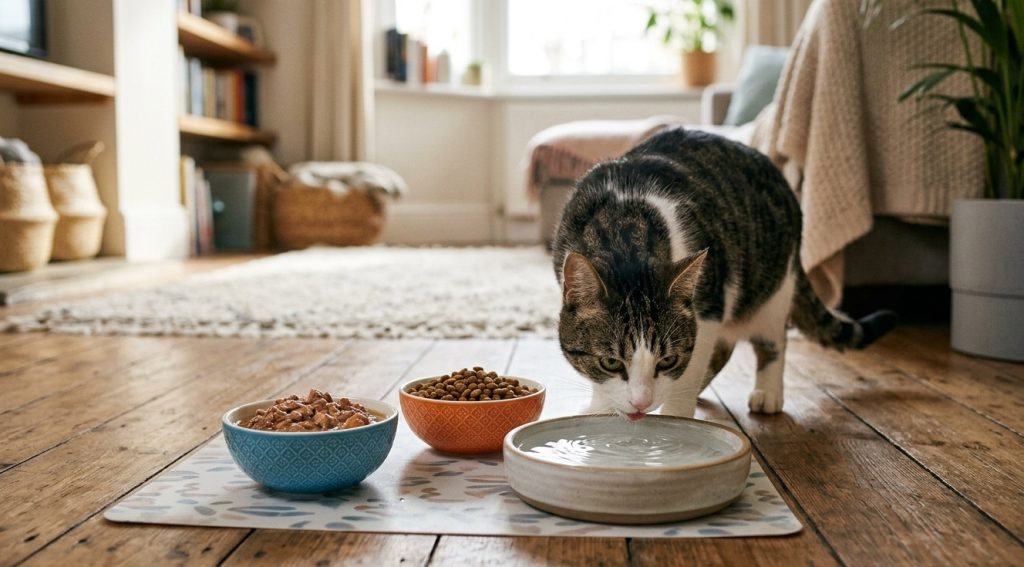
If you have ever watched your cat ignore a perfectly clean bowl of water while acting deeply interested in a dripping faucet, you are not alone. Cats can be surprisingly selective about drinking, which is one reason Wet Food vs Dry Food for Cat Hydration is an important question for many pet owners.
After years of caring for cats and other pets, I have learned that hydration is not always as simple as measuring how much disappears from the water bowl. A cat gets water from more than one place, especially from food. That means a cat eating a moisture-rich canned diet may drink far less visibly than a cat eating mostly dry kibble—and still receive plenty of water overall.
The discussion around Wet Food vs Dry Food for Cat Hydration is not about declaring one type of food the winner in every household. Instead, it is about understanding how each diet contributes to total water intake, how individual cats respond, and what practical steps can help support healthy hydration.
For some cats, increasing dietary moisture can make a meaningful difference. For others, a combination of nutritious food and easy access to fresh water works well. The key is looking at the whole cat, not just the water bowl.
Why Hydration Matters for Cats
Water supports virtually every major function in a cat’s body. It helps regulate body temperature, supports digestion, transports nutrients, and contributes to normal kidney and urinary function. When a cat does not receive enough water, the consequences can range from mild dehydration to more serious health concerns, depending on the cause and severity.
Possible signs of dehydration in cats may include lethargy, reduced appetite, dry or tacky gums, weakness, or changes in normal behavior. However, these signs can also occur with other illnesses, so they should not be used as a substitute for veterinary care.
In my experience, one of the easiest mistakes a cat owner can make is assuming that a full-looking water bowl means everything is fine. Some cats simply do not drink much at one time. Others get a significant portion of their moisture from meals. That is why Wet Food vs Dry Food for Cat Hydration deserves more attention than a quick glance at the bowl.
Understanding a Cat’s Natural Relationship With Water
Domestic cats evolved from ancestors adapted to relatively dry environments. Their natural prey contained substantial moisture, so cats historically obtained much of their water through food rather than by frequently visiting a separate water source.
Modern cats still reflect some of those tendencies. Many do not have the same strong thirst response that owners might expect from watching a dog enthusiastically empty a water bowl after a walk. Cats can be a little more understated about the whole thing—because apparently being mysterious applies to hydration too.
This does not mean every cat is a poor drinker. Some happily drink throughout the day. But cats that eat a dry-food-heavy diet generally depend more heavily on voluntary drinking to make up for the low moisture content of kibble.
That basic difference is central to Wet Food vs Dry Food for Cat Hydration.
Wet Food vs Dry Food for Cat Hydration: The Key Difference
The most important distinction between wet and dry cat food is moisture content.
Wet or canned cat food commonly contains a large percentage of water. Dry kibble, by comparison, contains relatively little moisture. Exact amounts vary by recipe and manufacturer, so checking the product label is always worthwhile.
From a hydration perspective, this means a cat eating wet food receives water with nearly every bite. A cat eating dry food must make up much more of its water needs by drinking separately.
That does not automatically make dry food inappropriate. A healthy cat can eat a nutritionally complete dry diet and remain properly hydrated if its overall water intake meets its needs. Still, when comparing Wet Food vs Dry Food for Cat Hydration, wet food generally provides a more direct and consistent source of dietary moisture.
How Wet Food Supports Hydration
Wet cat food can contribute significantly to a cat’s total daily water intake because of its naturally high moisture content. This is especially useful for cats that show little interest in drinking from a bowl.
For example, I have cared for cats that barely seemed to touch their water after switching to regular wet meals. At first, that worried me. Then I remembered to look at the bigger picture: they were consuming substantial moisture with their food. The water bowl was only telling part of the story.
Another practical advantage is that wet food makes hydration less dependent on a cat deciding to drink enough throughout the day. For a naturally low-thirst cat, that can be helpful.
However, wet food is not a medical treatment by itself. A cat with kidney disease, urinary problems, vomiting, diarrhea, or suspected dehydration needs individualized advice from a veterinarian. Choosing a canned food does not replace diagnosing the reason a cat is unwell.
How Dry Food Affects Water Intake
Dry food contains much less moisture, so cats eating mostly kibble generally need to drink more water separately. This makes easy access to fresh water especially important.
Some cats compensate very well. Others may not drink as enthusiastically as their owners would like. That is where Wet Food vs Dry Food for Cat Hydration becomes a practical feeding question rather than simply a nutritional debate.
Dry food also offers conveniences that matter to many households. It is generally easier to store, can be left out longer than wet food, and may be useful for certain feeding routines. Some cats strongly prefer its texture. A balanced decision should consider those factors alongside hydration.
FYI, dry kibble should not be viewed as a replacement for dental care. While food texture may have some effects depending on the diet, regular veterinary dental guidance remains important.
Wet Food vs Dry Food for Cat Hydration and Cat Water Intake Per Day
Understanding cat water intake per day requires looking beyond the amount a cat drinks from a bowl. Total water intake comes from both drinking water and moisture contained in food.
This is particularly important when comparing Wet Food vs Dry Food for Cat Hydration. A cat eating primarily wet food may drink noticeably less from a bowl because much of its water arrives with meals. A dry-food-fed cat may need to make up most of its water intake by drinking.
Common veterinary guidance often estimates a cat’s daily water needs based partly on body weight and total calorie consumption, but individual requirements vary considerably. Age, body size, activity level, weather, diet, and health status can all affect hydration needs.
For that reason, there is no single amount that every cat must drink from a bowl each day. If you are trying to assess cat water intake per day, consider the moisture content of the food as well.
A sudden increase or decrease in drinking can also matter. Drinking much more than usual, for example, may sometimes signal a health problem. Likewise, a cat that appears ill and refuses water should not simply be encouraged to drink at home indefinitely. When behavior changes significantly, contact your veterinarian.
A Practical Comparison of Wet Food and Dry Food
When considering Wet Food vs Dry Food for Cat Hydration, it helps to compare more than moisture alone.
Moisture Contribution
Wet food has the obvious advantage here. Its high water content can make a substantial contribution to total daily hydration.
Dry food contributes comparatively little water, placing greater reliance on voluntary drinking.
Convenience and Storage
Dry food is generally convenient. It is easy to measure, store, and use in certain automatic feeders.
Wet food requires more careful handling after opening. Leftover food usually needs refrigeration, and uneaten portions should not sit out indefinitely.
Cost
Wet food can be more expensive per serving or calorie than many dry-food options. Budget is a legitimate consideration for pet owners. The best feeding plan is not particularly helpful if it cannot be maintained consistently.
Calorie Management
Both wet and dry foods can fit into an appropriate calorie-controlled diet. The important factors are the specific food, portion size, calorie density, and the cat’s individual needs.
Dental Considerations
Do not assume that feeding ordinary dry kibble automatically cleans a cat’s teeth. Dental health depends on multiple factors, including home care and veterinary evaluation.
Cat Preference
This factor is often underestimated. Some cats love canned food. Others would file a formal complaint if their kibble disappeared overnight.
A food is only useful if the cat will eat it, so transitions should usually be gradual rather than sudden.
Which Food Is Better for a Cat That Does Not Drink Much Water?
For a cat that voluntarily drinks very little, wet food may be a practical way to increase total moisture intake. That is one of the strongest arguments in favor of wet food when discussing Wet Food vs Dry Food for Cat Hydration.
A mixed-feeding approach may also work well for some cats. For example, a veterinarian-approved portion of wet food could provide dietary moisture while dry food remains part of the overall feeding routine.
IMO, the best question is often not, “Which food is universally best?” It is, “Which feeding plan gives my particular cat appropriate nutrition and adequate moisture?”
If your cat consistently avoids water, has urinary or kidney concerns, or shows changes in appetite or behavior, speak with a veterinarian before making major assumptions about the cause.
Practical Ways to Increase Your Cat’s Water Intake
Food choice is only one part of the hydration equation. These strategies may help encourage healthy water consumption.
Offer More Wet Food When Appropriate
If your cat tolerates wet food and it fits the nutritional plan recommended for your pet, replacing some dry calories with wet food may increase dietary moisture.
This is one of the most straightforward practical solutions discussed in Wet Food vs Dry Food for Cat Hydration.
Add Water to Food Carefully
Some cats accept a small amount of water mixed into wet food, gradually increasing moisture intake. Start slowly so you do not turn a favorite meal into suspicious-looking soup :/
Make sure the food remains appealing, and follow appropriate food-safety practices. If your cat has a medical condition or special diet, ask your veterinarian before making significant changes.
Provide Multiple Fresh Water Sources
Place water bowls in several quiet locations. A cat may prefer drinking away from busy areas, loud appliances, or the litter box.
Clean bowls regularly and refresh the water often.
Consider a Cat Water Fountain
Some cats are attracted to moving water. A fountain may encourage drinking for cats that enjoy the sound and movement.
If you recommend one in your article, a natural placement could be:
Best Type of Water Fountain for Cats: Top-Rated Options for Hydration
Choose a product based on your own review standards and the cat’s needs rather than making unsupported claims.
Experiment With Bowl Type and Location
Wide, shallow bowls may appeal to some cats because their whiskers are less likely to touch the sides. Stainless steel, ceramic, and other safe, easy-to-clean materials can also be worth trying.
Small environmental changes sometimes produce surprisingly useful results.
When to Visit a Veterinarian
Do not rely on food changes alone if your cat seems unwell.
Contact a veterinarian if you notice significant changes in drinking, eating, urination, energy level, or normal behavior. Prompt veterinary attention is particularly important if your cat appears weak, repeatedly vomits, has ongoing diarrhea, refuses food or water, or shows possible signs of significant dehydration.
Cats with known kidney disease, diabetes, urinary tract problems, or other chronic health concerns may have specific dietary and hydration requirements.
The goal of Wet Food vs Dry Food for Cat Hydration is to help you make informed everyday feeding decisions—not to replace professional medical advice when something appears wrong.
How to Choose the Right Feeding Approach
The best choice depends on your cat’s individual situation.
Consider your cat’s:
- Age and life stage
- Body condition
- Activity level
- Food preferences
- Daily water-drinking habits
- Medical history
- Veterinary recommendations
- Household budget and feeding routine
Some cats thrive on a primarily wet diet. Others do well with dry food while drinking sufficient water. A mixed approach may provide a practical middle ground.
When evaluating Wet Food vs Dry Food for Cat Hydration, look at the complete feeding pattern rather than judging one ingredient or format in isolation.
A nutritionally complete food, appropriate portions, consistent access to clean water, and attention to changes in your cat’s habits are all important.
Frequently Asked Questions
Is wet food better than dry food for cat hydration?
Generally, wet food provides substantially more moisture than dry kibble, so it can contribute more directly to total water intake. However, the best diet depends on the individual cat’s nutritional needs, preferences, health, and veterinary guidance.
How much water should a cat drink each day?
There is no single bowl-drinking amount that applies to every cat. Total water needs vary, and water from food counts. When considering cat water intake per day, include both drinking water and dietary moisture.
Can a cat get enough water from wet food alone?
Some cats eating a high-moisture diet receive a large portion of their daily water from food and may drink very little separately. However, fresh, clean drinking water should still always be available unless a veterinarian provides different instructions.
Should I add water to my cat’s food?
Many cats tolerate a small amount of added water in wet food, which may increase moisture intake. Introduce changes gradually, keep food palatable, and consult your veterinarian if your cat has a medical condition or specialized diet.
Is mixed feeding good for cat hydration?
It can be. Combining wet and dry food may increase dietary moisture while preserving some of the convenience or preferences associated with dry food. The right proportions should depend on the cat’s calorie needs and overall nutritional plan.
Final Words
The answer to Wet Food vs Dry Food for Cat Hydration is not that one format is automatically perfect and the other is automatically problematic. Wet food usually offers a clear advantage in moisture content, while dry food requires a cat to obtain more water through voluntary drinking.
For cats that rarely visit the water bowl, increasing dietary moisture may be especially helpful. For cats that drink well and thrive on an appropriate dry-food diet, hydration may still be adequately supported with consistent access to fresh water.
After years of living with pets, one lesson I keep coming back to is that daily observation matters. Know your cat’s normal habits. Notice changes. Consider the moisture coming from food as well as the water bowl. And do not assume that a cat’s opinion about a meal is subtle—they tend to make their feelings known eventually.
Ultimately, Wet Food vs Dry Food for Cat Hydration should be evaluated according to your individual cat’s needs. Choose a nutritionally appropriate diet, encourage regular water access, monitor normal habits, and work with your veterinarian whenever health concerns arise. That balanced approach is far more useful than declaring a universal winner in the great wet-food-versus-kibble debate.