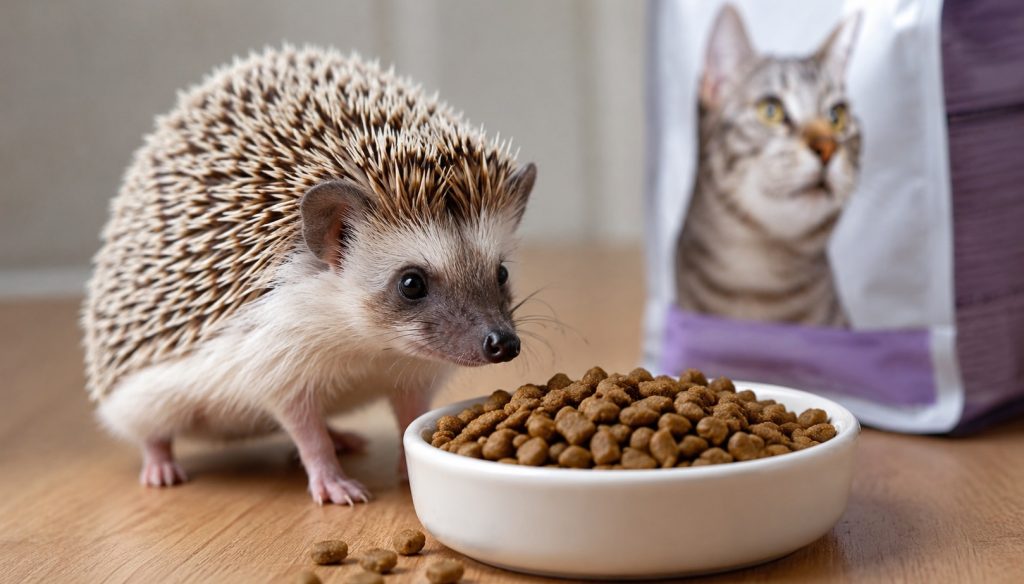
If you have ever stood in a pet-food aisle wondering, “Can Hedgehogs Eat Cat Food?”, you are not alone. Cat food is easy to find, comes in countless formulas, and is often discussed as a practical staple for pet hedgehogs. But convenience alone does not make a food appropriate. A hedgehog’s diet deserves more thought than grabbing the nearest bag of kibble and hoping for the best.
So, can hedgehogs eat cat food? Yes, many pet hedgehogs can eat a carefully selected, nutritionally appropriate cat food as part of their diet. However, not every cat food is suitable, and choosing the wrong formula can contribute to excess calorie intake or an unbalanced diet.
After years of caring for different pets, one lesson has remained consistent: the label matters. Two bags sitting side by side may both say “cat food,” yet their ingredients and nutritional profiles can be very different. For hedgehog owners, that difference is important.
This guide explains Can Hedgehogs Eat Cat Food? in practical terms, including what to look for, what to avoid, and how cat food may fit into a healthy hedgehog diet.
Can Hedgehogs Eat Cat Food?
The short answer is yes—but choose carefully.
Many pet hedgehog owners use selected cat foods because they can provide a convenient source of animal-based protein and are widely available in the United States. However, can hedgehogs eat cat food is not a question that can be answered by simply saying, “It’s made for cats, so probably.” Different cat foods contain very different amounts of protein, fat, fiber, and calories.
A food that works reasonably well for one hedgehog may not be ideal for another. Age, body condition, activity level, chewing ability, and overall health can all affect dietary needs.
The most sensible approach is to evaluate the individual product rather than assuming every cat food is appropriate. A balanced hedgehog diet should support healthy body condition without regularly providing excessive calories or fat.
In my opinion, that is where many feeding discussions go wrong. People often ask, “Can Hedgehogs Eat Cat Food?”, as though every bag belongs in one giant “yes” or “no” category. Pet nutrition is rarely that simple—annoying, perhaps, but true 🙂
Why Do Some Hedgehog Owners Feed Cat Food?
There are several reasons selected cat foods have become popular among hedgehog owners.
Convenient Availability
Cat food is easy to purchase from pet stores, supermarkets, and online retailers across the United States. Owners can usually compare ingredient lists and nutrition information without hunting for a specialty product.
Animal-Based Protein
Hedgehogs naturally consume a varied diet that includes insects and other animal matter. A carefully chosen commercial food with appropriate animal-based ingredients may therefore offer useful nutritional characteristics.
More Choices to Compare
Specialty foods marketed specifically for hedgehogs are not automatically the best food for hedgehogs simply because a package says “hedgehog.” Owners should still examine the ingredients and nutritional profile. Marketing can be creative; your hedgehog, unfortunately, cannot read the label and file a complaint.
Practical Feeding
Dry kibble is convenient to measure and can make daily feeding easier. This can be especially useful for owners who monitor portions closely.
Still, can hedgehogs eat cat food every day? That depends on the particular formula and the individual animal’s overall diet. Cat food should not be selected based solely on price, brand popularity, or a recommendation copied from a random social-media comment.
Best Cat Food For A Hedgehog: From Kibble to Insectivore Diets
What Nutrients Should You Look for in Cat Food for Hedgehogs?
When considering Can Hedgehogs Eat Cat Food?, the nutritional label is one of the most useful places to start.
Protein
Protein is an important part of hedgehog nutrition. Look for a food with a reasonable protein level and quality animal-based ingredients.
However, more protein is not automatically better. Extremely high-protein diets are not necessarily appropriate for every pet hedgehog, particularly when the overall nutritional balance is poor. The goal is a suitable diet, not turning your tiny pet into a competitive bodybuilder.
Fat
Fat deserves especially close attention because hedgehogs can gain weight easily when they consume too many calories.
A food with excessive fat may be a poor choice as a regular staple, particularly for a less active or overweight hedgehog. Check the guaranteed analysis and consider the food’s calorie density as well as its fat percentage.
If your hedgehog is gaining weight unexpectedly, review portion size and the entire diet rather than blaming one ingredient immediately.
Fiber
Moderate dietary fiber may support normal digestion, although a hedgehog’s nutritional needs are more complex than simply choosing the food with the highest fiber number.
Compare products as a whole. A single attractive number on the label does not tell the complete story.
Ingredients and Protein Sources
High-quality ingredients and identifiable animal-based protein sources are generally worth considering.
Read the ingredient list rather than relying entirely on front-of-package marketing. A food promoted with words such as “premium” or “natural” still needs to earn its place in the bowl.
Kibble Size and Texture
Some dry cat foods have large or hard pieces that may be difficult for an individual hedgehog to manage.
Consider your pet’s age and chewing ability. If a hedgehog struggles with a particular kibble, do not assume the animal is simply being “picky.” Persistent difficulty chewing deserves attention and may warrant veterinary advice.
Dry Cat Food vs. Wet Cat Food for Hedgehogs
Another common version of “Can Hedgehogs Eat Cat Food?” is whether dry or wet food is the better option.
Dry Cat Food for Hedgehogs
Dry kibble can be convenient because it is easy to portion and generally stays fresh longer after being served.
Benefits may include:
- Convenient storage
- Easier portion measurement
- Less mess for many owners
- A wide range of formulas to compare
However, not every dry food is nutritionally suitable, and some kibble may be too large or difficult for certain hedgehogs.
Wet Cat Food for Hedgehogs
Wet food can be appealing because of its soft texture and higher moisture content.
Potential advantages include:
- Softer texture
- Additional dietary moisture
- Often strong palatability
The downside is that wet food spoils more quickly once served. Uneaten food should not be left sitting out indefinitely. Portion control can also be important because calorie content varies substantially between products.
For many owners, a suitable dry staple may be easier to manage, while appropriate wet food may occasionally fit into the feeding plan. The best choice depends on the individual hedgehog and the specific product.
What Cat Food Should Hedgehog Owners Avoid?
Because can hedgehogs eat cat food depends on the formula, knowing what to avoid is just as important as knowing what to seek.
Be cautious about foods with the following characteristics.
Excessively High Fat
A very rich food may provide more calories than a pet hedgehog needs, especially if portions are generous. Weight gain can happen gradually, which is why regular monitoring is helpful.
Poor Overall Ingredient Quality
Do not judge a food by one appealing ingredient on the front of the package. Review the complete ingredient list and nutritional analysis.
Highly Calorie-Dense Treat Products Used as Staples
Cat treats and highly indulgent products are designed differently from complete meals. They should not automatically become the foundation of a hedgehog’s daily diet.
Foods an Individual Hedgehog Cannot Tolerate
Even a nutritionally reasonable food may not agree with every animal. Persistent digestive changes, appetite problems, or other unusual symptoms should not be ignored.
Foods That Are Difficult to Chew
Kibble that is too large or hard for your hedgehog may create practical feeding problems. Consider the individual pet, not just the nutrition label.
FYI, changing a pet’s entire diet overnight is rarely a brilliant idea. Introduce dietary changes gradually whenever possible so you can observe how your hedgehog responds.
How Much Cat Food Should a Hedgehog Eat?
There is no single portion that fits every pet hedgehog.
A hedgehog’s appropriate food intake can vary according to:
- Age
- Body size
- Activity level
- Metabolism
- Health status
- Calorie density of the food
- Other foods and treats consumed
This is why the question “Can Hedgehogs Eat Cat Food?” should be followed by another question: How much of that specific food does this particular hedgehog actually need?
Start with a carefully measured amount appropriate to your hedgehog’s feeding plan and monitor body condition over time. A small kitchen scale can be useful for tracking weight trends rather than relying on occasional guesses.
Avoid increasing portions simply because your hedgehog enthusiastically finishes the bowl. Many animals are excellent at acting as though they have not eaten since approximately the Jurassic period.
If you notice unexplained weight gain, weight loss, or major changes in appetite, consult a veterinarian experienced with hedgehogs or exotic mammals.
What Is the Best Food for Hedgehogs?
The best food for hedgehogs is not necessarily one specific brand or one single ingredient. A healthy approach focuses on an appropriate, balanced diet that meets the individual animal’s nutritional needs.
For many pet hedgehogs, a carefully selected commercial food can serve as a practical staple, with other appropriate foods added thoughtfully and in moderation.
A varied feeding approach may include suitable:
- Commercial staple food
- Insects
- Small amounts of other appropriate animal-based foods
- Limited amounts of suitable fruits or vegetables where appropriate
The exact balance should be based on reliable nutritional guidance and the needs of the individual animal.
When people ask me what the best food for hedgehogs is, I generally think the better answer is, “the one that provides appropriate nutrition for your hedgehog.” A sedentary adult with extra weight and a young, active hedgehog should not automatically receive identical feeding plans.
Other Foods and Treats Pet Hedgehogs May Enjoy
Cat food does not have to be the only consideration in a healthy hedgehog diet.
Insects
Appropriately sourced insects can be a natural and enriching addition to a hedgehog’s diet.
Because insects differ greatly in nutritional composition, they should be offered thoughtfully rather than in unlimited amounts. Some are considerably richer than others.
Lean Cooked Meat
Plain, properly cooked lean meat may occasionally be suitable in small amounts, depending on the overall diet and individual needs.
Avoid heavily seasoned foods and ingredients intended for human flavor preferences. Your hedgehog does not need a five-spice barbecue experience.
Small Amounts of Suitable Fruits and Vegetables
Some hedgehog owners offer carefully selected fruits and vegetables in small quantities. These foods should not automatically replace a nutritionally appropriate staple.
Introduce new foods gradually and observe your pet for digestive changes.
Foods Hedgehogs Should Avoid or Limit
Not everything in a typical human kitchen belongs in a hedgehog bowl.
Foods that are questionable, excessively sugary, heavily seasoned, highly processed, or otherwise unsuitable for a hedgehog should be avoided. Very calorie-dense treats should also be limited.
Before offering an unfamiliar food, verify that it is appropriate for hedgehogs and consider the amount. A food that may be tolerated in a tiny quantity is not necessarily suitable as a major part of the diet.
If you are unsure, ask a veterinarian with experience treating hedgehogs rather than experimenting with your pet.
Signs Your Hedgehog’s Diet May Need Attention
A diet should be reviewed if you notice significant changes such as:
- Unexpected weight gain
- Unexplained weight loss
- Major changes in appetite
- Persistent changes in stool
- Difficulty chewing or eating
- Reduced energy or unusual behavior
- Repeated refusal of a previously accepted food
These signs do not automatically mean the food is responsible. Health problems, environmental factors, and other issues may also play a role.
Regular observation is one of the best habits a pet owner can develop. Small changes can be easier to address when noticed early.
When Should You Visit a Veterinarian?
Seek veterinary advice if your hedgehog has persistent digestive problems, refuses food, loses weight unexpectedly, gains excessive weight, appears weak, has difficulty chewing, or shows other concerning changes.
A veterinarian experienced with exotic or small mammals is especially valuable because hedgehogs have specific care requirements.
If you are considering a major dietary change for a young, elderly, overweight, or medically compromised hedgehog, professional guidance can help you create a safer feeding plan.
Frequently Asked Questions About Whether Hedgehogs Can Eat Cat Food
Can hedgehogs eat cat food every day?
Can hedgehogs eat cat food every day? A carefully selected cat food may be used as a regular part of some pet hedgehogs’ diets, but the specific formula, portion size, and the hedgehog’s individual needs matter. Consult an experienced veterinarian if you need individualized dietary advice.
Is dry cat food better than wet cat food for hedgehogs?
Neither is automatically better. Dry food may be easier to portion and store, while wet food offers a softer texture and additional moisture. Nutritional quality and the individual hedgehog’s needs are more important than simply choosing dry versus wet.
What kind of cat food is safest for a hedgehog?
Look for a nutritionally appropriate formula with suitable protein and fat levels, reasonable ingredients, and a texture your individual hedgehog can manage. Avoid assuming that every product within one brand—or every food labeled “premium”—is equally suitable.
Can baby hedgehogs eat cat food?
Young hedgehogs have different nutritional needs from adults, so feeding decisions should be made carefully. If you are caring for a baby or juvenile hedgehog, seek guidance from a qualified veterinarian or an experienced, reputable source familiar with proper hedgehog nutrition.
What is the best food for hedgehogs besides cat food?
The best food for hedgehogs is a balanced feeding plan appropriate for the individual animal. Suitable options may include an appropriate commercial staple combined with carefully selected insects and other foods in moderation. The exact plan depends on age, body condition, and health.
Final Words
So, Can Hedgehogs Eat Cat Food? Yes, selected cat foods can be a practical part of a pet hedgehog’s diet, but the answer is never “all cat food is fine.”
Check the nutritional profile, review the ingredients, consider fat and calorie content, choose an appropriate texture, and watch your hedgehog’s body condition over time. A carefully chosen food and sensible portion size matter far more than a flashy package or a popular recommendation.
Ultimately, can hedgehogs eat cat food safely and successfully depends on the specific food and the specific animal. IMO, that is the most useful rule to remember: feed the hedgehog in front of you, not the imaginary “average hedgehog” from a random internet comment.
When in doubt, a veterinarian experienced with exotic pets can help you build a diet that supports your hedgehog’s long-term health. Thoughtful feeding may not be glamorous, but your little spiky companion will benefit from the effort.