Feeding a pet hedgehog sounds simple until you start looking at the options. Commercial hedgehog food, cat food, insects, fruit, vegetables, treats—suddenly, a tiny bowl can turn into a surprisingly big decision.
A good Hedgehog Diet Guide should make those decisions easier. After roughly 15 years of caring for different pets, I have learned one lesson repeatedly: nutrition is rarely about finding one magical food and serving it forever. It is about choosing a solid nutritional foundation, controlling portions, watching the individual animal, and making sensible adjustments when necessary.
For pet owners in the United States, understanding a proper hedgehog diet is especially important because obesity and poor food choices can create real problems over time. Hedgehogs are small, and small animals do not have much room for repeated nutritional mistakes. A few extra calories here and there may not look like much. Unfortunately, those calories can add up faster than most owners expect. Cute does not cancel out basic nutrition, sadly. 🙂
This Hedgehog Diet Guide explains what do pet hedgehogs eat, which foods can form the foundation of their diet, how treats should fit into the picture, what foods to avoid, and when it is time to ask a veterinarian for advice.
What Do Pet Hedgehogs Eat?
One of the most common questions from new owners is simple: what do pet hedgehogs eat?
Pet hedgehogs generally need a nutritionally balanced diet built around an appropriate commercial staple food, with carefully selected supplemental foods offered in moderation. Many owners use a quality commercial hedgehog food, while some use an appropriate dry cat food after carefully reviewing its nutritional profile and ingredients.
The goal is not to create a buffet worthy of a five-star restaurant every evening. A consistent, balanced diet is usually much more useful than constantly offering a long list of random foods.
A practical Hedgehog Diet Guide begins with the understanding that hedgehogs are individuals. Their ideal food amount and nutritional needs can vary with age, activity level, body condition, reproductive status, and health. That is why monitoring your own hedgehog matters as much as reading a feeding chart.
Understanding a Healthy Hedgehog Diet
A healthy hedgehog diet should provide appropriate nutrition without supplying unnecessary calories. Animal-based protein is an important consideration, and owners should also pay attention to fat levels, fiber, ingredient quality, and the overall nutritional balance of the food.
In my experience caring for pets, I have found that owners sometimes become overly focused on one number on a food label. Protein percentage, for example, matters, but it does not tell the whole story. Ingredient quality, calorie density, fat content, and how the individual animal maintains its body condition also deserve attention.
This Hedgehog Diet Guide therefore focuses on the overall feeding pattern rather than claiming that one exact formula works perfectly for every hedgehog.
The Best Everyday Food for Pet Hedgehogs
The everyday staple should do most of the nutritional heavy lifting. Look for a food designed for appropriate nutritional balance rather than depending primarily on treats, fruit, or insects.
Commercial hedgehog diets may be available, although not every product marketed specifically for hedgehogs is automatically superior. Some owners and veterinarians also consider carefully selected, high-quality dry cat foods suitable in certain situations because they may provide an animal-protein-based nutritional profile.
If you are considering high-protein cat food for hedgehogs, read the entire label rather than choosing a product simply because the package says “high protein.” Excessive fat or calories may be unsuitable for some animals, particularly those already prone to weight gain.
What to Look for on a Pet Food Label
When comparing potential staple foods, consider:
- A nutritionally appropriate overall profile for your hedgehog
- Quality animal-based protein sources
- Reasonable calorie and fat content for the individual animal
- Ingredient quality and consistency
- Whether the food is appropriate for the hedgehog’s age and health
- Your exotic-animal veterinarian’s recommendations
Avoid assuming that the most expensive bag is automatically the best food for hedgehogs. Marketing departments are extremely talented at making ordinary products sound like they were developed by a team of Nobel Prize winners. IMO, a careful look at the label is usually more valuable than flashy packaging.
Why One Food Is Not Automatically Perfect for Every Hedgehog
Young, highly active, underweight, overweight, senior, or medically affected hedgehogs may not have identical dietary needs. An owner dealing with significant weight changes should not simply copy another person’s feeding routine from the internet.
A responsible Hedgehog Diet Guide should encourage observation. Monitor how much your hedgehog eats, watch for meaningful changes in weight or body condition, and discuss concerns with a qualified veterinarian.
Safe Foods and Treats for Hedgehogs
A staple food provides the nutritional foundation, while supplemental foods can add variety. The important word is supplemental.
Treats should not quietly become half of the diet because your hedgehog has mastered the art of looking adorable. That strategy works on humans far too often.
Insects as Part of a Hedgehog Diet
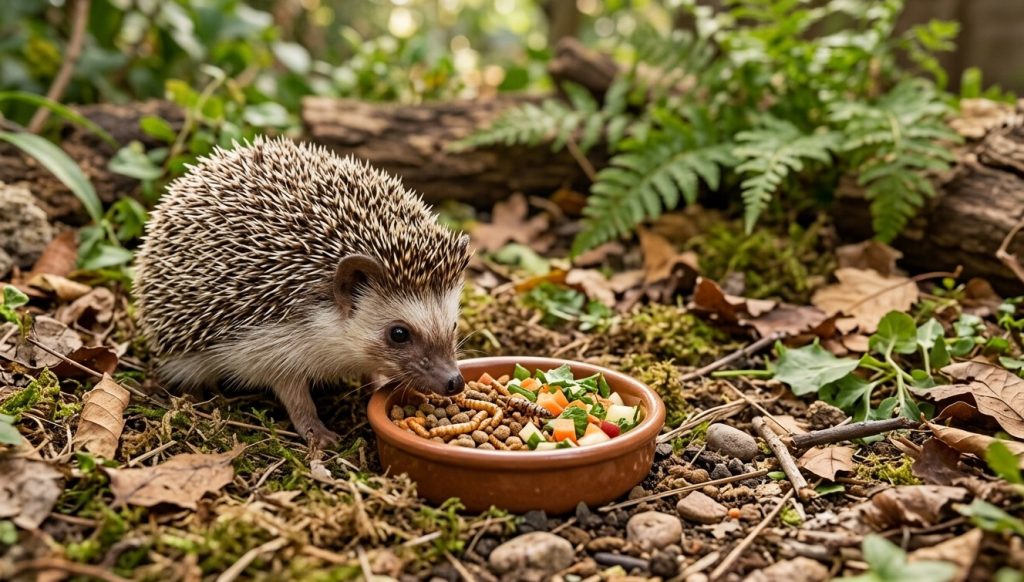
Appropriately sourced feeder insects can be offered as part of a varied hedgehog diet. Depending on availability and the individual animal, owners may use options such as mealworms, crickets, or other feeder insects intended for animal consumption.
However, insects differ in their nutritional and fat content. Some should be offered more sparingly than others. Overfeeding fatty treats can contribute unnecessary calories and make weight management more difficult.
Purchase feeder insects from reliable sources intended for animal feeding. Avoid collecting random insects outdoors, where exposure to pesticides or other contaminants may be a concern.
For many owners, insects are a useful occasional addition rather than the main course. This Hedgehog Diet Guide recommends moderation and variety rather than turning every feeding into an insect festival.
Can Hedgehogs Eat Fruits and Vegetables?
Some fruits and vegetables may be offered in small, appropriate portions, depending on the food and the individual hedgehog. They should generally be occasional additions rather than the nutritional foundation.
When offering a new food:
- Introduce only a small amount.
- Offer one new item at a time.
- Watch for digestive changes or other problems.
- Remove uneaten fresh food promptly.
Because fruits can contain significant amounts of natural sugar, moderation is important. Likewise, vegetables are not automatically appropriate in unlimited quantities simply because they are considered healthy for humans.
A useful Hedgehog Diet Guide keeps the focus on species-appropriate nutrition. Your hedgehog does not need to follow your smoothie routine.
Foods Hedgehogs Should Avoid
Knowing what foods hedgehogs should avoid is just as important as knowing what they can eat.
Avoid offering foods that may create toxicity, digestive problems, excessive sugar or fat intake, or choking hazards. Common concerns can include:
- Chocolate and caffeinated products
- Alcohol
- Foods containing toxic ingredients such as certain alliums
- Highly processed or heavily seasoned human foods
- Very sugary treats
- Extremely fatty foods
- Sticky foods or foods that may present choking risks
- Large or hard pieces that are difficult for a small animal to manage
Milk and other dairy products are also often unsuitable as a regular food choice for animals that may not tolerate them well.
Preparation matters, too. A food that is acceptable in one form may become unsuitable when covered in salt, sugar, seasoning, butter, or sauce.
If you are unsure about a particular food, check with a veterinarian before offering it. FYI, an internet list is not a replacement for professional advice when your hedgehog has a medical condition or has eaten something potentially dangerous.
How Much Should a Hedgehog Eat?
There is no single portion size that fits every pet. The right amount depends on the calorie density of the food, the hedgehog’s age, activity, body condition, and overall health.
Start with a sensible measured portion based on the food and your veterinarian’s guidance, then monitor the individual hedgehog. A feeding routine should be adjusted thoughtfully, not randomly every few days.
A useful habit is regular weight and body-condition monitoring. Unexplained weight gain or loss deserves attention, especially when it happens quickly or accompanies appetite, stool, activity, or behavioral changes.
This part of the Hedgehog Diet Guide is particularly important for preventing the common mistake of equating a constantly full food bowl with excellent care. More food is not automatically better care.
A Practical Hedgehog Feeding Schedule
Pet hedgehogs are generally more active during the evening and nighttime, so many owners provide the main meal in the evening.
Consistency can help you notice changes. If your hedgehog normally eats well overnight and suddenly leaves most of its food untouched, that change may be easier to identify when you follow a regular routine.
Fresh foods and treats should not be left sitting long enough to spoil. Remove leftovers and keep the feeding area clean.
Fresh Water Is Essential
Every Hedgehog Diet Guide should include a reminder about water because nutrition is not just about solid food.
Provide clean, fresh water at all times using a safe container that your hedgehog can access comfortably. Check it regularly, clean the container, and replace the water frequently.
Some hedgehogs may drink differently depending on their diet, activity, and environment. A sudden major change in water consumption can be worth discussing with a veterinarian, particularly if other symptoms appear.
Common Hedgehog Diet Mistakes
Even well-meaning owners can make feeding mistakes. The most common ones are usually not dramatic—they are small habits repeated over time.
Overfeeding Treats
A few treats can gradually become many treats. This is particularly easy with insects or other foods your hedgehog loves.
Solution: Keep treats occasional and account for their calories as part of the overall hedgehog diet.
Feeding Too Many Fatty Insects
Some feeder insects are more calorie-dense than others. Offering large quantities may contribute to weight gain.
Solution: Use variety and moderation instead of relying heavily on one fatty treat.
Making Sudden Diet Changes
Switching foods abruptly may cause digestive upset or make it difficult to identify what caused a problem.
Solution: When changing an established diet, make transitions gradually unless a veterinarian advises otherwise.
Offering Too Much Fruit
Fruit can seem harmless because it is natural. So is rain, and you still would not want your food bowl filled with it.
Solution: Keep sweet foods limited and treat them as occasional additions.
Ignoring Weight Changes
Owners sometimes notice a rounder hedgehog but dismiss it as “extra cute.” Body condition deserves more objective attention.
Solution: Monitor weight and overall condition regularly and ask a veterinarian about significant or unexplained changes.
Assuming Every Hedgehog Needs the Same Diet
Online feeding recommendations can be useful starting points, but individual needs vary.
Solution: Use this Hedgehog Diet Guide as general education while observing your own animal and seeking professional advice when needed.
How to Prevent Obesity Through Proper Feeding
Hedgehog obesity can become a serious concern when calorie intake consistently exceeds energy use. High-calorie foods, excessive treats, limited activity, and oversized portions can all contribute.
Preventing weight gain usually requires steady habits rather than dramatic changes. Measure staple food instead of endlessly refilling the bowl. Limit treats. Encourage appropriate activity and enrichment. Monitor the hedgehog’s body condition over time.
Do not attempt aggressive dieting without veterinary guidance. A rapid or unexplained change in weight can indicate more than a simple feeding issue.
A balanced Hedgehog Diet Guide emphasizes prevention: sensible portions are much easier to manage than trying to correct substantial weight gain later.
When Should You Ask a Veterinarian About Your Hedgehog’s Diet?
General feeding information is useful, but some situations require individualized professional advice.
Contact a qualified veterinarian if your hedgehog has:
- Persistent loss of appetite
- Significant or unexplained weight loss or gain
- Ongoing diarrhea or major stool changes
- Difficulty eating or chewing
- Repeated vomiting or signs of illness
- Suspected nutritional deficiencies
- A diagnosed medical condition affecting dietary needs
- Special needs related to age, pregnancy, recovery, or other health circumstances
An exotic-animal veterinarian can help assess whether the current hedgehog diet is appropriate and recommend changes based on the animal’s actual condition.
Frequently Asked Questions About a Hedgehog Diet Guide
What do pet hedgehogs eat every day?
The daily diet should generally center on an appropriate, nutritionally balanced staple food. Commercial hedgehog diets or carefully selected cat foods may be considered depending on the individual animal and veterinary guidance. Insects, fruits, and other foods should usually be supplemental rather than the foundation.
Can hedgehogs eat cat food?
Some pet hedgehog owners use carefully selected dry cat food as part of the diet, but not every cat food is appropriate. Review the nutritional profile and ingredients, consider calorie and fat content, and ask an exotic-animal veterinarian for advice when selecting food for your individual hedgehog.
How often should I feed my pet hedgehog?
Many owners provide a measured daily portion in the evening because hedgehogs are generally more active overnight. The exact amount depends on the individual animal, food calorie density, body condition, and veterinary recommendations.
Can hedgehogs eat insects every day?
Insects can be part of a varied diet, but daily amounts should be controlled because some are relatively high in fat or calories. Use appropriately sourced feeder insects and avoid letting treats replace a nutritionally balanced staple food.
What foods are dangerous or unsuitable for hedgehogs?
Avoid foods that are toxic, heavily processed, excessively sugary, highly fatty, seasoned, or difficult to chew safely. Examples include chocolate, alcohol, caffeinated products, and certain ingredients known to be toxic to pets. When uncertain about a food, consult a veterinarian before offering it.
Final Words
The best Hedgehog Diet Guide is not a rigid list that tells every owner to feed exactly the same thing. Good nutrition depends on balance, consistency, portion control, and careful observation.
Start with an appropriate staple food, use treats and insects sensibly, keep fresh water available, and avoid turning occasional foods into everyday habits. Pay attention to your hedgehog’s weight, appetite, energy, and digestive health.
After years of caring for pets, I still believe one of the simplest rules is also one of the most useful: watch the animal in front of you. Food labels and general recommendations provide guidance, but your hedgehog’s actual condition matters.
Use this Hedgehog Diet Guide as a practical starting point, keep learning, and work with a qualified veterinarian whenever your hedgehog’s diet or health raises questions. A well-fed hedgehog does not need a complicated menu—just thoughtful, consistent care.