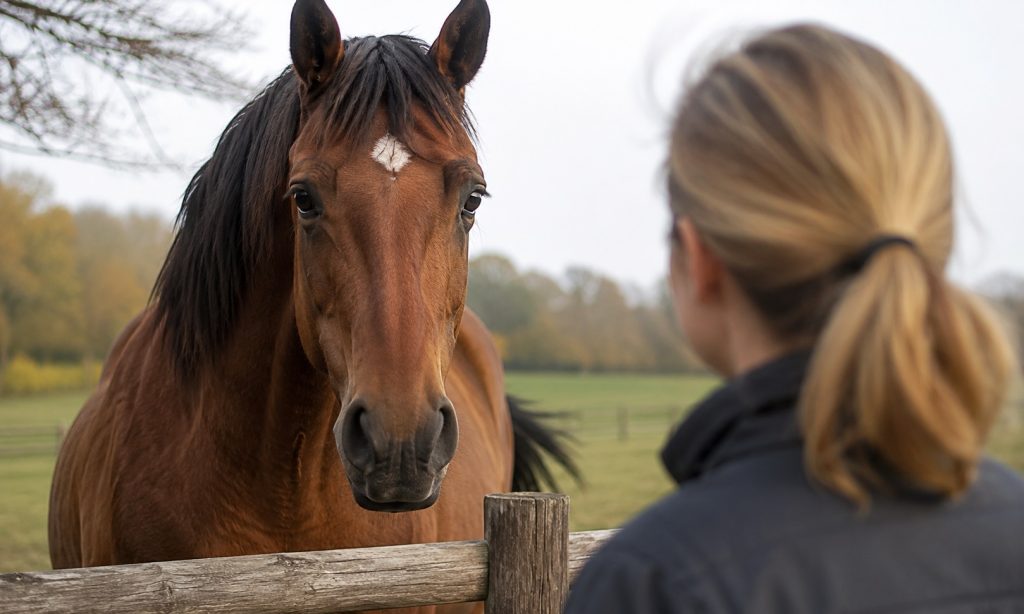
A horse staring at you usually means it is curious, assessing you, or watching for cues.
I have spent years working with horses, studying their moves, and reading equine behavior research. If you have ever wondered what does it mean when a horse stares at you, this article breaks it down clearly. I will explain why horses stare, how to read their body language, when to be cautious, and practical steps you can use right away. Read on for actionable advice and real-world examples from my experience handling horses of all temperaments.
How horses use staring as body language
Horses use their eyes and posture to share information. A fixed stare is one tool in their social toolkit. It can show focus, interest, or assessment of risk.
Horses are prey animals. They watch their world closely. Staring often means they are gathering information. Watching you helps a horse decide if you are safe or a threat.
Common reasons why a horse stares at you
Horses stare for many clear reasons. Below are the most common, with simple signs to watch for.
- Curiosity.
A new object or person draws interest. The horse will hold its head up and look steady. - Attention seeking.
Horses that want food, grooming, or interaction will lock eyes and wait. Often they will move closer or nudge. - Social bonding.
Familiar horses may stare to connect. Calm eye contact can be part of friendly interaction. - Alert or vigilance.
If the horse is tense and staring, it is assessing risk. Ears forward and tight lips are signs of worry. - Pain or discomfort.
A horse that stares repeatedly at a body area or at you while showing stiffness may be signaling pain. - Learned behavior.
Horses quickly learn that staring can get a reaction, such as treats or attention. That reinforces the habit. - Dominance or challenge.
In some herd contexts, a hard stare can be a mild challenge. Look for other dominant cues like pinned ears or raised head.
Why does my horse stare at me?
Horses stare at people to gather information, ask for something, or check for safety. Look at ears, breathing, and body posture to read intent.
Is staring a sign of affection?
Sometimes. Soft eyes, relaxed ears, and slow blinks paired with a calm body usually indicate a positive, social look.
Can staring mean aggression?
Yes. A hard stare with pinned ears, tense muzzle, and lunging suggests threat or challenge. Step back and stay calm.
Reading subtle cues: eyes, ears, head, and body
To know what does it mean when a horse stares at you, read the full picture. One sign alone is rarely conclusive.
- Eyes.
Soft, half-closed eyes are relaxed. Wide, white-showing eyes mean fear or high alert. - Ears.
Ears forward show interest. Ears pinned flat mean anger or extreme discomfort. - Head and neck.
A lowered head often shows trust. A high head means the horse is watchful or tense. - Mouth and nostrils.
Tight lips, flared nostrils, or grinding can signal stress or pain. - Whole-body stance.
Weight shifted back, tense muscles, and a fixed stare indicate the horse is ready to react.
Use patterns. One stare with a relaxed body usually equals curiosity. Repeated staring with other stress signals means investigate further.

Source: dreamstime.com
Personal experience and practical tips
I once worked with a gelding that stared at new boots every time I visited the barn. The first few times I ignored him and then I calmly walked toward him and let him sniff. Within a week he stopped the intense stare and instead came up for a nudge.
Lessons I learned:
- Approach calmly and predictably. Quick moves make a horse tense.
- Let the horse take the first step toward you when safe. This reduces defensive staring.
- Offer a hand as a scent option, not a treat every time. This prevents learned pleading stares.
Common mistakes to avoid:
- Reacting with loud noises or sudden gestures. That can escalate a stare into fear.
- Feeding immediately when a horse stares. This teaches attention-seeking staring.
- Ignoring clear pain signals. Always check for injury if the stare is paired with changes in movement or appetite.
How to respond safely when a horse stares at you
A clear plan helps you respond right away. Follow these steps for safety and better rapport.
- Pause and breathe.
Keep your body calm. Horses read tension easily. - Check for warning signs.
Look at ears, eyes, tail, and stance. If you see pinned ears or pawing, move back slowly. - Offer a neutral cue.
Speak softly or hold your hand out low for sniffing. Avoid reaching over the horse’s head. - Redirect with a simple task.
Ask the horse to step, lower its head, or take a step back. Movement changes focus. - Reward calm behavior appropriately.
Praise softly or offer a small treat when the horse relaxes. Do this sparingly to avoid reinforcing persistent staring.
When to be concerned: fear, pain, or behavioral issues
Not every stare is harmless. Know when to act.
- Repeated staring with other signs of distress may mean pain. Check vet and farrier records.
- Staring accompanied by aggression, biting, or kicking is a safety risk. Use professional help.
- Sudden changes in staring behavior can indicate vision loss, dental pain, or neurological issues.
If you suspect pain or a health issue, stop routine training and consult a professional. Early action prevents escalation.

Source: youtube.com
Frequently Asked Questions of what does it mean when a horse stares at you
Why does my horse stare at me while I ride?
Riding adds pressure and new cues. Your horse may stare to read you or wait for a command. Check rein contact and rider tension.
Can horses stare because they recognize me?
Yes. Horses remember people and faces. A calm stare with relaxed body likely signals recognition and interest.
Is it rude if a horse stares at me?
Horses do not intend rudeness. Staring is their way to gather facts. Interpret the stare by reading body language.
How do I stop a horse from staring for food?
Avoid feeding on cue every time. Use a schedule for treats and reward calm behavior only. Train alternate behaviors like “stand quietly.”
Should I worry if a horse stares at a wound?
Yes. If a horse stares at a specific body spot and shows lameness or sensitivity, check for pain. Call a veterinarian if needed.
What does it mean when a horse stares at you and blinks slowly?
A slow blink with a soft face usually means relaxation and trust. You can respond with calm voice and gentle petting.
Conclusion
Understanding what does it mean when a horse stares at you helps you stay safe and build trust. Staring can mean curiosity, attention-seeking, bonding, vigilance, or pain. Read the whole horse—eyes, ears, mouth, and body—before you decide. Use calm moves, let the horse investigate, and act quickly if you see pain or aggression. Try these tips the next time a horse fixes you with a steady gaze, and leave a note below about what worked for you. Explore more resources, subscribe for updates, or share your experience in the comments.