
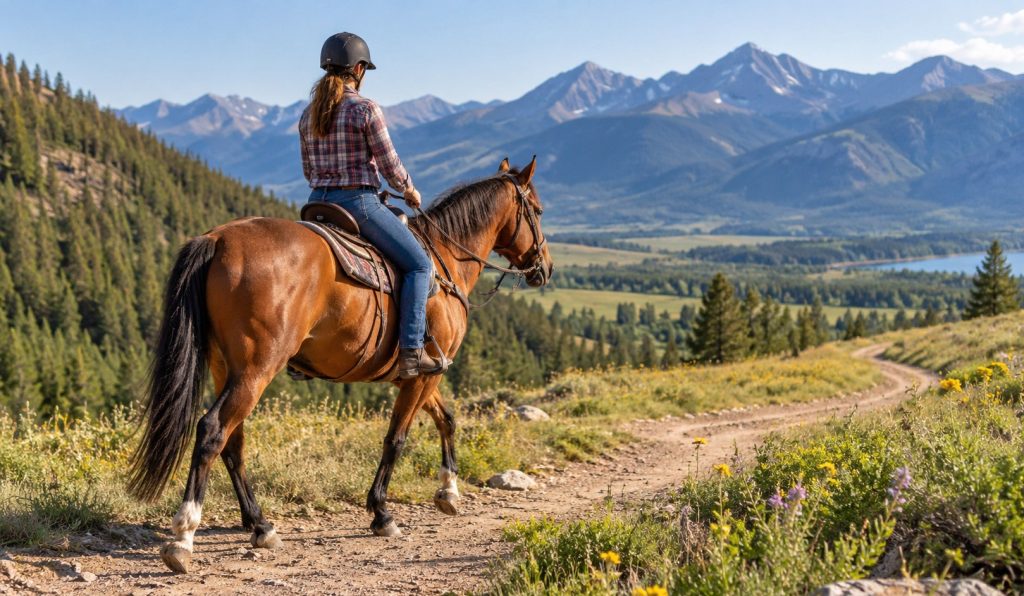
If you have ever watched a horse casually wander around a pasture, graze for hours, and somehow still have energy left for whatever comes next, you may wonder about horse walking distance. How many miles can a horse actually cover in a day? And does a horse that can roam several miles naturally have the same endurance when carrying a rider?
The short answer is no.
Horses are naturally built for movement, and they can cover impressive distances. However, the distance a particular horse can safely walk depends on fitness, terrain, weather, hoof condition, age, nutrition, hydration, workload, and whether the horse is carrying a rider.
So, rather than chasing one magic mileage number, it is more useful to understand what affects a horse’s endurance and how to increase exercise safely.
What Is a Typical Horse Walking Distance?
There is no single “normal” horse walking distance because horses live very different lifestyles. A horse turned out on a large pasture may spend much of the day slowly moving between grazing, water, shelter, and other horses. Research on horse movement has found substantial differences between wild horses, pasture-kept domestic horses, and stalled horses.
One study reported wild horses averaging around 10.6 miles of movement per day, while domestic horses at pasture averaged around 4 miles. Stalled horses with limited turnout moved considerably less. That distinction matters. A horse naturally wandering several miles throughout a day is not necessarily ready to walk the same distance under saddle. Natural movement is usually spread across many hours, with frequent pauses for grazing and resting. A trail ride, meanwhile, concentrates exercise into a much shorter period.

Source: Unsplash — Rider on horseback on a forest path
How Far Can a Horse Walk in a Day?
A healthy, appropriately conditioned horse can potentially cover many miles in a day, but the practical distance depends heavily on circumstances. For example, a relaxed horse wandering around pasture might accumulate several miles without the owner even realizing it. Some research has documented much higher daily movement in horses living under more natural conditions.
Ridden distance is a different story. A recreational horse that is not regularly conditioned may become tired after a relatively short outing. One equine-care source notes that a basic-fitness recreational horse may safely handle a short walk or trot of less than 5 miles, while longer distances should be approached progressively. A highly conditioned endurance horse is obviously in another category.
So when someone asks, “How many miles can a horse walk?” my answer would be: ask what horse, carrying what load, over what terrain, at what speed, and in what weather. Those details are far more meaningful than the mileage number alone.
Horse Walking Distance vs. Ridden Distance
This is one of the most important distinctions for horse owners. Walking several miles without a rider is not equivalent to carrying a person several miles.
Under saddle, the horse has to deal with:
- Rider weight
- Saddle and tack
- Hills and elevation changes
- Uneven or difficult footing
- Temperature and humidity
- Speed changes
- Longer periods of continuous exercise
- Additional muscular and cardiovascular demand
Even a fit-looking horse may need conditioning before handling longer trail rides comfortably. IMO, mileage should be treated as a training variable, not a trophy. The goal is not to make your horse travel the greatest possible distance. The goal is to develop enough fitness that the horse can comfortably perform the work you ask of it and recover appropriately afterward.
Horse Travel Speed: How Fast Does a Horse Walk?
Horse travel speed varies according to gait, individual fitness, terrain, and the purpose of the trip. A relaxed walking pace is commonly around 3–4 miles per hour, although individual horses and circumstances vary. Trotting is substantially faster, while cantering and galloping increase speed dramatically.
The important point is that speed and endurance are not the same thing. A horse may sprint quickly but cannot maintain that pace for a long period. Conversely, a conditioned horse can cover substantial distances at controlled speeds while conserving energy.
Horse Walking Speed
A comfortable walk is one of the most useful gaits for conditioning. Walking places less stress on the horse than faster gaits while still encouraging movement and muscular work. It can also be useful when gradually introducing an inexperienced horse to longer trail outings.
If your horse is accustomed to only short rides, adding distance at a relaxed walk is generally more sensible than immediately introducing long stretches of trotting. That may not sound particularly exciting, but horses do not award bonus points for dramatic training plans. 🙂

Source: Wikimedia Commons — Horse Trail ride, Bryce Canyon, Utah
How Long Can a Horse Run?
The question “how long can a horse run?” does not have one universal answer. Running ability depends on the horse’s conditioning, breed type, gait, terrain, temperature, distance, and workload.
A short gallop differs greatly from sustained endurance exercise. Horses can produce impressive bursts of speed, but maintaining faster gaits requires considerably more energy and places greater demands on the cardiovascular system, muscles, tendons, and joints.
For long-distance work, horses are generally managed around controlled speeds, pacing, rest, hydration, and recovery rather than simply running continuously. This is also why endurance riding should not be confused with racing. Endurance horses are conditioned specifically for prolonged exercise, and the demands increase considerably as distances become longer. Research into endurance competitions has also shown that risk can increase with ride distance.
What Determines a Horse’s Walking Distance?
Fitness and Conditioning
Fitness is probably one of the biggest factors affecting horse walking distance. A horse that spends most of its time in a stall and receives occasional short rides cannot reasonably be expected to perform like a horse that has been conditioned consistently.
Conditioning should be progressive. Start with manageable work and increase duration or distance gradually. Giving a horse a sudden, dramatic increase in workload can place unnecessary stress on muscles, tendons, joints, and hooves.
Age and Health
Age matters, but it is not the only consideration. A healthy senior horse may comfortably enjoy regular light exercise, while a younger horse may need carefully controlled conditioning appropriate for its stage of development. Previous injuries, arthritis, respiratory problems, metabolic conditions, lameness, and other health concerns can also affect exercise tolerance.
If you notice a significant change in your horse’s willingness or ability to exercise, don’t assume it is simply “getting tired.” A veterinary examination may be appropriate.
Terrain and Footing
A flat dirt trail is not the same workout as a steep, rocky mountain trail. Hills increase muscular demand. Deep sand can be tiring. Mud can require additional effort and increase slipping risk. Hard or uneven surfaces may also affect hoof and limb comfort. Consequently, two rides covering exactly 5 miles can place very different demands on a horse.
Weather and Temperature
Weather can dramatically influence exercise tolerance. Heat and humidity are particularly important because horses generate substantial body heat during exercise. A distance that seems reasonable on a cool morning may become much more demanding during hot, humid conditions. Watch your horse rather than relying only on the mileage on your phone.
Hoof Health
Healthy feet are essential for comfortable movement. A horse experiencing hoof pain may shorten its stride, become reluctant to move, or develop an altered gait. Regular hoof care and an experienced farrier are important parts of maintaining an active horse.
If your horse suddenly becomes uncomfortable on terrain that was previously easy, investigate the cause rather than simply reducing the distance and hoping for the best.
Hydration and Nutrition
Longer exercise requires appropriate access to water and nutrition. A horse traveling for extended periods needs a management plan that considers weather, workload, forage, electrolytes where appropriate, and access to water. For longer rides or demanding exercise, planning matters just as much as fitness.
How to Safely Increase a Horse’s Walking Distance
If you want to increase your horse’s exercise distance, resist the temptation to double the mileage simply because yesterday went well. A safer approach is to build gradually.
1. Start With a Comfortable Distance
Begin with an amount of exercise your horse already handles comfortably.
2. Establish Consistency
Regular moderate exercise is generally more useful for building fitness than one enormous workout followed by several days of inactivity.
3. Increase Gradually
Add distance or duration progressively rather than making large jumps.
4. Introduce Difficult Terrain Slowly
Once your horse is comfortable on easy footing, gradually introduce hills, varied surfaces, and other challenges.
5. Allow Recovery
Recovery is part of conditioning. Muscles and supporting tissues need time to adapt.
6. Watch the Horse, Not Just the GPS
A GPS can tell you that you traveled 7 miles. It cannot tell you whether your horse felt comfortable doing it. Pay attention to gait, attitude, breathing, sweating, stride length, and recovery.
7. Adjust When Necessary
If your horse struggles with the workload, reduce the demand and reassess rather than pushing through.
Signs Your Horse Has Traveled Too Far
A horse that has been pushed beyond its comfortable capacity may show signs such as:
- Unusual or persistent fatigue
- Reluctance to continue
- Abnormal breathing
- Excessive sweating
- Abnormal lack of sweating in hot conditions
- Stiffness
- Shortened stride
- Lameness
- Muscle soreness
- Unusual behavior
- Difficulty recovering after exercise
Heat-related problems, significant weakness, lameness, dehydration concerns, or other abnormal signs deserve prompt attention. If you are unsure whether your horse is fit enough for a particular exercise program, an equine veterinarian can help you develop an appropriate plan.
The University of Minnesota Extension also emphasizes recognizing changes in a horse’s normal behavior and vital signs and not delaying veterinary care when professional help is needed.
Horse Walking Distance for Trail Riding
For most recreational horse owners, the best trail-riding distance is the distance your horse can complete comfortably and recover from appropriately. That might be only a few miles for one horse and substantially more for another. A sensible trail-conditioning program starts with easier routes and gradually introduces longer distances and faster speeds.
Pay attention to the return trip, too. A horse may look energetic halfway through a ride because excitement is doing some of the work. Fatigue can become much more obvious later. Planning a route with water access, shade where possible, suitable footing, and an easy way to shorten the ride is a smart habit.

Source: Pexels — Equestrian Rider on Trail Ride at Sunset
Horse Walking Distance for Different Types of Horses
Lightly Exercised Recreational Horses
These horses generally need conservative distances and gradual conditioning.
Regularly Conditioned Trail Horses
A consistently exercised horse can usually handle longer outings, provided distance, terrain, and weather are appropriate.
Highly Conditioned Endurance Horses
These horses undergo specialized conditioning and management. Their capabilities should not be used as the benchmark for an ordinary recreational horse.
Older Horses
Older horses may still enjoy exercise, but their workload should reflect their physical condition, soundness, and recovery ability.
Young Horses
Young horses require age-appropriate exercise and should not simply be trained according to the mileage goals of a mature endurance horse.
Frequently Asked Questions
How many miles can a horse walk in a day?
There is no universal number. Domestic horses may naturally move several miles per day, while horses living under more natural grazing conditions can cover substantially greater distances. The safe ridden distance depends on conditioning, terrain, weather, rider weight, hoof health, and other factors.
How far can a horse travel without stopping?
A horse can travel considerable distances when properly conditioned, but horses should not be expected to move continuously without appropriate opportunities for rest, hydration, and recovery. Long-distance travel should be planned around the horse’s individual fitness rather than a maximum-distance challenge.
What is the average horse walking speed?
A typical comfortable walking speed is roughly 3–4 miles per hour, although individual horses and conditions vary. Terrain, fitness, rider preferences, and whether the horse is working or simply wandering can all change the actual pace.
How long can a horse run?
There is no single time limit. A horse can gallop for a relatively short period at high intensity but may travel for much longer at controlled speeds and with appropriate conditioning. The more demanding the pace, terrain, and distance, the more important conditioning and recovery become.
Can a horse walk 20 miles in one day?
A properly conditioned horse may be capable of covering 20 miles under appropriate circumstances, but that does not mean every horse can safely handle 20 miles. Twenty miles of relaxed movement spread throughout a day is very different from 20 miles under saddle over difficult terrain. The horse’s conditioning and health should determine the workload.
Final Words
The most useful way to think about horse walking distance is not as a single magic number. A horse’s ability to travel depends on the individual animal, its fitness, the terrain, weather, footing, rider and tack, hydration, nutrition, hoof condition, and pace. Healthy horses are remarkably capable animals. Some can cover impressive distances, especially when properly conditioned for the job. But impressive endurance should never be confused with unlimited endurance.
For recreational horse owners, gradual conditioning, careful observation, appropriate hoof care, hydration, rest, and sensible route planning are much more valuable than chasing a particular mileage target.
If your horse finishes a ride comfortable, alert, sound, and able to recover normally, that’s a much better measure of a successful outing than whatever number appeared on your GPS. And honestly, that is the kind of distance record worth keeping.









