
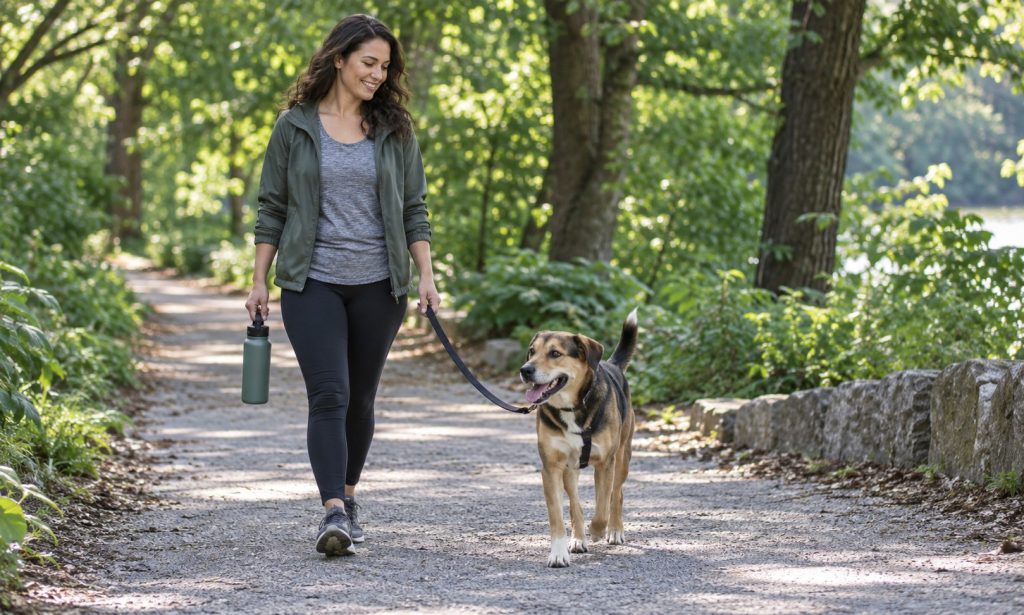
A good dog exercise plan should fit the dog in front of you, not a generic number on a chart. Age, health, body condition, breed traits, weather, and daily habits all affect what feels comfortable. This Dog Exercise Guide explains how to build activity gradually, choose a mix of movement and play, watch for signs to stop, and adjust plans across seasons. If you are learning how to take care of a dog, regular activity is one useful part of the routine, alongside rest, grooming, and veterinary care. The goal is steady, enjoyable movement that supports your dog’s well-being without pushing through pain or heat stress. Build activity gradually and adjust it when your dog’s health or weather changes. Leave time for recovery.
Why exercise matters for dogs
Movement gives dogs chances to walk, sniff, play, and spend time with their people. Regular activity can support fitness and healthy body condition, and varied outings provide mental stimulation. Exercise does not have to mean running long distances. A relaxed walk with time to sniff may be a better fit for one dog, while another may enjoy fetch, swimming, training games, or structured sports.
This Dog Exercise Guide is a planning aid, not a prescription. Dogs differ widely, and a veterinarian can help set safe limits if your dog is overweight, elderly, recovering from injury, short-nosed, or living with heart, joint, or breathing problems.
How much activity does a dog need?
There is no single duration that fits every dog. Puppies need play and short opportunities to move, balanced with substantial rest. Adult dogs may tolerate longer outings, but stamina should be built gradually. Senior dogs may benefit from frequent, shorter, lower-impact movement. Individual health and comfort matter more than assumptions about breed alone.
Before starting jogging, hiking, or another strenuous activity, talk with your veterinarian. A checkup can identify limitations and help you choose a gradual progression. If your dog has been sedentary, increase duration and intensity in small steps rather than going from couch to long run in a day. This Dog Exercise Guide recommends watching how your dog moves later that day and the next morning for signs of fatigue or soreness.
Build a balanced weekly routine
Mix low-intensity movement, opportunities to sniff, play, and short training. You might plan a morning walk, a few brief games at home, and a calmer evening outing. The exact schedule can change with weather, workdays, age, and the dog’s energy level. Rest days or lighter days are useful after more demanding outings.
Use your dog’s behavior to assess the pace. A dog who keeps lagging, lies down, pants heavily, or seems reluctant may need a break or a shorter route. Avoid using exercise to exhaust a dog into compliance. Predictable routines and mental enrichment can help settle activity needs without repeatedly increasing physical demands.
Exercise ideas for different settings
Movement can support fitness, but pace and route should match your dog’s age, conditioning, and comfort.
Walks and sniffing outings
Walks are flexible and can be adjusted for speed and length. Letting your dog pause to sniff gives the outing a mental component. Choose secure routes, use a well-fitted leash and harness or collar, and avoid hot pavement. In warm weather, plan for cooler hours, shade, and access to water. The American Veterinary Medical Association notes that short-nosed and overweight dogs face added risk during warm-weather exercise.
Indoor movement and games
On rainy or very hot days, try short training sessions, hide-and-seek with family, gentle tug with clear release cues, or a food puzzle using part of the dog’s normal meal. Keep games safe for the dog’s size and mobility. Avoid slippery floors and high jumps if your dog has joint or balance concerns.
Fetch, hikes, and sports
Higher-impact activities need preparation. Warm up with an easy walk, increase distance gradually, take breaks, and choose surfaces that are comfortable underfoot. For hiking, consider terrain, temperature, water access, paw condition, and your dog’s ability to return if tired. If you plan to run or bike with a dog, ask the veterinarian about age, conditioning, and safe distances.
For more detail on one activity, see how to introduce a dog to a treadmill safely. Avoid starting treadmill use as a shortcut before you understand your dog’s needs and supervision requirements.
Signs to pause or stop
Stop activity and move your dog to a safe, cool place if you notice heavy panting, weakness, confusion, vomiting, diarrhea, stumbling, unusual slowing, or distress. Heat illness can become an emergency. Contact a veterinarian promptly if your dog does not recover quickly, collapses, has trouble breathing, or shows severe symptoms.
Also pause exercise if your dog limps, repeatedly lifts a paw, resists movement, or seems sore after activity. A new limp, swelling, or pain deserves veterinary advice. Do not encourage a dog to run through discomfort. This Dog Exercise Guide treats rest and professional assessment as part of a healthy routine.
Exercise, vaccination, and routine care
Before visiting dog parks, daycare, or group events, ask your veterinarian which vaccines and preventive care are appropriate for your dog. Exercise in shared spaces can increase contact with other dogs and surfaces, so prevention matters. Our existing puppy vaccination schedule guide explains one part of early-life planning; your veterinarian can tailor recommendations to age, location, and lifestyle.
Keep identification current and bring water on longer outings. Check paws after walks on rough or hot surfaces, and adjust grooming or nail care if coat or nails interfere with comfortable movement. A simple log of activity, appetite, energy, and soreness can help you notice changes.
Sample routines for different dogs
A young adult dog with no health limits might enjoy a morning sniff walk, a short training game at midday, and play in the evening. A senior dog may do better with two brief walks, a soft-surface sniff outing, and a quiet puzzle at home. A dog recovering from illness may need only controlled leash walks set by the veterinarian. These examples are starting points, not fixed prescriptions.
Dog Exercise Guide planning should leave room for rest and unstructured sniffing. A dog that is panting heavily or lagging should not be pushed to complete a route. If your dog seems energetic but becomes sore later, reduce the next session and ask the veterinarian whether the pattern suggests a health issue.
Weather and surface safety
Heat and humidity raise the risk of overheating. Exercise during cooler hours, carry water, seek shade, and shorten outings when the weather is warm. Short-nosed breeds, overweight dogs, and dogs with breathing or heart conditions may need extra caution. If you notice weakness, confusion, vomiting, collapse, or severe panting, stop activity and contact a veterinarian urgently.
Check pavement and trails for heat, ice, sharp debris, and rough surfaces. Hot ground can injure paw pads. In cold conditions, consider your dog’s coat, size, age, and tolerance. Dog Exercise Guide decisions should be adapted to the day’s conditions, not only to the calendar.
Conditioning and recovery
Build stamina gradually. Start with comfortable walks and increase one element at a time, such as duration or pace. Avoid adding long distance and steep terrain in the same week. Give your dog recovery time after vigorous play, and watch for limping, stiffness, reluctance to rise, or unusual fatigue.
Dog Exercise Guide plans are especially important for dogs returning from injury or surgery. Follow the veterinarian’s restrictions, even if the dog seems eager to run. A veterinary rehabilitation professional may provide structured exercises for mobility or recovery. Do not substitute online workouts for a prescribed plan.
Make the routine engaging, not punishing
Vary routes, include sniff stops, and use short reward-based training during walks. Some dogs enjoy fetch, but repeated abrupt stops and turns may be hard on joints. Choose games that fit your dog’s age and body. A walk is not a race, and an active dog still needs time to relax.
Use a simple log to note duration, weather, surface, and how your dog feels after activity. Dog Exercise Guide records can help a veterinarian understand changes in stamina or mobility. If your dog’s activity level drops suddenly, arrange a health check instead of assuming the dog is simply becoming lazy.
Plan activity around weather and recovery
Dog Exercise Guide decisions should account for heat, humidity, cold, footing, and air quality. On hot days, choose cooler hours, carry water, and shorten activity. Watch for heavy panting, weakness, confusion, vomiting, or collapse; these signs need urgent veterinary attention. Do not rely on pavement temperature alone, since a dog can overheat even when the ground feels comfortable.
Build in rest after unfamiliar or strenuous activity. Increase time and intensity gradually, and give the dog a chance to drink and settle. If your dog is sore, limping, unusually tired, or reluctant to move afterward, pause the plan and contact your veterinarian if signs persist or are severe. Exercise should support health without pushing through pain.
Make a weekly routine practical
Consistency is more helpful than a demanding schedule that is difficult to keep. Plan several opportunities for movement and sniffing across the week, then adjust for work, weather, and your dog’s energy. Short play sessions, training on a walk, and gentle indoor games can add variety. Include quiet time; rest is part of a balanced Dog Exercise Guide.
Track what your dog enjoys and how they respond afterward. A simple note about duration, surface, weather, and recovery can reveal whether an activity is a good fit. If you are unsure about exercise after surgery, illness, or a vaccination visit, follow the veterinarian’s specific instructions. A general plan cannot replace limits set for an individual dog.
Frequently Asked Questions
These answers address safe routines, activity levels, and signs to pause.
Should every dog walk for the same amount of time?
No. Age, health, conditioning, breed traits, body condition, and weather all affect a comfortable routine. Ask your veterinarian if you are unsure.
Can puppies go on long runs?
Do not begin strenuous running without veterinary guidance. Puppies are still developing, and activity should be appropriate for their age and condition.
Is sniffing on a walk exercise?
Yes. Sniffing adds mental engagement and can make a moderate walk more enriching. Let your dog explore safely while keeping control of the leash.
How can I exercise a dog in hot weather?
Choose cooler hours, shorter outings, shade, and water. Stop if your dog shows heavy panting, weakness, confusion, or distress, and contact a veterinarian.
What if my dog does not want to exercise?
Do not force activity. A change in willingness may reflect heat, fatigue, fear, pain, or illness. Contact your veterinarian if the change is new or persistent.
Final Words
A useful Dog Exercise Guide starts with your dog’s comfort and builds a routine gradually. Mix walks, sniffing, games, and rest, then adjust for age, health, and weather. Stop for distress or pain and ask your veterinarian about strenuous activity or new symptoms. Regular activity is one part of how to care for a dog, alongside preventive care and a safe, predictable daily routine.









