
Some dogs are happiest when they have a small problem to solve: finding a treat, learning a cue, or following a scent through the yard. Dog mental stimulation gives the brain useful work and adds variety to the day. It does not have to mean complicated equipment or long training sessions. This guide explains simple enrichment activities, how to match difficulty to your dog, and how to build a steady routine. If you are learning how to take care of a dog, mental activity belongs alongside exercise, rest, grooming, and social connection. Watch your dog’s response and keep each activity safe, rewarding, and short enough to end before frustration takes over. Keep activities positive, simple, and suited to your dog’s abilities.
What is dog mental stimulation?
Mental stimulation is activity that invites a dog to use senses, attention, memory, movement, or problem-solving. Sniffing on a walk, learning a cue, searching for food, and exploring a new safe environment can all provide enrichment. It is not a contest to tire a dog out. The goal is meaningful activity that fits the dog’s interests and abilities.
Dog mental stimulation can help make a routine more varied, but it is not a treatment for anxiety or other behavior disorders. If your dog shows persistent distress, destructive behavior, or difficulty being left alone, talk with a veterinarian or qualified behavior professional.
Benefits of enrichment in a daily routine
Enrichment gives dogs opportunities to engage in natural behaviors such as sniffing, searching, chewing appropriate items, and interacting with people. Short activities can break up long quiet periods and provide positive shared time. They can also be adapted for different ages and mobility levels: a senior dog may enjoy scent work on a mat, while a young dog may like short reward-based training games.
Activity should complement physical movement, sleep, and companionship. A food puzzle is not a substitute for walks or social contact, and more challenge is not always better. Dog mental stimulation should be enjoyable. Watch for signs of frustration, such as barking at a puzzle, pawing repeatedly, leaving the activity, or guarding food. Make it easier or stop.
Simple mental enrichment ideas
Short activities let a dog investigate and solve simple problems without becoming overwhelmed.
Scent searches
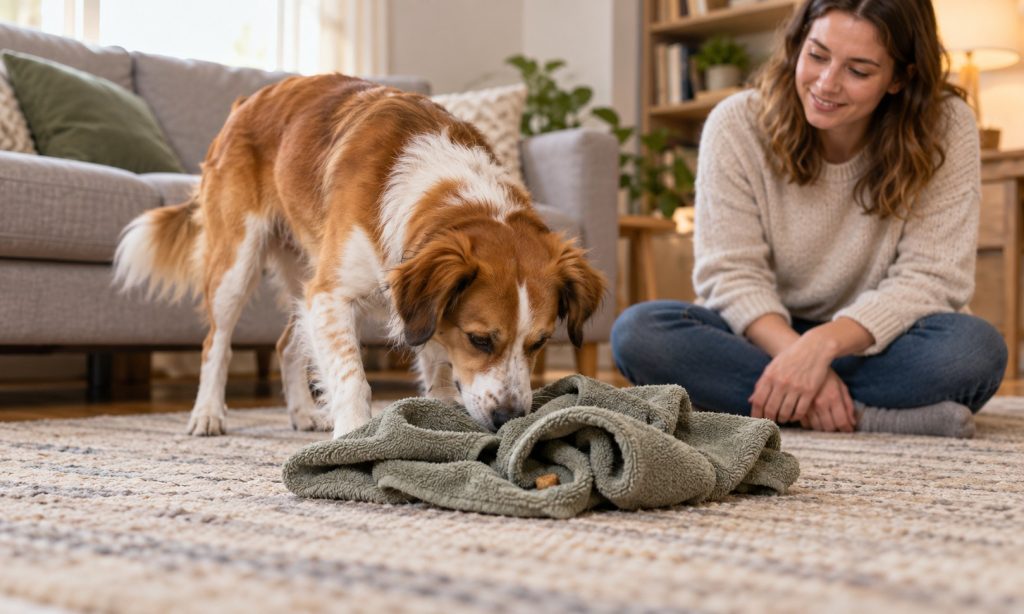
Start with a few pieces of your dog’s regular food on an easy-to-find towel, mat, or safe patch of grass. Let the dog sniff them out. Gradually make the search slightly harder by hiding pieces under a light cloth or behind a safe object. Supervise so the dog does not chew or swallow fabric. Keep the search short and celebrate calm effort.
Reward-based training
Practice familiar cues or teach a simple new behavior in short sessions. Use small rewards from the dog’s daily food allowance if appropriate. Train in a quiet place first, then add mild distractions only when the dog is comfortable. Stop while the dog is still engaged. A few minutes of focused practice can be more useful than a long session that ends in frustration.
Food enrichment
Some dogs enjoy working for part of their meal through a puzzle feeder, snuffle mat, or safe food-stuffable toy. Introduce a simple version so the dog can succeed. Choose an option that is large enough not to swallow and made for supervised use. Inspect it for damage and remove it if pieces break loose. If your dog gulps food, guards items, or has dietary restrictions, ask your veterinarian how to adapt the activity.
Explore a new route
A slow walk in a safe, unfamiliar area gives a dog new smells and surfaces to investigate. Choose a route suited to your dog’s fitness and confidence. Avoid forcing interactions with people or animals. Allow sniffing while maintaining control of the leash and respecting local rules.
How to choose the right difficulty
Start easy enough that your dog can succeed quickly. If the dog loses interest, make the task simpler or use a more motivating reward. If the dog finishes immediately and stays relaxed, adjust one part at a time: add one hiding spot, slightly increase the search area, or teach a small variation of a known cue.
Dog mental stimulation should not require a dog to solve an impossible puzzle. Avoid products or activities that encourage frantic chewing, swallowing, or guarding. For a disabled or older dog, adapt the activity around hearing, vision, balance, and mobility. A veterinarian can help you choose safe options if your dog has medical limitations.
Build enrichment into the week
Keep a short list of activities your dog enjoys and rotate them. For example, use a scent search one morning, a training game later, and a quiet puzzle another day. Leave room for rest. If a dog seems more settled after a certain activity, note that, but do not assume enrichment alone will resolve a serious behavior concern.
You can combine mental and physical activity through a sniff-focused walk or a few training cues during an outing. Simple scent searches and short training games can add variety. Use part of the dog’s measured meal when appropriate, and supervise food activities.
When you are thinking about how to take care of a dog, remember that predictability matters too. A stable meal, walk, rest, and play schedule can make daily life easier to understand. Keep activities positive and end with a calm transition, such as a water break or nap.
Safety and signs to pause
Use dog-safe materials and foods, avoid small parts or loose strings, and supervise food puzzles. Do not use an enrichment activity that requires your dog to climb, jump, or navigate slippery surfaces if those movements are difficult. Keep toys clean and discard damaged items.
Pause if your dog appears overwhelmed, starts guarding, repeatedly barks in frustration, or disengages. If your dog suddenly loses interest in play or becomes unusually restless, consider whether pain or illness could be involved and contact your veterinarian when the change persists or comes with other signs.
Low-cost activities that use a dog’s senses
Hide a few pieces of the dog’s measured meal in safe, easy-to-reach places and invite a search. Use a towel only under direct supervision if your dog does not chew fabric. Scatter food across a clean lawn or snuffle mat if that is safe for the dog. Dog mental stimulation can be simple; the novelty of searching often matters more than an elaborate setup.
Change the route of a familiar walk, let your dog sniff a safe tree or patch of grass, or introduce a new surface at the dog’s pace. Avoid forcing a nervous dog toward new people, animals, or objects. Let the dog observe from a comfortable distance and reward calm exploration.
Use training as a thinking activity
Practice cues your dog already knows, such as touch, settle, or coming when called, then add a small variation. Keep sessions short and reward the behavior you want. Training can be woven into daily routines, such as asking for a calm pause before a door opens. Dog mental stimulation works best when the dog can understand the task and succeed.
Use reward-based methods and avoid intimidation. If a task causes fear or frustration, make it easier or stop. If behavior concerns persist, seek professional support instead of increasing the difficulty or applying punishment.
Adapt activities to age and ability
For puppies, use brief exploration and simple searches with frequent rest. For older dogs, choose low-impact scent games or familiar cues. Dogs with vision or hearing changes may benefit from activities that rely on their stronger senses. Ask your veterinarian about adaptations for pain, mobility limits, or medical restrictions.
Dog mental stimulation should remain safe around food, small objects, and other pets. Separate animals if one guards food or toys. Use puzzle items that cannot be swallowed, and supervise chewing or shredding activities. Remove a toy if it becomes damaged.
Know when enrichment is not enough
A dog that chews, barks, or paces may need more than an activity. Anxiety, pain, illness, and other causes can produce similar behavior. Dog mental stimulation may support a broader plan, but it does not replace veterinary care for a sudden change or persistent distress.
Keep notes about when the behavior happens, how long it lasts, and what helps. Share that pattern with your veterinarian. If separation-related distress is suspected, ask for a behavior plan; simply giving a puzzle when the dog is panicking may not address the problem.
Notice what your dog finds rewarding
Dogs do not all enjoy the same puzzle. One may prefer sniffing for kibble, while another likes learning a new cue or exploring a different route. Offer two safe choices and observe which one your dog returns to. Dog Mental Stimulation should feel engaging, not like a test the dog can fail.
Keep activities short at first and end while your dog is still interested. If the dog becomes frustrated, reduce the difficulty or offer a break. Rotate familiar games with small changes, such as hiding food in a new safe location. This creates novelty without requiring special equipment or a long session.
Balance activity with rest
Mental activity can be tiring, especially for puppies, older dogs, or dogs learning in a new environment. Pair a search or training game with water and a quiet rest period. Do not use enrichment to keep a dog constantly occupied. Dogs need sleep and downtime to recover and feel secure.
Dog Mental Stimulation may support a daily routine, but it does not by itself treat anxiety or compulsive behavior. If the dog panics when alone, repeatedly damages objects, or cannot settle, discuss the pattern with a veterinarian or qualified behavior professional. Keep notes about triggers and recovery, and choose low-pressure activities while you seek guidance.
Our published guide to dog exercise on a treadmill covers another controlled activity to consider alongside mental enrichment.
Frequently Asked Questions
These answers cover practical enrichment and adapting activities.
How much mental stimulation does a dog need?
There is no fixed daily amount for every dog. Offer varied short activities and adjust to age, health, interest, and the rest of the dog’s routine.
Can sniffing count as enrichment?
Yes. Sniffing lets a dog gather information and can make a walk or search game more engaging.
Will enrichment stop destructive behavior?
It may add useful activity, but destructive behavior can have several causes. Persistent or distress-related behavior needs a broader plan with professional guidance.
Are food puzzles safe for every dog?
Not always. Size, chewing style, swallowing, food guarding, and medical needs matter. Supervise and ask your veterinarian if you are unsure.
Can older dogs enjoy mental activities?
Yes. Use gentle scent games, simple training, and low-mobility activities that fit the dog’s comfort and sensory abilities.
Final Words
Dog mental stimulation can be as simple as a sniffing walk, a short training game, or an easy food search. Begin with tasks your dog can enjoy, supervise for safety, and adjust the challenge gradually. It is one useful part of how to take care of a dog, alongside physical exercise, rest, and attention to behavior changes.









