
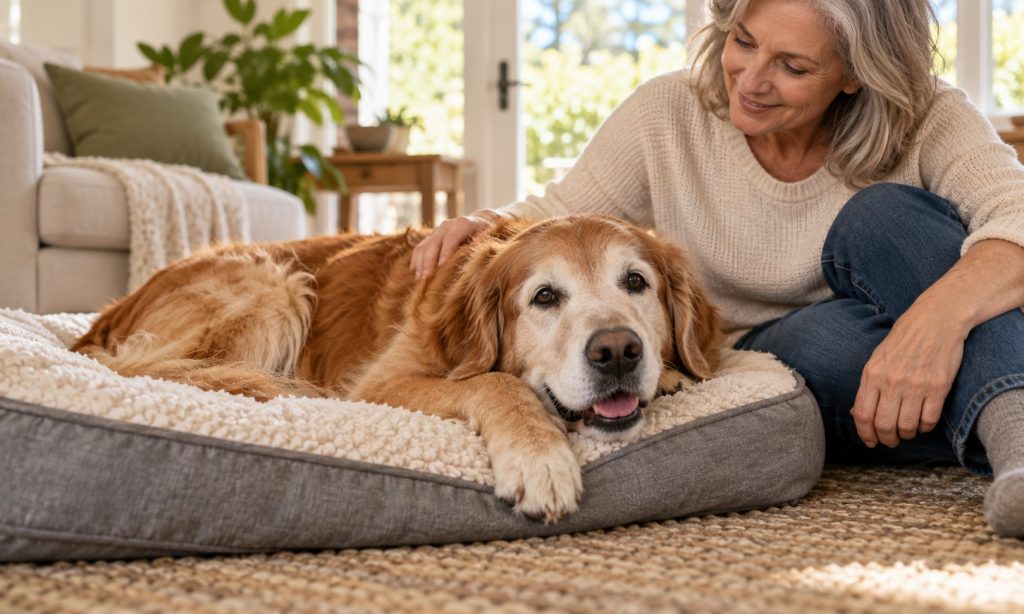
Dogs do not all reach “senior” age at the same time, and growing older does not automatically mean giving up favorite routines. Senior dog care is about noticing changes early and adjusting the home, activity, and veterinary plan to match the individual dog. If you are learning how to take care of a dog, this guide covers wellness visits, mobility, food and water, grooming, sleep, and mental engagement for older dogs. The aim is comfort and continued participation, not treating every slower day as a disease. A veterinarian can help distinguish normal aging from pain or illness and create a plan that suits your dog’s history and quality of life. Comfortable routines and early attention can support healthy aging. Keep familiar routines predictable.
When is a dog considered senior?
There is no single age that applies to every dog. Size, breed, genetics, and health history influence how quickly a dog ages. Large dogs may enter later life earlier than some small dogs, but age alone is not enough to decide what care is needed. Senior dog care should be based on observed changes and veterinary assessment, not a birthday threshold alone.
Watch for shifts in energy, sleep, appetite, thirst, weight, hearing, vision, mobility, grooming habits, and interaction. Small changes can be meaningful when they persist or appear together. Note what you observe so you can give your veterinarian a clear timeline.
Schedule more intentional veterinary check-ins
Older dogs may benefit from more frequent wellness visits, often every six months depending on the dog’s condition and veterinarian’s advice. Visits can review mobility, dental health, body condition, medications, behavior, and preventive care. AAHA senior-care guidance describes a tailored approach to screening and monitoring; tests and frequency depend on the dog’s health and risk factors.
Tell the clinic about changes in drinking, urination, appetite, movement, sleep, vocalizing, house training, or grooming. Bring a medication and supplement list. Ask which changes need urgent attention and how to monitor known conditions. Senior dog care is easier when small trends are recorded instead of relying on memory at the appointment.
Support mobility and comfortable exercise
Regular, appropriately paced movement can help an older dog stay engaged and maintain function, but the activity should match comfort. Try shorter walks, more frequent breaks, gentle play, or indoor movement on slick or hot days. Avoid suddenly increasing duration or asking a dog to jump into a car or onto furniture if that has become difficult.
Use nonslip rugs, ramps, low-entry beds, and clear pathways to reduce slips and awkward steps. Keep food, water, and resting areas easy to reach. If your dog limps, hesitates on stairs, struggles to rise, or stops enjoying familiar walks, schedule a veterinary exam. Pain can be mistaken for “just getting old.”
For a related activity topic, see our published guide on introducing a dog to a treadmill safely. Do not begin a new exercise program without asking the veterinarian if your dog has joint, heart, breathing, or neurologic concerns.
Review food, water, and body condition
Senior dogs do not all need the same food. A dog’s calorie needs, muscle condition, dental comfort, and medical diagnoses can change over time. Ask your veterinarian to assess body condition and muscle mass, and discuss whether a diet change is useful. Avoid switching foods or adding supplements based only on age or marketing claims.
Make fresh water easy to access. If your dog drinks or urinates more than usual, eats less, loses weight, or has trouble chewing, mention it promptly. Those changes can reflect a health issue and deserve assessment. A food that worked for years may need to be adjusted if a veterinarian identifies a new need.
Keep grooming and home care gentle
Older dogs may be less flexible or have sensitive joints, so brushing, nail care, bathing, and handling may need shorter sessions. Use a nonslip surface and support the dog’s body without forcing a position. Check skin, coat, nails, ears, and paws while grooming. Stop if your dog shows pain or distress, and ask a veterinary professional about any lump, sore, odor, or persistent skin change.
Our existing dog grooming basics guide covers a simple routine. For senior dog care, adjust the steps to your dog’s comfort rather than trying to finish every task at once. Dental checks remain important; changes in breath, chewing, or food acceptance should be discussed with a veterinarian.
Protect sleep, confidence, and mental engagement
Keep a predictable daily rhythm with meals, walks, rest, and quiet interaction. Older dogs may need more uninterrupted sleep and more time to respond to cues. If hearing or vision changes, approach where the dog can see or smell you and avoid startling them awake. Keep furniture arrangements consistent and add night lighting if navigation becomes difficult.
Offer low-impact enrichment such as scent games, gentle training, food puzzles suited to the dog’s ability, or calm social time. If your dog becomes confused, restless at night, has new house-soiling, or seems less engaged, share the changes with your veterinarian. These signs may be related to health, sensory changes, or cognitive decline, and support options may be available.
Quality-of-life check-ins
Track good days and hard days, appetite, comfort, mobility, sleep, and interest in familiar activities. Ask your veterinarian to help you define signs that indicate pain or declining quality of life. A written plan can guide decisions and prevent you from overlooking gradual changes. Senior dog care is an ongoing partnership between the household and veterinary team.
Adjust the home for easier movement
Look at your home from the dog’s perspective. Slick floors, steep stairs, and high jumps can become more difficult with age. Add nonslip runners on common paths, keep nails trimmed as advised, and place a bed in a quiet area near family activity. A ramp may help with a vehicle or favorite resting spot if the dog can use it safely.
Senior dog care should preserve independence where possible without making the dog navigate obstacles alone. Keep water bowls easy to reach and avoid moving furniture frequently if vision or hearing has changed. Use a night light to make routes clearer. Watch how your dog rises, turns, and lies down, and report worsening stiffness or reluctance to move.
Watch for changes in routine behavior
Changes in sleep, house training, social interest, vocalizing, or awareness can have medical or sensory causes. Record when they began and how often they happen. Senior dog care includes discussing behavior changes with a veterinarian instead of assuming they are inevitable with age.
If your dog seems confused at night, gets stuck in familiar spaces, or no longer responds to a familiar cue, keep the environment predictable and seek veterinary advice. A professional can assess vision, hearing, pain, medications, and other health factors. Do not scold a dog for accidents or confusion.
Support eating, drinking, and grooming
Make food and water accessible without requiring a jump or long walk. If bending to a bowl seems difficult, ask your veterinarian whether a different setup is appropriate. Monitor how much your dog eats and drinks. Changes may be early signs of illness, dental discomfort, or medication effects.
Break grooming into brief sessions and use soft brushes. Check for mats, skin irritation, nail overgrowth, and sensitive areas, but stop if handling causes pain. Senior dog care can include professional grooming or veterinary nail care if home handling is difficult. A calm, supportive approach is more important than completing every grooming task at once.
Include the dog in family life
Older dogs may still enjoy training, sniff walks, gentle play, and quiet companionship. Choose activities that fit comfort and energy. Give the dog a choice to rest, and avoid overwhelming them with noisy gatherings or rough play. Short, frequent interaction may be more enjoyable than a long outing.
Senior dog care also means planning ahead. Keep an updated medication list, know the clinic’s after-hours process, and discuss what signs should trigger a call. A written routine can help everyone in the household provide consistent care.
Adjust the home for comfort and safety
Small changes can make daily movement easier for an older dog. Keep walking routes clear, add traction to slippery floors, and place beds where the dog can rest without climbing stairs. Use a ramp only if the dog is comfortable and can use it safely. Keep food and water easy to reach, but do not restrict movement without veterinary advice.
Watch how your dog rises, turns, climbs, and settles. New hesitation, slipping, stiffness, or avoiding a favorite activity may point to pain or a mobility problem. Senior Dog Care works best when changes are discussed early, because an exam can identify treatable causes and suggest a safe activity plan. Do not start human pain medicine; some common drugs are dangerous for dogs.
Preserve familiar routines
Older dogs may benefit from predictable meal, walk, rest, and bathroom schedules. Continue gentle social time and sniffing opportunities while adapting duration to stamina. If hearing or vision changes, approach calmly and avoid startling the dog. Keep identification current and use a leash in unfamiliar areas.
Senior Dog Care also includes noticing changes in sleep, appetite, thirst, weight, elimination, and interaction. Write down when a change began and how often it happens. A simple record can help your veterinarian see patterns that are hard to recall during an appointment. Sudden changes, pain, breathing problems, collapse, or inability to urinate need prompt medical advice.
Frequently Asked Questions
These answers address comfort, mobility, routines, and veterinary follow-up.
How often should a senior dog see a veterinarian?
Ask your veterinarian to set a schedule based on health and risk. Many older pets benefit from more frequent check-ins than annual visits.
Should an older dog stop exercising?
Not automatically. Adjust the activity to comfort and health, and ask your veterinarian before increasing intensity or starting strenuous exercise.
Does every senior dog need senior food?
No single diet fits all older dogs. Choose food based on body condition, health needs, and veterinary guidance.
What changes should I report?
Report persistent changes in appetite, thirst, weight, mobility, sleep, behavior, grooming, vision, hearing, or house training.
How can I make home safer for an older dog?
Use nonslip paths, clear routes, easy-to-reach water, and ramps or steps where appropriate. Keep the layout predictable and observe for discomfort.
Final Words
Senior dog care means adapting routines while staying alert to new signs of discomfort or illness. Keep veterinary visits regular, offer comfortable movement, make grooming gentle, and support sleep and engagement. These are practical parts of how to care for a dog through later life. Ask your veterinarian to help tailor each change to your dog.
Reference
These selected sources support the health and safety information in this article.









