
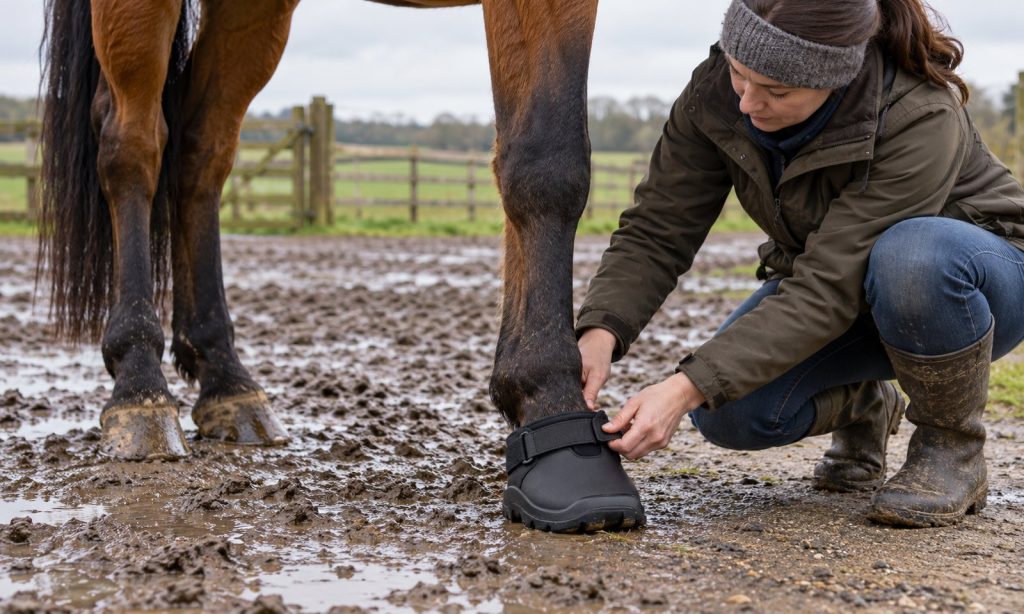
Muddy ground can challenge a horse’s footing and make hoof care harder, but hoof boots are not a one-size solution. The right choice depends on the reason for using boots, the horse’s hoof shape, the length of wear, and the ground conditions. Fit matters because a loose boot can shift, while a tight or poorly positioned boot can rub. This guide explains how to compare sizing, closures, sole coverage, materials, cleaning, and daily checks. It also covers when to remove a boot and when a farrier or veterinarian should assess the hoof. How to choose the right hoof boots for muddy ground begins with a clear use case and a careful fit check. For product comparisons, our hoof boots for muddy ground roundup is a separate guide. Follow the boot maker’s instructions and your farrier’s advice.
Decide Why the Horse Needs a Boot
Start by identifying the situation. A horse may wear a boot for temporary hoof protection, comfort during a transition, or a specific veterinary or farrier plan. Boots designed for riding may differ from those intended for turnout or recovery. Do not assume that a boot suitable for a short ride is also appropriate for all-day paddock wear. How to choose the right hoof boots for muddy ground starts with that distinction.
Ask your farrier what problem the boot should address and how long the horse should wear it. If the horse is lame, has a puncture, or has a diagnosed hoof condition, consult a veterinarian before selecting a boot. A boot can cover a hoof and make it harder to notice a developing issue. It does not treat an abscess or replace examination.
Muddy ground varies. Shallow soft soil is different from deep sticky mud, standing water, or rocky footing under a wet surface. Consider where the horse will stand and move, how long the boot will be on, and whether the ground has debris that could enter the boot. Those details help clarify what to look for in hoof boots for muddy ground.
Choose the Right Size and Shape
Use the manufacturer’s measuring instructions for each hoof. Many boot systems require measurements taken after a fresh trim, but sizing methods vary. Follow the exact chart for the model you are considering. Measure each hoof rather than assuming the front and hind feet match. Keep the measurements and trim date for reference.
A boot should sit securely without pinching the heel bulbs, restricting movement, or leaving excessive gaps. Check whether the hoof shape is round, oval, broad, or narrow and compare that shape with the boot’s design. A size based only on length may not suit a hoof with a different width or flare. Ask your farrier to help evaluate fit if you are unsure. How to choose the right hoof boots for muddy ground includes measuring each hoof.
How to choose the right hoof boots for muddy ground includes trying them on clean, dry hooves before turnout. Watch the horse walk on a safe, level surface. Look for twisting, slipping, rubbing, or a change in stride. A boot that seems secure while standing may move once the horse turns or steps through mud. Do not rely on tight straps to compensate for the wrong shell size.
Compare Closures and Retention
Boots may use straps, gaiters, cables, buckles, or other closures. Check whether the system is easy to fasten with cold or muddy hands. The closure should lie flat and stay secured during the intended activity. Avoid loose straps that can catch on fencing or vegetation. Follow the maker’s method for fastening rather than improvising with additional wraps.
Look for construction that limits mud and grit from entering around the opening, while still allowing water to drain or the boot to dry as designed. No boot can guarantee that mud will stay out in every paddock. After use, check beneath the shell for packed dirt, stones, hair, and moisture. Debris trapped inside can rub or press against the hoof.
A boot that repeatedly comes off is not a cue to over-tighten the closure. How to choose the right hoof boots for muddy ground includes secure retention without excess tension. Recheck the size, shape, trim timing, and application steps. Ask the manufacturer or farrier about fit before making changes. What to look for in hoof boots for muddy ground includes a secure but comfortable closure that does not depend on excessive tension.
Review Sole Coverage and Traction
Examine the sole shape and tread. A deeper tread may help the boot move through some soft surfaces, but mud can still reduce traction. Consider whether the boot is meant for turnout, riding, or temporary protection, and match the design to that purpose. Follow the label about surfaces and activity; avoid assuming a rugged-looking sole works on every terrain.
Mud may hide rocks, holes, branches, and other hazards. A boot can protect some parts of the hoof, but it cannot eliminate the risk of slips, twists, or impacts. Check the route and paddock for sharp debris and deep holes. If the area is unsafe, improve footing or limit access where practical rather than relying on footwear alone.
How to choose the right hoof boots for muddy ground also means checking whether the boot changes the horse’s natural stride. Watch the horse walk in both directions on a level surface. If there is a shortened step, reluctance, uneven movement, or visible discomfort, remove the boot in a safe place and consult your farrier or veterinarian.
Think About Wear Time and Fit Checks
The safe wear period depends on the boot design, the horse, and the activity. Follow the product directions and the professional’s plan. A boot made for riding may not be intended for overnight turnout. If the horse will wear a boot for an extended period, ask how often it should be removed for hoof and skin checks.
Inspect the hoof and lower leg before and after use. Look for heat, swelling, hair loss, redness, moisture, odor, debris, or a new rub mark. Check the boot’s seams, straps, and sole for damage. Stop using a boot that is cracked, deformed, or no longer closes properly.
How to choose the right hoof boots for muddy ground includes planning how to remove, dry, and refit them. If the horse is calm and safe to handle, clean the hoof and boot after muddy turnout. Let the boot dry fully according to its instructions. Do not put a damp, grit-filled boot back on without inspecting the hoof and liner.
Choose Materials and Cleaning Method
Materials vary in flexibility, stiffness, weight, and drying time. A flexible shell may be easier to put on but can deform with wear. A stiffer boot may hold its shape but feel different on the horse. Compare the material and construction to the intended use and the manufacturer’s care instructions.
A boot should be straightforward to rinse and inspect. Mud and manure left in seams or closures can make the next fit less reliable. Use only cleaning methods allowed by the maker. Harsh chemicals, heat, or aggressive scraping may damage materials. Keep the boot away from direct heat while drying unless instructions say otherwise.
What to look for in hoof boots for muddy ground includes surfaces that are easy to check for cracks, trapped grit, and wear. Keep a brush and clean towel near the wash area. Label boots by hoof if sizes differ. Store them dry and away from sharp tools that could cut the shell or straps.
Check the Paddock and Turnout Plan
Boots are only one part of mud management. Pennsylvania State University Extension describes mud-free turnout surfaces as a way to manage wet areas and heavy horse traffic. Improve drainage, rotate turnout when possible, and maintain high-traffic areas around gates and water sources. Good footing can reduce the need to rely on a boot for every movement.
Consider where water pools and whether the horse must cross a muddy lane. A firm path or dry standing area can provide a break from deep mud. Check for sharp stones, broken fence material, and objects that can become covered by soil. If mud is deep enough to restrict movement or create a fall hazard, change access rather than expecting a hoof boot to solve it.
How to choose the right hoof boots for muddy ground depends on turnout duration and terrain. The best boot for a short, supervised trip may not suit a whole day in a wet paddock. If conditions change, recheck fit and inspect the hoof more often. Ask your farrier whether the horse needs a different management plan during prolonged wet weather.
Consider the Horse’s Hoof and Existing Care
A boot should fit the hoof as it is currently trimmed. If the hoof is long, flared, recently injured, or changing shape, a boot may not sit correctly. Check with the farrier before buying if the horse has a history of hoof cracks, abscesses, white line problems, or an unusual gait. A professional can tell you whether a boot is suitable and when to reassess.
Do not use a boot to hide discharge, a puncture, or a painful area. University of Minnesota Extension notes that a hoof abscess can cause sudden severe lameness and should be assessed. If you see an object lodged in the hoof, do not remove it. Call a veterinarian and keep the horse calm while following their instructions.
Our guide to choosing a hoof pick for horses covers routine cleaning before you fit a boot. For additional wet-weather product information, see our guide to hoof sealants for wet conditions. Neither type of product replaces a fit assessment or veterinary care when the horse is sore.
Fit-Test Before Relying on a Boot
Before using a new boot in deep mud, test it in a clean, controlled area. Put it on exactly as directed and walk the horse on level ground. Check that the shell stays centered and closures remain secure. Then try a brief supervised walk on the kind of footing the horse will encounter, if the maker allows this use.
After the test, remove the boot and inspect the hoof and skin. Look for pressure marks, dampness, loose hair, grit, or unusual warmth. Check for mud inside the shell. If the hoof seems irritated or the horse moves differently, stop the trial and ask your farrier or veterinarian what to do.
Keep a simple note with the model, size, hoof measurements, trim date, activity, and any fit changes. Recheck the size after trims and as the hoof grows. A boot that fit at the start of a cycle may fit differently later. How to choose the right hoof boots for muddy ground includes checking fit after trims. Replace worn parts before they fail during turnout or riding.
Questions to Ask Before Buying
- Is this boot designed for the planned activity and wear time?
- How should I measure each hoof, and when should I repeat the measurements?
- What signs indicate rubbing, pressure, or an incorrect fit?
- How often should the boot be removed for cleaning and hoof checks?
- Which surfaces and cleaning methods are approved by the manufacturer?
- Does my horse’s hoof condition or farrier plan affect boot use?
Bring the boot or size chart to a farrier appointment if you are uncertain. A fitting review can prevent guesswork. Ask what signs should prompt you to stop using the boot and call for advice.
Frequently Asked Questions
Can a horse wear hoof boots all day in mud?
Only if the specific boot is designed for that use and the horse’s professional care plan allows it. Follow the manufacturer’s wear instructions and inspect the hoof and skin at the recommended intervals.
How tight should a hoof boot fit?
It should stay in place without pinching or rubbing. Use the size chart and fit instructions for the exact model. Ask a farrier to assess fit if it twists, slips, or leaves marks.
Do hoof boots prevent slipping in mud?
No boot guarantees traction on every surface. Mud depth, hidden debris, slope, and the boot tread all affect footing. Avoid unsafe ground and supervise the horse when conditions are poor.
Should I remove the boot after turnout?
Follow the boot’s directions. Remove it as directed, then check the hoof, skin, closures, and inside of the shell for moisture or trapped debris before putting it away.
When should I call a veterinarian?
Contact a veterinarian for sudden lameness, a puncture, an object in the hoof, swelling, discharge, or persistent discomfort. Do not use a boot to cover a suspected injury and wait.
Final Words
How to choose the right hoof boots for muddy ground starts with the horse’s purpose, fit, and the length of wear. Measure each hoof, follow the maker’s instructions, and check closures, traction, cleaning, and drying. Inspect the horse after use and change the turnout plan if footing becomes unsafe. For product comparisons, see our hoof boots for muddy ground guide, then confirm fit and use with your farrier. Remove a boot and seek professional help if the horse becomes sore or the hoof shows an injury.









