
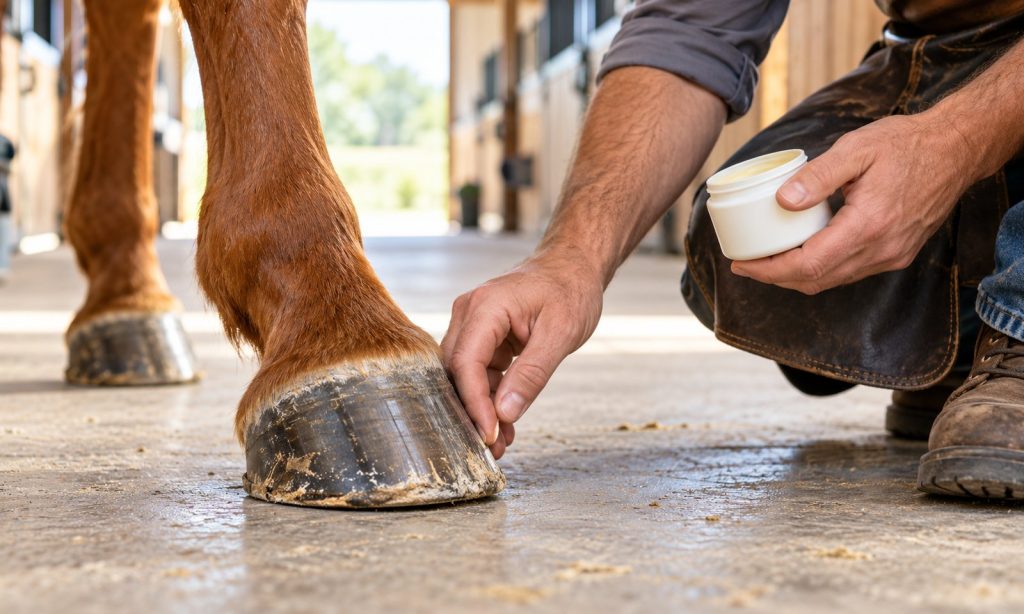
Brittle or chipping hoof walls can make horse owners wonder whether a conditioner will help. Products vary in their ingredients, consistency, application directions, and intended use. A topical dressing cannot correct a trim problem, treat infection, or replace a farrier’s assessment. Start by noting where the hoof is breaking and whether the change followed different weather, footing, or care. This guide explains how to compare conditioners, read labels, and decide when professional advice is needed. What to look for in hoof conditioner for brittle hooves begins with the condition of the hoof and the goal for the product. For a product comparison, see our guide to the best hoof conditioner for brittle hooves. Use that roundup alongside advice from your farrier or veterinarian.
Look Closely at the Hoof First
Pick out the hoof and inspect it in good light. Note whether the wall is chipping, flaking, or splitting, and whether the problem is at the toe, quarters, or heel. Check whether the horse is comfortable walking and whether the change is recent. Take a photo from the same angle every few days if you want to track a change for your farrier. What to look for in hoof conditioner for brittle hooves starts with the surface and pattern.
A dry-looking surface alone does not establish why a hoof is brittle. Changes from wet to dry conditions, long trimming intervals, conformation, shoeing, nutrition, and workload may all matter. The University of Minnesota Extension describes dry weather and frequent wet-to-dry changes among possible contributors to hoof cracks. Consider the full routine instead of assuming a conditioner is the only answer.
Call your farrier if the wall repeatedly chips or cracks. Contact a veterinarian promptly for sudden lameness, heat, swelling, discharge, an embedded object, or a deep crack. Do not cover a suspected infection or wound with a dressing and wait. A conditioner is not a treatment for pain, abscess, or injury.
Set a Realistic Goal
Hoof conditioners and dressings are topical products used in routine care. Depending on the formula, they may add temporary sheen, form a surface layer, or support a care routine recommended by a professional. They do not rebuild existing damage. A hoof wall grows gradually, and cracks generally need time and appropriate management to grow out.
Ask what you want the product to do. Is it for a dry-looking wall, a routine approved by the farrier, or an appearance before a show? A cosmetic finish and a hoof-care plan are different goals. Avoid using a product to mask a crack that has not been evaluated. What to look for in hoof conditioner for brittle hooves includes a clear purpose and expectations that match the label.
A farrier may advise a conditioner, moisturizer, hardener, or no topical product, depending on the hoof and environment. These categories are not interchangeable. A product that creates a barrier may be a poor match for another use. Ask which hoof surface should be treated, how often, and when to stop.
Read Ingredients and Intended Use
Check the ingredient list and the directions. Labels may include oils, waxes, resins, or other coating ingredients. Product names do not tell you how a formula behaves. Look for the intended species and hoof surfaces, plus handling and storage instructions. If the ingredients are not listed clearly, contact the company before use.
Some formulas include fragrances or botanical ingredients. If your horse has sensitive skin or a history of reactions, ask your veterinarian or farrier to review the label. Do not apply a conditioner to the coronary band, skin, wounds, or irritated areas unless the label specifically allows it or a veterinarian directs you. Avoid combining products without professional advice.
What to look for in hoof conditioner for brittle hooves also includes clear cautions. The package should identify a manufacturer, lot number, expiration date, and contact method. The directions should state whether to apply to a clean, dry hoof and whether the product belongs on the wall, sole, or another area. Vague instructions make consistent use harder.
Compare Consistency and Application
Conditioners may be thin liquids, creams, or wax-like pastes. A liquid can spread quickly but may drip onto the floor. A cream or paste may stay in place but collect dust if applied heavily. Choose a consistency you can handle neatly and in a measured amount. There is no single texture that suits every horse and routine.
Check the applicator. A built-in brush can be convenient, while a separate brush may give you more control. Keep the tool clean and do not share it between horses if it could transfer debris. Store the brush as directed and keep it separate from wound-care supplies.
Apply products in a ventilated area and protect feed, water, and eyes from splashes. Use gloves if the label recommends them. Keep the horse on safe footing while the product settles. Wipe any spills because a slick floor can cause a fall. Apply only the amount on the label or recommended by your farrier.
Match the Product to the Environment
Think about where the horse spends time. Dry paddocks, wet stalls, muddy turnout, arena footing, and repeated washing can affect what the hoof encounters. A topical product cannot fix drainage, bedding, or trimming issues. Clean, well-managed footing and regular farrier visits remain the base of hoof care.
For a horse exposed to frequent wet conditions, ask a professional whether a barrier product is appropriate. A conditioner intended to soften or dress the hoof may not be the same as a sealant designed for wet exposure. Our separate guide to hoof sealants for wet conditions explains that product category. Use the specific label and your farrier’s advice to decide what fits.
What to look for in hoof conditioner for brittle hooves can change with season and footing. Note whether the hoof changes after rain, drought, a new stall surface, or a change in turnout. Share that history with the farrier. If a product is recommended, record the conditions and application date so you can evaluate whether it fits the routine. Season and footing can change which details matter.
Check Packaging, Storage, and Practical Fit
Select a container that is easy to close and store. Wide tubs may be simple to use but can collect dust if left open. Brush-top bottles can reduce mess but need a clean applicator. A smaller size may be easier to finish before its expiration date. Compare label directions and storage needs, not just the amount in the container. What to look for in hoof conditioner for brittle hooves includes a container that is easy to close and store.
Keep the lid sealed and follow temperature directions. Do not leave a container in direct sun, near heaters, or where a horse can chew it. If the color, odor, or consistency changes, ask the manufacturer before applying it. Discard expired or contaminated product as directed.
A conditioner should fit your stable routine. If it is hard to apply without making a mess, you may be tempted to skip steps or use too much. Ask whether the schedule can be simpler. If a professional recommends no topical product, focus on the underlying care recommendation instead.
Compare Product Types Carefully
A conditioner, moisturizer, hardener, and sealant may be described with similar words on store pages. Read the full label to see whether a product is meant to soften, coat, or protect a specific hoof surface. Ask a farrier to explain whether that purpose matches the horse’s current condition. What to look for in hoof conditioner for brittle hooves includes the intended effect rather than a general promise.
If a product claims it will repair cracks quickly or fix hoof quality by itself, treat that as a reason to ask more questions. Hoof wall grows over time, and structural concerns may need farrier or veterinary care. Compare whether the dressing fits the daily routine, can be stored properly, and has clear directions. What to look for in hoof conditioner for brittle hooves also includes realistic limits and consistent use.
Keep Regular Farrier Care Central
A topical dressing does not replace a consistent trim or shoeing schedule. A long interval can allow imbalance or flare to develop, which may contribute to hoof wall stress. Work with a qualified farrier who knows the horse’s work, footing, and conformation. Ask how often the feet should be checked and whether the current schedule still fits.
If the hoof wall is repeatedly brittle, review the full picture. Nutrition, workload, shoe fit, conformation, trimming, and stable conditions may be relevant. Do not add supplements or change feed based only on a marketing claim. Ask the veterinarian or an equine nutrition professional whether a diet review is appropriate.
How to choose the right hoof conditioner for brittle hooves is therefore a practical question, but it starts with assessment. A conditioner may be one small part of care. It cannot replace diagnosis of a persistent problem. Our general guide to hoof care products for horses describes other categories to discuss with your farrier.
Monitor the Hoof and Know When to Stop
Before starting, note the hoof’s appearance and take a clear photo. Follow the product directions and the professional’s guidance. Check the hoof regularly for increased chipping, an unusual reaction, or a change in comfort. Stop using the product and ask for advice if the horse’s skin becomes irritated or the hoof appears worse. What to look for in hoof conditioner for brittle hooves includes a plan for checking changes.
A crack that grows, reaches sensitive structures, or comes with pain needs professional evaluation. Sudden lameness, heat, a strong digital pulse, swelling, or discharge can indicate a more serious issue. Do not apply several products to see what works. Contact the veterinarian or farrier and explain what you have already used.
If the horse is sound and the change is mild, a farrier can help set a routine and a realistic time to reassess. Keep a record of the trim date, product, application schedule, and environment. That creates a useful history instead of relying on memory. If the hoof does not improve as expected, revisit the plan rather than increasing the application.
Questions to Ask Before You Buy
- What is causing the brittleness, and does the hoof need professional evaluation?
- Is this product a conditioner, moisturizer, hardener, or sealant?
- Which parts of the hoof should receive it, and how often?
- Can I use it with any current medication or topical treatment?
- What changes or signs mean I should stop and call the farrier or veterinarian?
Bring the container or a photo of the full label to your farrier. Ask for a routine that fits your horse’s environment and schedule. Clear instructions reduce the chance of overuse or mixing products that should not be combined.
Frequently Asked Questions
Can a conditioner repair a cracked hoof?
A topical conditioner cannot repair a structural crack. A farrier should assess the crack, and a veterinarian should evaluate pain, infection, or a sudden change in soundness.
Is hoof conditioner the same as hoof oil?
The terms can vary by manufacturer, and formulas differ. Read the ingredients and intended use instead of assuming products with different names work the same way.
Should I use conditioner every day?
Follow the product label and your farrier’s recommendation. Frequency depends on the formula, hoof condition, and environment. More frequent application is not automatically better.
Can I apply conditioner to a wet hoof?
Check the label and ask your farrier. Some products may call for a clean, dry surface. Avoid guessing when the directions are unclear.
When should I call a veterinarian?
Contact a veterinarian for sudden lameness, heat, swelling, discharge, a puncture, or a painful or deep crack. Do not cover a suspected injury with conditioner and wait.
Final Words
What to look for in hoof conditioner for brittle hooves includes clear ingredients, a defined intended use, manageable application, safe storage, and fit with the horse’s environment. A conditioner cannot fix a crack or replace regular farrier care. Note changes, follow professional instructions, and seek help for pain or sudden hoof problems. If you are comparing products, see the published roundup of the best hoof conditioner for brittle hooves. Then ask your farrier whether a topical product is appropriate for this horse.









