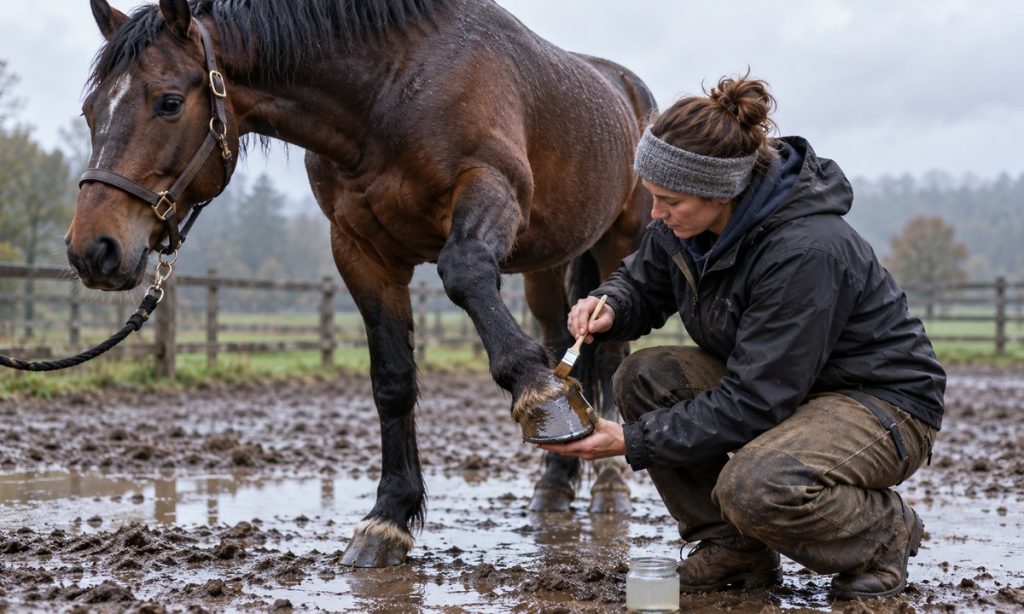
Persistent rain, muddy turnout, and wet bedding can leave you wondering whether a hoof coating will help—or whether your horse needs a different kind of product. The best hoof sealant for wet conditions depends on the part of the hoof you want to protect and the product’s actual format. A brush-on coating for the hoof wall is not interchangeable with putty for a small cavity, clay for targeted frog or sole coverage, wax for localized gaps, or clay for targeted coverage in damp footing. This guide compares seven verified Amazon listings by their stated uses and application styles, while separating dedicated barriers from adjacent hoof-care products. You’ll also find a practical selection guide, sensible limits for topical products, and signs that call for a farrier or veterinarian.
Published on: October 17, 2026
Quick Picks
These products use different materials and target different hoof areas. Check the current label before choosing a coating, putty, clay, or wax for your horse’s routine. For a wider product overview, see our horse hoof care products guide.
| Product | Best For | Key Advantage | Buy | |
|---|---|---|---|---|
| Hoof Guard Sealant for Horses, 16 oz | Brush-on hoof-wall barrier | Dedicated sealant format with aramid fiber | View on Amazon | Jump to Review |
| Equine One Hoof Mender Putty – White Line, 18 oz | Localized wall separations and nail holes | Putty designed to stay in place | View on Amazon | Jump to Review |
| Artimud Horse Hoof Putty, 10 oz | Targeted frog and sole coverage | Clay-like putty for cavities and grooves | View on Amazon | Jump to Review |
| Therazure Hoof Treatment Clay, 20 oz | Targeted application in wet footing | Clay consistency intended to hold its place | View on Amazon | Jump to Review |
| SBS Equine SAV-A-HOOF Protectant, 7.5 fl oz | Moisture-repelling hoof conditioner | Listed for wet and dry conditions | View on Amazon | Jump to Review |
| Pure Sole Hoof Clay / Hoof Mud, 8 oz | Targeted frog, sole, and groove coverage | Thick clay is listed for wet and dry conditions | View on Amazon | Jump to Review |
| Pure Sole Hoof Wax, 7 oz | Filling selected cavities and separations | Malleable beeswax-based putty | View on Amazon | Jump to Review |
Seven Hoof Sealant Options for Wet Conditions
The products below are not all whole-hoof sealants. Their verified listings include dedicated surface protection, targeted packing materials, a conditioner, and wet-weather hoof clay, so the review notes where each option fits and where its use differs.
Hoof Guard Sealant for Horses, Fiber-Fortified Aramid Hoof Protector, 16 oz

What We Like
- Dedicated brush-on sealant
- Aramid fiber is part of the listed formula
- Marketed to form a breathable moisture barrier
- 16-ounce bottle size
What We Don’t Like
- Does not replace farrier assessment of cracks
- Reapplication interval is not established for every footing
Hoof Guard is the most direct match here for an owner specifically looking for a brush-on hoof sealant. Its verified product listing describes an aramid-fiber-fortified formula intended to form a breathable barrier and shield the hoof wall from weather exposure. The listing also describes application with a brush after cleaning the hoof. These details make the format easier to compare with putties or clays that are pressed into selected areas. The 16-ounce size gives you a stated container amount, but it does not tell you how many applications you will get; coverage depends on how much hoof you coat and how often the label directs you to reapply.
For a horse exposed to rain or muddy turnout, the practical question is whether a labeled surface coating fits the hoof area and your farrier’s advice. A coating may help protect the surface where it is applied, but it cannot keep a horse’s feet dry in standing water, correct a structural defect, or guarantee protection from infection. Inspect and clean the hoof first, then follow the package directions for drying and placement. Do not use a topical to cover pain, heat, drainage, or a deep crack. Ask a farrier before applying it over damaged horn or around a loose shoe, and avoid layering it with other products unless the label or your farrier supports that routine. Confirm the label before applying it.
My Recommendation
Hoof Guard is the clearest choice in this group when you want a dedicated brush-on barrier for the hoof wall. Consider it only if the label matches the area you intend to coat and your farrier agrees that a surface protectant suits the hoof. It is not a substitute for treating a crack or managing muddy footing.
Equine One Hoof Mender Putty – White Line, 18 oz

What We Like
- Putty can be placed in selected spots
- Birch bark extract is identified in the listing
- Listing describes one-to-two-day adhesion
- 18-ounce container is specified
What We Don’t Like
- Localized putty is not a quick whole-wall coating
- Listing notes a smoky odor
Equine One Hoof Mender is a putty for targeted use, not a paint-on dressing for covering the full hoof wall. Its verified listing identifies birch bark extract and describes the material as staying in place for one to two days. It is presented for areas such as white-line separations and old nail holes, so the format may be more practical when you need to place material precisely instead of brushing a broad surface. The listed 18-ounce size is useful when comparing package quantities. Because an Amazon product listing is not a diagnosis or a treatment plan, ask your farrier whether the area you have in mind is appropriate for packing.
In wet turnout, a putty’s ability to remain in place can sound appealing, but actual wear will depend on preparation, hoof shape, footing, movement, and the product’s current directions. Do not assume the stated duration is a guarantee for every horse or weather pattern. The listing mentions a smoky smell, which some owners may find noticeable during application. Clean out loose debris and inspect the hoof before using any material. Avoid packing an unexplained crack, hole, or separation without guidance, since covering a problem can make it harder to monitor. If you see tenderness, discharge, heat, or a sudden change in soundness, contact your farrier or veterinarian instead of trying to seal the area yourself. Recheck directions before every use.
My Recommendation
Choose Equine One when a farrier has recommended a targeted putty for a specific hoof-wall area and the current label supports that use. Its localized application is the main reason to consider it over a brush-on coating. The smoky odor and placement step are worth weighing before you add it to routine care.
Artimud – Horse Hoof Putty Thrush Treatment, 10 oz (300 g)

What We Like
- Clay-like putty for selected hoof areas
- Listing names frog, sole, and collateral grooves
- Options for use under some pads and shoes are described
- 10-ounce size is listed
What We Don’t Like
- Targeted packing requires careful placement
- Not a broad hoof-wall sealant
Artimud is a clay-like hoof putty intended for specific parts of the foot rather than a brush-on barrier across the outside hoof wall. Its verified listing identifies use around the frog, sole, collateral grooves, and some hoof cavities; it also describes packing under certain pads, shoes, casts, or boots. That makes the product a specialized option for owners working with a farrier on a particular packing routine. The listing identifies the package as 10 ounces, or 300 grams. Its name references thrush, but that label should not be taken as proof that a horse has a condition or that a topical product alone is appropriate for a particular hoof concern.
For wet conditions, the appeal of a moldable clay is that it can be pressed into a selected space rather than applied as a thin surface coat. That does not make it a substitute for regular cleaning, dry and clean bedding, or professional assessment. Use only the current package instructions, and ask your farrier whether the hoof area should be packed or left open for observation. Do not apply it into a deep split, puncture, or painful area without veterinary or farrier direction. Keep the hoof pick and hands clean, and check the area as recommended so you do not miss a developing problem. Stop and seek professional guidance for increasing odor, drainage, heat, swelling, or lameness rather than relying on a product description.
My Recommendation
Artimud is a more logical comparison for targeted frog, sole, or groove coverage than for coating an entire hoof. It may suit a horse whose farrier has advised a clay-like packing product and specified where to use it. Read the full label carefully, especially if the hoof is painful or already damaged.
Therazure Horse Hoof Thrush Treatment Clay, 20 oz

What We Like
- Clay texture for precise placement
- Listing says it is intended to stay put in varied footing
- 20-ounce jar size is specified
- Described as noncaustic by the product listing
What We Don’t Like
- Product claims are not a diagnosis or outcome guarantee
- Jar format needs clean handling
Therazure is a clay-format hoof product, and its verified listing describes a consistency designed to stay where applied through mud, rain, puddles, sand, and snow. The page lists a 20-ounce jar and says the clay is formulated to be noncaustic. These details distinguish it from liquid sealants that are brushed over the wall. The listing also positions it for targeted hoof areas rather than describing a general coating for every surface. Since claims about treatment and performance are manufacturer statements, they should be read as intended use, not a promise that the product will resolve a hoof problem or remain in place for a fixed time on every horse.
A clay that is meant to hold its position may be convenient in a damp paddock, but the hoof still needs regular inspection and cleaning. Confirm that the current label identifies the area where you plan to use it. If you are responding to odor, discharge, tenderness, or a visible cavity, ask a veterinarian or farrier what the horse needs before you cover it. Use a clean hoof pick or applicator and avoid contaminating the jar with mud or manure. Follow instructions about removal or reapplication, and do not combine it with another topical unless a professional recommends that approach. A larger jar may offer more material, but it also needs a clean, dry storage spot and careful handling between uses.
My Recommendation
Therazure is worth comparing if your farrier has recommended a clay product for targeted application and your horse’s footing makes staying power a priority. Its 20-ounce jar and clay format are clear practical differentiators. Treat the listing’s performance and treatment language as claims, and follow professional guidance for any active hoof concern.
SBS Equine SAV-A-HOOF Protectant, 7.5 fl oz

What We Like
- Listed for use in wet or dry conditions
- Moisture-repelling protectant format
- 7.5-fluid-ounce size is stated
- Product listing describes a finished surface barrier
What We Don’t Like
- Conditioner and protectant positioning is broader than sealant
- Specific reapplication timing is not verified here
SAV-A-HOOF is described in the verified product listing as a dual-action hoof conditioner and protectant. The page says it is intended to moisturize, support flexibility, and leave a surface that repels moisture and contaminants in wet or dry conditions. The listed package is 7.5 fluid ounces. This makes it an adjacent option for someone comparing hoof barriers, but its conditioner positioning is different from a dedicated brush-on sealant or a clay packed into a selected area. Product descriptions also include claims about bacteria and fungi; those are not a reason to treat an infection without professional evaluation or to expect a guaranteed medical outcome.
If you want a topical that is presented for both conditioning and surface protection, check the current label for where it should be applied and how often. Prepare the hoof as directed and allow any stated drying time before turnout. The amount of moisture repellency or conditioning you notice will depend on the horse’s individual hoof, the environment, and use. A topical will not correct poor drainage or replace cleaning out mud and manure. Do not apply it to an irritated, open, or painful area unless your farrier or veterinarian advises you to do so. Keep the bottle closed and use the applicator in a way that does not transfer debris back into the product. When comparing it with waxes and clays, focus on its liquid conditioner format rather than treating all three as equivalent.
My Recommendation
SAV-A-HOOF may suit an owner looking for a liquid hoof conditioner that is also marketed as a moisture-repelling protectant. It is less directly targeted to the keyword than Hoof Guard, so compare its label and application area before choosing it as a barrier. Seek veterinary advice for suspected infection or pain.
Pure Sole Hoof Clay / Hoof Mud for Horses, 8 oz

What We Like
- Thick clay intended to stay in place in wet footing
- Spreadable coverage for sole, frog, and grooves
- Listing says it can be used without packing
- 8-ounce size is listed
What We Don’t Like
- Needs clean hoof preparation and periodic reapplication
- Not a brush-on hoof-wall sealant
Pure Sole Hoof Clay, also called Hoof Mud in its listing, is a thick, spreadable clay for selected parts of the foot. Its verified product information describes coverage for the sole, frog, grooves, central sulcus, and other targeted areas, with a consistency intended to remain in place in wet or dry conditions. The directions say to clean the hoof and spread a thin layer where needed; the listing says packing is not required. It identifies bentonite clay and several oils and plant ingredients in the formula, and lists an 8-ounce container. This is a targeted clay product, not a liquid coating for the whole hoof wall, so compare the format with the job you need done.
In a muddy turnout routine, a spreadable clay may be easier to place over a broader part of the sole or frog than a firm putty. The listing says to reapply as needed and describes routine use, but that is not a guarantee of a fixed wear time or a treatment outcome. Follow the package instructions and ask your farrier which areas are appropriate for coverage, particularly if you see a deep sulcus crack or white-line separation. Clean and inspect the hoof before application, and keep the jar free from manure and mud. Do not cover a painful, draining, or injured hoof without professional advice. If you need a barrier over the hoof wall, choose a product specifically labeled for that surface instead of assuming clay and sealant are interchangeable.
My Recommendation
Pure Sole Hoof Clay is a relevant option when you want a spreadable material for targeted frog, sole, or groove coverage in damp footing. Its wet-weather positioning and no-packing application distinguish it from putties. It is not a brush-on wall sealant, so match it to the area your farrier has recommended.
Pure Sole Hoof Wax, 7 oz

What We Like
- Beeswax-based, malleable hoof wax
- Listing identifies coconut oil and honey
- Designed for selected cavities and separations
- 7-ounce package size is listed
What We Don’t Like
- Hand placement is more involved than a liquid coat
- Not intended to replace professional hoof repair
Pure Sole Hoof Wax is a malleable wax putty rather than a brush-on product. Its verified listing describes a beeswax base with coconut oil and honey and says the material is intended to seal selected cavities, cracks, crevices, wall separations, and white-line areas after debridement. The page gives the package size as 7 ounces and describes warming or working the wax by hand before pressing it into the chosen area. Those details make it a more localized option than a coating meant to cover a broad section of the wall. The listing also mentions avoiding several ingredients, but review the current label if ingredient exclusions matter to your horse.
Wax can provide a physical fill in a specific spot, but do not use it to hide a crack or separation that has not been assessed. A farrier should decide whether an area needs debridement, packing, or another form of care. In wet conditions, a wax intended to keep mud or debris out may seem useful, but the product’s actual hold will depend on the hoof surface, preparation, location, movement, and footing. Apply only as the label directs, and keep the container and your hands clean. Do not pack it over heat, drainage, tenderness, or an open injury without veterinary or farrier advice. For a whole-hoof barrier, compare a liquid sealant; for a cavity, compare this wax only when the site and plan are appropriate.
My Recommendation
Pure Sole is a targeted wax option for a specific cavity or separation when a farrier says packing is appropriate. Its beeswax-based, malleable format separates it from the brush-on picks. It is not a whole-hoof coating, and I would not use it to conceal an unassessed crack or painful area.
How to choose Best Hoof Sealant for Wet Conditions
Start with the hoof area and the job you need the product to do. A label’s format and directions matter more than a broad promise of “waterproof” protection, especially when mud, turnout, and routine cleaning are part of your horse’s environment.
Match the format to the hoof area
A brush-on sealant is meant to coat a surface, while a putty or wax is placed into selected grooves, cavities, or separations. Clay products are also targeted materials and may be used on the frog or sole when their instructions allow. A hardener changes how a topical is positioned in the routine; it should not be treated as a sealant by default. Before buying, identify whether you are protecting the outside wall, filling a small area, or following a farrier’s plan for packing. When the hoof is already painful, cracked, or draining, get professional advice before covering it.
Read the label for preparation and application
Look for clear directions about cleaning, drying, application location, and reapplication. Those details help you understand whether the product fits a horse that spends time in wet turnout or whether it is intended for a different routine. Check the package size and applicator style, too: a liquid may cover an area quickly, while a putty or wax calls for more precise placement. Do not assume one application lasts a certain number of days unless the current label says so, and do not layer products without guidance. Follow any warnings about contact with skin, eyes, open areas, or other hoof products.
Consider management as well as products
Topicals cannot correct pooled water, contaminated bedding, or a paddock that stays muddy. Routine picking and inspection help you notice changes and remove packed debris. University of Minnesota Extension recommends planning dry lots or sacrifice paddocks for wet conditions and avoiding low gates where water may pool; that kind of management can be more useful than relying on a coating alone. Wet ground by itself does not prove that a horse has thrush, and a product marketed for thrush should not replace diagnosis or veterinary care. Ask a farrier to recommend a trimming or shoeing schedule for your horse rather than assuming one interval fits every animal. If you are comparing care for different needs, see our guides to hoof conditioners for brittle hooves and hoof oils for dry hooves.
Frequently Asked Questions
These answers focus on safe selection and realistic expectations for hoof products used around wet turnout.
Does a hoof sealant keep a horse’s feet dry in mud?
No topical should be assumed to keep the entire hoof dry in persistent mud or standing water. A product may provide a surface barrier where applied, but cleaning, inspection, turnout conditions, and professional hoof care still matter.
Should I use putty or a coating on a crack?
Ask a farrier or veterinarian before covering a crack, separation, or cavity. The right response depends on its depth, cause, and condition. Do not use a topical to conceal pain, heat, drainage, or a loose shoe.
Is a hoof hardener the same as a sealant?
No. A hardener, conditioner, wax, clay, putty, and brush-on sealant are different product types. Choose by the labeled purpose and application area, and follow your farrier’s advice when the hoof has a specific problem.
Can wet footing alone cause thrush?
Wet footing alone does not establish that a horse has thrush. Keep hooves clean, inspect them regularly, and contact a veterinarian or farrier if you notice persistent odor, discharge, sensitivity, or lameness.
When should I call a farrier or veterinarian?
Contact a professional for lameness, heat, swelling, discharge, a deep crack, a loose shoe, or a sudden change in the hoof. Do not cover a painful or draining area with a topical before it is assessed.
Final Verdict
For a dedicated brush-on barrier, Hoof Guard is the most direct match among these seven verified listings. Equine One, Artimud, Therazure, and Pure Sole are more targeted putty, clay, or wax options; SAV-A-HOOF is a conditioner/protectant; Pure Sole Hoof Clay is a spreadable product for selected frog, sole, and groove areas. That distinction is central to choosing well. Match the product to the hoof area and its current directions, and use a farrier or veterinarian for cracks, pain, discharge, or other changes that need assessment. A topical is one part of care, while clean footing and regular inspection remain essential.
Affiliate disclosure
This article contains Amazon affiliate links. If you purchase through these links, PetAdvisorPro may earn a commission. As an Amazon Associate I earn from qualifying purchases.