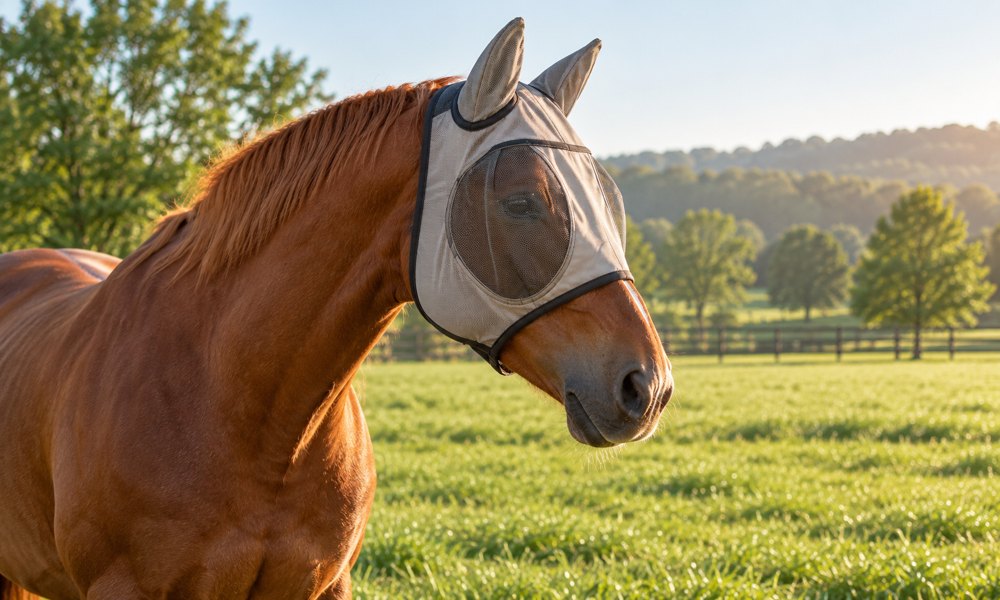
A horse with light-sensitive eyes needs dependable shade and a fly barrier that stays clear of the lashes. The best fly mask for horses with sensitive eyes combines a verified, comfortable fit with breathable mesh and UV protection that matches the horse’s needs. Masks vary widely: some sit close to the face, while raised designs hold mesh farther from the eyes; some cover the ears and nose, while others keep coverage minimal. This roundup compares seven options with those tradeoffs in mind. Product claims and prices can change, so confirm specifications before purchase. If your horse is squinting, tearing, holding an eye shut, or showing redness or cloudiness, contact a veterinarian promptly. A mask may reduce exposure, but it cannot diagnose or treat an eye problem.
Jump to buying advice | Jump to FAQs
Quick Picks
| Product | Best For | Key Advantage | Buy | Review |
|---|---|---|---|---|
| EquiVizor 95% UV Eye Protection Full Fly Mask | horses needing added eye clearance | Raised visor; 95% UV protection listed | View on Amazon | Jump to Review |
| Sunnymove Full Size All-Round Mesh UV Eye Protection Mask | horses needing full-face mesh coverage | Wraparound straps; adjustable adult fit | View on Amazon | Jump to Review |
| Harrison Howard All-Round Mesh UV Fly Mask with Fleece Edging | horses that benefit from a soft-edged mask | Fine mesh, fleece edging, forelock opening | View on Amazon | Jump to Review |
| Pro-Force UV Fly Mask Without Ears | horses preferring an open-ear design | Clear-view mesh; double-lock closure | View on Amazon | Jump to Review |
| Harrison Howard LumiVista Half-Face Fly Mask | horses needing a less enclosing mask | Large eye space; 60% UV protection listed | View on Amazon | Jump to Review |
| Fine-Mesh UV Horse Fly Mask with Ears | horses needing ear coverage | Lightweight mesh; adjustable straps | View on Amazon | Jump to Review |
| Breathable Fine-Mesh Fly Mask with Full Ear Coverage | horses needing full ear coverage | High-density mesh; large visible area listed | View on Amazon | Jump to Review |
How We Chose These Fly Masks
We compared mask shape, eye clearance, UV information, closure design, coverage, breathability, and price. A high UV claim is useful only when the product also fits securely and leaves the eyelashes unobstructed. We gave preference to products with explicit construction details and noted where sellers did not publish a numeric UV rating. None of the options should be treated as medical devices or as treatment for eye disease.
Best Fly Masks for Horses With Sensitive Eyes
1. EquiVizor 95% UV Eye Protection Full Fly Mask

What We Like
- Raised visor design helps keep mesh away from the eye area
- Manufacturer lists 95% UV protection
- Breakaway clips and nose coverage
- Full nose coverage adds shade around the lower face
What We Don’t Like
- Higher price than basic fly masks
- Requires careful sizing and regular fit checks
EquiVizor stands out for horses that dislike fabric resting close to their eyes. Its raised, darted visor creates a small amount of space between the mask and the face, while the full design also covers the nose. The maker lists 95% UV protection, a useful specification to compare when sunlight is a concern. The quick release clips are designed to come apart under pressure, and the mask can be worn over a bridle according to the listing. These features make it the most purpose-built option in this group, though the more structured design takes a little more attention when fitting. A raised shape can create eye clearance, but individual face shape determines fit. For sensitive-eye needs, prioritize clear eye space, soft contact points, and a stable fit; a stated UV percentage is useful only when the mask’s coverage suits the horse.
Before ordering, measure the horse and use the maker’s size chart rather than relying on the usual halter size. Check that the visor stays clear of lashes and that the lower edge does not rub the cheek or nose. The open construction may feel less close-fitting than a conventional mask, but it still needs a secure fit that cannot slip into the eye. Look over straps and clips daily, especially after turnout. The product is not a treatment for uveitis, ulcers, or other eye disease; a horse with squinting, tearing, redness, or cloudiness needs prompt veterinary advice. For a horse whose main need is shade and fly protection, this is a thoughtful premium design.
My Recommendation
Consider this mask if eye clearance and shade are priorities for your horse. The listing identifies raised visor design helps keep mesh away from the eye area and manufacturer lists 95% uv protection, giving you concrete points to compare with the other options. Confirm the selected size and make sure the mask stays clear of lashes without rubbing. Introduce it under supervision and inspect the horse’s skin and eyes each day. For diagnosed eye sensitivity or persistent signs, follow your veterinarian’s advice.
2. Sunnymove Full Size All-Round Mesh UV Eye Protection Mask

What We Like
- Wraparound straps intended to hold the mask away from the face
- Full coverage mesh
- Adjustable fit for adult horses
- Full-face mesh covers the eye area
What We Don’t Like
- UV percentage is not stated in the listing
- Check eye clearance carefully on your horse
Sunnymove’s all-round mesh mask is designed for owners seeking fuller face coverage with a fit that stands away from the eyes. The listing describes a wraparound strap arrangement intended to keep the mesh farther from the face than a flat mask. That distinction can matter for a horse that rubs at close-fitting fabric, although individual acceptance depends on fit and temperament. Adjustable straps help accommodate different head shapes, and the mesh is intended to shade the eye area while keeping flies and debris out. At this price point, it offers a more specialized shape without reaching the cost of the most technical option. A raised shape can create eye clearance, but individual face shape determines fit. For sensitive-eye needs, prioritize clear eye space, soft contact points, and a stable fit; a stated UV percentage is useful only when the mask’s coverage suits the horse.
The product page does not provide a numeric UV rating, so buyers who need a specified level of UV filtering should confirm that detail with the seller or choose a model with a published figure. Fit is still the deciding factor: the mask should stay centered, leave the lashes unobstructed, and avoid rubbing the cheekbones. Inspect the underside for grit each time it is removed, and wash according to the maker’s directions. Do not use a fly mask to manage an eye condition without veterinary guidance. This model is best treated as a comfort-focused shade and fly barrier; it is a sensible candidate when adjustability and extra eye clearance matter more than a documented UV percentage.
My Recommendation
Consider this mask if eye clearance and shade are priorities for your horse. The listing identifies wraparound straps intended to hold the mask away from the face and full coverage mesh, giving you concrete points to compare with the other options. Confirm the selected size and make sure the mask stays clear of lashes without rubbing. Introduce it under supervision and inspect the horse’s skin and eyes each day. For diagnosed eye sensitivity or persistent signs, follow your veterinarian’s advice.
3. Harrison Howard All-Round Mesh UV Fly Mask with Fleece Edging

What We Like
- Breathable fine mesh with stated UV protection
- Soft fleece edging
- Forelock opening
- Fleece edging is listed for a softer border
What We Don’t Like
- Protection percentage is not shown in the listing
- Fleece needs cleaning and inspection
This Harrison Howard mask uses fine mesh with fleece padding around the edges, a combination aimed at keeping the face shaded while reducing direct contact along the trim. The product listing describes UV protection but does not specify a percentage, so it is worth checking current manufacturer details if a measured rating is important. The forelock opening gives longer hair a place to sit, which can help the mask lie more evenly on some horses. A single adjustable chin strap keeps the design relatively simple to put on and remove. It is a practical everyday option for horses that need fly coverage with soft contact points. A raised shape can create eye clearance, but individual face shape determines fit. For sensitive-eye needs, prioritize clear eye space, soft contact points, and a stable fit; a stated UV percentage is useful only when the mask’s coverage suits the horse.
Fleece can collect dust, moisture, and bits of bedding, so the edge should be checked often and cleaned before it becomes irritating. Make sure the padding does not create a tight line against the eye socket or press the lashes. The listing describes a large size; compare the chart with your horse’s measurements because broad foreheads and long faces can change how a mask sits. The mesh is not a substitute for shade, and no mask should be left on if it becomes wet, torn, or dirty near the eye. This option suits owners who value padded edges and a forelock opening, provided they are comfortable with an unspecified UV rating.
My Recommendation
Consider this mask if eye clearance and shade are priorities for your horse. The listing identifies breathable fine mesh with stated uv protection and soft fleece edging, giving you concrete points to compare with the other options. Confirm the selected size and make sure the mask stays clear of lashes without rubbing. Introduce it under supervision and inspect the horse’s skin and eyes each day. For diagnosed eye sensitivity or persistent signs, follow your veterinarian’s advice.
4. Pro-Force UV Fly Mask Without Ears

What We Like
- Lightweight clear-view mesh
- Adjustable double-locking closure
- Fleece-lined trim
- No ear coverage keeps the design open
What We Don’t Like
- No ear coverage
- UV percentage is not listed
Pro-Force keeps the design straightforward: a lightweight mesh mask with no ear covers, adjustable double-locking closure, and fleece-lined trim. The listing says it offers UV protection and uses durable clear-view mesh, but it does not show a numeric rating. Its simple shape makes it a useful pick for horses that do not need ear coverage or find ear sleeves bothersome. The closure can be adjusted for a secure fit, while the fleece edge is meant to reduce friction. It is among the lower-priced choices in this roundup and is widely suited to basic pasture fly and sun coverage. A raised shape can create eye clearance, but individual face shape determines fit. For sensitive-eye needs, prioritize clear eye space, soft contact points, and a stable fit; a stated UV percentage is useful only when the mask’s coverage suits the horse.
For a horse with sensitive eyes, prioritize how far the mesh sits from the eyelashes and whether the forehead seam stays clear of the brow. The mask should not twist when the horse grazes or rub lightly against a safe surface. Since this model has no ears, pair it with other fly protection only if needed and safe for the horse. The maker lists a weight range, but measuring the face remains a better way to select a size. If a veterinarian recommends a particular UV threshold, ask the manufacturer to confirm the rating before purchase. This is a good simple option where comfort and easy fastening matter more than full coverage.
My Recommendation
Consider this mask if eye clearance and shade are priorities for your horse. The listing identifies lightweight clear-view mesh and adjustable double-locking closure, giving you concrete points to compare with the other options. Confirm the selected size and make sure the mask stays clear of lashes without rubbing. Introduce it under supervision and inspect the horse’s skin and eyes each day. For diagnosed eye sensitivity or persistent signs, follow your veterinarian’s advice.
5. Harrison Howard LumiVista Half-Face Fly Mask

What We Like
- Large eye space and anatomical shape
- Breathable fine mesh
- Listing states 60% UV protection
- Half-face cut offers a less enclosing design
What We Don’t Like
- Half-face coverage leaves ears and lower face open
- Decorative colors may limit availability
LumiVista is a half-face design with a roomy eye area and an anatomical shape. Its listing states a 60% UV protection rate and describes breathable, midge-resistant mesh with soft inner fleece padding. The partial coverage leaves ears uncovered, which can suit horses that resist ear sleeves or need a simpler mask for turnout. A larger eye space can also help keep material from lying close to the lashes, although the right fit depends on the horse’s head. This model offers a clear specification for comparing UV claims, along with padded edges intended to reduce rubbing. A raised shape can create eye clearance, but individual face shape determines fit. For sensitive-eye needs, prioritize clear eye space, soft contact points, and a stable fit; a stated UV percentage is useful only when the mask’s coverage suits the horse.
A 60% rating is lower than the highest specified options here, so owners whose veterinarian recommends stronger UV protection should compare carefully. The half-face pattern also does not shield the ears or lower muzzle; think about whether those areas need coverage for your horse’s situation. Confirm the mask does not shift down when the horse lowers its head and that the fleece remains smooth and clean. Replace it if the mesh stretches or seams fray. Its balance of eye room and a stated UV figure makes LumiVista an easy-to-compare everyday option, particularly for horses that prefer a lighter, less enclosing mask.
My Recommendation
Consider this mask if eye clearance and shade are priorities for your horse. The listing identifies large eye space and anatomical shape and breathable fine mesh, giving you concrete points to compare with the other options. Confirm the selected size and make sure the mask stays clear of lashes without rubbing. Introduce it under supervision and inspect the horse’s skin and eyes each day. For diagnosed eye sensitivity or persistent signs, follow your veterinarian’s advice.
6. Fine-Mesh UV Horse Fly Mask with Ears

What We Like
- Fine mesh with ear coverage
- Adjustable straps
- Lightweight, breathable construction
- Ear panels extend the covered area
What We Don’t Like
- Listing does not quantify UV filtration
- Sizing and long-term durability need owner checks
This generic fine-mesh mask offers full ears, adjustable straps, and a lightweight construction at a modest price. The product listing says the mesh is breathable and intended to block UV rays, though it does not publish a percentage. Ear sleeves can reduce insect nuisance for horses bothered by flies around the ears, while the adjustable fit makes it easier to keep the mask centered. Because the product is sold in multiple sizes, read the chart and compare the shape with your horse’s forehead, cheek, and nose length. It is a budget-friendly option for routine fly coverage when documented UV performance is not the main requirement. A raised shape can create eye clearance, but individual face shape determines fit. For sensitive-eye needs, prioritize clear eye space, soft contact points, and a stable fit; a stated UV percentage is useful only when the mask’s coverage suits the horse.
The seller’s description is broad, so treat performance claims cautiously and check the seams and mesh when the mask arrives. Try it on while supervised and confirm that the eye panels remain away from the lashes, the ears have room to move, and no strap sits under tension against the jaw. Remove the mask daily to check for sweat, debris, or rub marks. If your horse has light sensitivity or a diagnosed eye problem, ask the veterinarian which UV rating and mask shape are appropriate. The mask can reduce direct exposure and insects, but it does not diagnose or treat eye symptoms. Its value depends on a comfortable fit and routine inspection.
My Recommendation
Consider this mask if eye clearance and shade are priorities for your horse. The listing identifies fine mesh with ear coverage and adjustable straps, giving you concrete points to compare with the other options. Confirm the selected size and make sure the mask stays clear of lashes without rubbing. Introduce it under supervision and inspect the horse’s skin and eyes each day. For diagnosed eye sensitivity or persistent signs, follow your veterinarian’s advice.
7. Breathable Fine-Mesh Fly Mask with Full Ear Coverage

What We Like
- Full ear coverage
- High-density mesh and adjustable fit
- Large visible area described in listing
- Full ear coverage adds protection around the ears
What We Don’t Like
- No UV percentage provided
- Newer generic listing with limited brand track record
This full-ear mask focuses on coverage: high-density mesh for the face and ears, adjustable straps, and an expanded visible area. The seller describes the mesh as breathable and UV protective, but does not give a numeric filtration rating. Full ear panels can be helpful where insects target the ears, and a roomy eye cut can allow space around the lashes. Its relatively low listed price may suit owners who want a spare mask for rotation, provided the fit and stitching hold up to daily use. The listing gives broad claims, so compare the actual construction and sizing details before choosing it for a sensitive horse. A raised shape can create eye clearance, but individual face shape determines fit. For sensitive-eye needs, prioritize clear eye space, soft contact points, and a stable fit; a stated UV percentage is useful only when the mask’s coverage suits the horse.
A new or little-known brand deserves a careful first fitting. Check the panels in bright light, feel the inside seams, and look for rough edges or loose threads before the horse wears it. Adjust the straps so the mask stays in place without restricting ear movement or pressing on the poll. Remove it regularly, especially in hot weather, and stop using it if the horse rubs, sweats excessively, or develops skin irritation. Because the UV percentage is unspecified, confirm it with the seller if a defined level matters. This model is a budget full-coverage option for everyday nuisance flies, with the usual need to monitor comfort and condition.
My Recommendation
Consider this mask if eye clearance and shade are priorities for your horse. The listing identifies full ear coverage and high-density mesh and adjustable fit, giving you concrete points to compare with the other options. Confirm the selected size and make sure the mask stays clear of lashes without rubbing. Introduce it under supervision and inspect the horse’s skin and eyes each day. For diagnosed eye sensitivity or persistent signs, follow your veterinarian’s advice.
How to Choose a Fly Mask for Sensitive Eyes
A sensitive horse needs a mask that shades the eyes while remaining comfortable through grazing, turnout, and routine movement. Start with the veterinarian’s advice if symptoms or a diagnosis are involved, then compare fit and documented UV protection.
Prioritize eye clearance and fit
Measure the horse using each manufacturer’s chart. Look for a mask that stays centered, leaves the lashes free, and does not press on the eye socket. Raised or darted visor shapes may create more room than flat mesh, though fit varies by head shape. Check the horse wearing the mask under supervision: it should not slide down when grazing, twist when moving, or rub along the cheekbones. Inspect the inside seams and trim for rough spots. Remove the mask daily to check for grit, sweat, dampness, or new rub marks. A horse that persistently paws, rubs, or shakes its head may be signaling discomfort.
Compare UV claims and coverage
UV protection percentages make products easier to compare, but many listings use general terms without a number. Ask the maker for a rating if your veterinarian has recommended a threshold. Consider whether the horse needs ear or nose coverage, and whether those panels fit without restricting ear movement or breathing. Fine mesh should allow reasonable vision and airflow; inspect it for tears that could let insects in or snag hair. Shade and turnout timing can complement a mask, especially during strong sun. Never assume that a fly mask alone is adequate protection for a diagnosed eye condition.
Build daily checks into the routine
Take the mask off at least daily, clean it as directed, and check the eyes and skin before putting it back on. Replace stretched elastic, worn hook-and-loop fasteners, damaged mesh, or frayed seams. Remove the mask if it becomes wet, dirty, or displaced. If there is squinting, tearing, discharge, redness, cloudiness, or sudden light sensitivity, call a veterinarian promptly; eye problems can worsen quickly. A fly mask may be part of a veterinarian’s care plan, but the clinician should guide selection and treatment.
Start with a short supervised trial and inspect the face after removal. If the mask becomes dirty, shifts toward the lashes, or triggers rubbing, remove it and reassess the shape. Keep the horse in shade where possible and follow veterinary instructions for any diagnosed eye condition.
FAQs
Can a fly mask help a horse that is sensitive to sunlight?
A mask with documented UV protection can reduce some direct exposure. Ask your veterinarian which rating and style suit your horse, especially if there is a diagnosed condition.
Should a horse with uveitis wear a fly mask?
Some veterinarians recommend UV-blocking masks as part of management, but the correct choice depends on the horse. Follow the veterinarian’s instructions and seek care for symptoms.
How often should I check the mask?
Check fit and the eyes daily, and inspect for dirt, rubbing, tears, or stretched closures each time it is removed.
What does a UV percentage tell me?
A stated percentage gives a comparison point, but confirm what the maker measured and whether the coverage matches your veterinarian’s recommendation.
Can the mask replace veterinary eye care?
No. A fly mask may help with shade and insects, but it does not treat eye disease. Seek veterinary advice for redness, tearing, squinting, or cloudiness.
Final Verdict
For maximum stated UV protection and a design that stands away from the face, EquiVizor is the most specialized pick. The Harrison Howard All-Round and Pro-Force models offer simpler everyday options, while LumiVista provides a published 60% UV figure in a half-face shape. Fit, comfort, and daily eye checks matter more than any single feature. Ask your veterinarian to guide mask choice when eye sensitivity has a medical cause.
Related Reading
- Best Fly Spray for Horses
- Best Feed-Through Fly Control for Horses
- Best Horse Shampoo for Sensitive Skin
Affiliate disclosure: This article contains Amazon affiliate links. If you purchase through them, PetAdvisorPro may earn a commission. As an Amazon Associate I earn from qualifying purchases.