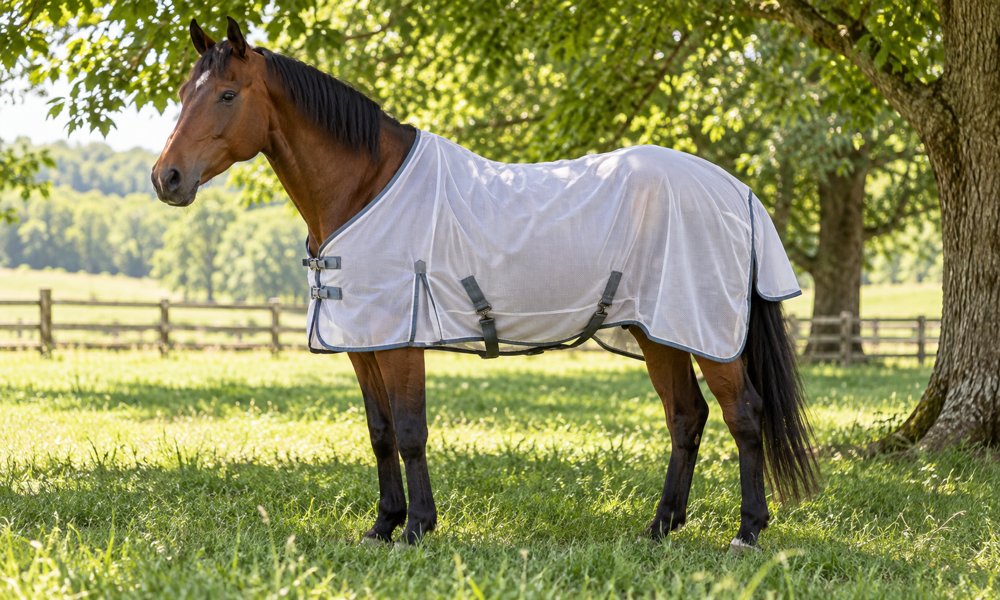
A lightweight summer horse sheet can help reduce fly contact without adding the insulation of a winter blanket. The best choice depends on how much coverage your horse needs, how much heat it tolerates, and which closures stay comfortable during turnout. Some sheets cover only the body, while combo styles extend over the neck and belly. This roundup compares seven breathable mesh options, focusing on fit, movement, strap layout, and the coverage each listing describes. Check the current sizing chart and product details before ordering. A sheet should be removed daily so you can inspect skin and fabric for sweat, rubbing, or damage. Consider whether the horse needs only body coverage or additional protection across the neck and belly, then match the cut to the turnout routine.
Quick Picks
| Product | Best For | Key Advantage | Buy | Review |
|---|---|---|---|---|
| Adjustable Lightweight Mesh Sheet with Dual Belly Straps | simple body coverage in warm weather | Lightweight mesh with dual belly straps | View on Amazon | Jump to Review |
| Gallopoff Standard-Neck Breathable Fine-Mesh Fly Sheet | standard-neck fly coverage | Fine mesh; standard-neck cut | View on Amazon | Jump to Review |
| Country Pride Zebra-Print Soft Mesh Fly Sheet | turnout mobility | Shoulder gussets and removable leg straps | View on Amazon | Jump to Review |
| LEAFOREST Fly Sheet with Neck Cover and Belly Band | more neck and belly coverage | Neck cover, belly band, UV protection listed | View on Amazon | Jump to Review |
| Jeffers Expression Softmesh Combo-Neck Fly Sheet | combo-neck coverage | Attached neck cover and adjustable belly straps | View on Amazon | Jump to Review |
| QHP Breathable UV Mesh Fly Sheet with Neck and Belly Coverage | neck and belly coverage | Breathable UV mesh listed | View on Amazon | Jump to Review |
| BARN & STABLE Tear-Resistant Breathable Mesh Fly Sheet | tear-resistant mesh coverage | UV protection listed; removable leg straps | View on Amazon | Jump to Review |
How We Chose These Summer Sheets
We compared breathable construction, coverage, mobility features, closure details, sizing information, and the stated use of each sheet. We note when sellers did not provide a numeric UV rating. Summer mesh is not rain protection or insulation unless a maker explicitly says it is. Product availability and prices can change, so confirm the current listing before purchase.
Best Lightweight Horse Sheets for Summer
1. Adjustable Lightweight Mesh Sheet with Dual Belly Straps

What We Like
- Dual belly straps help secure the underside
- Lightweight mesh suits warm weather
- Simple design for everyday turnout
- Dual belly straps help secure underside coverage
What We Don’t Like
- Single size shown in this listing
- No UV percentage is stated
This lightweight mesh sheet is a straightforward choice for warm weather and routine turnout. The listing describes adjustable front closures and dual belly straps, useful details for owners who want a sheet that stays centered as a horse grazes. Its simple construction avoids a bulky insulated layer, making it more appropriate for summer conditions than a winter blanket. The mesh also serves as a physical barrier against flies, though it should not be expected to stop every insect or replace other protection where needed. The listed 72-inch size makes measuring especially important before ordering. Compare the fabric and coverage with the horse’s turnout conditions, and recheck fit after movement or sweating during warm weather.
A well-fitted summer sheet should cover the body without pulling across the shoulders or restricting the stride. Check that the belly straps lie flat and do not catch a hind leg, and adjust the front so the fabric does not gape or tug. The page does not state a UV percentage, so ask the seller if measurable UV protection is important. Inspect mesh and fasteners after the first few turnouts, and remove the sheet daily to look for heat, dampness, or rubbing. This is a basic, budget-minded option for horses that tolerate mesh coverage and need a light fly barrier. A summer sheet should stay breathable and stable without restricting the shoulders or trapping too much heat. Note the weather and how the horse responds during early uses, then adjust coverage or remove it if sweating, rubbing, or discomfort appears.
My Recommendation
Consider this sheet if lightweight summer coverage suits your turnout routine. The listing identifies dual belly straps help secure the underside and lightweight mesh suits warm weather, useful details to compare with the other mesh options. Measure with the manufacturer’s chart and check shoulder and belly movement after fitting. Remove the sheet daily to look for heat, dampness, or rubbing. Mesh fly sheets are not automatically waterproof, so check the current listing for weather-protection claims before use.
2. Gallopoff Standard-Neck Breathable Fine-Mesh Fly Sheet

What We Like
- Fine mesh with a simple standard-neck cut
- Lightweight summer construction
- Useful for routine fly coverage
- Standard-neck cut leaves the neck uncovered
What We Don’t Like
- No attached neck cover
- Confirm exact fit and closures before ordering
Gallopoff’s standard-neck sheet keeps its coverage focused on the body rather than adding a neck panel. Fine mesh provides a lighter feel for summer turnout, and the uncomplicated cut may be easier to fit on horses that dislike a combo neck. The product is marketed as a breathable summer sheet, so it is best considered for insect coverage and light shading rather than warmth. Owners can pair it with a separate neck cover only if the horse accepts it and the pieces fit without rubbing. The listing has multiple sizes, making careful measurement essential. Compare the fabric and coverage with the horse’s turnout conditions, and recheck fit after movement or sweating during warm weather.
Check the sheet at the shoulders, withers, and tail before leaving a horse unattended. A standard neck leaves more of the neck exposed than a combo design, which may be a benefit for comfort but a limitation for fly coverage. Confirm whether the chosen size includes leg straps and verify all closure details on the current product page. Remove the sheet daily, brush away debris, and check the skin for pressure marks. If the horse sweats under it or the mesh is torn, take it off and reassess. This is a reasonable everyday choice when light body coverage is the priority. A summer sheet should stay breathable and stable without restricting the shoulders or trapping too much heat. Note the weather and how the horse responds during early uses, then adjust coverage or remove it if sweating, rubbing, or discomfort appears.
My Recommendation
Consider this sheet if lightweight summer coverage suits your turnout routine. The listing identifies fine mesh with a simple standard-neck cut and lightweight summer construction, useful details to compare with the other mesh options. Measure with the manufacturer’s chart and check shoulder and belly movement after fitting. Remove the sheet daily to look for heat, dampness, or rubbing. Mesh fly sheets are not automatically waterproof, so check the current listing for weather-protection claims before use.
3. Country Pride Zebra-Print Soft Mesh Fly Sheet

What We Like
- Shoulder gussets support movement
- Removable leg straps
- Breathable mesh and double-buckle front
- Zebra-print mesh provides a distinctive design
What We Don’t Like
- Print may not suit every barn
- Check strap placement and sizing
Country Pride’s zebra-print sheet combines soft mesh with shoulder gussets, a double-buckle front, and removable leg straps. Gussets can give the shoulders more room during movement than a flat cut, while removable straps allow owners to adjust the setup to their horse and routine. Its recognizable print is a style choice; the practical question is whether the fabric and closures fit smoothly. The product is positioned as summer insect protection, with a breathable mesh body that avoids adding winter insulation. This makes it a distinctive option for owners who want mobility features in a lightweight sheet. Compare the fabric and coverage with the horse’s turnout conditions, and recheck fit after movement or sweating during warm weather.
Fit the shoulder area carefully and watch the horse walk, graze, and turn before turnout. The sheet should not pull backward when the horse lowers its head, and straps should be adjusted so they stabilize without chafing or dangling. If leg straps are removed, make sure the remaining closures still keep the sheet secure. The listing shows a 70-inch size, so use its chart rather than assuming other brands’ measurements transfer. Check under the edges daily for trapped grit and rubs, especially after wet or dusty weather. Choose this model if shoulder freedom and adjustable straps matter, and if the horse is comfortable in mesh. A summer sheet should stay breathable and stable without restricting the shoulders or trapping too much heat. Note the weather and how the horse responds during early uses, then adjust coverage or remove it if sweating, rubbing, or discomfort appears.
My Recommendation
Consider this sheet if lightweight summer coverage suits your turnout routine. The listing identifies shoulder gussets support movement and removable leg straps, useful details to compare with the other mesh options. Measure with the manufacturer’s chart and check shoulder and belly movement after fitting. Remove the sheet daily to look for heat, dampness, or rubbing. Mesh fly sheets are not automatically waterproof, so check the current listing for weather-protection claims before use.
4. LEAFOREST Fly Sheet with Neck Cover and Belly Band

What We Like
- Neck cover and belly band extend coverage
- Lightweight mesh construction
- Listing identifies UV protection
- The neck and underside panels add coverage
What We Don’t Like
- Higher price than basic body sheets
- Bulkier coverage may not suit every horse
LEAFOREST offers more extensive coverage with a neck cover and belly band attached to a lightweight mesh sheet. The product listing identifies UV protection and breathable construction, which may appeal to owners looking for summer coverage across more than the back and sides. The added panels can reduce exposed areas but also mean more points to adjust and inspect. This is a fuller-featured option for horses that accept neck coverage and benefit from a secure belly panel. Confirm the exact neckline and fastening arrangement on the current listing before buying. Compare the fabric and coverage with the horse’s turnout conditions, and recheck fit after movement or sweating during warm weather.
Combo coverage has to fit the horse’s body in several places at once. Check the neck panel for pressure at the mane and poll, the belly band for clearance from the legs, and the body sheet for freedom at the shoulders. The listing’s 81-inch version may not match your horse; use the maker’s measurements for every size. Ask the seller for a numeric UV rating if you need one, because a general claim does not establish a precise level. Remove the sheet daily and look for rubbing under the neck and belly straps. This pick favors broader coverage over a minimal, quick-on sheet. A summer sheet should stay breathable and stable without restricting the shoulders or trapping too much heat. Note the weather and how the horse responds during early uses, then adjust coverage or remove it if sweating, rubbing, or discomfort appears.
My Recommendation
Consider this sheet if lightweight summer coverage suits your turnout routine. The listing identifies neck cover and belly band extend coverage and lightweight mesh construction, useful details to compare with the other mesh options. Measure with the manufacturer’s chart and check shoulder and belly movement after fitting. Remove the sheet daily to look for heat, dampness, or rubbing. Mesh fly sheets are not automatically waterproof, so check the current listing for weather-protection claims before use.
5. Jeffers Expression Softmesh Combo-Neck Fly Sheet

What We Like
- Attached neck cover adds coverage
- Adjustable belly straps
- Softmesh construction
- Combo-neck style extends coverage along the neck
What We Don’t Like
- Decorative pattern can be harder to match
- Verify sizing and neck closure details
The Jeffers Expression sheet uses a softmesh body with an attached combo neck cover, aiming to protect more of the horse from nuisance flies. Adjustable belly straps help anchor the sheet, and the lightweight mesh is designed for warm-weather use. Compared with a standard-neck sheet, this style covers more of the upper body but requires a careful fit along the mane and shoulder. The patterned finish is a visual detail; the deciding factors should be correct sizing, comfortable neck movement, and fabric that stays away from sensitive skin. Compare the fabric and coverage with the horse’s turnout conditions, and recheck fit after movement or sweating during warm weather.
When trying a combo-neck sheet, make sure the neck can flex naturally and the front does not pull the body sheet backward. Watch for rubs along the mane, shoulder, and chest after the first short wear. Check the straps for secure adjustment and remove excess strap length that could snag. The listing specifies 69 inches, so measure the horse and compare the seller’s chart. A lightweight sheet should not be treated as rain protection or insulation unless the maker clearly says so. This model is a useful option for owners who want attached neck coverage and can take time to confirm a precise fit. A summer sheet should stay breathable and stable without restricting the shoulders or trapping too much heat. Note the weather and how the horse responds during early uses, then adjust coverage or remove it if sweating, rubbing, or discomfort appears.
My Recommendation
Consider this sheet if lightweight summer coverage suits your turnout routine. The listing identifies attached neck cover adds coverage and adjustable belly straps, useful details to compare with the other mesh options. Measure with the manufacturer’s chart and check shoulder and belly movement after fitting. Remove the sheet daily to look for heat, dampness, or rubbing. Mesh fly sheets are not automatically waterproof, so check the current listing for weather-protection claims before use.
6. QHP Breathable UV Mesh Fly Sheet with Neck and Belly Coverage

What We Like
- Listing describes UV mesh
- Neck and belly coverage
- Multiple sizes and colors listed
- Mesh panels cover more than the body alone
What We Don’t Like
- Premium listed price
- Confirm exact included panels for selected size
QHP’s fly sheet is a higher-priced option with breathable UV mesh and both neck and belly coverage listed among its features. Its multiple colors and sizes offer more choice than a one-size generic sheet, and the listed construction is meant for warm-weather fly protection. The broader coverage can suit horses bothered by insects across the neck and underside, as long as the panels fit without restricting movement. Because the listing includes several variants, confirm the exact neck and belly arrangement for the selected option rather than assuming every size is identical. Compare the fabric and coverage with the horse’s turnout conditions, and recheck fit after movement or sweating during warm weather.
Use the product chart to match the sheet length and check how the neck attaches. A neck panel that is too tight can limit comfort, while one that is too loose can shift and rub. Make sure belly fasteners sit safely away from the legs and that the fabric stays smooth as the horse moves. The listing says UV mesh, but a numeric percentage is not visible in the summary we verified; contact the seller if that number matters. At the premium end of the group, this is best for owners who value fuller coverage and established brand options, provided the fit is right. A summer sheet should stay breathable and stable without restricting the shoulders or trapping too much heat. Note the weather and how the horse responds during early uses, then adjust coverage or remove it if sweating, rubbing, or discomfort appears.
My Recommendation
Consider this sheet if lightweight summer coverage suits your turnout routine. The listing identifies listing describes uv mesh and neck and belly coverage, useful details to compare with the other mesh options. Measure with the manufacturer’s chart and check shoulder and belly movement after fitting. Remove the sheet daily to look for heat, dampness, or rubbing. Mesh fly sheets are not automatically waterproof, so check the current listing for weather-protection claims before use.
7. BARN & STABLE Tear-Resistant Breathable Mesh Fly Sheet

What We Like
- Listing describes tear-resistant mesh
- UV protective construction
- Removable web leg straps
- The tail flap adds listed hindquarter coverage
What We Don’t Like
- Brand and durability claims need real-world inspection
- Check available size and closure details
BARN & STABLE’s sheet is described as breathable, UV protective, and tear resistant, with removable web leg straps. Those features target owners who need a mesh layer for daily turnout and want the option to adjust the leg straps to suit their horse. The lighter fabric is intended for summer, when insulation would be uncomfortable. UV and tear-resistance claims come from the listing, so use them as starting points and check the fabric and construction on arrival. This option emphasizes practical turnout features at a midrange listed price. Compare the fabric and coverage with the horse’s turnout conditions, and recheck fit after movement or sweating during warm weather.
Fit still determines whether a sheet works: check the shoulder gussets, front closure, tail coverage, and strap position before leaving the horse wearing it. Remove it after the first few hours to check for rub marks and trapped heat. The product summary does not list a numeric UV percentage or complete fastening dimensions, so verify those with the seller if they matter to your decision. Inspect mesh regularly for snags and repair or replace damaged panels. Choose this model when adjustable leg straps and a stated tear-resistant mesh are useful, while keeping expectations grounded in the specific listing details. A summer sheet should stay breathable and stable without restricting the shoulders or trapping too much heat. Note the weather and how the horse responds during early uses, then adjust coverage or remove it if sweating, rubbing, or discomfort appears.
My Recommendation
Consider this sheet if lightweight summer coverage suits your turnout routine. The listing identifies listing describes tear-resistant mesh and uv protective construction, useful details to compare with the other mesh options. Measure with the manufacturer’s chart and check shoulder and belly movement after fitting. Remove the sheet daily to look for heat, dampness, or rubbing. Mesh fly sheets are not automatically waterproof, so check the current listing for weather-protection claims before use.
How to Choose a Lightweight Horse Sheet for Summer
A summer sheet should address the horse’s main need without trapping excess heat. Decide whether you want a simple body layer, full neck coverage, or a more secure underside panel before comparing product details.
Match the fabric to weather and purpose
Breathable mesh is suited to warm-weather fly coverage, while insulated blankets serve a different purpose. Check product information carefully: a lightweight fly sheet may not be waterproof, and a general UV claim may not include a measured rating. If UV protection is important, ask for a numeric specification. Choose mesh that allows airflow and remains intact without loose threads or rough seams. In hot conditions, monitor the horse for sweating and remove the sheet if it seems uncomfortable. A sheet should complement shade, water, and sensible turnout management.
Choose coverage and mobility features
Standard-neck styles leave more of the neck uncovered and may feel simpler for horses that dislike attached panels. Combo-neck styles cover more area, but the neck must flex freely and the front must not pull backward. Belly bands can help cover the underside, while leg straps can stabilize the sheet if they fit safely. Shoulder gussets may allow better movement. Check each closure and strap position against your horse’s build, then observe the horse walking and grazing before unattended turnout.
Measure, fit, and inspect
Use the brand’s size chart and measure the horse rather than carrying over a size from another maker. Look for a smooth fit at the withers, chest, shoulders, and tail, with no tension that restricts stride. Adjust straps so they secure the sheet without dangling or rubbing. Remove it daily to check for heat, dampness, dirt, and skin irritation; inspect mesh for snags and closures for wear. Wash and dry it according to the maker’s directions. If the horse sweats heavily, rubs, or seems distressed, remove the sheet and reassess.
Before buying, compare the horse’s usual turnout conditions with the material and closure details on the listing. A sheet that feels light in hand still needs careful fit checks, and mesh should be removed if heat or humidity makes it uncomfortable. Keep a spare dry sheet available if the horse’s routine involves washing or prolonged turnout.
FAQs
Are lightweight summer sheets waterproof?
Usually not. Mesh fly sheets are designed for airflow and fly coverage; choose a turnout rain sheet only when the listing specifically states waterproof performance.
Should a summer sheet cover the neck?
It depends on the horse’s needs and tolerance. Neck coverage protects more area but should allow natural movement without rubbing.
How often should I remove a fly sheet?
Remove it daily to inspect the horse’s skin and check the sheet for dampness, debris, tears, or worn straps.
Will a lightweight fly sheet keep a horse dry in rain?
Usually not. Mesh sheets are intended for airflow and fly coverage; choose a rain sheet only when the listing specifies weather protection.
Does every summer sheet provide UV protection?
No. Check whether the specific listing states UV protection and whether it gives a measurable rating.
Final Verdict
For a balance of mobility features and lightweight coverage, Country Pride’s soft mesh sheet is a practical pick. Choose a combo-neck model when broader coverage matters, and a standard-neck style when simplicity is preferred. Measure carefully, check UV claims with the seller when needed, and inspect the horse daily during use.
Related Reading
Affiliate disclosure: This article contains Amazon affiliate links. If you purchase through them, PetAdvisorPro may earn a commission. As an Amazon Associate I earn from qualifying purchases.