
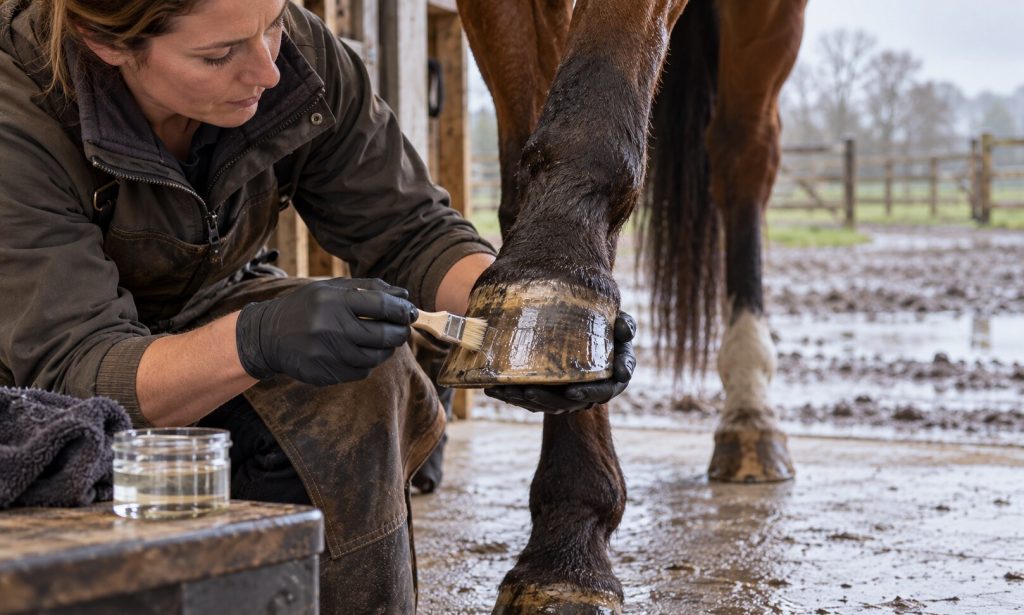
Choosing a hoof sealant for wet conditions starts with understanding what the product can and cannot do. A coating may help limit direct exposure to mud and standing water, but it cannot correct poor drainage, neglected trimming, infection, or a damaged hoof wall. The right choice depends on where the horse lives, how often the hoof stays wet, whether the goal is a temporary barrier or routine care, and what your farrier or veterinarian sees. This guide explains how to compare ingredients, coverage, drying time, removal, and safe application. It also helps you recognize when recurring softness or odor deserves professional attention instead of another coat of product. If you need a separate overview, see our guide to hoof sealant for wet conditions.
What a hoof sealant does in wet weather
A sealant is a surface product intended to reduce contact between the hoof and moisture or debris. Formulas differ, and labels may describe coatings for the hoof wall, sole, frog, or particular areas. Those terms are not interchangeable. Read the directions to confirm the intended surface and use. A product designed for the outer wall should not automatically be applied to the sole or frog.
Hooves naturally interact with moisture. Long wet periods, repeated wet-to-dry cycles, dirty bedding, and poor drainage can contribute to softening and other hoof problems. A topical barrier may be one small part of management, but it does not make a horse’s feet waterproof. Daily cleaning, dry resting areas, appropriate trimming, and prompt attention to lameness remain central.
How to choose a hoof sealant for wet conditions
Match the formula to the hoof area
Start with the label. Some products form a coating on the outside of the hoof wall. Others are meant for a limited area or have a different consistency and use. Avoid products that do not clearly identify where they belong. If your horse has cracks, discharge, a strong smell, heat, or tenderness, ask a veterinarian or farrier before covering the area. A coating can make it harder to observe a problem and does not treat infection.
Consider the length and source of exposure
A horse standing in a wet paddock for hours has a different exposure pattern from one crossing a damp trail briefly. Think about whether the hoof is wet from rain, mud, urine-soaked bedding, or repeated washing. Improve the environment where possible: repair water runoff, clean wet stalls, and create a dry place to stand. Product choice matters less if the hoof remains continuously in dirty, saturated conditions.
Check application and drying requirements
Look for clear directions about cleaning, drying, application frequency, and curing time. Many coatings need a clean, dry surface to adhere well. Applying a product over mud or damp debris can trap material or reduce performance. Choose a format you can apply evenly without coating healthy skin or areas the label excludes. Follow the package instructions and keep the horse in a safe place while the product dries.
Review ingredients and handling cautions
Read the full label, not just the front description. Check warnings, ventilation needs, storage guidance, and what to do after skin or eye contact. Use gloves if directed. Do not assume that “natural,” “waterproof,” or “breathable” means safer or more effective for every horse. If a horse has sensitive skin or a history of reactions, ask your veterinarian before trying a new topical product.
Balance barrier strength with routine inspection
A very durable coating may sound appealing, but hoof care still requires regular inspection and cleaning. Make sure the product’s removal or reapplication schedule fits your routine. You should be able to check for embedded stones, cracks, odor, heat, and changes in comfort. If a coating hides the hoof surface for too long or requires harsh removal, it may not suit your management plan.
Prepare the hoof and apply carefully
- Pick out the hoof and remove packed mud, manure, and loose debris.
- Inspect the wall, sole, frog, and white line for cracks, punctures, odor, discharge, or tenderness.
- Let the intended surface dry if the label requires it. Do not use heat or harsh cleaners to speed the process.
- Apply only to the areas listed on the label, using the specified amount and frequency.
- Allow the coating to dry before turnout or exercise, as directed.
Stop if the horse reacts strongly, develops skin irritation, or becomes more uncomfortable. Do not apply sealant over a suspected abscess or open wound unless your veterinarian specifically directs you to do so. Sudden severe lameness, a hot hoof, or a strong digital pulse needs prompt veterinary assessment.
When a sealant is not the main answer
Repeatedly soft or foul-smelling hoof tissue may reflect a management or health problem that a coating cannot solve. Persistent cracks can have several causes, including hoof balance, injury, or underlying disease. A farrier can assess trim intervals and balance. A veterinarian can investigate pain, infection, or systemic concerns. For general background on wet-ground protection, see our guide to choosing hoof boots for muddy ground. If brittle wall is also an issue, our article on hoof conditioner considerations for brittle hooves covers a related care question.
A dry-looking hoof raises a different care question from a hoof exposed to saturated ground. Our guide to hoof oil for dry hooves explains that separate use case.
Frequently Asked Questions
Can hoof sealant prevent thrush?
No. A surface coating is not a treatment for thrush or another infection. Keep the hoof clean and dry when practical, and ask a veterinarian or farrier about foul odor, dark discharge, or tenderness.
Should I apply sealant to a wet hoof?
Follow the product label. Many coatings need a clean, dry surface to adhere, but directions differ. Do not apply one product to a wet hoof simply because the weather is wet.
Can I use hoof sealant every day?
Only if the label recommends that schedule. More frequent application is not automatically more protective and may interfere with inspection or create unwanted buildup.
Does a sealant replace regular farrier care?
No. Routine trimming or shoeing, hoof inspection, clean footing, and appropriate nutrition remain important. A topical product cannot correct balance or structural problems.
When should I call a veterinarian?
Seek prompt advice for sudden or severe lameness, heat, swelling, a strong pulse at the pastern, a puncture, discharge, or a persistent foul smell. These signs need assessment rather than cosmetic coverage.
Final Words
Choose a hoof sealant by its labeled use, application requirements, and fit with your horse’s actual exposure to wet ground. Keep the hoof clean, inspect it often, and treat a coating as one limited management tool. When evaluating a hoof sealant for wet conditions, follow the label and keep product claims separate from veterinary guidance. When hoof changes persist or your horse is uncomfortable, consult a qualified farrier or veterinarian before continuing topical care. For a related overview of hoof sealant for wet conditions, see the separate guide and verify details for your situation.









