
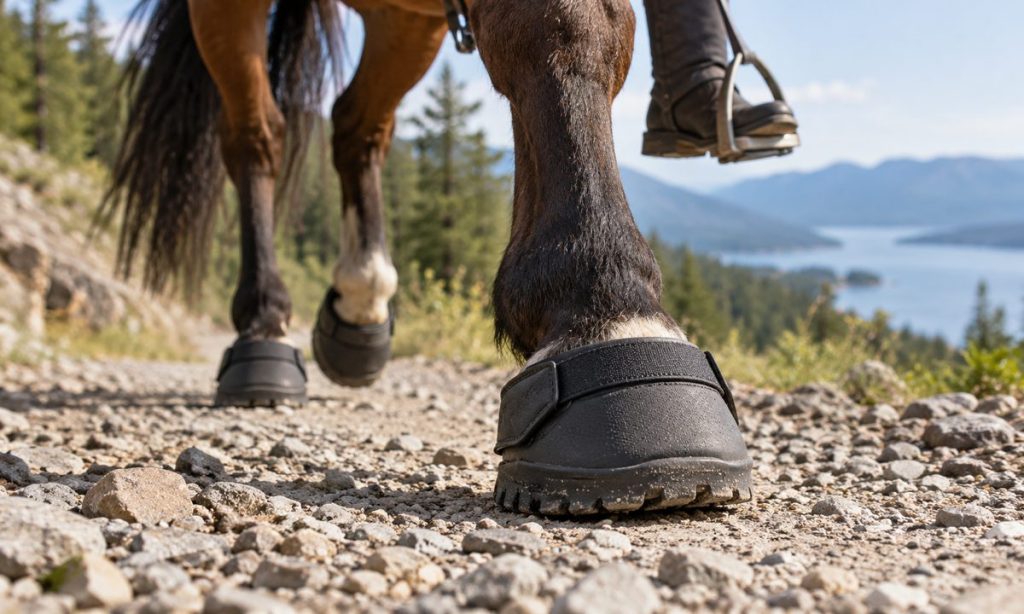
A horse that flinches on gravel or walks cautiously over firm ground may need a closer look before you reach for hoof boots. Sensitivity can relate to many factors, including recent trimming, sole depth, footing, or an underlying hoof problem. Boots can provide temporary protection in some situations, but they do not diagnose or resolve pain. To choose hoof boots for sensitive hooves, first discuss persistent discomfort with a farrier or veterinarian. Then compare fit, interior seams, sole coverage, closure, and how easily you can inspect the hoof. A careful trial helps you spot rubbing or movement before a short outing becomes a long, uncomfortable one. A boot that protects one horse may rub another, so watch each foot closely during a gradual trial.
Start with the horse and the hoof
Check the hoof when it is clean and dry, and use the manufacturer’s current sizing instructions. Measure each hoof separately; front and hind feet may differ. Record width and length at the locations and timing specified by the maker, since freshly trimmed and grown-out hooves can measure differently. If the hoof shape is changing, ask your farrier when to measure and whether a boot is suitable.
Boots should not pinch, rock, or rotate. The closure should stay secured without pressing into the coronary band or heel bulbs. Do not size up automatically to make room for padding. Thick inserts can change internal fit and may crowd the hoof. Consult the boot maker and your farrier about any pad or insert.
Compare sole protection, traction, and closure
For rocky footing, look for a sole and tread intended for the surfaces you ride. Deeper or more rigid patterns may protect from sharp stones but can feel less flexible. Traction must match the conditions; aggressive tread is not automatically safer on every wet, paved, or uneven surface. Consider whether debris can be cleared and whether the tread wears evenly.
Closures vary in how they secure the boot and how easy they are to adjust with cold fingers or gloves. Prefer a design that you can inspect and fasten correctly. Look for smooth interior surfaces, well-finished edges, and materials that can be cleaned and dried between rides. Review the care instructions, expected wear points, and replacement parts.
Trial the boots before the trail
- Fit both boots on clean hooves using the manufacturer’s instructions.
- Walk on level ground, then turn and back up. Watch for twisting, lifting, or shortened steps.
- Remove the boots and check for warmth, dampness, hair disturbance, or rub marks.
- Build up gradually with short rides and recheck during the outing.
- Carry a safe backup plan and inspect the boots after water, mud, or debris exposure.
Stop using a boot if it causes a rub, changes the horse’s gait, or becomes unstable. Sudden lameness, heat, swelling, a puncture, or persistent tenderness should be assessed by a veterinarian or farrier. A boot should not cover an unresolved injury.
Match the boot to the trip
For a short rocky section, easy on-and-off may matter most. For repeated long rides, durability, predictable fit, cleanability, and access to replacement parts deserve more attention. Check whether the manufacturer permits the boot for the pace and activity you plan. Compare the full set-up, including any gaiters or pads, because accessories can affect fit. Keep a record of trim dates and inspect the hoof after each use.
Our guide to horse boots for trail riding covers related trail-use considerations. Riders planning a longer outing may also find our guide to horse distance and endurance riding useful for thinking through conditioning and ride demands.
Use comfort checks, not appearance alone
A boot can look secure and still create pressure. Check the horse’s stride before fitting, then compare it during the trial. Pay attention to reluctance on turns, shortened steps, toe-first landings, or a new willingness to move. These observations do not diagnose the cause, but they help you decide whether to stop and seek advice.
After each short trial, remove the boot and inspect the hoof and pastern. Redness, warmth, rubbing, trapped grit, or a change in the horse’s comfort means the fit or duration needs reassessment. Keep notes about the surface, trim date, boot setup, and how long the horse wore it. This record can help a farrier or veterinarian identify patterns.
Separate boot fit from the cause of sensitivity
Before comparing models, note when the horse is uncomfortable and what surfaces trigger it. Sensitivity that begins after trimming, worsens on one foot, or continues on soft ground calls for a professional assessment. A boot can shield the sole during a planned activity, but it cannot diagnose bruising, a puncture, infection, or an incorrectly balanced trim. Record the onset, affected feet, footing, and any visible changes to share with your farrier or veterinarian.
For a horse that needs temporary protection, ask whether a boot can be used for the intended duration and whether a pad is appropriate. Pads change the internal space and may concentrate pressure if the boot is already snug. Avoid adding thick material to make an oversized boot feel secure; shifting can create new friction. Follow the manufacturer’s fit instructions, and get help if the hoof shape falls between sizes or changes quickly.
Introduce the boot in a quiet area and keep the first test short. Check the horse at a walk, on a turn, and while backing. Remove the boot and inspect the sole, heel bulbs, and hairline for marks or debris. Recheck after a brief ride and again when the boot is removed. Stop if the horse moves differently or becomes more tender. These checks help distinguish a potentially useful protective fit from a boot that is adding pressure to an already sensitive hoof.
Frequently Asked Questions
Should a hoof boot feel tight?
It should be secure without pinching, rotating, or rubbing. Follow the maker’s fit guidance and inspect the hoof after a short trial.
Can hoof boots stay on for every ride?
Use them only for activities and durations allowed by the manufacturer. Check fit, wear, and the hoof regularly.
Do boots fix a sore hoof?
No. They may protect the hoof in some situations, but persistent or sudden pain needs assessment by a veterinarian or farrier.
Should I use pads inside hoof boots?
Only when the design allows them and the fit remains correct. A pad can reduce internal space or shift the hoof, so seek professional fitting advice.
How do I know if a boot is rubbing?
Look for hair disturbance, redness, warmth, dampness, or a change in gait. Remove the boot and reassess instead of continuing the ride.
Final Words
Choose a boot around measured hoof shape, intended terrain, and the horse’s comfort. Test it gradually, inspect after use, and adjust the plan if it shifts or rubs. If hoof sensitivity continues, involve your farrier or veterinarian before increasing ride distance. For further fit considerations, see our guide to sensitive-hoof boot options.









