
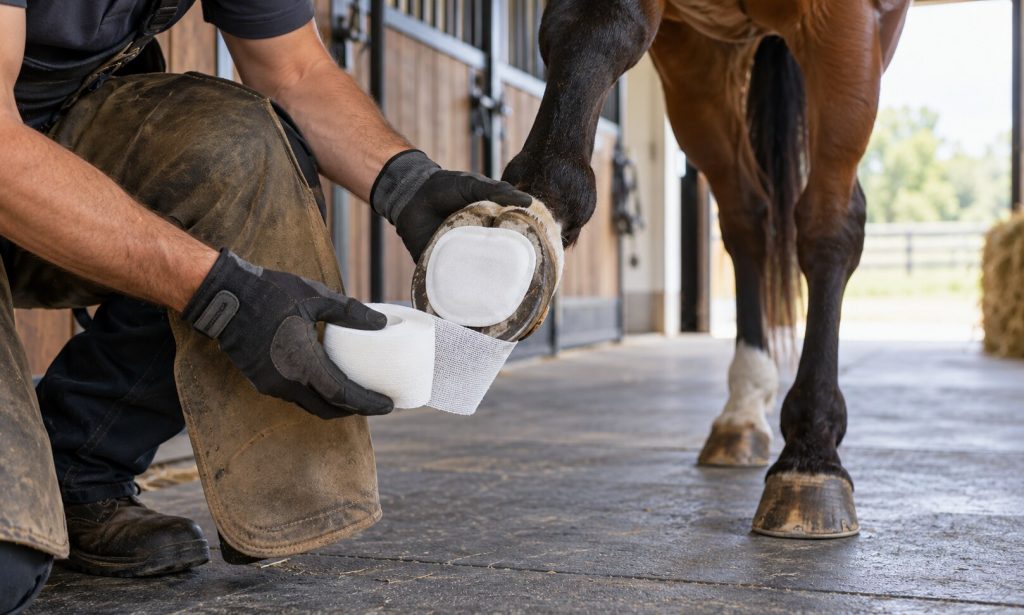
Hoof packing can help protect a treated area or keep a hoof dressing in place, but choosing material depends on why the hoof needs care. A poultice, absorbent pad, and protective packing are not interchangeable. An abscess, puncture, or painful hoof should be assessed by a veterinarian or farrier; packing material does not diagnose or cure the underlying problem. Before choosing, identify the professional’s instructions, the area being covered, how long the wrap must stay in place, and whether the horse will be stalled or turned out. This guide explains the main material features and safe questions to ask before applying anything to a horse’s hoof. Material choice also depends on whether a professional is managing a wound or whether you are protecting a dressing during turnout.
What hoof packing materials do
Hoof packing may refer to a poultice pad, a medicated or non-medicated dressing, or a material placed under a bandage. The intended purpose and veterinary instructions determine the choice. Some materials absorb moisture, others hold a prescribed topical dressing against a hoof surface, and some simply cushion or cover. Do not place a product into a puncture, open area, or suspected abscess unless a veterinarian gives instructions.
How to compare materials
Follow the treatment plan
Confirm whether the goal is to protect a site, keep a dressing positioned, or manage drainage after a professional assessment. Ask which product and how often to change it. Avoid substituting a barn remedy when the treating professional has specified a material.
Clean, careful preparation comes first: our guides to hoof picks for horses and hoof brushes for horses cover tools for routine debris removal. Packing and a surface barrier serve different purposes; see the separate guide to hoof sealant for wet conditions for that distinction.
Check absorbency and fit
The material should cover the intended area without bunching or creating pressure. Consider whether it can stay in place under the chosen bandage and whether it will become saturated in the horse’s environment. A wet, dirty wrap may need prompt attention.
Consider clean handling and removal
Choose packaging that stays clean until use. Look for clear instructions, single-use guidance, and easy removal without pulling on sensitive tissue. Use clean hands or gloves and do not reuse contaminated material.
Apply only with clear directions
Clean the hoof only as directed. Place the material over the area identified by the veterinarian, then secure it with an appropriate hoof bandage without restricting circulation or movement. Check the wrap on the schedule given and replace it if it slips, becomes soaked, or is contaminated. Never use a tight improvised wrap that could create pressure or catch on objects.
Sudden severe lameness, a puncture wound, heat, swelling, discharge, or a strong pulse calls for prompt veterinary advice. University of Minnesota Extension notes that abscesses can cause significant pain and require appropriate assessment and drainage. The treating professional should guide packing and bandaging for the individual case.
Questions to clarify before applying a hoof wrap
Ask the veterinarian or farrier which surface needs covering, what the packing is meant to do, and how long the wrap should stay on. Confirm whether the hoof needs soaking or cleaning first and whether a medication or dressing belongs under the packing. These details vary by case. Do not mix a home remedy with a prescribed treatment unless the professional approves it.
Ask how the wrap should be secured, what level of snugness is safe, and how often the hoof should be checked. A loose bandage can slip, while an overly tight one can create pressure. Clarify what to do if the horse removes the wrap or becomes more lame. Keep the product packaging and any instructions available for whoever checks the horse.
Choose material by purpose and follow-up plan
The word “packing” can refer to different materials used for different goals, so identify the purpose before choosing anything. A veterinarian may recommend a poultice or dressing as part of managing a hoof abscess or protecting a site. A farrier may advise a temporary packing approach for a particular hoof-care situation. Those uses are not interchangeable, and a general-purpose material should not be placed into a wound or under a shoe without instructions from the professional responsible for the horse.
Read the package for intended use, ingredients, storage, application, and removal directions. Check that the material can be secured without restricting circulation or creating pressure at the coronet or heel bulbs. Consider how it will behave when wet, whether it sheds fibers, and whether you can change it at the required interval. Clean hands, clean tools, and a fresh dressing matter; do not reuse material that has been contaminated by mud or manure.
Ask in advance what change should prompt a call. Increasing pain, swelling, heat, discharge, a foul smell, or worsening lameness can mean the plan needs reassessment. A hoof packing material is a temporary aid, not a substitute for diagnosis or a way to seal a problem out of sight. Keep a record of when it was applied and how the hoof looked at each change. If you are unsure whether to continue, contact your veterinarian or farrier before adding another layer or switching products.
Frequently Asked Questions
Is hoof packing the same as a poultice?
Not always. People use the terms differently. Confirm the product and purpose with the veterinarian or farrier directing care.
Can I pack a hoof abscess at home?
Ask a veterinarian for instructions. Severe lameness or a puncture should not be managed by covering the hoof without assessment.
How often should a hoof bandage be changed?
Follow the treating professional’s schedule and the product directions. Change it sooner if it becomes wet, dirty, loose, or damaged.
Can a horse go outside with a packed hoof?
That depends on the injury, wrap, footing, and professional plan. Ask whether stall rest or protected turnout is appropriate.
What should I do if the wrap slips?
Move the horse to a safe area and contact the professional who advised the treatment. Do not tighten a loose wrap over a painful hoof without guidance.
Final Words
Choose hoof packing material by the specific care goal and the instructions from the veterinarian or farrier. Clean handling, correct placement, and timely checks matter as much as the material itself. Do not use packing to hide persistent pain or an unassessed wound.









