
When a horse’s hooves seem to grow slowly, a supplement may look like an easy answer. First consider whether growth is truly slow for that horse and whether the hoof is breaking or wearing faster than it grows. Trim history, season, workload, footing, overall diet, and health can all affect what you observe. A supplement should fill a demonstrated nutritional gap, not replace routine farrier care or veterinary assessment. This guide explains how to read nutrient labels, compare formulas, and set realistic expectations. It also covers signs that a hoof change needs a professional evaluation before you add another feed product. A farrier can help distinguish slow wall growth from excess wear, breakage, or a trim schedule that makes growth hard to judge.
First check whether the hoof needs a supplement
Hoof growth is not identical in every horse, and apparent lack of growth can reflect wear, breakage, trimming intervals, or seasonal conditions. Track hoof measurements and farrier visits over time rather than relying on a single impression. Ask a veterinarian or equine nutrition professional to review forage, fortified feed, body condition, workload, and any health concerns.
How to compare a hoof supplement
Read amounts, not just ingredient names
Compare the guaranteed analysis and daily serving. Check biotin, zinc, copper, methionine, and other nutrients against the horse’s full ration. A long ingredient list does not show whether amounts are useful or balanced.
For another view of hoof-focused formulas, compare our overview of supplements for barefoot horses with the guide to biotin supplements for horse hooves; labels and total-ration fit still matter.
Check the complete ration
Count nutrients from hay, pasture, grain, balancers, and existing supplements. Adding several products can duplicate nutrients. Ask for a ration analysis before combining concentrated mineral products.
Consider the horse’s feeding needs
Check calories, sugar and starch information when relevant, feeding rate, allergens, and whether the product fits the horse’s routine. Follow the label and avoid guessing at doses. Choose a product with transparent amounts and clear feeding directions.
Set realistic expectations
Hoof horn grows gradually, so visible change takes time. A supplement cannot change hoof that has already grown out, repair a crack immediately, or replace balanced trimming. Keep a consistent record with dated photos and farrier notes. Review progress with a professional before deciding the product has failed or increasing the amount.
UMN Extension advises attention to good-quality forage and correctly balanced vitamins and trace minerals as part of hoof care. If slow growth is new, severe, or accompanied by lameness, heat, cracks, or poor condition, seek a veterinary assessment rather than treating it as a supplement-selection problem alone.
Review the whole hoof-care picture
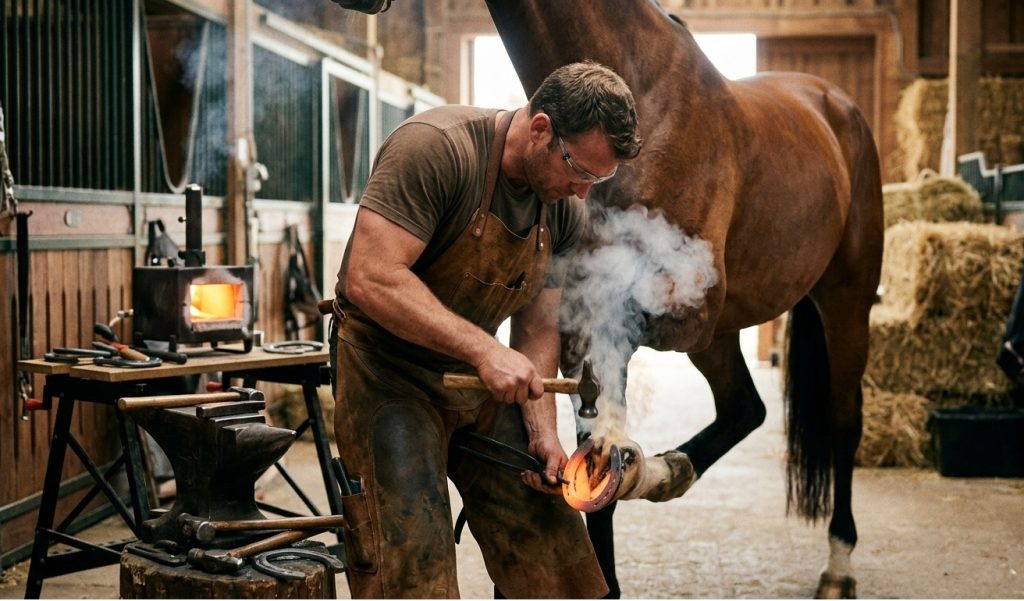
A supplement is only one possible part of a hoof-care plan. Ask whether the current trim interval, footing, moisture exposure, workload, and forage could explain what you see. If a hoof breaks faster than it grows, a supplement may not address the source of the problem. A farrier can assess shape and wear, while a veterinarian can look for pain or health changes.
If the main issue is chipping or brittleness rather than slow growth, our guide to care considerations for brittle hoof walls addresses that different concern.
Avoid switching several feeds and supplements at once. Too many simultaneous changes make it difficult to tell what helped and can create nutrient overlap. Keep the rest of the ration consistent while a professional reviews the plan. Reassess using dated photos, trim notes, and the horse’s comfort rather than relying only on how glossy the hoof looks.
Investigate slow growth before adding a supplement
Hoof growth is gradual, so a short observation window can make a normal variation look like a supplement problem. Ask your farrier to assess growth and hoof quality across more than one trim cycle. Note cracks, chipping, wall separation, tenderness, and whether the issue affects one hoof or all four. One hoof changing differently may point toward a local injury or loading issue, while broader changes deserve a review of the horse’s overall diet and health.
Before selecting a product, list every feed, balancer, mineral mix, and supplement the horse receives, including serving sizes. A ration review can show whether a nutrient is actually missing or whether a second product would duplicate what is already supplied. Share forage information and the horse’s workload with an equine nutrition professional or veterinarian. Avoid using a supplement to compensate for poor-quality forage, an unbalanced ration, or an untreated medical problem.
Set a realistic monitoring plan with your farrier. Take clear photos at consistent intervals and record trim dates, diet changes, and any change in hoof comfort. A new supplement cannot instantly replace existing hoof wall; visible change takes time as new growth emerges. If the horse develops lameness, heat, swelling, sudden cracking, or separation, seek assessment rather than waiting for a nutritional product to work. Choose a supplement only after you know what the horse needs and how you will judge the result.
Frequently Asked Questions
How long does a hoof supplement take to work?
There is no immediate change to existing hoof wall. Evaluate any plan over the growth period recommended by your equine professional.
Does every slow-growing hoof need a supplement?
No. Growth, wear, trim schedule, environment, and overall nutrition should be considered first.
Can I combine two hoof supplements?
Do not combine them without checking the total nutrient intake with a veterinarian or equine nutrition professional.
Should I change farriers if hoof growth is slow?
Discuss the pattern and trimming interval with your current farrier. A veterinarian can help investigate pain or health changes.
When is slow hoof growth urgent?
Slow growth alone is not always urgent, but sudden lameness, heat, swelling, a puncture, or major hoof damage needs prompt veterinary attention.
Final Words
Choose a hoof supplement only after reviewing the full ration and confirming that the horse may benefit from added nutrients. Compare actual daily amounts, avoid overlap, and allow time for new hoof to grow. Persistent or painful changes need professional evaluation.