Introduction
Cowboy boots can feel secure on the ground yet rub or pinch once you sit in the saddle. Fit affects comfort, but riding footwear also has a safety role: a defined heel helps reduce the chance of a foot sliding too far through a stirrup, while an overly bulky or deeply treaded sole may catch. Check your boots with the socks you normally ride in and, when possible, with the stirrups you use. Look for pressure across the instep, cramped toes, heel movement, shaft friction, and any hot spot after a short wear test. Do not assume that painful boots will “break in” safely. If you are comparing cowboy boots for riding horses, use the checks below to assess fit and stirrup compatibility rather than relying on appearance or a size label alone.
Why fit matters for riding
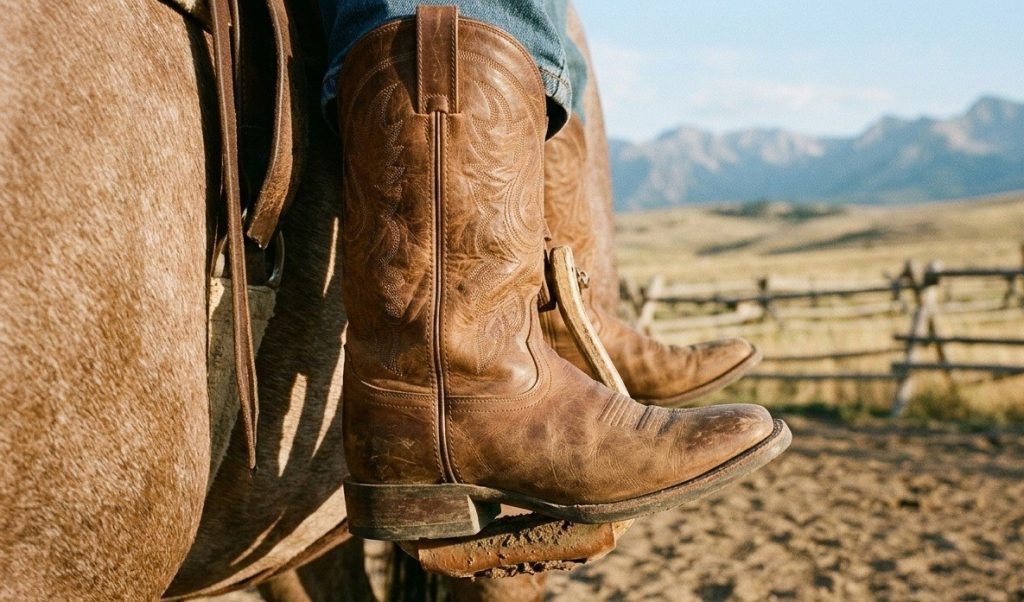
A well-fitted boot should hold the foot securely without squeezing it. Excess room can let the foot slide, while pressure at the toes, ball, instep, heel, or calf may distract you or lead to rubbing. A boot also needs to work with the stirrup: a heel and a smooth, reasonably low-profile sole are common safety features, but they do not remove all risk. The boot should enter and leave the stirrup without sticking, and the stirrup should not be so wide that the foot can pass too far through.
Fit is individual. Foot shape, socks, boot construction, swelling during a long ride, and stirrup dimensions all matter. A boot that fits in a store while standing may feel different after walking, flexing the ankle, and placing the foot in the stirrup.
Check the foot fit before riding
Try both boots with your riding socks
Feet are often slightly different in size. Try both boots later in the day if your feet tend to swell, and wear the socks you expect to ride in. Stand, walk, bend your knees, and flex your ankles. The ball of each foot should sit near the boot’s widest area, and your toes should have enough room to move without being pushed together or hitting the front.
Notice pressure across the instep
Pull-on cowboy boots often feel snug over the instep because that area helps hold the foot. Snug should not mean numb, painful, or sharply pinched. Check for pressure across the top of the foot and at the arch. If pressure worsens when you flex your ankle or stand on the stirrup, the fit or shape may not suit your foot.
Check heel lift and heel rubbing
A small amount of heel movement can occur in a new pull-on boot, but excessive lift may rub and cause blisters. Walk several steps and notice whether the heel repeatedly slides, twists, or lifts enough to feel unstable. A boot that rubs the back of the heel during a short fitting is unlikely to become comfortable through riding longer.
Check the shaft and calf
The shaft should not dig into your calf, catch the back of your knee, or rub the ankle when you sit. If you wear half-chaps or other layers, try them together. Check seams, stitching, and edges that could press under stirrup leathers or against your leg.
Inspect the sole and heel
Look for a distinct heel and a sole that is not excessively wide, thick, or deeply lugged for your stirrups. A smooth sole can make it easier for a boot to move in and out; a large tread pattern may catch on some stirrups. A pointed toe is not required for every rider, but the boot’s overall shape should fit the stirrup with modest side-to-side clearance.
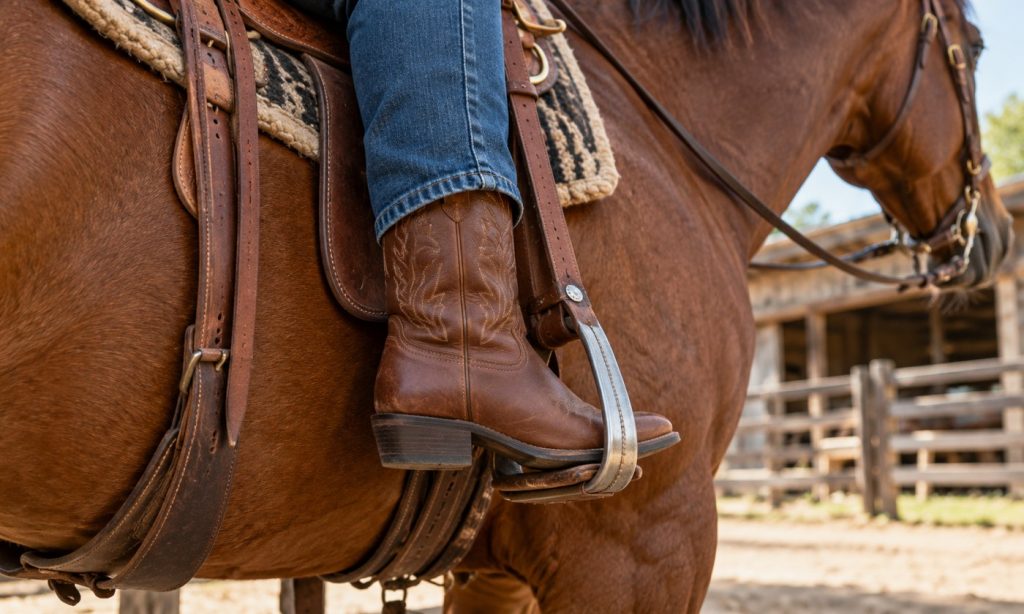
Check the boot with the actual stirrup if you can do so safely while the horse is stationary and supervised. The boot should slide in without forcing it and should not wedge at the widest part. Check that the heel sits where it should and the foot can be withdrawn easily. If the boot feels trapped, the stirrup is unusually narrow, or there is excessive room around the foot, ask an experienced instructor or tack professional to assess the combination. Do not test a questionable fit while mounted outdoors.
For broader riding-clothing guidance, see what to wear riding horses. The right boot still depends on your discipline, the stirrup, the horse, and the rider’s needs.
Recognize rubbing and pressure points
After a short fitting walk, remove the boots and look for red marks, warm patches, blisters, or sore areas. Pay attention to the toes, ball of the foot, instep, heel, ankle bones, and calf. A little awareness of the boot is normal; sharp pain, tingling, numbness, burning, or a pressure spot that remains after removal is a reason to stop and reassess.
Do not ride through worsening pain to “break in” a pair. Leather may soften, but length, toe shape, heel position, and major pressure points do not reliably correct themselves. If the boot causes persistent foot pain or numbness, stop wearing it and seek advice from a qualified footwear fitter or health professional.
A practical fit check before a ride
-
Wear your usual socks. Put on both boots and fasten any closures as you normally would.
-
Walk and flex. Take several steps, bend your knees, rise onto your toes, and flex each ankle. Notice shifting, pinching, or heel rub.
-
Check the toe and ball. Make sure toes can move and the ball of the foot rests at the boot’s widest point.
-
Inspect the heel and shaft. Look for excessive lift, rubbing, calf pressure, or a seam that contacts the leg.
-
Test the boot and stirrup match. With the horse still and a competent person supervising, check that the boot enters and exits the stirrup smoothly without being forced or passing too far through.
-
Recheck your feet. Remove the boots after the short test and check for redness or soreness. Stop if pain or numbness develops.
Recheck fit if you change socks, add an insole, switch stirrups, or have a long ride planned. Worn heels, damaged soles, stretched uppers, or loose stitching can change how the boot sits and moves in a stirrup.
When to replace or refit boots
Reassess boots if the sole is separating, the heel is worn unevenly, the tread is catching, the upper no longer supports the foot, or the boot has begun rubbing after it previously fit. Weight changes, foot swelling, and replacement insoles can also alter fit. If a professional recommends stretching or another alteration, ask whether it could change the boot’s hold in the stirrup. A comfortable fit on foot does not automatically make the boot safe for riding.
Frequently Asked Questions
How much room should cowboy boots have at the toes?
Your toes should be able to move without hitting the front or being squeezed together. The ball of your foot should sit near the boot’s widest area. Exact space varies with boot shape and your foot.
Is heel slip normal in new cowboy boots?
A small amount of movement can occur in some new pull-on boots, but excessive movement that rubs or feels unstable is not a good fit. Test the boots by walking before riding.
Can I ride in work boots with deep tread?
Deep tread can catch in some stirrups. Check the sole and heel against your stirrup while the horse is stationary, and ask an instructor if the fit is uncertain.
Should riding boots feel tight at first?
They may feel secure, but pain, numbness, sharp pressure, or cramped toes are warning signs. Do not depend on a painful fit to improve with break-in.
How do I check whether my boot fits the stirrup?
With the horse still and supervision, see whether the boot enters and exits without force, does not wedge, and cannot pass too far through. Do not test a questionable fit while riding.
Final Words
Check cowboy boots while standing, walking, flexing your ankles, and testing them with the stirrups you actually use. Look for cramped toes, painful instep pressure, excessive heel movement, shaft rubbing, a worn heel, and a sole that catches or wedges. Stop if you develop pain or numbness, and do not ride in a boot that feels trapped in the stirrup. For more on cowboy boots for riding horses, compare the safety details with your own fit check and ask an instructor when boot and stirrup compatibility is unclear.