
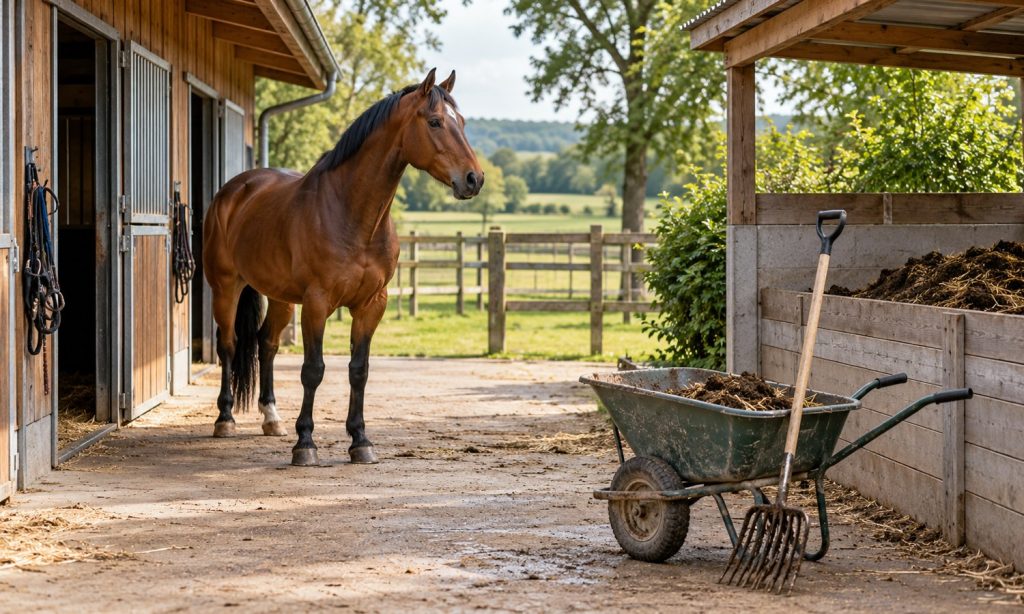
Flies around a horse facility are more than a nuisance: steady irritation can make horses restless and make barn chores unpleasant. The most useful first step is often a careful look at where flies are breeding, especially moist manure, wet bedding, spilled feed, and decaying hay. A clean-looking stall does not guarantee the whole property is fly-unfriendly; wheelbarrows, fence lines, waterers, and manure storage can be overlooked. If you are comparing a feed through fly control for horses, remember that a supplement or insect growth regulator works alongside facility management rather than replacing it. This guide explains a practical routine for reducing breeding sites, organizing manure handling, and deciding when other fly controls may help. The goal is steady, manageable prevention that fits your property and protects horses, people, and beneficial insects.
Why stable and manure management matter
Many common “filth flies,” including house flies and stable flies, use moist, decomposing organic material as a breeding site. Manure mixed with wet bedding, spilled feed, and waste hay can provide the right conditions. Adult flies may also arrive from neighboring properties, so a tidy barn cannot guarantee a fly-free horse. Still, reducing local breeding sites removes some of the supply close to stalls, turnout areas, and feeding places.
Fly species differ in where they develop and how they bother horses. Stable flies bite, while house flies tend to gather around feed, water, and buildings. Horse and deer flies often breed in wetland or other outdoor habitats far from a stable. This is why one trap or one cleanup routine may not solve every fly problem. Notice where flies cluster and whether they are biting before choosing additional control.
Build a repeatable cleanup routine
Remove manure and soiled bedding from stalls and high-use horse areas on a regular schedule. During warm weather, daily stall cleaning is practical for many operations; also check paddock gates, loafing sheds, sacrifice areas, and spots where horses stand to eat. Extension guidance commonly emphasizes frequent removal, with manure storage emptied or managed within a short cycle during fly season. Conditions vary with weather, stocking density, bedding, and local rules, so use a routine that keeps moist waste from sitting undisturbed.
Look beyond the stall floor. Clear wet, decaying hay around round bales and feed stations, clean up grain spills promptly, and empty manure buckets or wheelbarrows instead of leaving them beside the barn. Check under stall mats and along edges where damp bedding can collect. Keep trash covered, remove rotting plant debris, and repair leaking troughs or downspouts that keep organic material wet.
Assign tasks and record them on a simple calendar. A brief daily stall check plus a weekly walk around the whole facility helps catch trouble before fly numbers climb. If several people share chores, identify who handles manure removal, storage, and water leaks. A dependable schedule is more useful than an occasional deep clean after flies have already become abundant.
Store and manage manure carefully
Choose a manure storage location that is convenient to clean but set away from horse living areas when the property allows. Keep runoff and precipitation from soaking the pile, and avoid spreading fresh manure into a broad, moist layer where flies can lay eggs. A roof, secure tarp, or covered container can help limit moisture, depending on local drainage and fire safety considerations. Store manure in a way that complies with local environmental requirements and prevents runoff into wells, waterways, or neighboring land.
Composting can reduce fly larvae when the pile is managed so it heats throughout. Simply calling a heap “compost” does not ensure it reaches effective conditions; pile size, moisture, aeration, and turning matter. Follow land-grant Extension guidance for your climate and setup, or arrange regular removal if composting is not practical. When spreading manure, follow local recommendations for pasture use, acreage, grazing intervals, and nutrient management. Do not spread it where horses will immediately graze if your local guidance advises against that practice.
Keep the work area clean as well. Scrape manure from the edges of storage bins, avoid leaving wet bedding in wheelbarrows, and rinse tools where wash water can drain safely. If fly predators are used, check the supplier’s timing instructions and avoid practices that indiscriminately kill beneficial insects. Biological controls are only one part of a broader plan and may not work equally in every climate or manure system.
Keep water and feeding areas dry
Move water troughs to well-drained ground when possible, inspect valves for leaks, and remove wet feed or hay before it decomposes. Feed in a way that limits waste, such as using an appropriate feeder rather than placing hay where it gets trampled into mud. If horses routinely drop feed in a particular corner, adjust the setup and clean that spot more often. Waterlogged ground can attract insects even when manure is removed consistently.
In paddocks, rotate feeding locations when practical and pick up accumulated waste hay. Repair drainage problems rather than relying on chemical treatments to compensate for standing water. Good drainage supports cleaner footing and reduces damp organic debris, though some biting flies breed in wetlands beyond the property owner’s control.
Use traps and other controls in the right places
Traps can help monitor or reduce some adult flies when placed where they target the right species. Keep baits and sticky surfaces away from horses, feed, and places where animals or wildlife could become entangled. Follow the product label, check traps on schedule, and dispose of captured insects or bait as directed. Traps are not a substitute for removing breeding material, and many devices do not control horse flies or deer flies effectively.
For safe details on locating and maintaining a trap, see this guide to a fly trap for a horse barn. If flies remain numerous after cleanup, identify the likely species and ask an Extension educator, pest professional, or veterinarian for help choosing the next step. Chemical premises treatments should be selected and applied according to their label, with horses, people, feed, water, and beneficial insects protected as directed.
A feed-through product may complement cleanup if the product is appropriate for the horse and region, but read the label and discuss use with your veterinarian when health conditions, medications, or competition rules matter. Feed-through controls generally target development in manure; they will not stop flies breeding in wet hay, neighboring manure, wetlands, or other untreated sites. The article on feed through fly control for horses can help you compare that product category, while the manure routine remains central.
A simple seasonal checklist
- Remove manure and wet bedding from stalls and high-use areas frequently.
- Empty manure buckets and wheelbarrows instead of leaving waste beside the barn.
- Remove spoiled hay, feed spills, and other damp organic debris.
- Keep manure storage covered or dry and arrange regular removal or properly managed composting.
- Fix leaking waterers and improve drainage around feeding and resting areas.
- Observe where flies gather, identify biting behavior, and keep a basic record of counts or trap catches.
- Use traps and labeled pesticides only for suitable fly species and in locations safe for horses.
Before the main fly season, clear out accumulated bedding and old waste, check drainage, and repair covers or fencing around manure storage. During peak season, keep the routine consistent and review problem spots weekly. After the season, remove remaining waste and plan any changes—such as a new storage location or feeder—before weather warms again.
Frequently Asked Questions
How often should manure be removed to reduce flies?
Remove stall manure as often as your operation can manage, often daily, and keep manure storage from becoming a wet breeding site. Follow local Extension advice for the recommended storage and removal interval in your climate.
Does barn lime prevent flies?
Do not rely on lime as a fly-control method. University of Minnesota Extension notes that the small amounts typically used in horse facilities do not provide effective fly control. Focus first on removing moist organic debris.
Will composting manure kill fly larvae?
Properly managed composting can generate heat that kills fly larvae, but an unmanaged pile may stay cool and wet. Follow a manure-composting guide suited to your system and climate.
Can traps solve a fly problem by themselves?
No single trap controls all fly species or removes breeding sites. Use a trap matched to the target fly, place it safely, and combine it with cleanup, dry storage, and other appropriate measures.
Should I add a feed-through fly control product?
It may be one part of an integrated plan, but suitability depends on the product label, horse, and local conditions. Ask your veterinarian when the horse has health concerns, takes medication, or competes under medication rules.
Final Words
Consistent sanitation, dry manure handling, and removal of spoiled feed or bedding form the foundation of fly reduction around a stable. Walk the whole property, not just the stalls, and track where flies are developing or gathering so your effort targets the source. Traps, repellents, and feed-through products may support the routine when used for the right purpose and according to their labels. If you are evaluating a feed through fly control for horses, treat it as a possible complement to manure and stable management. A practical schedule that everyone follows can improve comfort through the season while keeping control measures safer and more focused.









