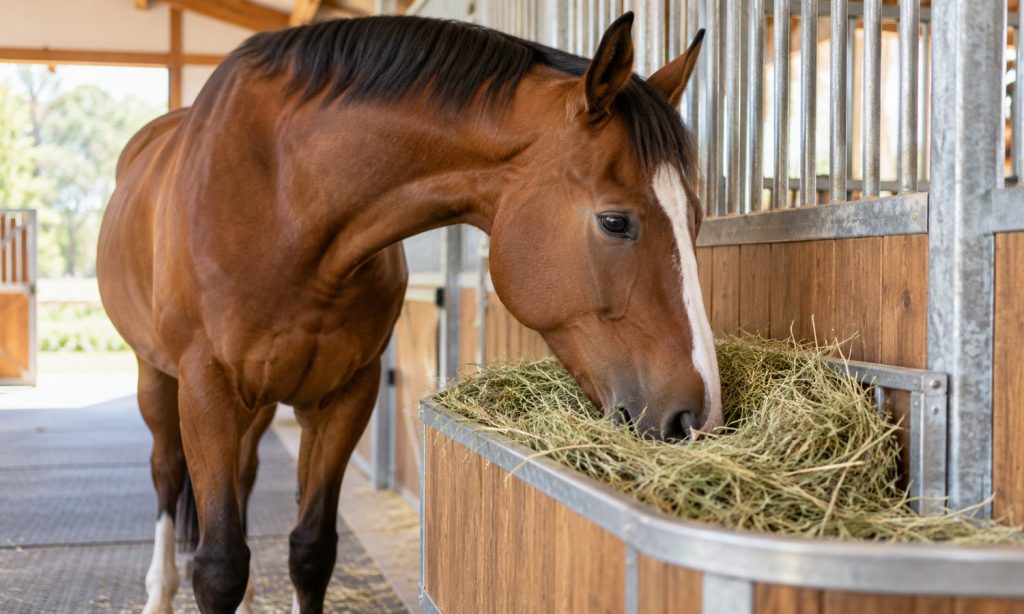
“Gut health” supplements can contain probiotics, prebiotics, yeast products, fiber, or combinations, and the terms do not guarantee that products work the same way. Before adding a gut health supplement for horses, look at the horse’s current ration, the reason you are considering it, and the evidence for the specific ingredients and intended use. A supplement should not replace forage, water, a balanced feeding plan, or veterinary care for digestive signs. This guide explains common ingredient categories, label questions, and ways to introduce a product thoughtfully. If the horse has colic, diarrhea, poor appetite, or unexplained weight loss, contact a veterinarian rather than relying on a supplement to diagnose or treat the problem.
Start with the horse’s diet and routine
Before buying a digestive aid, write down what the horse eats and when: forage, pasture, concentrate, treats, and current supplements. Include measured amounts, feeding frequency, recent changes, turnout, workload, medications, and any history of colic or other digestive concerns. This helps identify whether a basic management adjustment or veterinary assessment is more relevant than another product.
Forage and consistent feeding practices are central to equine nutrition. A horse’s digestive system is adapted to frequent forage intake, and abrupt feed changes can create problems. Keep clean water available and avoid making several diet changes at once. If a horse has a veterinary diet or a metabolic condition, ask the veterinarian before adding an ingredient or changing feed.
Clarify the goal. Are you trying to support a ration during a transition, address a diagnosed condition, or respond to an unspecific change in manure or appetite? “Gut health” is broad, and a product selected without a clear purpose can add cost or nutrients that the horse does not need.
Understand common supplement categories
Probiotics are live microorganisms intended to provide a benefit when consumed in adequate amounts. Different strains and products are not interchangeable, and a general claim about probiotics does not establish that a specific product will benefit every horse.
Prebiotics are ingredients intended to support selected microbes or fermentation in the digestive tract. The type and amount matter, and a horse’s response may depend on the whole ration and management.
Yeast products may contain live yeast or yeast derivatives and are used in some feeding programs. Check the label to see which form is included and what the manufacturer claims. Do not assume that all yeast products have the same effect.
Some products combine these ingredients with fiber, herbs, enzymes, or other additives. Read the full ingredient list and guaranteed analysis, and compare the amount provided at the recommended feeding rate. Ask whether the product duplicates nutrients or ingredients already in the horse’s feed.
Ask useful questions about the product
- What specific purpose does the product claim to serve, and is that purpose relevant to this horse?
- Does the label identify the microorganism strain or ingredient amount, rather than using only broad terms?
- What is the feeding rate, storage requirement, expiration date, and transition guidance?
- Does the product add calories, sugar, starch, minerals, or ingredients that matter for the horse’s condition?
- Is there quality-control information or testing the manufacturer can provide?
- Could it interact with medication, a prescribed diet, or competition rules?
Research quality and product regulation vary. In an AAEP nutrition discussion, digestive additives are described as adjuncts to an overall feeding program, not a replacement for forage and sound management. Ask a veterinarian or qualified equine nutritionist to interpret claims for the particular horse.
Introduce one change at a time
Follow the product label and your veterinarian’s directions. If the label permits, introduce the supplement gradually so the horse can adapt to the taste and you can observe any change. Avoid changing several feeds, supplements, and management routines simultaneously; if the horse reacts, it becomes harder to know which change mattered.
Measure the dose rather than estimating by eye, and make sure the horse consumes the full amount. Store the product as directed to protect viability or freshness. Do not feed a supplement past its expiration date or when packaging is damaged, moldy, or contaminated.
Track appetite, manure, body condition, and behavior during the transition. If the horse develops loose manure, reduced appetite, abdominal discomfort, or another concerning change, stop the new product if appropriate under the label and contact your veterinarian. Severe pain, repeated rolling, sweating, or other signs of colic call for urgent veterinary attention.
When a supplement is not the next step
A supplement cannot diagnose ulcers, parasites, dental pain, colitis, or other causes of digestive changes. Contact a veterinarian for persistent or recurring diarrhea, appetite loss, weight loss, colic signs, or a major change in manure. Share the product label and the timeline of signs. Do not delay evaluation while waiting to see whether a product helps.
If you are choosing a gut health supplement for horses, discuss the product alongside the complete ration. An equine nutrition professional can review forage, feed, body condition, and any lab results to find a targeted plan. A supplement may have a role, but the horse’s full care plan comes first.
Measure whether the change helps
Before starting, choose an observable measure tied to the reason for adding the product. You might record daily appetite, manure consistency, or body condition rather than relying on a vague impression that the horse seems “better.” Keep notes on dates, amounts, and any changes to exercise, turnout, or feed. This record can help a veterinarian decide whether to continue, adjust, or discontinue the product.
Do not keep increasing the dose because an expected result has not appeared quickly. The label’s recommended amount is not an invitation to exceed directions, and a longer trial is not appropriate if the horse is uncomfortable or worsening. Revisit the original goal with a professional and check whether a different cause needs attention.
\n
Frequently Asked Questions
Do all horses need a gut health supplement?
No. Many horses may meet their needs through forage and a balanced ration. Whether an additional product makes sense depends on the horse, diet, health history, and the supplement’s intended use.
Are probiotics and prebiotics the same?
No. Probiotics are live microorganisms intended to provide a benefit; prebiotics are ingredients intended to support selected microbes or fermentation. Product details matter.
Can a gut supplement treat colic or diarrhea?
Do not rely on a supplement to treat these signs. Contact a veterinarian, especially for severe, persistent, or recurring symptoms.
Should I add a supplement during an antibiotic course?
Ask the prescribing veterinarian. Medication, supplement ingredients, timing, and the horse’s condition can affect whether a product is appropriate.
How long should I try a new product?
Follow the label and professional guidance, and set a clear monitoring period with your veterinarian or nutritionist. Stop and seek advice if concerning signs appear.
Final Words
Choose a digestive supplement only after identifying the goal and reviewing the horse’s forage, full ration, health history, and current products. Compare the specific ingredients and amounts, introduce one change at a time, and monitor appetite and manure. Persistent digestive changes or colic signs need veterinary attention. If you are comparing a gut health supplement for horses, use its label and claims as a starting point for a conversation about whether it fits the horse’s overall feeding plan.