When a horse is itchy, reaching for a cream can feel like the fastest way to help. Yet rubbing, scabs, hair loss, or hives can come from insects, parasites, infection, allergies, or irritation, and those causes do not all respond to the same treatment. Before using anti itch cream for horses, ask your veterinarian what may be causing the problem, whether the skin needs an examination, and whether the cream’s ingredients are appropriate for your horse and the area involved. Bring the package or a clear photo of its label, plus notes about when signs began. A focused conversation can prevent a product from masking a diagnosis, worsening irritation, or delaying care. This guide explains what to ask, what information to bring, and when itching needs prompt veterinary attention.
Start by asking what could be causing the itch
Itching is a sign, not a diagnosis. Horses may rub because of biting insects, mites, lice, allergic skin disease, bacterial or fungal problems, contact irritation, tack friction, or another condition. More than one issue can be present. The location and pattern help guide an examination, but they cannot confirm the cause on their own.
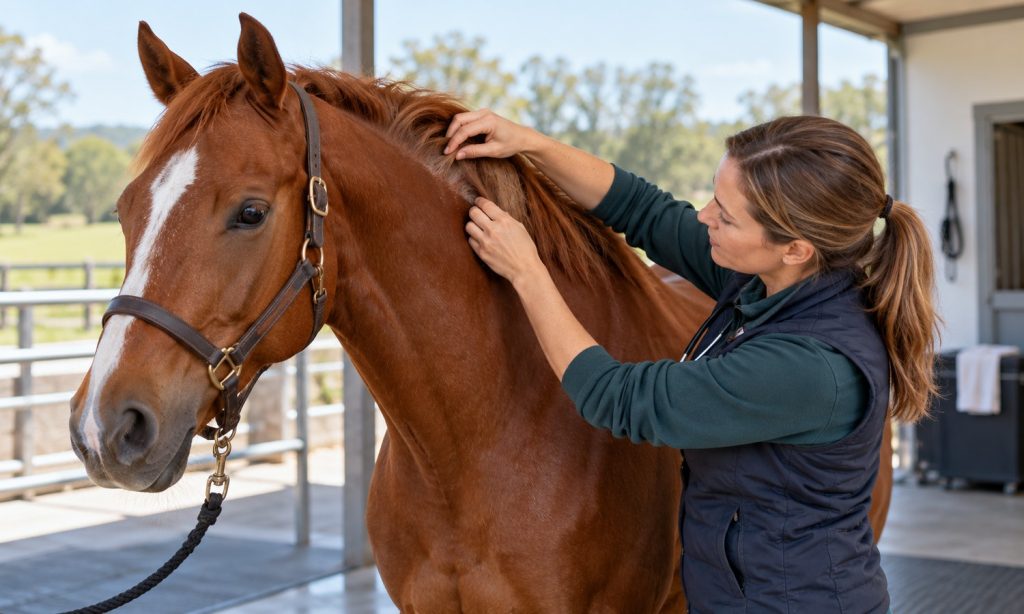
Ask your veterinarian: “What are the most likely causes based on where the itching is and how it started?” Share whether the mane, tail, belly, legs, face, or several areas are affected. Mention season, turnout, new bedding or feed, recent bathing, fly-control routines, new sprays, and whether other horses are itchy. Note any recent medication or skin product.
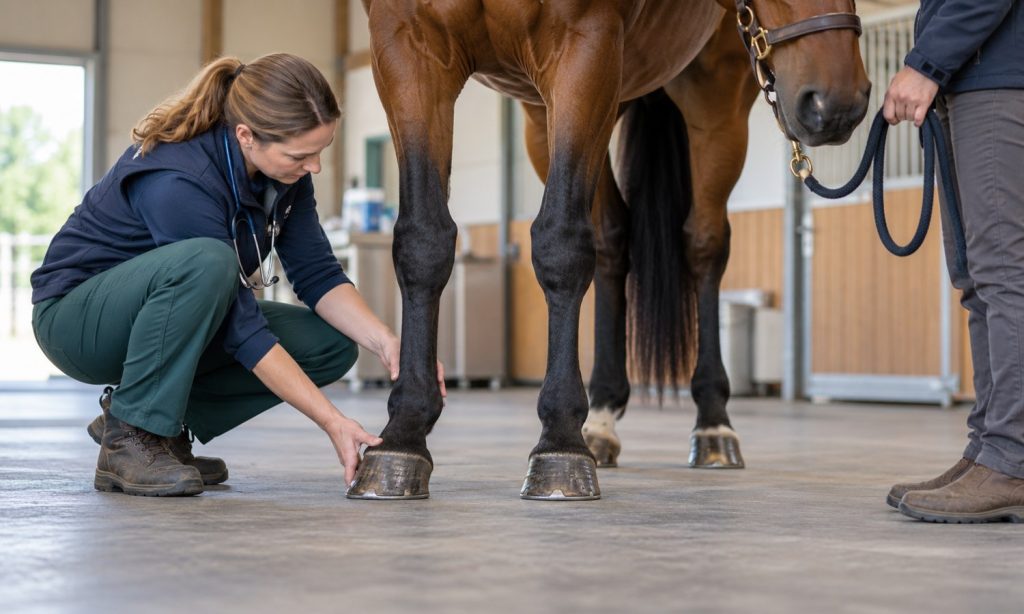
Ask whether the horse should be examined before anything is applied. A cream can change the appearance of a lesion, make a sample harder to interpret, or irritate damaged skin. If you already applied something, tell the veterinarian what it was, where you used it, and when. Do not feel you need to scrub it off unless the veterinarian advises you to do so.
Bring the cream label and ask about every active ingredient
The phrase “anti-itch cream” describes a purpose, not a single medicine. Products may contain different types of ingredients, including anti-inflammatory drugs, local anesthetics, antibiotics, antifungals, or combinations. A product suitable for one diagnosed problem may be unhelpful or inappropriate for another. Ask your veterinarian to review the full label, including active and inactive ingredients, strength, warnings, and directions.
Useful questions include: “Is this product intended for horses?” “Is it appropriate for this specific skin problem and body area?” “Could any ingredient sting, trigger a reaction, or interfere with a test?” “Is there a reason to avoid it because of my horse’s health, other medicines, or competition plans?” Do not assume a human, dog, or leftover prescription cream is safe for a horse. Use it only if your veterinarian approves the exact product and directions.
Ask whether any part of the skin should be avoided, such as the eyes, nostrils, mouth, genital area, or open wounds. If the horse can rub the treated area on tack, bedding, or another horse, ask whether contact could expose people or animals. The label and veterinary directions should settle those details; guessing from a product’s name is not enough.
Clarify how to apply it and how long to continue
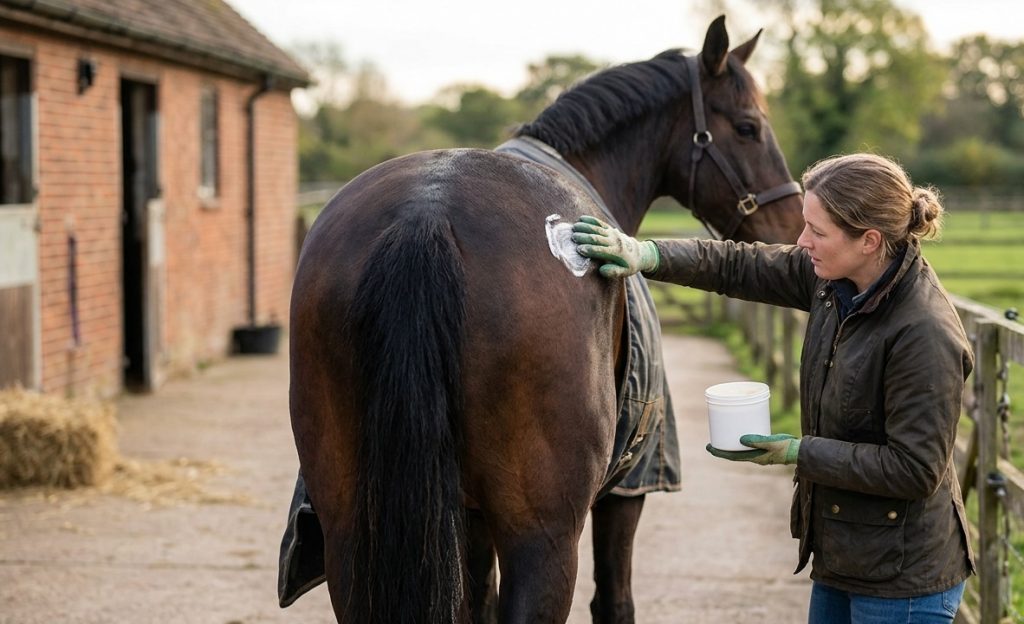
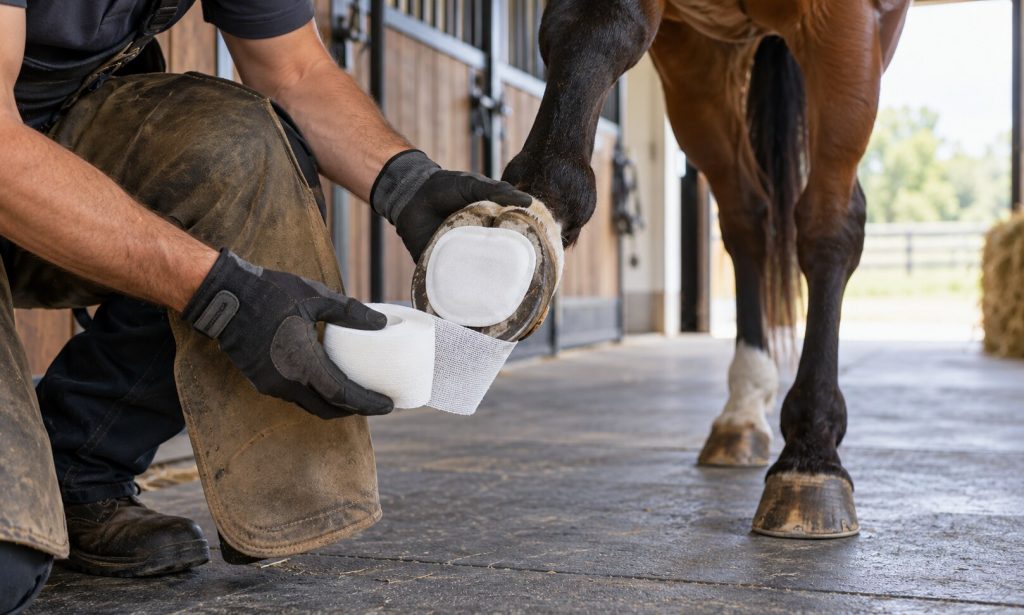
If your veterinarian approves the cream, ask for a clear plan. Confirm the amount, exact area, frequency, duration, and whether the skin should be clean and dry first. Ask if the hair needs clipping or if crusts should be left alone. Do not scrub, pick scabs, mix products, or cover the area with a bandage unless directed.
Ask what to do if the horse rubs the cream off, if rain or bathing removes it, or if you miss an application. More frequent use is not automatically more effective. Some topical products can irritate skin, and shampoo residue itself can contribute to irritation. Follow the prescribed contact time and rinse instructions when a medicated wash is part of the plan.
Check whether the horse could lick the product or transfer it to another animal. Ask if gloves are appropriate for applying it and how to wash hands, brushes, or cloths afterward. If the horse wears tack over the area, ask when it is safe to tack up. Confirm whether a recheck is needed and when you should expect to see improvement.
Ask how to tell whether the plan is working
Agree on what improvement should look like. It may include less rubbing, fewer new bumps, calmer behavior during grooming, or gradual healing of damaged skin. Ask how soon to reassess and what signs mean the treatment should stop. If the itching worsens, spreads, or returns as soon as treatment ends, contact the veterinarian instead of extending or repeating the cream on your own.
Keep a short daily record. Note the affected areas, rubbing episodes, weather and turnout, application times, and any new redness, swelling, discharge, or sensitivity. Take photographs in similar lighting and from the same distance. This record helps the veterinarian compare changes and decide whether the diagnosis or treatment needs adjustment.
Ask whether management changes are also needed. If insects are suspected, the veterinarian may discuss reducing exposure or changing the stable routine. If contact irritation is possible, review recent changes in bedding, grooming supplies, sprays, or tack. A cream may calm a symptom without removing its trigger, so ask which practical steps fit the suspected cause.
Know when itching needs prompt care
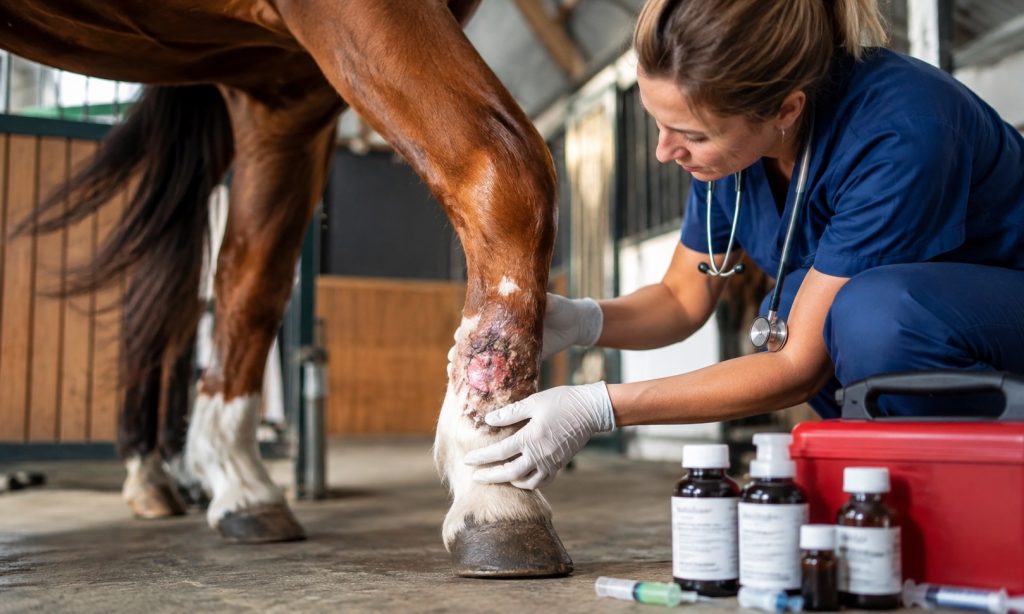
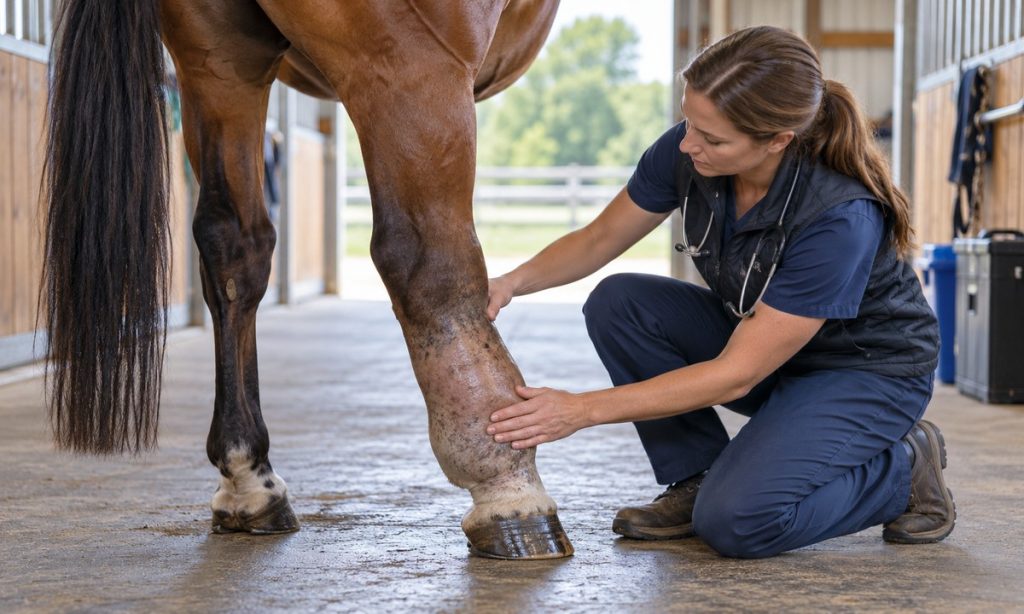
Contact a veterinarian promptly for rapidly spreading lesions, marked pain, heat, swelling, open or oozing skin, fever, lameness, or a horse that seems unwell. Hives accompanied by trouble breathing, facial swelling, weakness, or collapse are an emergency. Do not wait to see whether an over-the-counter cream settles a severe reaction.
For mild, localized itching, ask the veterinarian how soon the horse should be seen and whether any steps are safe while you wait. Avoid applying a new cream, insecticide, or home remedy unless advised. If the horse is repeatedly rubbing until the skin breaks, mention that clearly when you call because self-trauma can make a small problem worse.
Frequently Asked Questions
Can I use human anti-itch cream on a horse?
Do not use it without veterinary approval. Ingredients, concentration, body location, and the cause of itching all matter. Show the veterinarian the exact label.
Should I clean the skin before applying a cream?
Ask first. The right approach depends on the diagnosis and product. Scrubbing or removing crusts may hurt the horse or interfere with an examination.
How long should a horse use an approved cream?
Follow the veterinarian’s specific duration. Do not continue, repeat, or increase use because signs remain without checking back.
What should I track after starting treatment?
Record application times, rubbing, lesion size and location, weather, turnout, and any reaction. Consistent photos can help show whether the skin is changing.
When is itchy skin an emergency?
Breathing difficulty, facial swelling, weakness, or collapse with hives needs emergency veterinary care. Rapidly worsening skin, fever, severe pain, or a horse that seems ill also needs prompt attention.
Final Words
Before using a cream, ask your veterinarian to assess the likely cause, review the full ingredient label, and explain exactly how and how long to apply it. Share changes in the horse’s routine and keep notes or photos so you can report what happens. Stop and call if the skin worsens or your horse reacts. If you are comparing anti itch cream for horses, use that information as a starting point for questions, not as a substitute for diagnosing your horse. The safest treatment is the one matched to the cause, the horse, and the specific area being treated.