Protective leg boots can feel unfamiliar to a horse, and a horse recovering from or managing a suspensory problem needs a plan from the veterinarian who knows the injury. A boot may shield the leg from some knocks or debris, but it does not repair a suspensory ligament or make a horse ready for work. Before using horse boots for suspensory support, ask whether boots are appropriate, what they should protect, how long they may be worn, and whether the horse’s exercise plan allows them. Then introduce them gradually, make sure they fit, and check the skin and leg after each wear. These steps can help a horse become comfortable with equipment while keeping veterinary care central.
Ask the veterinarian before trying a boot
“Suspensory support” can refer to different products and claims. Ask the veterinarian to clarify the diagnosis, the affected limb, and the purpose of any boot being considered. Some boots are intended to protect the lower leg from impact or brushing; others are marketed as support devices. A protective boot cannot replace diagnosis, rest, rehabilitation, farrier care, or controlled exercise prescribed for an injury.
Ask whether the horse should wear a boot during turnout, hand-walking, rehabilitation, or riding, and for how long. Confirm which areas must remain visible for monitoring, whether the boot could interfere with bandaging or treatment, and what signs mean it should be removed. If the horse has new lameness, heat, swelling, or pain, contact the veterinarian before fitting equipment or exercising.
Choose a suitable style and size
Start with the job the boot is meant to do. A brushing boot, tendon boot, fetlock boot, and hoof boot each cover different areas and may affect ventilation, movement, and fastening in different ways. Ask the veterinarian or an experienced equine professional to help choose a style that fits the horse’s conformation and the approved activity.
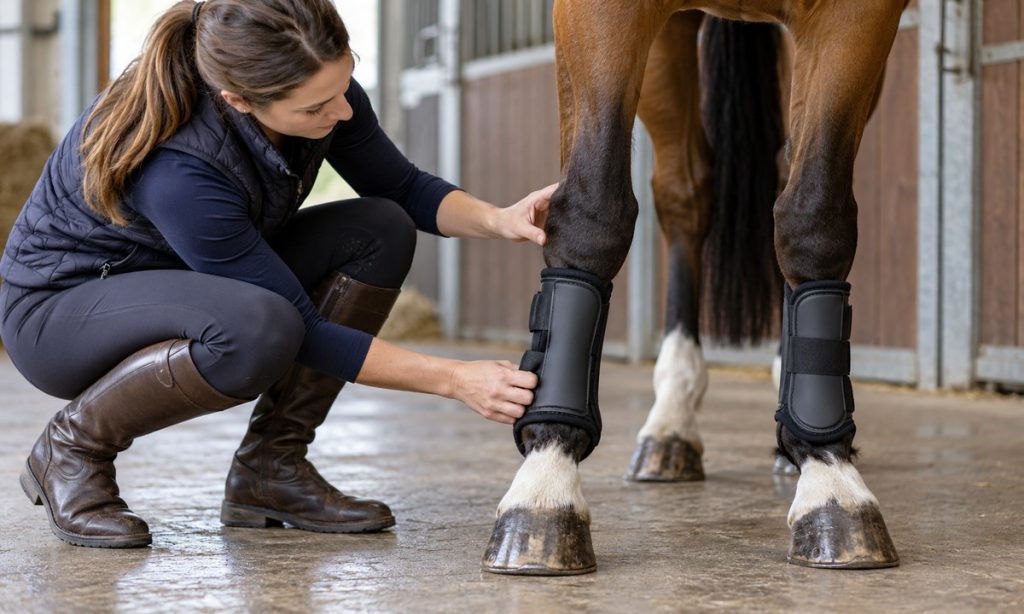
Use the manufacturer’s measuring guide and fastening instructions. A boot that is too loose can rotate or slip; one that is too tight can rub, press on sensitive tissue, or restrict movement. Do not assume that a particular size will fit every horse with a similar weight or breed. Check that the boot does not catch on the shoe, drag on the ground, or interfere with natural movement.
Introduce the equipment in short steps
Let the horse investigate it calmly
Begin in a quiet, familiar area with the horse under control. Let the horse see and smell the clean boot, and reward relaxed attention. Keep the session brief and stop before the horse becomes anxious. Do not surprise the horse by suddenly fastening both front and hind boots or applying a full set when it has never worn them.
Fit one boot and check the response
Clean and dry the leg first. Place the boot according to the product instructions, fasten it evenly, and check that it lies flat. Run a hand around the edges to feel for folds, trapped hair, grit, or a strap pressing into the skin. Allow the horse to stand quietly for a short period, then walk a few steps on safe, level ground if the veterinarian has cleared that activity. Watch for repeated lifting, kicking, stamping, shortened stride, or attempts to bite at the boot.
Build duration gradually
If the horse stays comfortable, add wear time in small increments over several short sessions. Remove the boot and inspect the skin after each session. Do not use an unfamiliar boot for a long ride or full rehabilitation session on the first day. If the horse reacts, remove the boot calmly, check the leg, and consider whether size, placement, dirt, heat, or unfamiliar handling contributed.
Prevent rubbing, heat, and pressure problems
Before every use, inspect the boot for worn lining, stiff edges, damaged fasteners, or dirt. Brush grit and dried mud from the horse’s leg. After use, remove the boot and check for rub marks, hair loss, dampness, swelling, or localized warmth. Wash and dry the boot according to its care instructions; a dirty or damp liner can irritate skin.
Leg boots can retain heat, particularly during exercise or in warm weather. Ask the veterinarian whether the material, style, and wear time are appropriate for this horse. Avoid leaving work boots on longer than the instructions allow, and do not use them as overnight support unless specifically directed. If the leg becomes hotter, more swollen, or more painful, stop using the boot and call the veterinarian.
Do not add padding or alter the boot to solve a poor fit unless the manufacturer or veterinarian recommends it. Improvised inserts can create pressure points or change how the boot moves. If the horse repeatedly reacts to the same boot, ask a knowledgeable professional to reassess the fit and purpose rather than forcing the horse to tolerate it.
Check comfort during and after activity
Before any veterinarian-approved exercise, watch the horse walk without the boot and note its usual stride. Fit the boot and repeat the walk on a safe surface. Check that it stays in place and does not change the horse’s movement. During activity, pause if the horse shortens stride, stumbles, becomes reluctant, or repeatedly focuses on the boot.
After activity, remove the boots and compare both legs. Note skin changes, heat, swelling, and tenderness, and record how long the boots were worn and what the horse was doing. A photo can help track a recurring rub. Share observations with the veterinarian, especially if the horse is in a rehabilitation program where exercise and equipment need to follow a specific schedule.
Frequently Asked Questions
Can boots heal a suspensory injury?
No. Boots may provide some protection, but they do not heal a ligament injury or replace a veterinarian’s treatment and rehabilitation plan.
Should my horse wear boots all day for suspensory support?
Ask the veterinarian before leaving boots on for extended periods. The correct duration depends on the device, the horse’s skin, the injury, and the intended activity.
What if the horse keeps kicking at the boot?
Remove it safely and inspect the skin and fit. If the horse continues to react or seems painful, do not force another session; ask a veterinarian or experienced fitter to assess the cause.
How can I tell if a boot is too tight?
Look for pressure marks, rubbing, swelling, discomfort, or difficulty moving. Follow the product’s fit guide and ask a professional to check the fit if uncertain.
Can I ride in a new boot right away?
Do not use a new boot for a long or demanding ride on the first try. Introduce it gradually during a short, controlled session only if the veterinarian has approved the activity.
Final Words
Help a horse get comfortable with protective boots by confirming the purpose with the veterinarian, choosing a suitable fit, introducing the equipment in brief sessions, and inspecting the leg after each wear. Remove a boot if it shifts, rubs, traps heat, or changes the horse’s movement. When comparing horse boots for suspensory support, treat product claims as questions for your veterinarian, not proof that a boot can treat an injury.