Riding gloves work hard: reins rub the palms, buckles and hook-and-loop closures catch the fabric, and sweat, dust, rain, and winter mud build up between rides. Cleaning them the wrong way can stiffen leather, loosen seams, or damage grip coatings, so care should match the material and the maker’s label. Inspection matters just as much. A glove can look clean but have a thin palm, a split fingertip, or a slick patch that affects how securely you hold the reins. If you are comparing gloves for winter horse riding, fit and rein feel deserve attention alongside warmth. This guide covers routine cleaning, drying, wear checks, and when a pair should be retired. Planning the routine around material and maker instructions prevents avoidable wear.
Identify the glove material first
Check the care label or maker’s instructions before washing. Gloves may use leather, synthetic leather, knit fabric, fleece, waterproof membranes, silicone grip, or a combination. A method that is fine for washable fabric can shrink a lining, crack a coating, or make leather stiff. If there is no label, use the gentlest method: brush away dry dirt, spot-clean a hidden area, and let the glove air-dry.
Separate removable liners if the design allows it. Close hook-and-loop tabs before washing so they do not snag other fabric. Do not assume a glove is machine washable because it feels synthetic; bonded palms and waterproof layers can have specific instructions.
Remove dirt after a ride
Let mud dry enough to brush off rather than scrubbing wet grit into the palm. Use a soft brush or clean cloth on the outside, paying attention to seams, fingertips, and the area between thumb and forefinger. Shake out loose arena dust and hay. For light marks, a barely damp cloth may be enough.
If the care label permits washing, follow its temperature and cycle directions. Use a mild detergent and avoid bleach, fabric softener, and harsh stain removers unless the maker specifically approves them. These can weaken fibers or coat grip surfaces. Wash gloves with similar items and avoid overloading the machine so they can rinse freely.
For leather, avoid soaking. Wipe dirt away with a lightly damp cloth and a cleaner made for the leather type only if the care instructions allow it. Rinse residue from the cloth and wipe gently. Too much water can draw natural oils from leather as it dries, leaving it stiff or misshapen.
Dry gloves slowly and reshape them
Press excess water out with a towel; do not wring or twist the fingers. Smooth each glove into its natural shape and let it air-dry in a ventilated place away from direct sunlight, heaters, radiators, or a hair dryer. High heat can shrink fabric, harden leather, loosen adhesives, and damage waterproof coatings.
Make sure the inside is fully dry before storing or wearing the pair again. Turn a washable glove inside out only if its construction and care label allow it. If the lining stays damp, it can become uncomfortable and may develop an odor. Dry liners separately when possible. Do not store damp gloves in a sealed tack trunk or plastic bag.
Once dry, flex the fingers gently and check that the glove has not hardened or lost its shape. Leather may need a suitable conditioner if the manufacturer recommends one; too much conditioner can make palms slippery. Test feel and grip before riding.
Inspect the palm, fingertips, and seams
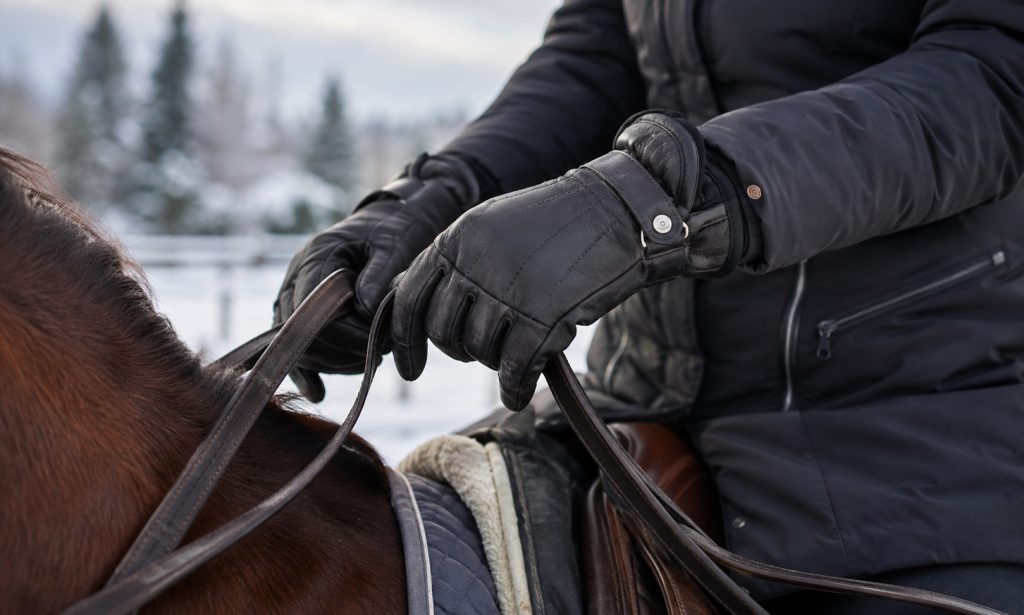
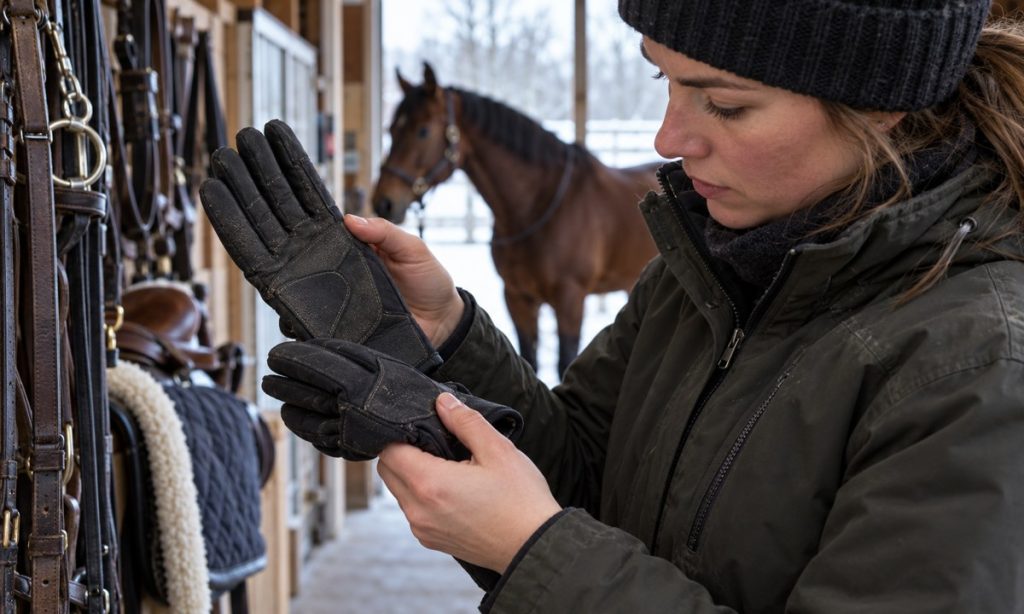
Turn the glove over and compare the palm to the rest of the material. Look for thin spots, holes, peeling synthetic layers, cracked grip dots, smooth shiny patches, or areas where reinforcement has worn through. These are common contact points where reins repeatedly move. Check both hands because wear may be uneven.
Examine the fingertips, thumb web, and stitching around the wrist. A small loose thread may be repairable if the glove remains structurally sound, but a seam that is opening under tension can spread quickly. Check the cuff, elastic, snap, and hook-and-loop closure. A closure that no longer stays secure can let the glove shift while handling a horse.
Put the gloves on and move your fingers as if holding reins. They should not bind, bunch, or slide around. Compare the pair for stretch or shrinkage. Check grip with clean, dry reins at a halt before riding; do not test a questionable glove during a fast or crowded ride. Gloves should support a secure hold, but they cannot compensate for damaged tack or unsafe handling.
Recognize when gloves are no longer reliable
Replace gloves with holes across the palm, a split thumb web, failing seams, loose closures, or peeling grip material. Retire a pair if it has become slick, stiff, or too stretched to stay in place. A repair is reasonable only when it restores the original fit and strength without creating a ridge that rubs the hand or changes rein feel.
Keep a dry spare pair available, especially in cold or wet weather. Riders discussing winter gloves in public forums describe different preferences for warmth and dexterity; those personal reports are useful context, not a durability test. Choose and maintain gloves based on fit, grip, and condition rather than a single anecdote.
Build a simple care routine
After each ride, brush off dirt and hang the gloves open to air. Wash them when sweat or grime has built up, following the care label. At the same time, check palms, fingertips, seams, closures, and lining. Note when a pair begins to wear so you can replace it before a hole or slick patch becomes a problem.
Store clean, dry gloves together in a ventilated location. Keep leather away from excess moisture and do not leave gloves crumpled beneath heavy tack. For winter riding, keep a second dry pair ready so a soaked glove does not force you to choose between riding with poor grip and wearing a damp one.
If gloves have liners, check that the liner lies flat and does not twist inside the fingers. A bunched lining can make a glove feel tight even when the outer shell is the right size. Remove lint and hay from hook-and-loop surfaces with a soft brush, and make sure closures are fully fastened before storing. These small steps help keep the pair easy to put on and less likely to snag on other gear.
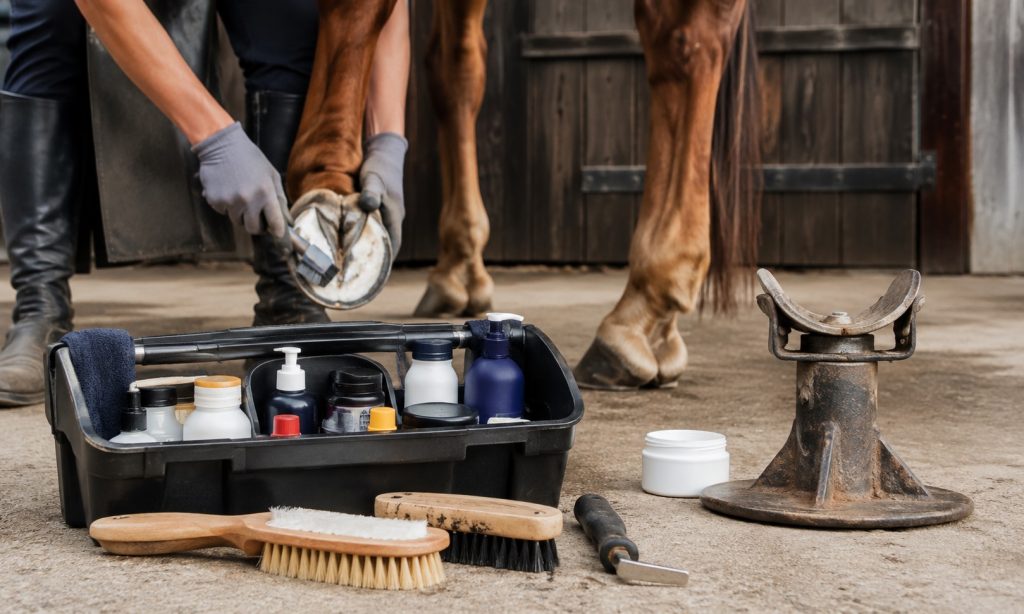
Keep a small care kit for the gloves: a soft brush, a clean cloth, and a ventilated place to dry them. Store cleaner items separately from wet barn gear so mud and manure do not transfer back to the palms. Check the pair again before a ride if they have been stored for a long period.
Frequently Asked Questions
Can riding gloves go in the washing machine?
Only if the care label permits it. Leather, waterproof layers, and coated palms may need hand cleaning or special care.
How do I clean leather riding gloves?
Avoid soaking. Wipe gently with a lightly damp cloth and use only care products allowed by the maker.
Can I dry gloves on a heater?
No. Let them air-dry away from direct heat, which can shrink fabric, stiffen leather, or damage coatings.
When should I replace riding gloves?
Replace them when palms are slick or worn through, seams open, closures fail, or the fit no longer stays secure.
Should winter gloves feel bulky?
Warmth matters, but excessive bulk can reduce rein feel. Try them with your usual reins while standing safely at a halt.
Final Words
Clean gloves according to their material and care label, dry them slowly, and inspect the palms, fingertips, seams, and closures regularly. Retire a pair when wear affects grip or fit, and keep a dry spare available for winter rides. When choosing gloves for winter horse riding, check that insulation still allows you to feel and hold the reins comfortably. A few careful checks after rides can help you notice wear before it changes how the gloves function.