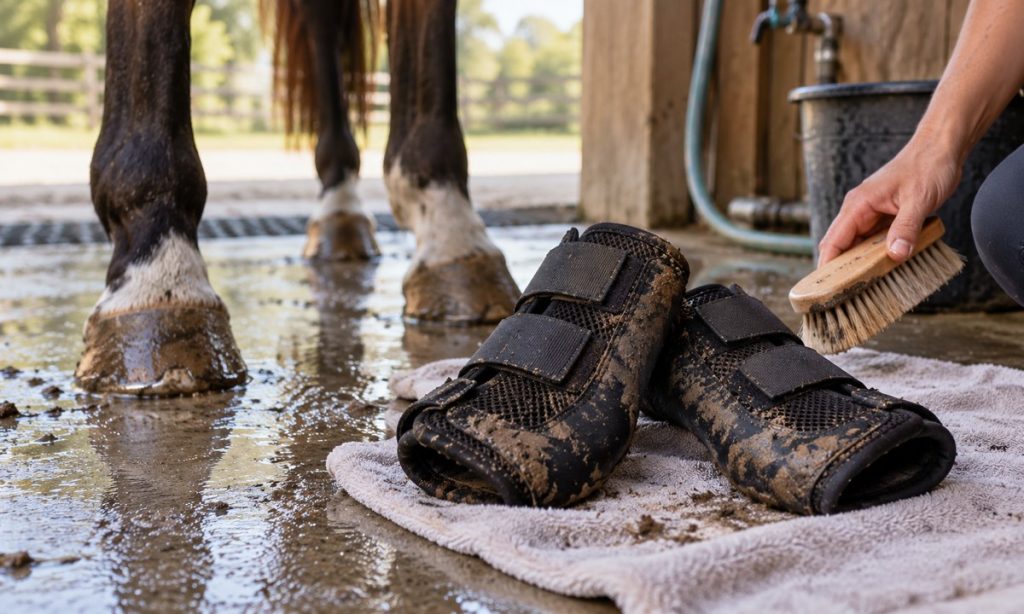
Mud can pack around straps, seams, and the inside of horse boots during a trail ride. Leaving it to dry in place can make the boots harder to clean and may leave grit against the horse’s skin the next time they are used. A simple routine after the ride is to remove the boots, check the horse’s legs, rinse or brush away mud according to the boot material, and let everything dry fully before storage. If you are comparing horse boots for trail riding, maintenance and fit matter along with coverage. This guide is about boots worn by the horse, such as protective leg or hoof boots; rider footwear needs separate care. Always follow the boot maker’s instructions. A quick post-ride routine helps prevent grit from staying against the horse’s skin.
Remove boots and check the horse first
After stopping in a safe place, remove the boots as soon as practical and before mud and sweat dry against the leg. Undo straps fully rather than pulling a boot over a muddy joint. Check the skin and hair beneath the boot for grit, rubbing, dampness, swelling, cuts, or heat. A quick visual and hands-on check can show whether debris has collected or the boot has shifted.
If you find a wound, marked swelling, persistent heat, lameness, or significant discomfort, contact your veterinarian. Cleaning a boot does not address an injury. Do not put a dirty boot back on simply because the ride is not over; remove debris and check fit and skin before deciding whether it is safe to continue.
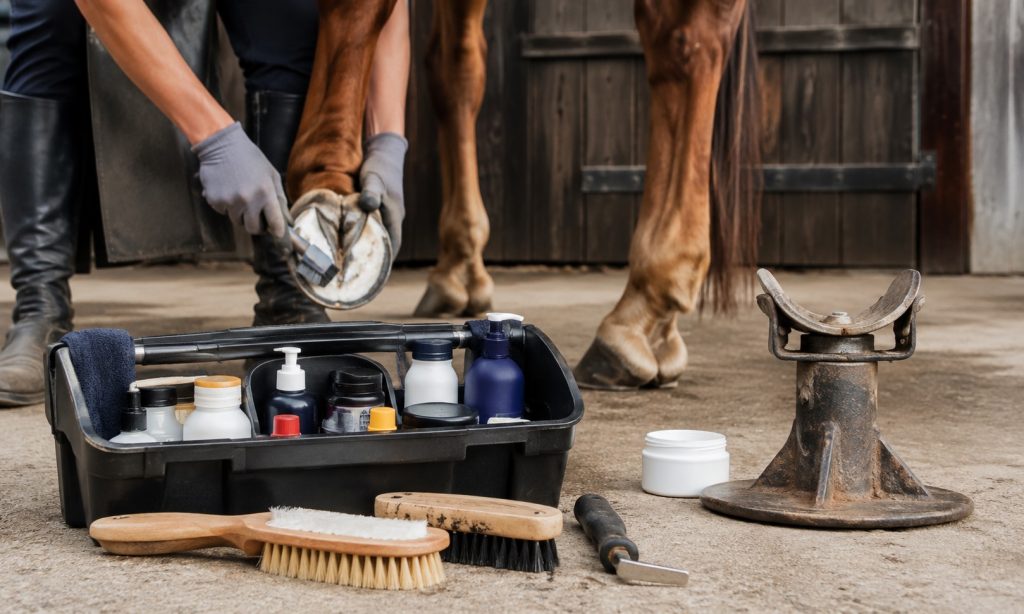
For hoof boots, check the sole, frog area, heel bulbs, and hairline after removal, and look inside for stones or packed mud. If the boot has rubbed or the horse is foot-sore, stop using it and ask a farrier or veterinarian for guidance as appropriate.
Brush off loose mud before rinsing
If the mud is wet and loose, rinse it gently with clean water in a designated wash area. If it has started to dry, let it dry completely and brush it off with a soft or medium brush before using water. This can reduce smearing grit into fabric or closures. Work over a surface where dirty runoff will not reach feed, water, or a horse’s bedding.
Open hook-and-loop straps and remove detachable liners if the manufacturer allows it. Brush mud from seams, straps, buckles, vents, and the inside of the boot. Use fingers or a soft brush rather than a sharp tool that could cut fabric or damage stitching. Do not pull on elastic or stretch a strap to dislodge a clump.
For rubber or plastic hoof boots, rinse the sole and tread grooves to clear packed soil and gravel. For fabric, neoprene, or leather components, check the care label before soaking or using soap. Boot designs vary, and machine washing, detergents, and heat may damage some materials.
Wash only as the boot permits
Use cool or lukewarm water and a mild cleaner only if the boot maker permits it. Avoid bleach, harsh solvents, high-pressure washing, and strong disinfectants unless the manufacturer specifically approves them. These can weaken stitching, adhesives, elastic, coatings, or hook-and-loop fasteners. Do not mix cleaners.
Rinse soap residue away from areas that contact the horse’s skin. If the boot has a removable liner, wash it separately only when the instructions allow. Clean both boots when practical so one is not left with more dirt or residue than the other. Use dedicated brushes and avoid sharing boots between horses unless the manufacturer and veterinarian agree on a cleaning and biosecurity method.
Horse owners discussing muddy rides report different approaches depending on boot style and local mud; those experiences are anecdotal. The material label and the boot’s construction should determine whether you rinse, brush, hand-wash, or use a machine.
Dry the boots completely
Shake off excess water and blot the boots with a clean towel. Open straps and closures so air can reach the inside. Let the boots air-dry in a well-ventilated area away from direct sunlight, heaters, radiators, fires, and a clothes dryer. High heat can warp plastic, shrink fabric, stiffen leather, weaken adhesive, or distort the fit.
Do not store a damp boot in a sealed bag or closed tack trunk. Moisture trapped inside can leave odors and make materials deteriorate. Make sure liners and straps are dry before reassembly. If a boot is still wet when it is time to ride again, use a clean, dry spare rather than putting a damp boot back on the horse.
Inspect straps, seams, and contact surfaces
When the boots are dry, inspect stitching, edges, closures, elastic, buckles, and straps. Look for fraying, cracks, holes, broken hooks, stretched elastic, delamination, or a strap that no longer secures. Check the inside for rough seams, embedded grit, or a hardened area that could rub. Replace damaged components only with parts approved for the boot.
Before the next ride, check that each boot fits the correct leg and sits as intended. It should not twist, slide, pinch, or create a pressure point. Recheck after mounting and again when you stop. A clean boot that is poorly fitted can still cause discomfort or come loose.
Store boots ready for the next ride
Store dry boots in a clean, ventilated place, away from direct sun, chemicals, and sharp tools. Keep pairs together and label them if several horses use similar equipment. Close hook-and-loop straps before storage to reduce lint and debris buildup, but do not fold a boot in a way that permanently creases or distorts it.
A short post-ride log can help if boots repeatedly collect mud or rub in the same location. Note which trail conditions, leg, and boot style were involved. If the same problem recurs, reassess fit, use, and the horse’s skin or hoof condition with a qualified professional rather than relying on more cleaning alone.
For boots with removable straps, note the original routing before taking them apart so they can be reassembled correctly. Check the manufacturer’s guide if a buckle, insert, or closure is difficult to remove. If muddy water has entered a lined boot, clean and dry the liner completely before putting it back in place.
Frequently Asked Questions
Should I rinse horse boots immediately after a muddy ride?
Remove the boots and check the horse first. Rinse loose mud or let packed mud dry and brush it off, following the boot’s care instructions.
Can horse boots go in a washing machine?
Only if the manufacturer permits it. Some fabrics and liners tolerate machine washing; leather, adhesives, and molded parts may not.
Can I dry horse boots on a heater?
No. Air-dry them away from direct heat to avoid warping, shrinkage, stiffening, or adhesive damage.
Should I disinfect boots between horses?
Ask your veterinarian and follow the boot maker’s care directions. Use only a compatible method that can be rinsed or dried as directed.
When should I stop using a pair?
Stop if a boot has a failed closure, sharp edge, damaged seam, distorted shape, or repeatedly slips or rubs.
Final Words
Remove muddy boots promptly, check the horse’s skin or hoof, clear grit from every closure and contact surface, and dry the equipment fully before storing it. Use only cleaning methods allowed for the boot material, and replace equipment that no longer fits or secures properly. When selecting horse boots for trail riding, plan for routine cleaning and inspection as part of their use. If the horse shows soreness, injury, or repeated rubbing, pause and get qualified advice.