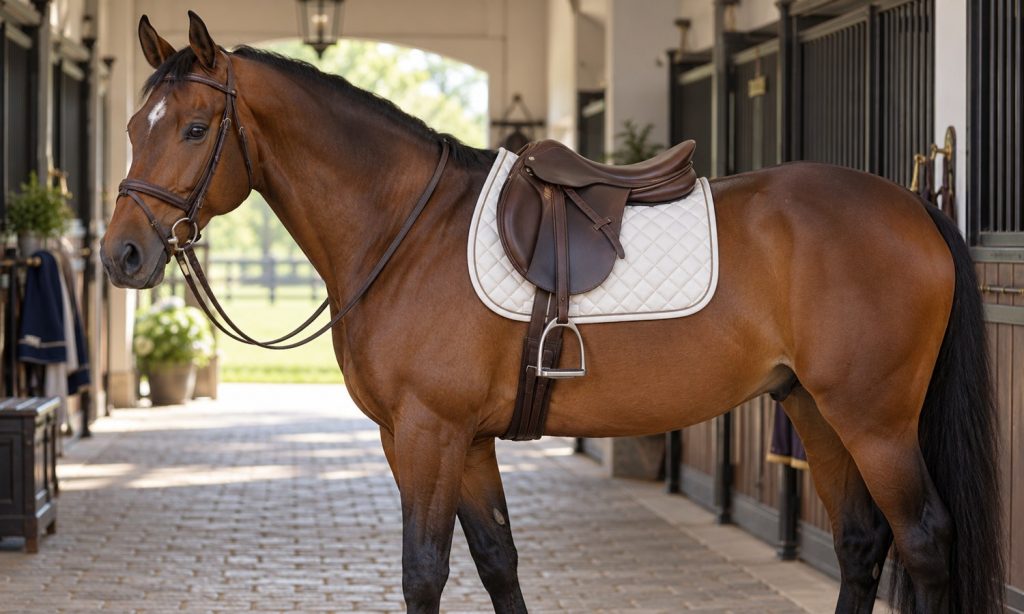
Choosing among the best saddle pads for horses starts with the saddle and the horse’s shape, not the color or thickness of the pad. A pad should lie smoothly, clear the withers and spine, and avoid bunching or restricting the shoulder. We compared seven options for different uses: lightweight English schooling, contoured western riding, fitter-guided adjustment, rider-seat cushioning, and jump-specific styles. Product features come from current Amazon Creators API listings, including the materials and dimensions provided by sellers; they are not guarantees of pressure relief or injury prevention. A saddle pad cannot repair a saddle that does not fit. Measure the saddle and horse, follow care instructions, and consult a qualified saddle fitter if tack shifts or the horse shows soreness. Our choices help narrow the shopping list while keeping fit and horse comfort at the center.
Quick Picks
| Product | Best For | Key Advantage | Buy | |
|---|---|---|---|---|
| TuffRider Basic All Purpose Saddle Pad | Best everyday all-purpose pad | Lightweight quilted cotton-flannel construction | View on Amazon | Jump to Review |
| Weaver Equine Contoured Wool-Blend Felt Pad | Best contoured western pad | Wool-blend felt liner with reinforced spine | View on Amazon | Jump to Review |
| ECP Adjustable Memory-Foam Half Pad | Best customizable half pad | Four shim pockets and 12 movable inserts | View on Amazon | Jump to Review |
| Southwestern Equine OrthoRide Wool Build-Up Pad | Best western build-up option | All-wool contour marketed for high-withered horses | View on Amazon | Jump to Review |
| Weaver Equine Mesh Gel Seat Pad | Best gel seat cushion | Breathable mesh cover with secure straps | View on Amazon | Jump to Review |
| Equestrian Stockholm Close-Contact Jump Pad | Best lightweight jump pad | Cotton shell with bamboo lining | View on Amazon | Jump to Review |
| Harrison Howard Velvet Jump Saddle Pad | Best plush competition style | Waffle lining and elastic stability webbing | View on Amazon | Jump to Review |
1. TuffRider Basic All Purpose Saddle Pad

- Lightweight all-purpose shape
- Cotton-flannel underside
- Channel quilting
- Color choices listed
- No adjustable shims or specialized correction
- Basic padding details
The TuffRider Basic is a straightforward English all-purpose pad with channel quilting and a cotton-flannel underside. Its light weight keeps bulk modest beneath a correctly fitted saddle, and the listing offers several colors. It is a simple schooling or competition layer for riders who want a familiar shape without correction inserts or a thick profile. Check the exact size and cut against your saddle and horse; the word “all-purpose” does not mean it fits every saddle or back.
A flannel underside is a practical choice for routine rides because it is soft and the pad is easy to handle between tack changes. Channel quilting keeps the fill in sections, but the listing does not provide a technical thickness or a pressure map. A pad cannot correct a saddle that bridges, pinches, or shifts. Place it smoothly, clear the withers and spine, then check for wrinkles and uneven sweat marks after riding. Wash and dry it according to the label so the underside stays clean.
The tradeoff is a basic feature set: this model does not have shims, a specialized contour for a particular back, or heavy western-style cushioning. That can be an advantage when the saddle already fits and you only need a clean barrier. Riders wanting impact-modifying layers or a marked correction system should compare other options here. The accessible design and color choices make it a practical everyday purchase, but inspect seams and padding over time and replace it if it becomes lumpy, torn, or permanently compressed.
My Recommendation
TuffRider Basic All Purpose Saddle Pad makes the most sense when its shape and thickness match the saddle already fitted to your horse. Its main advantage is lightweight quilted cotton-flannel construction. The tradeoff is no adjustable shims or specialized correction. Check the size, place the pad smoothly, and assess clearance before mounting. After a short ride, inspect the pad and horse for slipping, bunching, uneven sweat, or irritation. If the saddle feels unbalanced or the horse reacts, stop and ask a qualified saddle fitter or veterinarian to assess the cause. Choose for fit and intended use rather than appearance alone.
2. Weaver Equine Contoured Wool-Blend Felt Pad

- Contoured 31-by-32-inch format
- Wool-blend felt liner
- Reinforced spine and wear leathers
- Traditional woven finish
- May be too thick for some saddle fits
- Requires careful drying
Weaver’s 31-by-32-inch pad combines a contoured shape, single-weave top, and a three-quarter-inch wool-blend felt liner. The listing also describes a reinforced spine and top-grain wear leathers. This build is geared toward western riders seeking a substantial, shaped layer with a traditional woven look. Confirm that the dimensions work with your saddle skirt and horse’s back; a contoured cut should follow the back rather than force a mismatched saddle into position.
Wool-blend felt is often selected for cushioning and moisture handling, but material alone does not establish whether a pad is comfortable for a specific horse. The contour and reinforced spine are the more useful fit details to evaluate when you place it. Make sure the pad does not bunch under the bars or create pressure near the withers. Use the saddle fit as the starting point, then check for even contact and normal movement at walk, trot, and any discipline-specific work.
This western model is thicker and more structured than a thin English schooling pad, so it may be too bulky under a saddle with limited clearance. The wear leathers are intended to protect high-contact areas, while the wool blend requires appropriate cleaning and full drying after a sweaty ride. It is an appealing pick for riders who want a contoured western pad with materials described in detail. If saddle position changes or the horse shows soreness, stop riding and ask a qualified saddle fitter or veterinarian to assess the cause.
My Recommendation
Weaver Equine Contoured Wool-Blend Felt Pad makes the most sense when its shape and thickness match the saddle already fitted to your horse. Its main advantage is wool-blend felt liner with reinforced spine. The tradeoff is may be too thick for some saddle fits. Check the size, place the pad smoothly, and assess clearance before mounting. After a short ride, inspect the pad and horse for slipping, bunching, uneven sweat, or irritation. If the saddle feels unbalanced or the horse reacts, stop and ask a qualified saddle fitter or veterinarian to assess the cause. Choose for fit and intended use rather than appearance alone.
3. ECP Adjustable Memory-Foam Half Pad
- Shim pockets allow placement changes
- Twelve inserts included per listing
- Designed as a half pad
- Useful for fitter-guided adjustments
- Needs careful setup by a qualified fitter
- Extra bulk can worsen a tight saddle
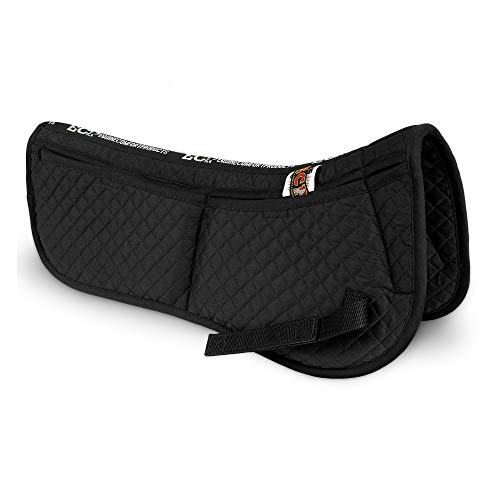
ECP’s correction-style half pad is built around a quilted top, four shim pockets, and twelve memory-foam inserts. The inserts can be moved or adjusted, which offers more flexibility than a uniform pad when a professional is fine-tuning the setup. The listing describes wither relief and several riding disciplines, but those claims should not be treated as a substitute for saddle fitting. Confirm the pad’s shape and compatibility with your saddle before adding any inserts.
The main advantage is adjustability: a rider or saddle fitter can place padding where the fit assessment calls for it instead of adding equal thickness everywhere. That can be useful when a horse’s topline changes, but an incorrect shim arrangement can create new pressure points. Follow the manufacturer’s directions and work with a qualified saddle fitter; do not trim or stack inserts based only on appearance. Recheck balance after changes and monitor the horse’s response during a short, controlled ride.
This is more specialized and potentially more expensive than a basic pad, and the added components mean more setup and cleaning. It may not suit a saddle that already fits well, because extra thickness can make a good fit too tight. It is best considered a tool for a planned correction, not a universal comfort upgrade or injury-prevention guarantee. Keep the inserts organized, inspect them for compression, and reassess the fit as the horse’s condition or saddle changes.
My Recommendation
ECP Adjustable Memory-Foam Half Pad makes the most sense when its shape and thickness match the saddle already fitted to your horse. Its main advantage is four shim pockets and 12 movable inserts. The tradeoff is needs careful setup by a qualified fitter. Check the size, place the pad smoothly, and assess clearance before mounting. After a short ride, inspect the pad and horse for slipping, bunching, uneven sweat, or irritation. If the saddle feels unbalanced or the horse reacts, stop and ask a qualified saddle fitter or veterinarian to assess the cause. Choose for fit and intended use rather than appearance alone.
4. Southwestern Equine OrthoRide Wool Build-Up Pad

- All-wool construction listed
- Contoured western shape
- Build-up profile for fitter assessment
- 32-by-31-inch dimensions listed
- Not a substitute for saddle fitting
- Added thickness may shift balance
The OrthoRide is a western build-up pad made from wool, with a classic contoured shape and a 32-by-31-inch listed size. Its seller positions it for high-withered horses and young horses with less developed shoulder musculature. Those are product descriptions, not a diagnosis or a guarantee of improved fit. Use the pad only after confirming with a saddle fitter that its contour and thickness are appropriate for the horse and the exact saddle.
A build-up pad can change how a saddle sits, so the model’s intended use makes assessment especially important. Before riding, check wither clearance, shoulder freedom, and whether the saddle remains level when girthed. A pad that fills a gap in one position may create pressure elsewhere as the horse moves. Ask a fitter to evaluate the horse and tack together rather than using the pad to mask a saddle that is too wide, narrow, or unstable.
The wool construction and western contour may appeal to riders who want a traditional material and a more substantial profile. The tradeoff is that a corrective build-up layer is not suitable for every horse or every saddle, and the marketplace description does not provide enough detail to prescribe a specific fit. Allow the pad to dry completely and keep it free of grit. If the horse develops soreness, swelling, or reluctance, discontinue use and seek professional advice promptly.Check the saddle’s balance after adjustment.
My Recommendation
Southwestern Equine OrthoRide Wool Build-Up Pad makes the most sense when its shape and thickness match the saddle already fitted to your horse. Its main advantage is all-wool contour marketed for high-withered horses. The tradeoff is not a substitute for saddle fitting. Check the size, place the pad smoothly, and assess clearance before mounting. After a short ride, inspect the pad and horse for slipping, bunching, uneven sweat, or irritation. If the saddle feels unbalanced or the horse reacts, stop and ask a qualified saddle fitter or veterinarian to assess the cause. Choose for fit and intended use rather than appearance alone.
5. Weaver Equine Mesh Gel Seat Pad

- Gel insert targets rider-seat cushioning
- Mesh cover for airflow
- Horn and rear straps
- Hand-washable listing
- Sits on the saddle seat, not under the saddle
- Can change rider feel or seat depth
This Weaver Equine western seat pad pairs a gel insert with a mesh cover and straps that attach over the horn and behind the seat. It is aimed at riders looking for cushioning at the saddle seat during longer rides, rather than a conventional under-saddle blanket. That distinction matters: it sits between the rider and saddle, so compare its shape and attachment points with your saddle before buying. The product listing describes hand washing and quick drying.
The gel layer is intended to soften the rider’s seat contact, while the mesh cover is designed to allow airflow. Secure straps may help keep the pad positioned, but check that they do not interfere with saddle strings, horn use, or movement. The product page makes claims about impact and pressure; individual comfort varies, and a seat pad cannot improve saddle fit for the horse. Keep the tack clean and make sure the pad does not fold or bunch during mounting or riding.
This is a specialized accessory rather than a general-purpose horse back pad, so riders wanting under-saddle cushioning should choose a different model. It may suit long trail or ranch rides where the rider wants a washable gel layer, but the added material changes feel and seat depth. Check the straps and gel for damage, especially after repeated folding or storage. Its mesh construction and quick-care details are practical strengths; measure and test the fit in a safe setting before a long ride.
My Recommendation
Weaver Equine Mesh Gel Seat Pad makes the most sense when its shape and thickness match the saddle already fitted to your horse. Its main advantage is breathable mesh cover with secure straps. The tradeoff is sits on the saddle seat, not under the saddle. Check the size, place the pad smoothly, and assess clearance before mounting. After a short ride, inspect the pad and horse for slipping, bunching, uneven sweat, or irritation. If the saddle feels unbalanced or the horse reacts, stop and ask a qualified saddle fitter or veterinarian to assess the cause. Choose for fit and intended use rather than appearance alone.
6. Equestrian Stockholm Close-Contact Jump Pad

- Jump-specific close-contact shape
- Lightweight padding
- Cotton shell and bamboo lining
- Quick-drying qualities listed
- Discipline-specific cut
- No correction inserts
This close-contact English pad is shaped for a jumping saddle and uses a cotton shell with a bamboo lining, according to the listing. The seller emphasizes lightweight cushioning, a stable jump cut, and moisture management. Its streamlined profile may appeal to riders who prefer less bulk beneath a correctly fitted saddle. Check the size and contour against the saddle panels and horse before ordering, since a jump cut can differ from all-purpose or dressage shapes.
The bamboo lining is marketed as moisture-wicking and quick-drying, while the cotton exterior and quilting provide a tidy everyday layer. These are material and design features, not clinical comfort claims. The pad should lie flat, clear the withers, and remain stable without pulling the skin or restricting shoulder movement. After a ride, inspect it for uneven sweat patterns, dirt, or shifted seams. Wash it according to care instructions and allow the lining to dry completely before storage.
The premium styling and close-contact cut are less versatile than a general-purpose pad, and the product listing does not specify a corrective shim system. That is appropriate for riders whose saddle already fits; it is not the answer to pressure or back soreness. Riders wanting a light pad for jumping, schooling, or competition may appreciate the shape and lining details. If the saddle shifts or the horse reacts, stop and get the fit checked instead of changing pad layers without guidance.
My Recommendation
Equestrian Stockholm Close-Contact Jump Pad makes the most sense when its shape and thickness match the saddle already fitted to your horse. Its main advantage is cotton shell with bamboo lining. The tradeoff is discipline-specific cut. Check the size, place the pad smoothly, and assess clearance before mounting. After a short ride, inspect the pad and horse for slipping, bunching, uneven sweat, or irritation. If the saddle feels unbalanced or the horse reacts, stop and ask a qualified saddle fitter or veterinarian to assess the cause. Choose for fit and intended use rather than appearance alone.
7. Harrison Howard Velvet Jump Saddle Pad

- Velvet outer finish
- Waffle-pattern lining
- Elastic stability webbing
- Jump-specific shape
- Plush build may add bulk
- Marketplace variations need size checking
Harrison Howard’s jump pad combines a velvet exterior, waffle-pattern lining, and a high-density sponge layer, based on the seller’s description. The product is designed for close-contact jumping and training, with elastic webbing intended to help it stay in place. Its plush finish gives a more polished look than a basic cotton pad. Match the shape to a jump saddle and check the selected color and size because marketplace variations can differ.
The waffle lining is described as breathable, and the quilting is intended to support rebound. Those features may make the pad comfortable to handle and visually distinctive, but they do not prove that it will fit every horse or keep a saddle from moving. Check wither clearance, panel coverage, and shoulder freedom before riding. If the pad slips, inspect the saddle and girth arrangement as well as the pad; adding extra layers can change the fit and increase pressure.
The velvet finish and sponge fill add more structure than a thin schooling pad, which can feel bulky beneath some saddles. Clean it gently and inspect the elastic and stitching, since wear can affect how securely it stays positioned. This option is best for riders prioritizing a plush competition look and a shaped jump cut, provided the saddle already fits. If your horse is sensitive or shows back discomfort, consult a veterinarian and qualified saddle fitter instead of relying on a thicker pad to solve the problem.
My Recommendation
Harrison Howard Velvet Jump Saddle Pad makes the most sense when its shape and thickness match the saddle already fitted to your horse. Its main advantage is waffle lining and elastic stability webbing. The tradeoff is plush build may add bulk. Check the size, place the pad smoothly, and assess clearance before mounting. After a short ride, inspect the pad and horse for slipping, bunching, uneven sweat, or irritation. If the saddle feels unbalanced or the horse reacts, stop and ask a qualified saddle fitter or veterinarian to assess the cause. Choose for fit and intended use rather than appearance alone.
How to choose best saddle pads for horses
Start by confirming what your saddle needs and how it fits the horse. Then compare pad shape, thickness, materials, and care. The right pad should support a stable, comfortable setup without hiding a fit problem or adding unnecessary bulk.
Match the cut and thickness to the saddle
English all-purpose, dressage, jumping, and western saddles use different shapes and coverage. Check the pad dimensions against the saddle panels or skirt and the horse’s back. A pad should clear the withers, extend beyond the saddle edges, and lie flat without wrinkles. Too little coverage can expose the horse to rubbing; excessive length or bulk can shift or interfere with the leg and saddle balance. Thicker does not automatically mean more comfortable. A well-fitted saddle may need only a simple layer, while a correction pad should be selected with a qualified fitter rather than by guesswork.
Choose materials for your use and care routine
Cotton and flannel pads are light and familiar for everyday riding. Wool or wool-blend felt offers a more substantial western profile, while mesh, bamboo, and waffle linings are marketed for airflow and moisture handling. Gel seat pads cushion the rider and sit on top of the saddle; they are not under-saddle horse pads. Consider sweat, climate, frequency of washing, and drying time. Look at stitching, wear leathers, elastic, inserts, and attachment points. Follow the manufacturer’s care guidance and retire a pad that is torn, lumpy, compressed, or difficult to clean.
Use correction pads only with fit guidance
Shim pockets and build-up layers can change saddle balance and pressure distribution. They are not universal fixes for a saddle that is too wide, narrow, unstable, or bridging. Ask a qualified saddle fitter to assess horse and tack together, especially if the horse’s shape is changing or there is a history of soreness. Check fit before and after adjusting inserts, and reassess as the horse develops. For more context, see our guide to non-slip trail pads, western saddle measurement guide, and horse carrying-capacity overview. Stop riding and seek veterinary advice for new swelling, persistent soreness, or resistance.
Check for rubbing after every ride.
Frequently Asked Questions
Can a thicker saddle pad fix a poor saddle fit?
No. Extra padding can make a tight saddle tighter or change balance. Ask a qualified fitter to assess the saddle and horse together.
How should a saddle pad sit?
It should lie flat, clear the withers and spine, extend adequately beneath the saddle, and avoid wrinkles or pressure at the edges.
Are gel pads for the horse’s back or rider’s seat?
It depends on the design. The Weaver Equine model here is a rider-seat pad that sits on the saddle; check product placement carefully.
How often should I wash a saddle pad?
Follow the care label and clean it often enough to remove sweat, hair, and grit. Let it dry completely before storing or reuse.
When should I ask a saddle fitter for help?
Seek a qualified fitter if the saddle slips, bridges, pinches, changes balance, or the horse shows soreness or reluctance under saddle.
Final Verdict
The best saddle pad depends on discipline, saddle shape, horse conformation, and whether you need a simple layer or a fitter-guided adjustment. TuffRider is a straightforward all-purpose choice; Weaver’s contoured wool-felt pad serves western riders wanting a traditional build. ECP’s adjustable half pad and Southwestern Equine’s build-up pad call for professional fit guidance. Weaver’s gel seat pad is for rider cushioning, while Equestrian Stockholm and Harrison Howard offer jump-specific shapes. Confirm fit before riding and never use padding to mask discomfort or an ill-fitting saddle.
Affiliate disclosure: This article contains Amazon affiliate links. If you purchase through them, PetAdvisorPro may earn a commission. As an Amazon Associate I earn from qualifying purchases.