
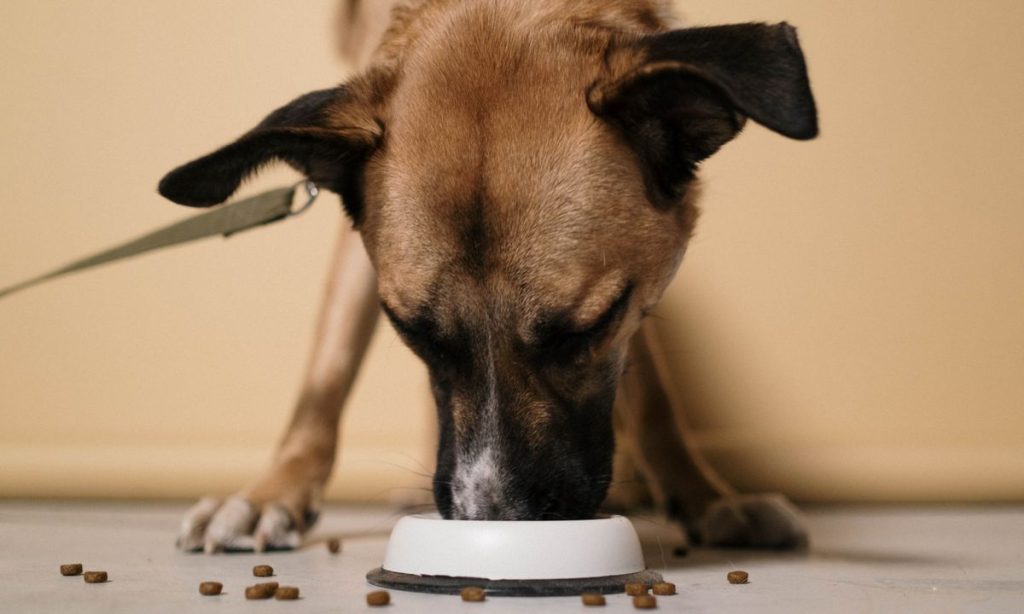
Feeding charts are useful starting points, but the right daily amount depends on much more than your dog’s weight. Age, activity, body condition, neuter status, health, and food calorie density all affect portions. Learning how to estimate daily portions of dog food means translating an approximate energy target into a measurable amount, then adjusting based on your dog’s response. You can begin with the package’s feeding directions and ask a veterinarian for a personalized calorie recommendation. A kitchen scale makes tracking easier, especially when mixing wet food, dry food, and treats. This guide explains the calculations, common mistakes, and signs that a plan needs revision. If your dog has a food allergy, such as a suspected reaction to chicken, diet selection requires separate veterinary guidance. Our related guide to dog food for dogs allergic to chicken addresses different considerations.
Start with body weight and body condition
The first step in how to estimate daily portions of dog food is recording an accurate current weight and an assessment of body condition. Two dogs can weigh the same while having different proportions of fat and muscle. Your veterinarian can teach you to feel the ribs and evaluate the waist using a body condition score. If a dog is overweight, the feeding plan may need to use an estimated ideal weight rather than current weight. Do not guess at a major calorie reduction. Puppies, pregnant dogs, working dogs, and dogs with chronic illness have special needs. Write down the dog’s age, neuter status, exercise routine, and recent weight trend. These details help determine whether the daily estimate is plausible.
Understand the resting energy requirement
A veterinary starting point for how to estimate daily portions of dog food is the resting energy requirement, or RER. The American Animal Hospital Association uses the equation RER = 70 × (body weight in kilograms)^0.75. This approximates the energy a resting animal needs for basic physiological functions. It is not the same as the amount that every dog should eat in a day. Daily needs also reflect normal activity, growth, reproduction, and medical circumstances. The calculation gives a baseline for professional judgment, not a universal prescription. Convert pounds to kilograms by dividing by approximately 2.2. A veterinarian may select a different starting weight or adjustment if the dog is overweight or recovering from illness.
Convert RER into an approximate daily calorie target
The next stage in how to estimate daily portions of dog food is estimating maintenance energy needs. In AAHA’s example, a 10-pound neutered adult dog weighing about 4.5 kilograms has an RER near 216 kilocalories. Applying an illustrative maintenance factor of 1.4 gives roughly 302 kilocalories per day. This is an example from a published guideline, not a feeding instruction for every ten-pound dog. Neutered adults, inactive dogs, intact adults, puppies, and working animals may need different factors. Some individuals require less than table estimates. Have your veterinarian select a reasonable starting target based on the dog’s body condition and lifestyle. Monitor the result rather than treating a formula as certainty.
Read calories per cup, can, or kilogram
For practical how to estimate daily portions of dog food calculations, find the calorie information on the label. Food may list kilocalories per cup, can, pouch, kilogram, or another defined unit. Do not confuse calories per kilogram with calories per serving. If a dry diet supplies 400 kilocalories per cup and the daily target is 300 kilocalories, the theoretical amount is 300 ÷ 400, or three-quarters of a cup per day. That amount changes if treats or other food contribute calories. For more detail, see our dog food label reading guide. Compare foods on actual calorie content rather than assuming equal scoops contain equal energy.
Subtract treats and other extras before dividing meals
Accurate how to estimate daily portions of dog food plans account for every calorie source. Training rewards, dental chews, table scraps, flavored medication carriers, and supplements can all add energy. Many veterinary nutrition resources recommend that treats remain a small portion of total calories, often no more than about ten percent, though the appropriate limit depends on the dog. Ask your veterinarian what is suitable. If a dog has a daily plan of 300 kilocalories and receives 20 kilocalories in approved treats, about 280 kilocalories remain for the complete diet. Do not let extras displace essential nutrition. For puppies or dogs receiving prescription food, unplanned treats may also interfere with growth or medical treatment.
Divide the daily total into consistent meals
Once you have a daily target, how to estimate daily portions of dog food becomes a meal-scheduling problem. Many healthy adult dogs do well with their daily ration divided into two meals, while puppies usually need more frequent feeding. The exact schedule depends on age, household routine, and medical needs. If the total is three-quarters of a cup, two equal meals would each contain three-eighths of a cup before accounting for treats or other foods. A digital kitchen scale can simplify small or irregular portions. Avoid loosely filling cups or using an unrelated household container. For a broader explanation of feeding timing, see our dog feeding guide. Predictable measurement helps you assess appetite and avoid accidental overfeeding.
Handle mixed wet and dry diets carefully
Combining foods adds another step to how to estimate daily portions of dog food. Calculate each ingredient’s share of the day’s calorie target instead of combining full recommended amounts from both labels. For example, a plan might assign half the daily calories to wet food and half to dry food. Divide each calorie allocation by the stated calories per can or cup to find the amount needed. The math should use the food’s actual label, not a typical value from a different product. Keep the mix nutritionally appropriate and discuss major dietary changes with your veterinarian. Dogs with gastrointestinal disease, allergies, or special health needs may require a more controlled plan, and random ingredient substitutions may make their condition harder to manage.
Track weight and adjust with veterinary guidance
The most important part of how to estimate daily portions of dog food is reassessment. Weigh your dog consistently using the same scale or a veterinary clinic scale. Monitor body condition, muscle condition, appetite, stool, and energy. A sudden change in body weight is not always caused by food and may need medical evaluation. If your dog gradually gains excess fat, the veterinarian can adjust intake and activity safely. If the dog loses weight unexpectedly, seek assessment rather than automatically feeding much more. Use a simple log of actual portions, treats, exercise, and weight checks. Our guide to how veterinarians monitor diet changes explains why follow-up observations matter.
Avoid common portion-estimation mistakes
Several errors can undermine how to estimate daily portions of dog food. The first is assuming every cup of kibble contains the same calories. Another is following package ranges without considering the dog’s current body condition. A third is forgetting treats, chews, and meal toppers. People also confuse a daily feeding amount with a per-meal amount, accidentally doubling intake. Finally, abrupt calorie cuts can be dangerous or nutritionally inappropriate, especially for puppies or animals with disease. Keep a copy of the food label and note when the formulation or package changes. Recalculate portions whenever you switch foods or change the feeding schedule. The goal is a repeatable process that you and your veterinarian can review, not mathematical perfection.
Consider food allergies and medical diets separately
The closing step of how to estimate daily portions of dog food is checking whether other restrictions change the plan. A dog with a confirmed food allergy may need a veterinarian-selected elimination diet or a restricted ingredient plan. A calculation cannot determine which proteins are safe. If you suspect a chicken allergy, consult the veterinarian before replacing the diet. Our related guide on questions about possible canine food allergies covers diagnostic conversations. Kidney disease, pancreatitis, diabetes, heart disease, and other conditions may also affect calories, nutrients, or feeding schedules. Medical diets must be handled as treatment plans. Formulas remain tools for informed discussion, not substitutes for veterinary prescriptions.
Frequently Asked Questions
Can the package feeding chart tell me exactly how much to feed?
No. It provides a starting range. Your dog’s weight, body condition, health, activity, and response determine whether adjustments are needed.
How do I convert daily calories into cups of dry food?
Divide the calories allocated to that food by its stated kilocalories per cup. Remember to account for treats and other foods.
Do puppies use the same calorie factors as adults?
No. Growing puppies have different requirements. Ask a veterinarian for an age-appropriate feeding plan.
Should I subtract calories from training treats?
Yes. Treat calories count toward total intake. They should not displace essential nutrients from the complete diet.
When should I recalculate my dog’s daily portion?
Review after a food change, meaningful weight or activity change, life-stage transition, or veterinary recommendation.
Final Words
Learning how to estimate daily portions of dog food means using calorie labels and a sensible starting target, then monitoring weight and body condition. Treats count, mixed diets require separate calculations, and formulas cannot replace individualized care. For dogs with dietary restrictions, see our discussion of dog food for dogs allergic to chicken alongside your veterinarian’s guidance. A feeding plan is most useful when it is measurable, nutritionally appropriate, and reviewed over time.
Reference
American Animal Hospital Association: “2021 AAHA Nutrition and Weight Management Guidelines for Dogs and Cats,” including “Energy Requirement Calculations.” American Animal Hospital Association: “Weight Reduction in the Obese Pet.”









