
Introduction
Learning how to trim dog nails safely and recognize the quick protects your dog from painful cuts while helping the paws stay comfortable. The quick is the living tissue inside the nail that contains nerves and blood vessels. On pale nails, you can often see its pink shape. On black nails, it is much harder to judge where it ends, so small cuts and regular inspection are essential.
You do not have to finish every paw in one session. A calm dog and a clear view matter far more than speed. Our guide to nail clippers for dogs with black nails discusses equipment characteristics, while this article explains safe handling, the signs to watch for while trimming, what to do if bleeding occurs, and when to ask a veterinarian or groomer to demonstrate the process.
Why nail length matters for comfort and movement
A nail that grows too long can change how the paw meets the ground and may catch on fabric, flooring, or outdoor surfaces. Some nails curl inward, particularly dewclaws that do not wear against the ground. Overgrown nails can become painful and may eventually dig toward the paw pad. Regular inspection helps you notice changes before they cause obvious trouble.
Not every dog wears nails down equally. Walks on hard surfaces may shorten some nails, while indoor activity or softer ground may do little. Front and back feet can differ. Check the nails individually rather than assuming they all need the same trim. If your dog has a split, infected, or severely curved nail, seek veterinary care instead of attempting a deep home cut.
Signs that it may be time to trim
Look for sharp hooks at the tips, repeated snagging, or nails touching the floor when the dog stands naturally. Clicking on hard flooring can be a clue, but it is not a perfect test. Evaluate the actual paw shape, especially in dogs with unusual toe structure. Ask a professional to show you an appropriate length for your dog if you are unsure.
Find the quick before you start clipping
How to trim dog nails safely and recognize the quick begins with an anatomical check. The outer nail is hard keratin. Inside, the quick supplies the growing nail. Cutting the hard tip is usually comfortable when performed correctly; cutting into the quick can hurt and bleed. Good lighting, a steady paw, and a sharp trimming tool make it easier to work conservatively.
For light-colored nails, look for the pink area visible through the shell. Leave a safety margin rather than cutting right up to the color. On dark nails, the quick may not be visible from the side. Begin by removing only the sharp tip and inspecting the cut surface after each tiny snip. Stop before you reach a darker, moist-looking center or any sign of discomfort.
The dark-nail cut surface
Experienced groomers may notice a small central spot that becomes more distinct as a cut approaches the quick. Appearance varies, so this is a caution signal, not a reliable promise of safety. If you cannot interpret what you see, stop early. A tiny amount of nail left long is better than a painful cut. Ask a veterinarian or groomer to demonstrate on your own dog’s black nails.
Prepare a calm space and the right basic supplies
Choose a quiet, well-lit area with a nonslip floor or mat. Have a clean towel, a suitable sharp pet nail trimmer, and a small amount of styptic powder available. A helper can give calm rewards if your dog is comfortable being handled. Keep the session short enough to finish before the dog becomes frightened or restless. Forced restraint increases the chance of sudden movement.
Scissor-style clippers and nail grinders are common options, but no one tool suits every nail shape or temperament. Dull or poorly sized cutters can crush or split a nail. A grinder offers gradual shortening but may frighten dogs because of its noise or vibration. The guide to dog nail trimmer types explains common differences. Choose a method you can control accurately.
Introduce equipment before trimming
Let your dog sniff the closed tool from a safe distance and reward relaxed behavior. Touch a paw briefly, then release it. Next, practice holding a toe gently without cutting. You can spread these steps over several sessions. If the dog pulls away, growls, or becomes distressed, stop and return to a simpler stage. A cooperative dog is safer than a restrained dog struggling to escape.
A careful step-by-step trimming routine
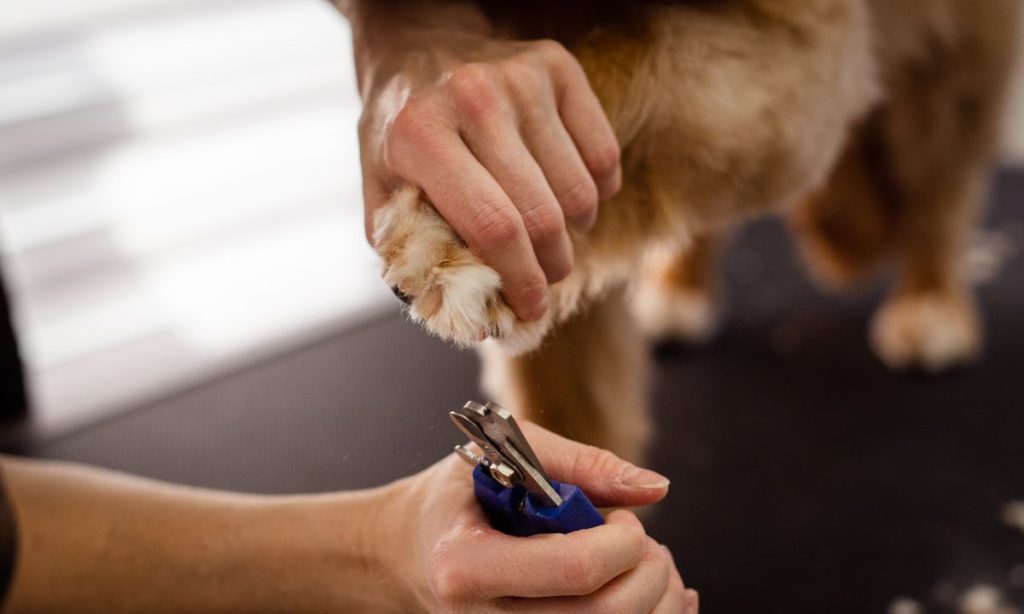
Position the paw so you can see the nail clearly and support the toe without twisting it. Identify the end of the quick where possible. Remove a very small piece from the nail tip rather than attempting the final length at once. Inspect the newly cut surface and your dog’s reaction. For dark nails, repeat only while you remain confident that a safe margin remains.
Work from nail to nail at the dog’s pace. Check every dewclaw because it may need a different angle or more attention. Offer a reward between successful steps and finish after a few calm trims if necessary. Avoid cutting at a rushed angle or pulling the paw sharply into position. If fur obscures the nail, move it gently out of the way before cutting.
How much should I remove at once?
For an uncertain or dark nail, start with approximately 1 to 2 millimeters or even less at the tip, then reassess. This is not an instruction to keep clipping until you reach a fixed length. Nail shape and quick location vary. If you encounter a central area that appears softer, darker, or more moist, stop. Your dog may need several short sessions instead of one deep trim.
What to do if you nick the quick
Even careful handlers occasionally trim too close. A nicked quick can produce visible bleeding and sudden pain. Stop clipping immediately, reassure your dog, and apply gentle pressure with clean material. A pet-safe styptic product used as directed can help stop minor bleeding. Do not keep trimming because the incident seems small; allow the dog to recover and regain confidence.
If bleeding continues, the nail is torn near the base, or your dog shows substantial pain, contact a veterinarian promptly. Seek urgent guidance for heavy bleeding or other concerning symptoms. Do not use unfamiliar human medications, caustic substances, or improvised adhesives on a nail wound. Note which nail was affected so you can monitor it and explain the incident if medical care is needed.
After a minor bleeding event
Keep the paw reasonably clean and watch for renewed bleeding, swelling, limping, or excessive licking. Follow your veterinary team’s wound-care instructions if they give any. Pause nail trimming until your dog is comfortable again. For a dog who becomes fearful after the incident, rebuild tolerance through short, rewarding handling sessions before trying another trim.
Extra care for black nails and long quicks
How to trim dog nails safely and recognize the quick is more challenging when nails are dark or neglected. The inner quick can extend farther forward as a nail becomes very long. Trying to cut an overgrown nail to an ideal length in one attempt risks pain. Gradual maintenance can allow the quick to retreat over time, but the schedule varies and should be guided by your veterinarian or groomer.
A grinder may permit small changes, yet heat and friction can hurt if it stays against the nail too long. Use short touches, keep fur away from moving parts, and stop if the dog becomes uncomfortable. Our guide to nail grinders for nervous dogs offers context on noise and handling needs. Do not expect a grinder to make an invisible quick visible.
When professional grooming is the safer choice
Ask for a demonstration if your dog has all-black nails, long quicks, thick nails, or a history of panic during grooming. Some dogs need a behavior plan designed by a veterinary professional. Injured paws, severe pain, or repeated bleeding should be assessed clinically. A professional can trim a small safe amount and show you how to maintain it at home.
Make nail care a repeatable routine
Check nail length regularly and aim for short, low-stress sessions before the tips become severely overgrown. The exact interval depends on growth, activity, surface contact, and the dog’s tolerance. Some dogs need frequent attention; others wear down several nails naturally. Record the last trim and note which nails were difficult. This information makes future sessions more predictable.
Include paw inspection in your broader dog grooming basics routine. Check between toes for debris, look for cracked pads, and notice swelling or unusual odor. Keep tools clean and dry between sessions. Good grooming should not feel like a race. If a routine makes your dog increasingly anxious, slow down and seek help with cooperative handling.
Frequently Asked Questions
The quick is the main safety concern during home nail trimming, especially for dark nails. These answers focus on practical limits rather than forcing a perfect-looking result. If you feel uncertain, a professional demonstration is often the fastest route to safer care.
Every dog has a different nail shape and tolerance for paw handling. The goal is comfortable movement and a cooperative grooming routine. Stop when you see warning signs, not only when you have reached a predetermined nail length.
Can I see the quick in black dog nails?
Usually not clearly from the outside. Remove only tiny amounts, inspect each cut surface, and stop before a concerning central spot appears. Professional guidance helps.
How often should dog nails be trimmed?
There is no universal interval. Check regularly and base trimming on nail length, wear, and your dog’s comfort. Dewclaws may need separate attention.
Can I use a nail grinder instead of clippers?
Yes, if your dog tolerates it and you use short, controlled contacts. Grinders can heat the nail and still reach the quick, so caution is essential.
What should I do if a nail starts bleeding?
Stop trimming, apply gentle pressure, and use styptic powder as directed for minor bleeding. Contact a veterinarian if bleeding persists or damage is severe.
Should I restrain a frightened dog to finish the trim?
No. Struggling increases injury risk. Stop, reward calm handling, and seek help developing a cooperative plan if fear persists.
Final Words
Learning how to trim dog nails safely and recognize the quick is mainly about patience and observation. Identify the living tissue where you can, take tiny cuts, inspect the cut surface, and stop early when uncertain. Comfortable handling and appropriate tools make the routine safer than rushed attempts to achieve a perfect length.
If dark nails make the quick difficult to judge, revisit our guidance on nail clippers for dogs with black nails and consider an in-person demonstration. A small, careful trim today is better than a painful deep cut. For injuries, repeated bleeding, or severe anxiety, ask your veterinarian or a qualified professional for assistance.









