
The best wet food for cats to lose weight depends on a safe calorie target and a food the cat will reliably eat. Moisture-rich meals can be useful for portion planning, but wet food does not automatically cause weight loss. Cats must not be crash-dieted or left without enough food, since prolonged inadequate intake can contribute to serious disease. A veterinarian should establish the target body condition, daily calorie budget, and monitoring schedule. This guide compares seven identifiable wet cat foods marketed for weight care, appetite control, or ideal-weight support. We evaluate textures, formula purposes, and limitations without claiming personal testing or guaranteeing results. Use the choices to discuss an appropriate plan with your veterinarian, and check the exact calories on each package. Regular meals, measured treats, and gradual adjustments are central to safe progress.
Quick Picks
The following wet foods differ in intended weight-management use, texture, and ingredient direction.
| Product | Best For | Key Advantage | Buy | |
|---|---|---|---|---|
| Royal Canin Appetite Control Care Wet | Frequent begging during weight care | Appetite-control formula | View on Amazon | Jump to Review |
| Royal Canin Weight Care Wet Cat Food | Slightly overweight adult cats | Weight-care slices in gravy | View on Amazon | Jump to Review |
| Hill’s Science Diet Perfect Weight Liver & Chicken | Canned weight management | Liver-and-chicken wet meal | View on Amazon | Jump to Review |
| Purina Pro Plan Weight Management Turkey & Rice | Turkey pâté with portion planning | Weight-focused turkey pâté | View on Amazon | Jump to Review |
| Purina Pro Plan Weight Management Variety Pack | Multi-flavor meal planning | Chicken, tuna and salmon options | View on Amazon | Jump to Review |
| Blue Buffalo True Solutions Total Support Wet | Chicken-based healthy weight support | Chicken and L-carnitine | View on Amazon | Jump to Review |
| Purina ONE Ideal Weight Salmon Wet | Fish-flavored weight awareness | Salmon in sauce | View on Amazon | Jump to Review |
1. Royal Canin Appetite Control Care Wet

What We Like
- Appetite-focused positioning
- Moderate-fat design
- L-carnitine noted
- Adult wet nutrition
What We Don’t Like
- Begging can have other causes
- Must measure portions
Royal Canin Appetite Control Care Wet is selected for frequent begging during weight care. The product listing emphasizes appetite control, moderate fat, and L-carnitine in adult wet food. It addresses a different challenge from ordinary calorie restriction: managing feeding expectations. Begging alone does not prove a cat is underfed. The current identifiable listing supports these features, not a promise of a particular rate of weight loss. Read the complete-and-balanced nutrition statement and calorie information for the exact formula. Product variations may differ. Any weight plan should begin with a veterinarian’s assessment of the individual cat, not just a package claim.
Keep a record of who feeds the cat and how many snacks are offered. Sudden changes in appetite can signal medical problems requiring evaluation. Unlike a simple preference change, deliberate weight reduction requires careful calorie planning. Measure wet meals and count every treat or dry-food snack. Make sure the cat continues eating sufficiently during a gradual transition. A cat that stops eating needs prompt veterinary advice. Appetite, behavior, and regular weigh-ins are important alongside the contents of the can.
The formula’s name does not guarantee that hunger behavior will stop. Food acceptance and measured daily calories remain critical. Consider the flavor, texture, cost per feeding day, and the cat’s actual meal acceptance. A new wet food should not be used to force fasting or dramatic short-term loss. Monitor body condition over time and adjust the ration with veterinary guidance. If vomiting, weakness, prolonged food refusal, or unexpected changes occur, arrange veterinary care rather than switching randomly among weight-focused products.
My Recommendation
This is worth discussing when frequent begging complicates a veterinarian-approved weight plan. Its stated appetite-control purpose differentiates it from other cans. Monitor whether the cat eats a safe amount and avoid any prolonged fasting during the transition. Gradual monitoring and reliable feeding acceptance remain essential to the decision.
2. Royal Canin Weight Care Wet Cat Food

What We Like
- Adult weight-care focus
- Slices in gravy
- L-carnitine listed
- Fiber included
What We Don’t Like
- Not a substitute for vet plan
- Gravy texture may not suit all
Royal Canin Weight Care Wet Cat Food is selected for slightly overweight adult cats. The listing describes an adult weight-care formula with gravy slices, fiber, and L-carnitine. This product is targeted toward cats needing modest weight management rather than general feeding. Study claims in product descriptions are not individual guarantees. The current identifiable listing supports these features, not a promise of a particular rate of weight loss. Read the complete-and-balanced nutrition statement and calorie information for the exact formula. Product variations may differ. Any weight plan should begin with a veterinarian’s assessment of the individual cat, not just a package claim.
Ask your veterinarian whether the cat needs calorie reduction and at what rate. Measure the actual cans served, not just the number of daily feeding occasions. Unlike a simple preference change, deliberate weight reduction requires careful calorie planning. Measure wet meals and count every treat or dry-food snack. Make sure the cat continues eating sufficiently during a gradual transition. A cat that stops eating needs prompt veterinary advice. Appetite, behavior, and regular weigh-ins are important alongside the contents of the can.
The gravy texture may not appeal to every cat. A specially positioned food cannot compensate for oversized meals or extra treats. Consider the flavor, texture, cost per feeding day, and the cat’s actual meal acceptance. A new wet food should not be used to force fasting or dramatic short-term loss. Monitor body condition over time and adjust the ration with veterinary guidance. If vomiting, weakness, prolonged food refusal, or unexpected changes occur, arrange veterinary care rather than switching randomly among weight-focused products.
My Recommendation
Royal Canin Weight Care is a distinct option for a slightly overweight adult cat following a safe veterinary weight plan. Its specific purpose and gravy texture are useful points of comparison. Confirm daily calories rather than assuming a standard number of cans.
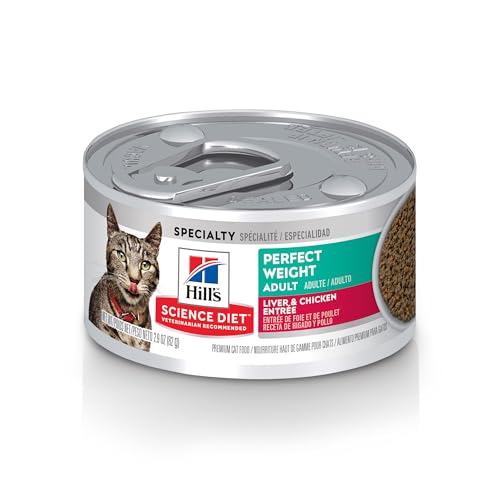
3. Hill’s Science Diet Perfect Weight Liver & Chicken
What We Like
- Dedicated weight purpose
- Liver and chicken
- Wet can serving
- Adult formula
What We Don’t Like
- Flavor may not suit all
- Results vary by calorie plan
Hill’s Science Diet Perfect Weight Liver & Chicken is selected for canned weight management. The product listing identifies an adult Perfect Weight liver-and-chicken canned formula. It has a clear weight-management purpose distinct from ordinary maintenance food. Manufacturer performance claims are not promises for a particular cat. The current identifiable listing supports these features, not a promise of a particular rate of weight loss. Read the complete-and-balanced nutrition statement and calorie information for the exact formula. Product variations may differ. Any weight plan should begin with a veterinarian’s assessment of the individual cat, not just a package claim.
Ask your veterinarian about the safe pace of weight reduction and follow-up weigh-ins. Monitor appetite daily instead of focusing exclusively on the number on a scale. Unlike a simple preference change, deliberate weight reduction requires careful calorie planning. Measure wet meals and count every treat or dry-food snack. Make sure the cat continues eating sufficiently during a gradual transition. A cat that stops eating needs prompt veterinary advice. Appetite, behavior, and regular weigh-ins are important alongside the contents of the can.
The liver-and-chicken flavor may not appeal to every cat. An apparently appealing diet is inappropriate if the cat persistently refuses it. Consider the flavor, texture, cost per feeding day, and the cat’s actual meal acceptance. A new wet food should not be used to force fasting or dramatic short-term loss. Monitor body condition over time and adjust the ration with veterinary guidance. If vomiting, weakness, prolonged food refusal, or unexpected changes occur, arrange veterinary care rather than switching randomly among weight-focused products.
My Recommendation
Hill’s Perfect Weight can be compared when a veterinarian recommends structured adult weight control. Its specific purpose is the useful difference. Check flavor acceptance carefully and seek prompt guidance if food refusal or other health changes occur. Gradual monitoring and reliable feeding acceptance remain essential to the decision.
4. Purina Pro Plan Weight Management Turkey & Rice

What We Like
- Turkey-and-rice formula
- Weight-management focus
- Pâté texture
- Protein for muscle maintenance
What We Don’t Like
- Pâté may be refused
- Calories still need calculation
Purina Pro Plan Weight Management Turkey & Rice is selected for turkey pâté with portion planning. The current listing identifies a turkey-and-rice wet formula designed for adult weight management. Its pâté texture makes it distinct from sliced-gravy products. The product’s protein positioning is relevant, but cannot establish weight loss for an individual cat. The current identifiable listing supports these features, not a promise of a particular rate of weight loss. Read the complete-and-balanced nutrition statement and calorie information for the exact formula. Product variations may differ. Any weight plan should begin with a veterinarian’s assessment of the individual cat, not just a package claim.
Divide the prescribed daily calorie allowance into practical meals. Account for hidden calories from toppers and treats, and monitor what is actually eaten. Unlike a simple preference change, deliberate weight reduction requires careful calorie planning. Measure wet meals and count every treat or dry-food snack. Make sure the cat continues eating sufficiently during a gradual transition. A cat that stops eating needs prompt veterinary advice. Appetite, behavior, and regular weigh-ins are important alongside the contents of the can.
Some cats refuse pâté after previously eating gravy. Do not let a cat go without food while attempting to enforce the new diet. Consider the flavor, texture, cost per feeding day, and the cat’s actual meal acceptance. A new wet food should not be used to force fasting or dramatic short-term loss. Monitor body condition over time and adjust the ration with veterinary guidance. If vomiting, weakness, prolonged food refusal, or unexpected changes occur, arrange veterinary care rather than switching randomly among weight-focused products.
My Recommendation
Choose this turkey pâté when texture and a distinct weight-management purpose fit your adult cat’s veterinary plan. Its ingredient and consistency profile differs from sliced foods. Transition gradually, and contact the veterinarian quickly if the cat refuses meals. Gradual monitoring and reliable feeding acceptance remain essential to the decision.
5. Purina Pro Plan Weight Management Variety Pack

What We Like
- Several named flavors
- Weight-control line
- Wet portion format
- More menu flexibility
What We Don’t Like
- May vary in calories
- Not for all sensitivities
Purina Pro Plan Weight Management Variety Pack is selected for multi-flavor meal planning. The variety pack lists weight-focused chicken, tuna, and salmon-and-rice wet meals. A choice of flavors may help some cats accept the plan without leaving the same product family. However, variety is not a replacement for calculating calories. The current identifiable listing supports these features, not a promise of a particular rate of weight loss. Read the complete-and-balanced nutrition statement and calorie information for the exact formula. Product variations may differ. Any weight plan should begin with a veterinarian’s assessment of the individual cat, not just a package claim.
Compare the calorie count of each flavor before rotating cans. Equal container sizes do not always indicate identical energy. Unlike a simple preference change, deliberate weight reduction requires careful calorie planning. Measure wet meals and count every treat or dry-food snack. Make sure the cat continues eating sufficiently during a gradual transition. A cat that stops eating needs prompt veterinary advice. Appetite, behavior, and regular weigh-ins are important alongside the contents of the can.
Mixed protein options are unsuitable for some cats undergoing a diagnostic food trial. Excessive changes can also complicate the feeding record. Consider the flavor, texture, cost per feeding day, and the cat’s actual meal acceptance. A new wet food should not be used to force fasting or dramatic short-term loss. Monitor body condition over time and adjust the ration with veterinary guidance. If vomiting, weakness, prolonged food refusal, or unexpected changes occur, arrange veterinary care rather than switching randomly among weight-focused products.
My Recommendation
The variety pack may suit an adult cat that enjoys multiple flavors and has a stable, measured weight plan. Its flexibility is the clear advantage. Check the calories of each flavor individually and keep total daily intake consistent. Gradual monitoring and reliable feeding acceptance remain essential to the decision.
6. Blue Buffalo True Solutions Total Support Wet

What We Like
- 24 single-serve 3-oz cans
- Real chicken listed first
- Prebiotic component
- Ideal-weight positioning
What We Don’t Like
- Chicken may not fit all
- No automatic weight loss
Blue Buffalo True Solutions Total Support Wet is selected for chicken-based healthy weight support. The listing identifies chicken wet food with L-carnitine and a prebiotic component. It offers an ingredient and brand alternative within adult ideal-weight positioning. The added ingredients are formulation details, not guaranteed medical outcomes. The current identifiable listing supports these features, not a promise of a particular rate of weight loss. Read the complete-and-balanced nutrition statement and calorie information for the exact formula. Product variations may differ. Any weight plan should begin with a veterinarian’s assessment of the individual cat, not just a package claim.
Mixing a weight-focused wet recipe with unrestricted dry snacks can erase the calorie plan. Work from actual calorie totals. Unlike a simple preference change, deliberate weight reduction requires careful calorie planning. Measure wet meals and count every treat or dry-food snack. Make sure the cat continues eating sufficiently during a gradual transition. A cat that stops eating needs prompt veterinary advice. Appetite, behavior, and regular weigh-ins are important alongside the contents of the can.
A retail food may be unsuitable if a cat has another diagnosed condition or does not tolerate chicken. Check the nutritional adequacy statement. Consider the flavor, texture, cost per feeding day, and the cat’s actual meal acceptance. A new wet food should not be used to force fasting or dramatic short-term loss. Monitor body condition over time and adjust the ration with veterinary guidance. If vomiting, weakness, prolonged food refusal, or unexpected changes occur, arrange veterinary care rather than switching randomly among weight-focused products.
My Recommendation
Blue Buffalo Total Support is an option for owners comparing a chicken-based wet formula under a supervised weight plan. Its composition differs from the others. Verify calories and feeding response, and involve a veterinarian if your cat has additional medical needs.
7. Purina ONE Ideal Weight Salmon Wet

What We Like
- Salmon-focused flavor
- Sauce texture
- Weight-control purpose
- Moist meal format
What We Don’t Like
- Not therapeutic food
- Fish unsuitable for some
Purina ONE Ideal Weight Salmon Wet is selected for fish-flavored weight awareness. The listing describes adult weight-control wet food made with salmon in sauce. This gives a fish-flavored alternative to turkey or chicken pâté. Flavor preference can affect acceptance, but does not prove nutritional superiority. The current identifiable listing supports these features, not a promise of a particular rate of weight loss. Read the complete-and-balanced nutrition statement and calorie information for the exact formula. Product variations may differ. Any weight plan should begin with a veterinarian’s assessment of the individual cat, not just a package claim.
Cats that enjoy fish flavors may still need a slow transition. Keep portions accurate and examine the daily calorie total before adding treats. Unlike a simple preference change, deliberate weight reduction requires careful calorie planning. Measure wet meals and count every treat or dry-food snack. Make sure the cat continues eating sufficiently during a gradual transition. A cat that stops eating needs prompt veterinary advice. Appetite, behavior, and regular weigh-ins are important alongside the contents of the can.
A salmon label cannot resolve urinary or skin disease. Some cats may require different formulas for documented health concerns. Consider the flavor, texture, cost per feeding day, and the cat’s actual meal acceptance. A new wet food should not be used to force fasting or dramatic short-term loss. Monitor body condition over time and adjust the ration with veterinary guidance. If vomiting, weakness, prolonged food refusal, or unexpected changes occur, arrange veterinary care rather than switching randomly among weight-focused products.
My Recommendation
Purina ONE Ideal Weight is worth comparing for a cat that prefers salmon and a sauce-style meal. Its weight-aware positioning can fit a measured plan. Use a veterinarian’s calorie target and monitor whether the cat continues to eat normally. Gradual monitoring and reliable feeding acceptance remain essential to the decision.
How to choose best wet food for cats to lose weight
The best wet food for cats to lose weight is selected for the cat’s health, age, and safe calorie target. Compare complete nutrition, energy per can, texture, and reliable appetite. Never let a desire for rapid weight loss override adequate intake or clinical guidance.
Plan gradual weight loss with a veterinarian
Assess body condition and obtain a safe calorie target before selecting a product. Rapid weight loss, prolonged fasting, or refusing meals can be dangerous for cats. Inadequate intake raises concern for hepatic lipidosis, a potentially serious liver condition. Ask your veterinarian how quickly your cat should lose weight and when to check progress. Count calories from canned meals, dry food, treats, and other snacks. Weigh portions consistently. Our article on estimating daily cat food portions explains why package feeding charts are starting points rather than an individual prescription. Seek prompt veterinary advice if your cat stops eating or seems lethargic.
Compare energy density and texture
Wet foods can differ markedly in calories per can even when the packages are the same size. Look for the specific calorie information and complete-and-balanced life-stage statement. Weight-care pâté, gravy slices, and sauce options may encourage different eating preferences. A cat must consume adequate nutrition while losing weight gradually. Evaluate each product’s calorie level and ingredient tolerances rather than assuming that moisture content alone is slimming. Special diets may be necessary when other medical conditions are present. Our guide to reading cat food labels can help clarify what to check. Discuss any prescription-diet needs with your veterinarian before shopping.
Account for treats and keep feeding consistent
Give planned meals rather than allowing every household member to offer extra food. Treats and toppers count toward the calorie budget. Our article on accounting for cat treats provides a practical framework. Record how much food was actually eaten, not simply how much you placed in the bowl. Transition food gradually and store opened cans according to their directions. Wash bowls and provide clean water. If your cat refuses food, vomits repeatedly, or becomes weak, seek veterinary guidance quickly. Slow, monitored progress is more appropriate than an aggressive short-term diet. Revisit the plan with the veterinarian as weight and appetite change. Keep the same scale and weighing routine whenever possible. That makes small long-term changes easier to interpret.
Frequently Asked Questions
These questions address common safety and meal-planning decisions.
Does wet food automatically cause cat weight loss?
No. Weight change follows an appropriate calorie plan and regular monitoring.
Can a cat lose weight too fast?
Yes. Rapid reduction and inadequate food intake may be dangerous. Follow veterinary guidance.
What if my cat refuses the diet food?
Do not force prolonged fasting. Contact your veterinarian promptly.
May I mix wet weight food and dry kibble?
Sometimes, but both contribute calories. Keep the overall ration complete and appropriate.
Do cat treats count during weight loss?
Yes. Every source of calories belongs in the daily plan.
Final Verdict
No single canned food guarantees safe weight loss. Choose a nutritionally complete wet food that the cat accepts, follow a veterinarian-guided calorie plan, and monitor weight gradually. Sudden food refusal or rapid decline needs prompt veterinary attention.
Affiliate disclosure: This article contains Amazon affiliate links. If you purchase through them, PetAdvisorPro may earn a commission. As an Amazon Associate I earn from qualifying purchases.









