
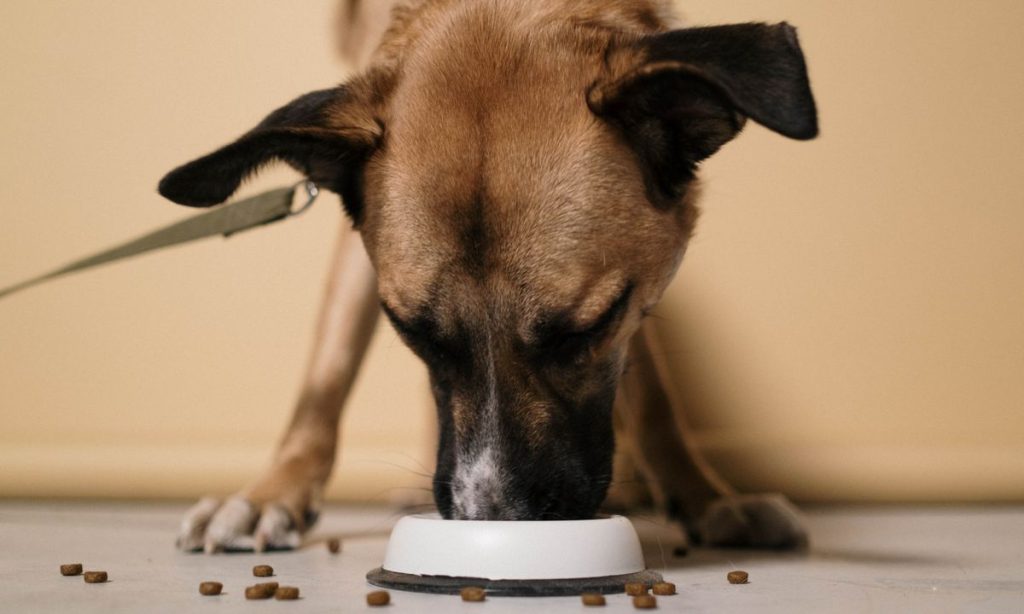
Feeding routines and portion needs for large-breed dogs depend on age, activity, body condition, and the calorie density of the food. A 70-pound couch companion and an athletic dog of the same weight may need very different amounts. The feeding chart on a bag gives a starting point, not a guarantee. Owners should measure meals, watch weight trends, and adjust portions with veterinary guidance.
This guide explains feeding routines and portion needs for large-breed dogs in everyday US households. It also clarifies why a label promoting high protein dog food for large breeds cannot replace a complete nutritional assessment. The goal is steady growth for puppies and a lean, healthy condition for adults. For general background, see our dog feeding schedules and portion basics. The steps below focus on meal timing, practical measurements, and recognizing when portions need adjustment.
Start with the right life stage and nutritional adequacy
A growing large-breed puppy is not a miniature version of an adult dog. Rapid growth and unsuitable mineral balance can increase skeletal concerns. Look for a nutritional adequacy statement showing that the diet is complete and balanced for the dog’s life stage. For large-size puppies, check whether it is appropriate for growth of large-sized dogs, often defined by labels as dogs weighing 70 pounds or more when mature. Ask the veterinarian about giant breeds or health conditions.
Adult dogs generally need food designed for adult maintenance, unless a veterinarian recommends otherwise. Pregnancy, lactation, severe illness, and working-dog activity change nutritional demands. Percent protein alone does not show whether food is balanced or how much to feed. Likewise, terms such as premium, grain free, or high protein do not reveal the total calories per cup. Accurate feeding routines and portion needs for large-breed dogs begin with the nutritional statement and life stage rather than marketing language.
Measure daily portions by calories, not just cups
Find the caloric content on the package, often expressed as kilocalories per cup, can, or kilogram. Then compare the label’s suggested daily amount with your dog’s weight and body condition. If a veterinarian estimates a daily calorie target, divide that target by the food’s caloric density. For example, a hypothetical 1,200-kcal plan using food with 400 kcal per cup equals three level cups across the day. This is an illustration, not a recommended intake for every large dog.
Kitchen scales make portions repeatable, especially when kibble pieces vary in size. Measure treats, training rewards, and edible chews too. A large dog can gain weight quietly when several people each give extra snacks. AAFCO feeding instructions are intended as guidance and should be adjusted to the individual. Review progress every few weeks, sooner when a puppy is growing fast or a veterinarian advises it. Feeding routines and portion needs for large-breed dogs work best when measurements are consistent.
Choose a steady meal schedule that fits the dog
Many healthy adult large dogs do well with two measured meals each day. A consistent morning and evening pattern makes appetite changes easier to notice. Puppies typically require more frequent smaller meals, with the schedule adjusted as they mature and with advice from their veterinarian. Dogs with special medical needs may require a different frequency. Avoid leaving a full bowl out indefinitely when weight or intake is difficult to track, especially in multi-dog homes.
Give your dog a quiet feeding place with clean water available. Feed dogs separately if they guard food or steal portions. Try to avoid vigorous activity immediately around large meals, especially in breeds at risk of gastric dilatation-volvulus. Meal timing alone cannot guarantee prevention of bloat, but a calm routine helps reduce rushing and improves observation. Comfortable placement matters; our guide on comfortable feeding bowl setup discusses practical fit rather than assuming elevated bowls are necessary. Small habits support feeding routines and portion needs for large-breed dogs.
Read body condition instead of following one fixed chart
A dog should generally have ribs that are easy to feel beneath a modest fat covering, a visible waist from above, and an abdominal tuck from the side. Veterinary teams often use a nine-point body condition score, with four or five commonly considered ideal. Check the same features monthly and record the dog’s weight. A fluffy coat can hide weight gain, so hands-on assessment helps. Muscle loss deserves attention even when the number on the scale seems stable.
If the waist disappears or the ribs become harder to feel, discuss a modest calorie reduction. If ribs and spine become sharply prominent, evaluate whether intake, digestion, or health has changed. Do not make drastic cuts for growing puppies, pregnant dogs, or animals with chronic disease. Your veterinarian can distinguish true excess fat from normal breed shape and recommend an appropriate target. Body condition makes feeding routines and portion needs for large-breed dogs responsive to the actual pet rather than generic breed tables.
Balance protein, treats, and activity without food fads
Large-breed dogs need adequate protein and other essential nutrients, but protein percentage alone is not a quality score. Compare foods on a complete-and-balanced basis and consider the pet’s growth stage, digestive tolerance, and health. High protein dog food for large breeds may sound appealing, yet it can vary in calories and nutrient balance. For an adult dog without special requirements, a well-formulated maintenance diet is usually more relevant than a dramatic label claim. For published site context, feeding considerations for adult large breeds covers considerations specific to large adults.
Aim for treats and extras to provide no more than about ten percent of daily calories, unless your veterinarian sets a different plan. Count rewards used for training as part of the day’s allowance. Activity needs vary with breed, age, environment, and season. A dog recovering from injury may need fewer calories than during active weeks. Increase or decrease intake based on sustained trends, not one busy afternoon. This perspective keeps feeding routines and portion needs for large-breed dogs grounded in energy balance.
Adjust the plan as puppies mature and seniors slow down
Growth brings changing calorie needs, and size alone cannot predict the transition to adulthood. Large and giant breeds may mature later than smaller dogs. Do not automatically switch a fast-growing puppy to adult food on its first birthday. Review growth, weight, body condition, and the food’s life-stage labeling with your veterinary team. Owners researching large-breed puppy growth needs should focus on controlled growth and balanced minerals, not simply maximizing the number of calories.
Older large dogs may exercise less, lose muscle, develop arthritis, or begin taking medications. Their meal sizes may need revision even when the brand and recipe remain unchanged. Watch for changes in thirst, appetite, chewing, stool, or sudden weight. These signs warrant veterinary review rather than blind portion adjustments. Keep an updated feeding record with daily amount, treat calories, weight, and any digestive concerns. Feeding routines and portion needs for large-breed dogs should evolve with the animal’s life.
Common portion mistakes and when to ask for help
Avoid mixing the cup from one food with the directions on another. A cup of one kibble may deliver far more calories than a cup of another. Switching formulas without checking caloric density can cause unintended gain or loss. Do not assume a dog begging after a meal is underfed; boredom and learned habits can look similar to hunger. Use predictable mealtimes and nonfood enrichment. FYI, the scoop is a measuring tool, not a vote on whether your dog is still hungry.
Seek veterinary advice for a puppy growing unusually fast or slowly, repeated vomiting, diarrhea, bloating, dramatic thirst, rapid weight change, food refusal, or difficulty chewing. A sudden swollen abdomen, unproductive retching, restlessness, or collapse in a large dog requires emergency veterinary care because bloat may be life-threatening. Do not delay for dietary experiments. When managing feeding routines and portion needs for large-breed dogs, safety and medical assessment outweigh any internet feeding calculator.
Frequently Asked Questions
These questions address the practical decisions owners face when planning consistent large-dog meals. Every answer should be adapted to the dog’s age, health, and veterinary advice.
When a portion estimate conflicts with the dog’s body condition or growth pattern, investigate the difference rather than choosing the larger or smaller number automatically.
How many times a day should a healthy adult large dog eat?
Two measured meals are common, but individual needs differ. Discuss the schedule with your veterinarian for dogs with special medical or behavioral concerns.
Should I choose food because it has more protein?
No. Nutritional adequacy, life stage, calories, and your dog’s health matter more than protein percentage considered alone.
How do I calculate cups from a calorie target?
Divide the veterinarian’s daily kilocalorie target by kilocalories per cup. Account separately for treats and other calorie sources.
Do large-breed puppies need different feeding rules?
Yes. Growth diets should be appropriate for large-size puppies, with attention to controlled growth and correct mineral balance.
What if my dog gains weight on the label’s suggested amount?
Check measurement accuracy, extras, exercise, and body condition. Ask your veterinarian to adjust the amount gradually.
Final Words
Feeding routines and portion needs for large-breed dogs become easier when owners use a dependable schedule and objective measurements. Begin with a complete-and-balanced diet, measure total daily calories, and compare intake with body condition over time. Keep the plan flexible for puppies, active adults, and aging companions.
If you are exploring high protein dog food for large breeds, consider the nutritional adequacy statement before focusing on a marketing claim. Our broader dog feeding guide offers additional context for meal planning. Record any lasting changes and involve your veterinarian when appetite, growth, or weight appears abnormal. Feeding routines and portion needs for large-breed dogs are individualized decisions, not one-size-fits-all charts.









