
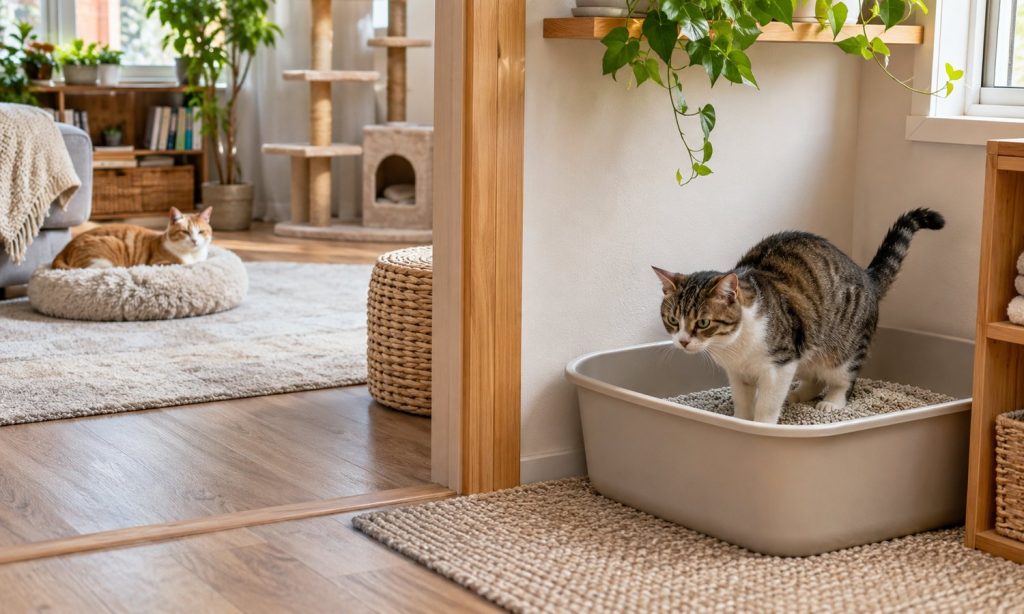
Litter box avoidance in multiple cats can look like one cat is being stubborn, but the cause is often access, social tension, box condition, or a health problem. One cat may wait until another leaves, choose a quieter room, or eliminate near a box it cannot reach safely. The pattern matters more than blame.
This guide helps you identify which cat is avoiding which box, check for urgent medical signs, and improve access without punishment. For equipment and size considerations, our guide to litter boxes for multiple cats can help you plan enough comfortable stations. The goal is to make every route to an appropriate box feel safe and predictable while checking for pain, illness, access problems, and social pressure.
Notice the pattern and identify the cat
Record where and when accidents happen, which cat was nearby, and which boxes each cat uses. Look for repeated patterns: the same hallway, the same box, or times when a particular cat is active. In a home with several cats, identifying the individual is important before you change the environment.
A brief camera view can help if it is placed safely and does not disturb the cats. Do not hover or punish them when they use a box. Your goal is to learn whether a cat cannot reach the box, is being blocked, dislikes the setup, or may be feeling unwell.
Rule out pain and other medical causes
A sudden change in toileting can result from urinary, digestive, joint, or other medical problems. Painful urination or defecation can make a cat associate the box with discomfort. Contact your veterinarian for new or persistent accidents, especially if the cat strains, cries, has blood in urine or stool, vomits, or eats less.
Repeated attempts to urinate with little or no urine can be an emergency, especially in male cats. Seek prompt veterinary care instead of assuming a housemate is guarding the box. Medical assessment is important even when household conflict also seems likely.
Check whether one cat controls access
A cat does not need to fight to block another. Staring, waiting at a doorway, chasing after a cat exits, or resting in the only path can make a box feel unsafe. Watch the approach and escape routes, not just the cats’ behavior inside the box.
Place boxes in separate parts of the home and on different floors when needed. Avoid tight corners where a cat can be trapped. Provide another route away from the box, and do not cluster every station together where one confident cat can monitor them all.
Provide enough clean, comfortable boxes
A common starting point is one box per cat plus one extra. Boxes should be large enough for a cat to enter, turn, dig, and leave comfortably. Some cats prefer uncovered boxes; others may accept a covered design if it does not trap odors or restrict access.
Scoop daily and keep each station easy to reach. Use a familiar litter at a comfortable depth, and avoid sudden changes to the box, location, and litter all at once. More choices help a cat avoid a dirty or socially risky station.
Keep litter stations separate from other resources
Place litter boxes away from food, water, and favorite sleeping areas. A quiet location is useful, but a hidden box behind a frequently closed door is not accessible. Make sure household members know not to block a box or store items in its approach path.
Consider a cat’s age and mobility too. Stairs, high box sides, slippery floors, or a narrow entry may be difficult for an older or injured cat. Offer a low-entry option when needed and keep at least one station on the cat’s main living level.
Clean accidents and protect the cat’s trust
Clean soiled surfaces with an appropriate pet-safe enzymatic cleaner and follow the label. Avoid ammonia-based cleaners near urine because the smell may resemble urine to a cat. Keep the cat away until the area is dry and safe.
Do not scold, spray, or carry a cat to the box as punishment. These actions can increase fear and make the problem harder to understand. Calmly remove access to the soiled area while you improve the box setup and investigate possible health concerns.
Reduce stress and support separate routines
Provide each cat with places to rest, hide, climb, eat, drink, and play. Spread resources across the home so cats do not have to compete in one crowded area. Predictable feeding and play routines can reduce tension during periods of change.
If a new pet, move, renovation, or schedule change occurred, add quiet spaces and restore familiar routines where possible. Introduce changes gradually. A veterinarian or qualified feline behavior professional can help when conflict persists or the cause is unclear. You can also review our guide to common cat setup and adjustment problems for related household changes.
Make one change at a time
When testing a new arrangement, change one feature at a time and keep a brief note of what changed. You might first add a box on another floor, then later adjust litter depth or privacy. This approach helps show whether access, location, or a cat’s preference made the difference.
Keep the previous safe option available while a cat is learning a new route or box. Do not remove a familiar station immediately after introducing a replacement. Give the cat time to use the new choice consistently, and check that another animal is not preventing access.
Measure whether the plan is helping
Review the home setup after several days and note whether accidents decrease, each cat can approach a box calmly, and the stations remain clean. Ask other household members to report incidents without correcting or chasing the cat. Shared observations can prevent confusion about which cat or location needs more attention.
If the problem continues despite safe access and a clean setup, revisit the veterinary question and seek professional behavior guidance. More boxes may help some homes, but persistent avoidance can have overlapping causes that need a tailored plan.
Frequently Asked Questions
Litter box avoidance can have more than one cause, so observe the household pattern and make changes carefully. These answers address common first steps.
If the behavior starts suddenly or occurs with pain or illness signs, arrange veterinary care. Environmental changes should not delay a medical evaluation.
How many litter boxes do multiple cats need?
A practical starting point is one box per cat plus one extra, with boxes placed in separate locations rather than grouped.
Can one cat keep another from using the litter box?
Yes. Blocking, staring, chasing, or guarding a narrow route can make another cat avoid that station without a physical fight.
Should I punish a cat for eliminating outside the box?
No. Punishment can increase stress and does not identify the cause. Clean the area and check for access, box, and health problems.
When should I call a veterinarian?
Call for new or persistent accidents, straining, blood, crying, appetite changes, or other illness signs. Little or no urine requires urgent care.
Will adding another box solve the problem?
It may help if access or crowding is the cause, but it is not a guaranteed fix. Spread boxes out and check for medical issues.
Final Words
Litter box avoidance in multiple cats often reflects a problem with access, cleanliness, social pressure, comfort, or health. Observe which cat avoids which station, provide enough boxes in separate places, and make sure every route is safe and open.
Avoid punishment and clean accidents thoroughly while you address the cause. If a cat returns to a soiled area, our article explains why cats may return to a urine-marked spot. Our guide to litter boxes for multiple cats can help you assess box size and maintenance. Ask your veterinarian about sudden or persistent avoidance, especially when a cat shows discomfort.









