
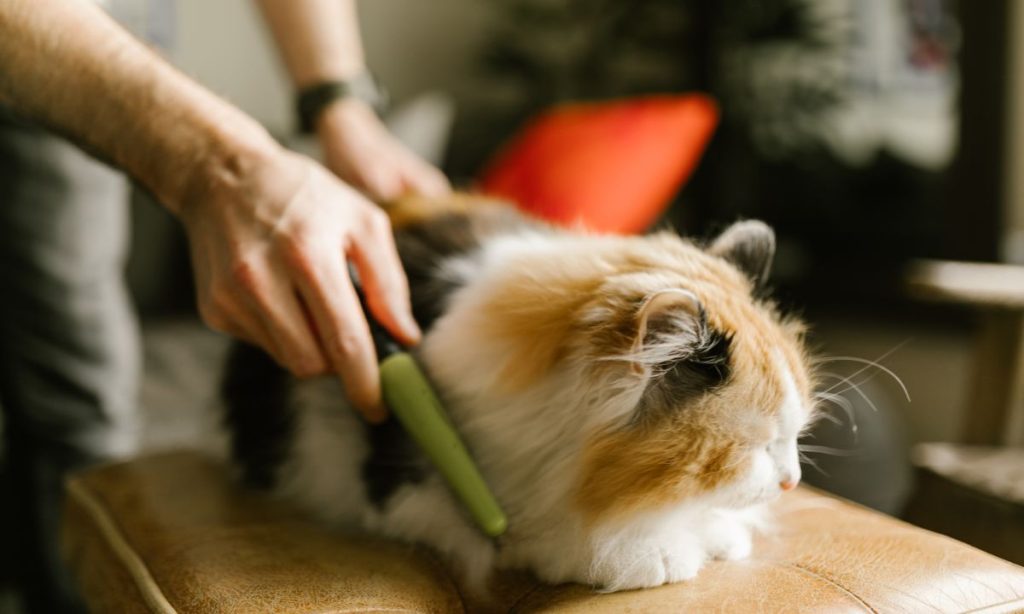
How to care for cats with dandruff between grooming sessions begins by noticing what the flakes are telling you. A few dry-looking flakes are different from widespread scaling with redness, scratching, hair loss, or an unpleasant odor. Cats may struggle to groom because of pain, limited flexibility, obesity, or an underlying skin condition. Dandruff is a symptom, not a diagnosis, so treating it as a cosmetic nuisance can miss the real problem.
This guide covers gentle coat checks, comfortable brushing, bathing precautions, and signs that require veterinary assessment. Owners researching cat shampoo for dandruff should first determine whether bathing is appropriate for their cat. Most healthy adult cats do not need frequent baths. Consistent observation and sensible hygiene between professional grooming appointments can help protect skin while a veterinarian investigates persistent or worsening flaking.
Recognize Mild Flaking and Warning Signs
When learning how to care for cats with dandruff between grooming sessions, first distinguish loose flakes from scabs, crusts, flea dirt, and debris. Part the coat gently in good light and note whether the skin looks normal underneath. Record the location of flaking and whether it changes over time. Dry-looking scales around the back can have several causes, including reduced self-grooming. Do not assume that a cat without obvious scratching has healthy skin. Some conditions are subtle or develop gradually.
Look for thinning fur, bald patches, red bumps, greasy buildup, sores, and persistent licking. Sudden scaling with intense itch, pain, lethargy, or decreased appetite warrants veterinary attention. Cornell’s feline skin guidance emphasizes that skin signs have overlapping causes and may require examination and testing. A photograph taken under consistent lighting can help track progression, but it cannot establish the cause. Keep a simple record of diet changes, flea prevention, new household exposures, and prior treatments to share with the clinician.
Keep Brushing Gentle and Predictable
Daily coat observation does not have to mean daily vigorous brushing. For how to care for cats with dandruff between grooming sessions, use a comfortable, slow routine that your cat accepts. Remove loose fur with gentle strokes and avoid rubbing the same flaky area repeatedly. Bristles should glide over the coat without scratching skin. Stop if the cat flinches, swishes its tail sharply, or pulls away. A dense mat needs professional assistance rather than force. If the coat is painful or inflamed, pause home grooming and contact a veterinarian.
Begin where the cat enjoys touch, and work in short intervals with pauses. Support the skin near small tangles to limit pulling. Avoid harsh deshedding tools and never cut mats with scissors close to the body. Our guide to gentle brushing for long-haired cats explains important handling precautions. A stable grooming area with nonslip footing reduces sudden movement. Do not use scrubbing, scraping, or vigorous massage to remove flakes; these methods can worsen irritation and make a previously tolerant cat fearful.
Avoid Irritating Products and Unnecessary Baths
Home bathing is not a universal answer to dandruff. How to care for cats with dandruff between grooming sessions includes knowing when to leave the skin alone. Most healthy cats groom themselves and rarely need bathing. Human shampoo, essential oils, harsh detergents, and improvised skin mixtures may irritate or harm cats. Do not apply medicated shampoo, topical flea products, or antifungal solutions without confirming they are suitable for cats and appropriate for the actual condition. A veterinarian may recommend a specific cleansing schedule for a diagnosed problem.
If a veterinarian does advise bathing, follow the exact product, dilution, contact time, rinsing, and drying instructions. Keep water away from the ears and face, protect the cat from slipping, and stop if distress becomes severe. An incomplete rinse can leave irritating residue. Never use products intended only for dogs. If professional grooming is scheduled, ask whether washing before the veterinary examination might interfere with diagnostic sampling. Our cat shampoo for dandruff guide discusses the category, but a treatment plan should follow clinical findings, not a marketing promise.
Support Coat Health Through Daily Care
A comfortable environment makes routine care easier, although housekeeping alone cannot treat skin disease. Keep bedding clean and dry, vacuum loose fur, and maintain accessible water. Feed a nutritionally complete diet appropriate for the cat’s life stage. Do not add oils, vitamins, or dietary supplements solely because flakes appear; excessive supplementation can be harmful. If a diet problem is suspected, discuss the full feeding history with a veterinarian. An older cat may need help maintaining hard-to-reach areas because stiff joints limit self-grooming.
Check whether your cat can rest, reach the litter box, and turn around comfortably during grooming. Weight and mobility changes can make self-care harder. For cats that dislike handling, read between-session care for cats that resist brushing. Keep flea prevention current under veterinary guidance, because parasites can contribute to skin discomfort. A healthy coat is supported by normal behavior and appropriate medical care, not by hiding flakes under fragrances or powders.
When to Contact a Veterinarian
Persistent dandruff, greasy scales, broken hairs, sores, crusts, or itchy patches deserve professional evaluation. New flaking in a cat that previously had healthy skin can reflect parasites, allergies, infection, or difficulty grooming due to other illness. Your veterinarian may examine the coat, check for parasites, and recommend targeted tests. Avoid diagnosing ringworm, mites, or allergies from online photographs. Some infectious skin conditions can spread to people or other animals, so promptly discuss suspicious lesions with the clinic and follow its precautions.
A grooming appointment cannot replace medical examination when skin is painful, inflamed, or deteriorating. Seek urgent help for extensive painful sores, marked swelling, severe weakness, or other concerning systemic signs. Bring the grooming record and details of anything applied to the skin. Review warning signs of serious cat itching for related symptom monitoring. Timely identification of the cause is more useful than repeated trial-and-error cleaning, especially when the cat’s appearance or behavior changes noticeably.
Frequently Asked Questions
Dandruff care is most useful when it protects skin and helps identify a cause. These answers explain common choices between grooming appointments.
No single home routine fits every flaky coat. Persistent signs or signs of illness should lead to a veterinary examination rather than repeated home treatments.
Does cat dandruff always mean dry skin?
No. Flakes can accompany parasites, infection, inflammation, grooming difficulty, and other conditions. A veterinarian can help determine the cause.
Should I bathe my cat every week?
Usually not without veterinary direction. Healthy adult cats seldom require frequent baths, and unnecessary washing may irritate their skin.
Can I use human dandruff shampoo?
Do not use human dandruff treatments on cats unless a veterinarian specifically directs it. Ingredients and concentrations may be unsuitable or dangerous.
Can poor grooming cause visible flakes?
Reduced self-grooming can allow flakes and loose fur to accumulate. Pain, limited mobility, and illness may explain a new inability to groom.
When should I schedule a skin examination?
Arrange one for persistent flakes, redness, hair loss, sores, significant itch, or a sudden change in coat condition.
Final Words
How to care for cats with dandruff between grooming sessions means observing skin carefully, brushing gently, keeping bedding clean, and avoiding irritating home remedies. Never assume that flakes are only a grooming issue. Watch for redness, hair loss, intense scratching, or discomfort, and describe those changes to your veterinarian. Gentle grooming can remove loose fur, but it does not diagnose or cure underlying skin conditions.
Before using cat shampoo for dandruff or changing a washing schedule, confirm whether the skin condition needs assessment. Follow veterinary instructions for any medicated treatment. Keep sessions brief and cooperative, especially for older or sensitive cats. The goal is a comfortable animal with a healthy skin barrier, not merely a coat that looks flake-free.
Reference
The following veterinary references explain why flakes and skin changes require a cause-based approach. They support the distinction between routine coat care and medical diagnosis.
These sources are provided for further reading and are not a substitute for examination of an individual cat. Your veterinarian should guide testing, medication, and any therapeutic bathing regimen.









