
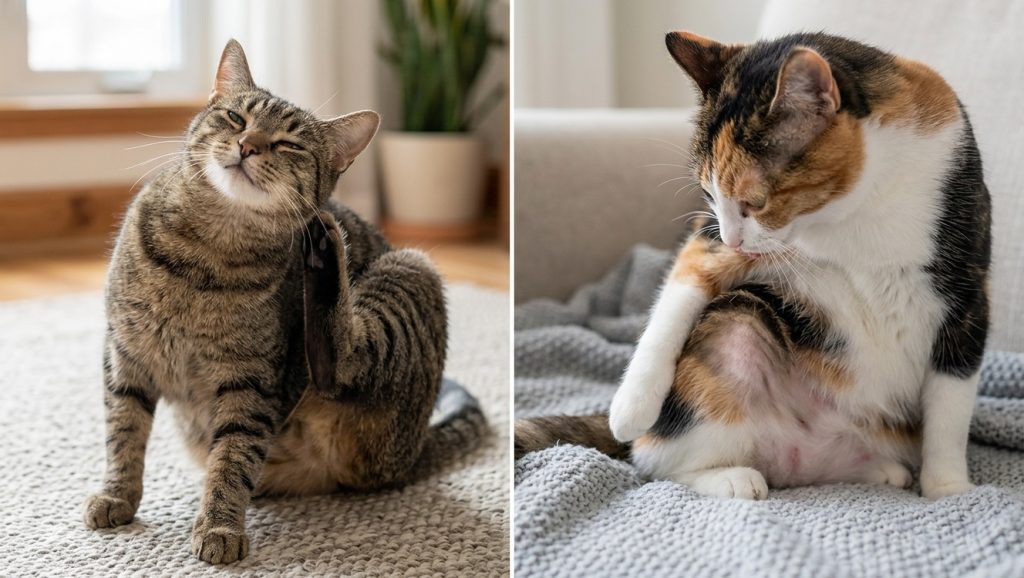
Cats are absolute masters of personal hygiene. Watching a cat contort into impossible yoga poses just to clean behind its ears is a staple of everyday life for pet owners. However, there is a distinct boundary between routine grooming and obsessive, tissue-damaging scratching. When you notice your favorite feline constantly twitching, biting at their tail, or licking their belly raw, a critical question arises: When Is Cat Itching Serious?
Recognizing the exact moment feline pruritus (the medical term for itching) shifts from a minor annoyance to a medical red flag can save your pet from severe discomfort, secondary skin infections, and prolonged stress.
Feline Grooming vs. Severe Itching
To know if your cat is in trouble, you first need to understand what normal looks like. Cats spend anywhere from 30% to 50% of their waking hours grooming. It serves multiple evolutionary purposes: it removes loose hair, keeps parasites away, cools them down through saliva evaporation, and releases endorphins that reduce stress.
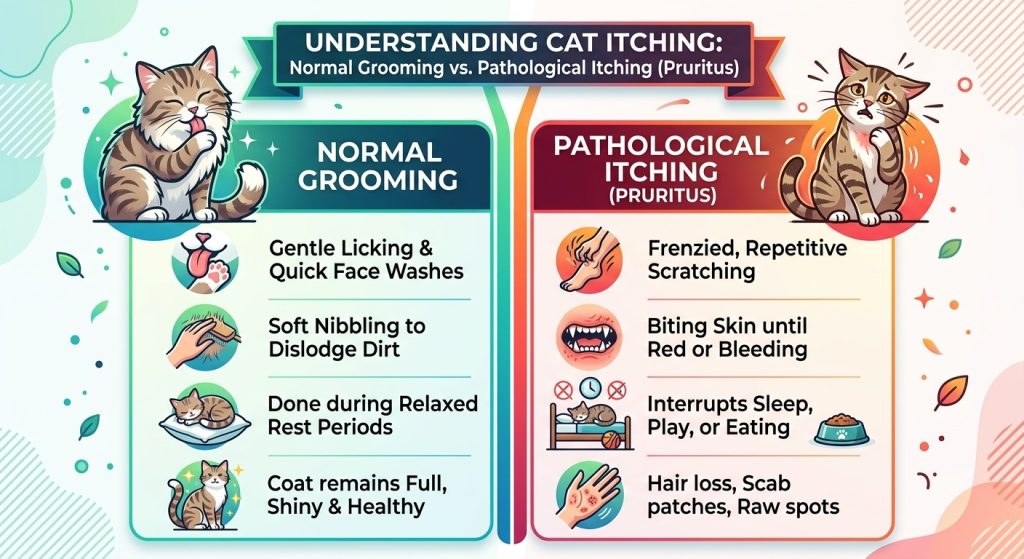
When grooming turns destructive, it ceases to be hygiene—it becomes a symptom. When a cat scratches so intensely that they wake themselves up from a deep sleep, interrupt their mealtime, or pull out clumps of fur, you are dealing with pathological itching.
Spotting the Red Flags: When Is Cat Itching Serious?
If you have ever had a poison ivy rash, you know how maddening a persistent itch can be. Cats experience that same frustration, but they express it through localized destruction of their skin barrier.
1. Hair Loss and “Barbering”
When cats lick a single spot obsessively, their rough, sandpaper-like tongues literally snap the hair shafts off near the follicle. This condition, known as barbering, leaves behind blunt, prickling patches of stubble or completely bare skin—most commonly along the lower abdomen, inner thighs, and spine.
2. Excoriations and Scabbing
If you run your hand down your cat’s back and feel tiny, raised bumps that feel like grains of sand, you are likely feeling miliary dermatitis. These tiny crusts form when tiny fluid-filled blisters burst from incessant clawing. Left unchecked, these small scratches turn into open, bleeding wounds (excoriations).
3. Hot Spots and Secondary Bacterial Infections
A “hot spot” is an area of skin that becomes inflamed, red, moist, and warm to the touch due to localized infection. Once the outer skin layer is broken by sharp claws, naturally occurring skin bacteria take hold. IMO, watching a simple itch spiral into a oozing hot spot within 24 hours is one of the most stressful parts of being a cat parent.
4. Behavioral Shifts and Irritability
Itching causes chronic physical distress. A cat suffering from unaddressed allergic reactions may hide under beds, hiss when petted around the lower back, or display sudden bursts of nervous energy—running frantically across the house as if trying to escape their own skin.
Root Causes of Feline Itching
Uncovering why your cat is scratching requires a systematic approach. The causes range from simple parasite infestations to intricate autoimmune responses.
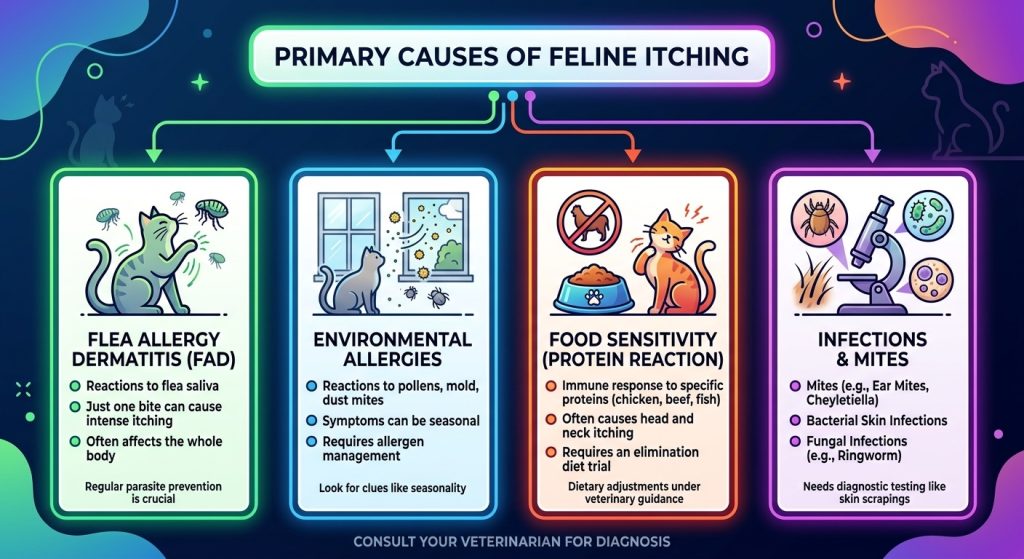
1. Flea Allergy Dermatitis (FAD)
Flea bites are annoying to any pet, but for a cat with Flea Allergy Dermatitis, a single bite triggers a massive immune reaction. The cat isn’t reacting to the flea itself, but to proteins in the flea’s saliva. Just one bite from a stray flea can cause intense, body-wide itching that lasts for up to two weeks.
2. Environmental Allergies (Atopy)
Just like humans suffer from seasonal hay fever, cats react to airborne environmental allergens. Pollen, dust mites, storage mites in dry food bags, cleaning chemicals, and mold spores can all spark feline allergic reactions. Unlike humans who sneeze and get watery eyes, cats register environmental allergies primarily through inflamed, itchy skin.
3. Food Allergies and Sensitivities
When a cat develops a food allergy, the culprit is almost always a protein source they have eaten for months or years—such as chicken, beef, fish, or dairy. Food allergies usually manifest as severe itching around the head, neck, and face, often accompanied by chronic ear infections or soft stool.
4. Ringworm and Fungal Overgrowth
Ringworm isn’t a worm at all; it’s a highly contagious fungal infection (Microsporum canis) that infects hair shafts and skin. It causes circular patches of hair loss, scaly skin, and mild to moderate itching. Because ringworm is zoonotic—meaning it easily jumps from cats to humans—early identification is vital.
Cat Itching But No Fleas: Diagnostic Troubleshooting
One of the most perplexing situations for any pet parent is managing a cat itching but no fleas in sight. You run a fine-toothed flea comb through their fur, check their bedding, find zero flea dirt, yet your cat continues to scratch relentlessly.
Do not rule out parasites immediately just because you cannot see them. Cats are meticulous clean-freaks; they frequently groom away live fleas and flea dirt before you ever get the chance to inspect them. However, if you are truly dealing with a situation where there are no fleas present, consider these hidden culprits:
-
Cheyletiella Mites (“Walking Dandruff”): These microscopic mites move under the keratin layer of the skin, creating heavy dandruff across the spine and severe irritation.
-
Ear Mites (Otodectes cynotis): If your cat is focusing their clawing exclusively around their ears, head, and neck, ear mites could be generating dark, coffee-ground-like debris inside the ear canal.
-
Dry Indoor Air and Skin Barrier Compromise: During winter months when home heating systems run continuously, ambient humidity plummets. This strips natural oils from your cat’s skin, leading to flaky, tight skin that cracks easily.
-
Psychogenic Alopecia (Stress Grooming): Cats thrive on predictability. Household changes—such as a new baby, recent home renovations, moving house, or a shift in your work schedule—can induce anxiety. To self-soothe, cats may lick specific spots (like their belly or forelegs) until the hair is completely gone.
At-Home First Aid and Supportive Care
When asking yourself when is cat itching serious?, you should also evaluate what immediate, non-prescription steps you can take to make your cat comfortable while waiting for professional medical evaluation.
Safe Comfort Measures
-
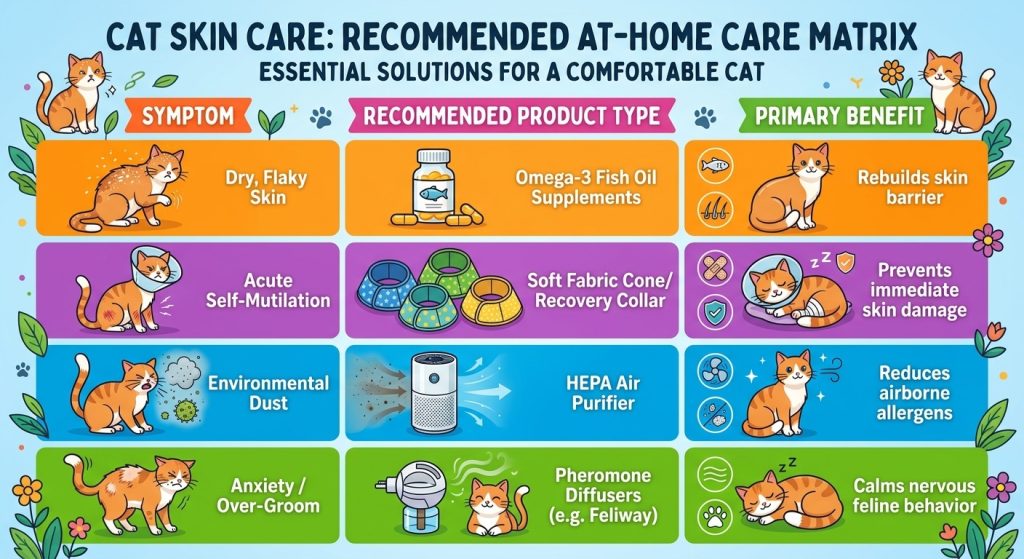
Switch to a Soothing, Hypoallergenic Shampoo: If your cat tolerates water, a bath using a soap-free, oatmeal-based cat shampoo can flush off surface environmental allergens and calm localized redness. Note: Never use human shampoos or dog products, as their pH levels and ingredients (like permethrin) can be toxic to cats.
-
Introduce Omega-3 Fatty Acid Supplements: High-quality wild Alaskan salmon oil or marine lipid supplements rich in EPA and DHA help rebuild the compromised skin lipid barrier and natural anti-inflammatory pathways from the inside out.
-
Use Soft Protective Collars: If your cat is actively tearing their skin open, install a soft, fabric recovery collar or an inflatable doughnut collar. This prevents immediate self-mutilation while you identify the root cause.
-
Optimize Humidity: Running a cool-mist humidifier near your cat’s favorite sleeping area adds moisture back into dry skin.
When to See Vet for Cat Itching
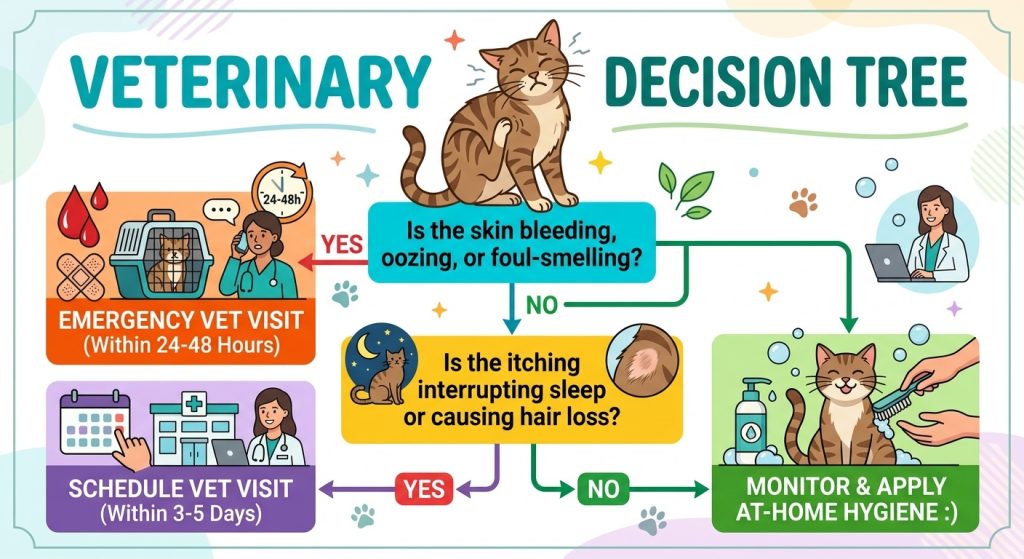
While mild skin dryness can often be mitigated with dietary adjustments and humidity control, you should know exactly when to see vet for cat itching to prevent manageable issues from escalating into painful skin disasters.
Immediate Veterinary Evaluation Triggers
Schedule a veterinary appointment right away if you observe any of the following symptoms:
-
Open, Oozing, or Foul-Smelling Wounds: Indications of deep bacterial or yeast infections that require systemic antibiotics or targeted antifungals.
-
Swollen, Bleeding Ear Canals: Shaking the head violently or scratching ears to the point of bleeding can rupture blood vessels in the ear flap, creating a painful aural hematoma that requires surgical drainage.
-
Widespread Hair Loss Over 20% of the Body: Extensive bald patches signal systemic disease, severe autoimmune dysfunction, or widespread parasitic involvement.
-
Lethargy, Loss of Appetite, or Fever: When a skin problem is accompanied by systemic illness, the body is fighting a broader infection.
-
No Improvement After 7 Days of Basic Care: Persistent symptoms demand specialized diagnostic testing, such as skin scrapings, fungal cultures, or cytology.
What to Expect at the Vet Clinic
When you bring your cat in for an evaluation, your veterinarian will systematically rule out underlying conditions:
-
Flea Treatment Trial: Even if no pests are visible, the vet will likely recommend a strict, prescription-grade topical parasite control for 60 to 90 days.
-
Skin Scraping and Impression Smears: Checking under a microscope for microscopic mites, abnormal yeast counts, or bacterial overgrowth.
-
Wood’s Lamp Examination & Fungal Culture: Using ultraviolet light to screen for ringworm fungi.
-
Elimination Food Trial: The gold standard for diagnosing food allergies involves feeding an exclusive, hydrolyzed protein diet or novel protein diet (like kangaroo or rabbit) for 8 to 12 weeks. FYI, no treats, flavored medications, or table scraps are allowed during this trial!
Long-Term Prevention Strategies for Healthy Skin
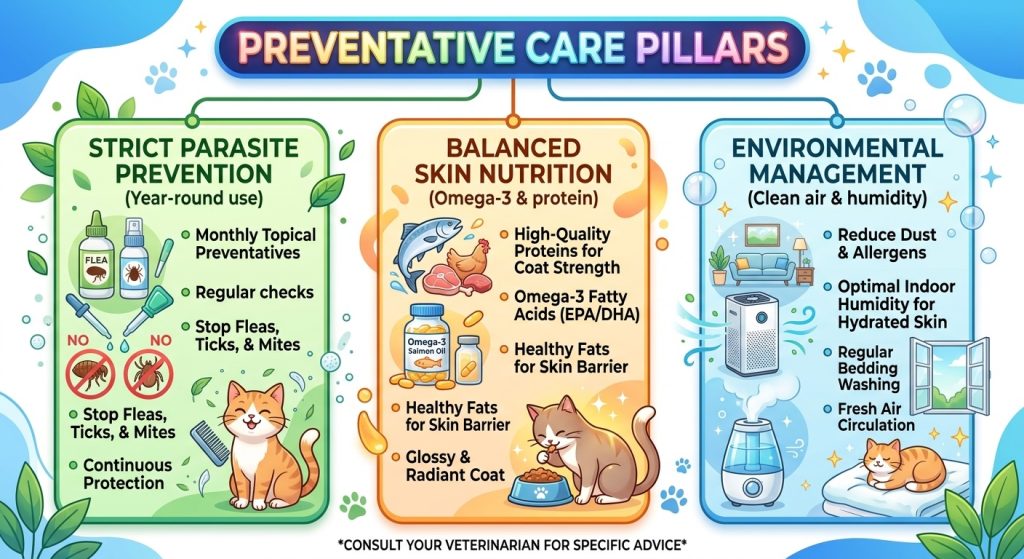
Once you have resolved the immediate itching crisis, shifting your focus toward long-term skin health prevention will keep your feline companion comfortable year-round.
1. Maintain Year-Round Parasite Prevention
Even strictly indoor cats need regular parasite protection. Fleas can easily hitchhike into your living room on your clothing, shoes, or through window screens. Consistent monthly topical preventatives eliminate FAD risks entirely.
2. High-Quality, Species-Appropriate Diet
Cats are obligate carnivores. Their skin and coat health depends heavily on animal-derived proteins and essential fatty acids. Look for foods where a named animal protein (like real salmon or turkey) is the very first ingredient, and avoid formulas loaded with generic fillers.
3. Regular Environmental Cleaning
Vacuum carpets, rugs, and upholstered furniture at least once a week to remove shed hair, skin dander, and dust mites. Wash your cat’s favorite plush beds and blankets regularly in hot water using unscented, hypoallergenic laundry detergents.
Frequently Asked Questions
Can I give my cat human Benadryl for itching?
Never give your cat any human medication without direct veterinary supervision. While diphenhydramine (Benadryl) is sometimes prescribed by vets, many over-the-counter human formulations contain added decongestants, alcohol, or artificial sweeteners like xylitol, which are highly toxic to cats. Furthermore, antihistamines are generally far less effective in felines than they are in humans for controlling skin allergies.
Why is my cat itching around their head and neck specifically?
Targeted itching around the face, eyes, ears, and neck is a classic hallmark of either food allergies or ear mite infestations. Cats scratching these sensitive areas can quickly inflict severe self-trauma, so having a veterinarian perform an ear swab and skin cytology is recommended.
How long does it take for a cat’s skin to heal after an allergic reaction?
Once the underlying allergen or parasite is successfully eliminated, minor skin redness typically improves within 7 to 14 days. However, full hair regrowth and total restoration of the skin’s protective barrier can take anywhere from 4 to 8 weeks.
Can stress alone cause a cat to scratch and groom until they bleed?
Yes. Psychogenic alopecia and stress-induced anxiety can trigger compulsive licking, chewing, and scratching. Cats are highly sensitive to their environments. Addressing stress with environmental enrichment, interactive toys, predictable daily routines, and calming pheromone diffusers is essential for resolution.
What is the difference between dry skin and a skin allergy in cats?
Dry skin usually produces fine, white flakes (dandruff) without significant redness, foul odors, or oozing. Skin allergies, on the other hand, trigger intense inflammation, skin redness, scabbing, wet sores, localized heat, and frantic, uncontrollable scratching.
Final Words
Deciphering when is cat itching serious boils down to monitoring intensity, skin integrity, and behavioral changes. A quick scratch behind the ear during a post-nap stretch is completely normal feline behavior. But when scratching leads to raw patches, hair loss, behavioral distress, or bleeding skin, your cat is asking for help.
By combining proactive parasite prevention, nutrient-dense diets, soothing at-home care, and timely veterinary consultations, you can eliminate maddening itch cycles and keep your cat’s coat plush, healthy, and comfortable for years to come.