
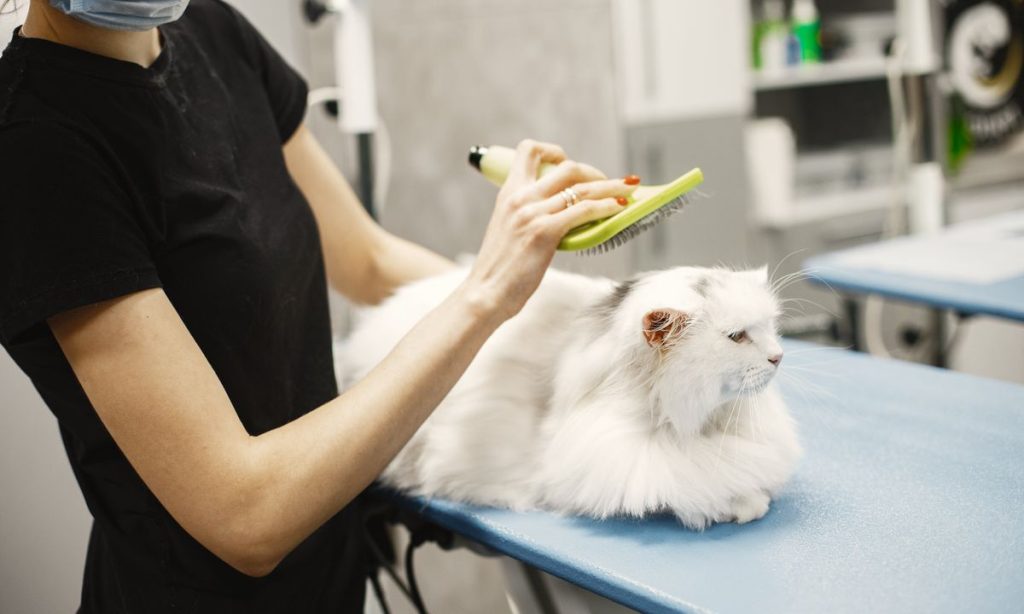
Long-haired cats can develop tangles where a brush barely reaches. Loose undercoat may collect behind the ears, around the armpits, and along the belly. Pulling harder is not the solution; thin feline skin can be hurt by rough grooming. This guide explains how to use brushes safely with long hair cats, with attention to coat sections, pressure, and early mats. The goal is gentle grooming and early problem detection.
A gentle start matters as much as technique. The Brushes For Long Hair Cats overview explains brush types, while this article concentrates on safe handling. Set up a stable, quiet surface, keep sessions brief, and let the cat walk away. Do not assume a thick coat protects the skin from sharp pins or hard pressure. If brushing causes pain, broken skin, or severe resistance, stop and seek help rather than forcing the tool through the fur.
Examine the Coat Before Each Session
Use your fingers to feel gently for tangles before introducing a brush. Check the neck, chest, underarms, flank, belly, and base of the tail. These areas experience friction when a cat walks or rests. Part the coat carefully where the cat tolerates it and look for redness, dandruff, scabs, parasites, or damp patches. A tight mat may conceal irritated skin. Do not probe a painful area repeatedly. Grooming should never become a test of how much discomfort an animal will accept.
Notice whether the coat is slightly tangled, heavily shedding, or already clumped close to the skin. A simple brush pass may remove loose surface hair but miss knots underneath. A coarse-to-fine approach can help with loose tangles, provided the cat stays comfortable. The guide to caring for long-haired cats between grooming visits describes broader home-coat maintenance. If the hair forms a hard felted patch, arrange professional grooming or veterinary assessment instead of trying to work a sharp tool beneath it.
Choose a Safe Tool and Check Its Condition
Inspect the brush before every session. Bent metal pins, exposed sharp wire, cracked teeth, and a loose head can scratch skin or snag fur. Use a brush intended for feline grooming and appropriate to the coat’s density. A soft brush may smooth the outer coat, while another gentle grooming implement may help separate loose hair in thicker sections. None should require force. The tool’s design is less important than avoiding scratches, pulling, and repeated passes over one sensitive spot.
Do not use blades or aggressive deshedding edges on delicate areas without professional guidance. A wide-tooth comb can help check whether a section is truly free of tangles after brushing. The low-stress cat combing guide explains how to approach that process gradually. Wash and dry grooming tools as directed so oil, dirt, and skin debris do not accumulate. When learning how to use brushes safely with long hair cats, begin with the tool in good condition and the cat’s skin in mind.
Brush in Small Sections Without Pulling
Begin on a relaxed part of the body, often along the back or shoulders. Use short, light strokes in the natural direction of coat growth. Part a small section and work from the tips of the hair toward the base as tangles permit. Support the hair near the skin gently with your fingers to reduce pulling. Do not drag a brush from the roots through a knot. Stop if the brush catches, and investigate the tangle with your hands instead of increasing pressure.
Move to another area before the cat becomes irritated. Check both sides of the body, but avoid forcing the animal onto its back to reach the belly. Some cats tolerate only a few minutes at a time. A shorter session repeated regularly is safer than a long struggle. IMO, a calm two-minute brush can accomplish more than an impressive but stressful grooming marathon. Keep treats or praise appropriate to the cat, and stop before frustration appears. Brushing should remain predictable and voluntary.
Handle Underarms, Belly, and Tail With Care
The underarms and belly can mat quickly because hair rubs together during movement. The skin there is thin and can fold under a tight knot. Use your fingers to locate the edge of a small loose tangle, then work gently from the ends. Never push brush pins against a skin fold. A second person should not hold a struggling cat down merely to complete the area. If access requires restraint or causes distress, stop and ask a qualified groomer or veterinarian.
Be similarly careful around the tail, groin, and behind the ears. Avoid pulling the tail to change the cat’s position. Brushing the fur in small sections may be more comfortable than sweeping across the whole area. Do not approach the eyes or ears with a pin brush. When a cat has fecal material stuck to the coat, consult a veterinarian or professional groomer if removal cannot be done gently and safely. The guide to cleaning and inspecting a grooming comb also supports hygienic maintenance between sessions.
Know When a Mat Needs Professional Removal
A soft, loose tangle may separate with fingers and gentle brushing. A dense mat pressed against the skin is different. It can pull painfully whenever the cat moves and may hide sores. Do not use household scissors to cut out a mat. Cats can jerk without warning, and thin skin may be drawn into the matted hair. ASPCA guidance recommends professional help for mats that do not release easily. Avoid soaking a severe mat or brushing through it aggressively.
Seek a groomer experienced with cats or a veterinarian for painful or extensive matting. Some cats need medical evaluation before coat removal, especially when the skin is inflamed or the animal is frail. A cat that stops grooming, develops sudden tangles, or becomes unusually sensitive may be ill. The guide to supportive grooming for cats that resist brushing discusses alternatives for difficult sessions. Professional intervention is a responsible choice, not a failure of home grooming.
Read the Cat’s Signals and End Early
Watch body language throughout the session. A relaxed cat may remain in place, blink slowly, or lean toward gentle contact. Tail lashing, flattened ears, tense shoulders, skin twitching, growling, or sudden swatting suggest the cat needs a break. Let the animal move away without punishment. Forcing the final strokes can make the next session more difficult. A calm ending with a familiar reward helps keep grooming a low-pressure experience.
Adjust the routine to age, temperament, and coat condition. A senior cat may have discomfort when turning or standing for long. Offer a nonslip surface and allow comfortable positions. When learning how to use brushes safely with long hair cats, observe changes over time rather than comparing every animal with a fixed schedule. The low-stress brushing routine provides complementary advice on gradually building tolerance. Contact a veterinarian for signs of pain, skin disease, or a sudden grooming change.
Set a Realistic Maintenance Rhythm
Regular brief sessions help prevent small knots becoming dense mats. Some long-haired cats benefit from daily attention, while others need gentler sessions spread across several days. The frequency should reflect coat density, shedding, activity, and the cat’s tolerance. Check high-friction areas often instead of brushing only the easily reached back. Remove loosened hair from the tool and keep grooming equipment clean. A quick inspection can be valuable even when the cat declines a full session.
Make a note of repeated problem areas and whether new mats appear despite regular care. Seasonal shedding, weight changes, mobility limitations, and illness may alter grooming needs. If problems recur, ask a veterinarian or experienced feline groomer to assess the coat and your technique. FYI, more strokes do not automatically mean better care. The safest outcome is a clean, comfortable coat and a cat willing to return for another session.
Frequently Asked Questions
Safe brushing depends on gentle pressure, appropriate tools, and knowing when to stop. The most common problems involve pulling against tangles, brushing sensitive skin, and trying to remove mats without help. These answers address practical decisions during everyday care.
If a cat becomes distressed or a knot lies tight against the skin, stop the grooming attempt. Patience, short sessions, and professional help for severe problems protect both skin and trust. No amount of routine coat care should require pain.
How often should I brush a long-haired cat?
Many need frequent attention, sometimes daily, but adjust to coat condition and tolerance. Brief checks help catch early tangles.
Can I pull a brush through a small knot?
No. Stop, support the hair near the skin, and gently work loose ends. Seek professional help when it resists.
Are scissors safe for cutting out mats?
No. A cat may move suddenly and thin skin can be caught in the mat. Use a qualified feline groomer or veterinarian.
What if the cat dislikes belly brushing?
Do not force the position. Try shorter, calmer sessions and request professional help for inaccessible or matted areas.
When should I contact a veterinarian?
Seek advice for painful matting, sores, sudden refusal, marked hair loss, new skin lesions, or abrupt changes in self-grooming.
Final Words
Learning how to use brushes safely with long hair cats means checking the coat first, brushing small sections, and respecting sensitive areas. Work gently through loose hair without yanking against knots. Inspect the tool for damaged pins and watch the cat’s response throughout. Leave tight or painful mats to a qualified professional instead of attempting scissors at home.
The Brushes For Long Hair Cats overview explains the main brush categories, but a safe technique matters with every tool. Keep sessions short, monitor skin and coat changes, and ask a veterinarian when pain or abnormal skin signs appear. Consistent, calm grooming supports comfort without turning coat care into a battle.









