
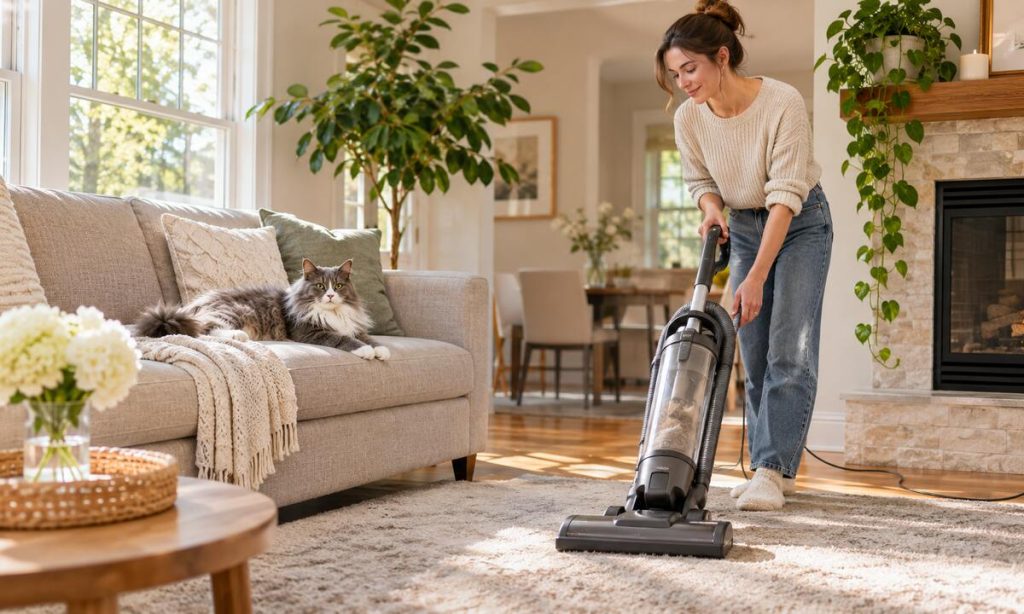
A vacuum cleaner for cat hair is only as useful as the routine around it. Cat fur collects on rugs, furniture seams, bedding, and the edges of stairs, while fine dander can remain in household dust. Learning how to use and care for a vacuum cleaner for cat hair helps you clean more effectively and protects the machine from avoidable clogs. It can also make the process less stressful for a sound-sensitive cat.
This practical guide covers room preparation, surface techniques, filters, rotating brushes, debris disposal, and a maintenance schedule. It also explains when to stop and address a machine problem. There is no need for a complicated collection of accessories. A steady routine with the correct attachment for each surface is usually more useful than an exhausting once-a-month cleaning marathon.
Know What You Are Removing
Loose cat hair is visible, but pet dander refers largely to tiny skin flakes and associated allergens. Vacuuming helps remove settled particles from textiles and floors, although no machine can promise an allergen-free room. The U.S. Environmental Protection Agency notes that efficient filtration can keep some captured dust from escaping back into indoor air. The entire cleaning approach matters, including fabrics and surfaces you do not vacuum.
Start by mapping where the cat actually spends time. Check couch armrests, soft blankets, cat trees, corners, baseboards, and under furniture. Areas with heavy traffic or sleeping spots may need attention more often. If anyone has significant respiratory allergies, discuss exposure-control measures with a qualified clinician. Vacuuming is one practical part of home care, not a medical treatment or a guarantee against symptoms.
Prepare the Room and Protect the Cat
Before using a vacuum cleaner for cat hair, pick up cords, small toys, loose strings, and sharp objects. Check that a surface is dry and suitable for dry vacuuming. Move fragile decorations, secure floor mats, and keep children and pets away from trailing cables. For a nervous cat, offer a quiet room with water, resting space, and an exit from the noise rather than trapping it nearby.
Choose a predictable cleaning time. A startled cat may run into furniture or hide in an unsafe spot when the motor starts unexpectedly. FYI, a calm cat is not necessarily a cat who enjoys the sound of suction. Let your pet move away voluntarily. For everyday shedding management, gentle cat brushing may reduce loose hair before it reaches the floor, but brushing should be gentle and adapted to the cat’s tolerance.
Use the Right Technique on Each Surface
On carpet, work slowly with overlapping passes and pay attention to edges where fur gathers. Use the brush roll only when it is appropriate for the carpet pile and the machine’s instructions. Delicate rugs or long fibers may need a suction-only setting to avoid pulling threads. On hard floors, use a suitable floor head that does not scatter debris or scratch the finish.
Upholstery needs a gentler touch. Use a designated fabric tool, inspect seams, and test an inconspicuous spot before applying strong agitation. A small crevice attachment can reach cushions and baseboards without dragging a full-size floor head across fabric. The guide to removing pet hair from carpet covers surface-care decisions when fur and accidents overlap. Never vacuum wet urine with a dry-only appliance; follow the machine’s wet-cleaning specifications.
Empty Hair Before It Becomes a Blockage
Cat fur can form dense clumps in the dust container, hose bends, and floor-head channels. If the cleaner suddenly loses suction, stops picking up debris, or makes an unusual noise, switch it off and unplug it before inspecting. Empty the container at the level recommended by the manufacturer. Overfilling can impair airflow and make the mess harder to remove.
For bagged systems, replace the bag at the maker’s specified fullness point instead of waiting for the appliance to stop working. Seal waste promptly, especially if household members react to dust. Anyone with strong allergies may prefer to empty the cleaner outdoors or have another household member handle the task. A vacuum cleaner for cat hair works best when airflow stays unobstructed, not when its bin is packed like a tiny fur suitcase.
Clean the Brush Roll, Hose, and Wheels
Long fur often winds around a rotating brush roll. With the appliance unplugged and all moving parts stopped, remove the floor head or access cover only as instructed. Use the supplied cleaning tool if provided, and avoid forcing scissors near electrical wires or delicate bristles. Check wheels, swivels, and small channels for wrapped fibers, rubber-band fragments, or trapped litter.
Inspect the hose for kinks and blockages without pushing sharp objects through it. If the machine has removable washable components, follow the exact rinsing and drying instructions before reassembly. A damp part can damage the motor or support unwanted growth inside the appliance. A clean brush and open air path make regular cleaning much easier, particularly in homes with long-haired cats.
Handle Filters According to Their Type
Filters are not all washable. Some are disposable, others can be rinsed, and certain components should never get wet. Read the manual before shaking, washing, or replacing a filter. If a HEPA filter is advertised, inspect whether it is part of a well-sealed system; escaping air around poorly fitted seals can carry dust back into the room. Filter care is a central part of responsible vacuum maintenance.
Turn the machine off, allow dust to settle, and remove filters carefully. A damaged or poorly seated filter may reduce performance. Replace parts at the specified intervals or sooner if the manual calls for it after heavy use. Never operate the machine without required filters. For a broader cleaning routine, combine vacuuming with damp wiping, washing soft bedding, and pet-safe carpet cleaning practices suited to the flooring materials.
Build a Schedule That Fits Your Household
Daily attention may help on a heavily used sofa, while less-trafficked rooms may need fewer passes. Let hair accumulation, the number of pets, the floor type, and family sensitivities guide the frequency. A modest, repeated routine is easier than waiting for layers to build up. It also helps the machine by preventing large clumps from entering the hose at once.
After each cleaning, empty the debris container when needed and inspect the floor head. Every few sessions, check the brush roll, hose, and wheels. Review the filter and service intervals on the manufacturer’s schedule. Clean cleaning a cat tree areas where fur and litter collect, without using unsafe chemicals around cats. IMO, the best maintenance habit is the simple one you will actually keep.
Know When to Repair or Stop Using the Cleaner
Stop immediately if the appliance smells hot or burnt, sparks, repeatedly shuts off, or has a damaged power cord. Do not continue testing it on the carpet. Disconnect the power and consult the manufacturer’s troubleshooting and repair guidance. Battery-powered cleaners need the same caution around damaged battery packs, swelling, or unusual heat.
Persistent poor suction may result from a full bin, filter blockage, worn seal, obstructed hose, or damaged brush mechanism. Inspect only user-serviceable parts. If the problem persists, use qualified service rather than opening electrical housing. Safety is part of knowing how to use and care for a vacuum cleaner for cat hair; a clean floor is never worth an avoidable electrical hazard.
Frequently Asked Questions
These questions focus on everyday use and upkeep rather than recommending one machine or accessory. The right approach depends on the appliance manual, flooring material, and the home’s shedding patterns. Follow model-specific instructions whenever they differ from general suggestions.
Reduce noise exposure for anxious cats and handle collected dust carefully. If a family member has severe allergy or asthma symptoms, consult their healthcare professional for personalized exposure-management advice.
How often should I vacuum with cats at home?
Adjust frequency to shedding, household traffic, fabrics, and allergy concerns. High-use resting spots often need more frequent attention.
Can every vacuum filter be washed?
No. Only wash filters explicitly labeled washable, and dry them fully for the time required before reinstalling.
Why does suction drop after cleaning cat hair?
Check the bin or bag, hose, filter, and brush head for packed fur or blockages. Unplug before inspection.
Should I vacuum while my cat is in the room?
Let the cat choose a quiet space away from noise. Do not corner or chase a frightened pet with the machine.
Is vacuuming enough to remove dander?
It can reduce settled particles, but washing fabrics, damp dusting, ventilation, and other measures may also be helpful.
Final Words
Good results from a vacuum cleaner for cat hair come from surface-aware technique and routine maintenance. Keep the brush roll clear, empty collected fur before airflow suffers, care for filters correctly, and stop when electrical or mechanical warning signs appear. Just as importantly, let the cat avoid noise and disruption.
When you know how to use and care for a vacuum cleaner for cat hair, the house can feel easier to manage without making cleaning a daily battle. Pair modest vacuum sessions with fabric care and gentle grooming. The goal is a cleaner, more comfortable home for both people and pets, not perfection after every pass.









