
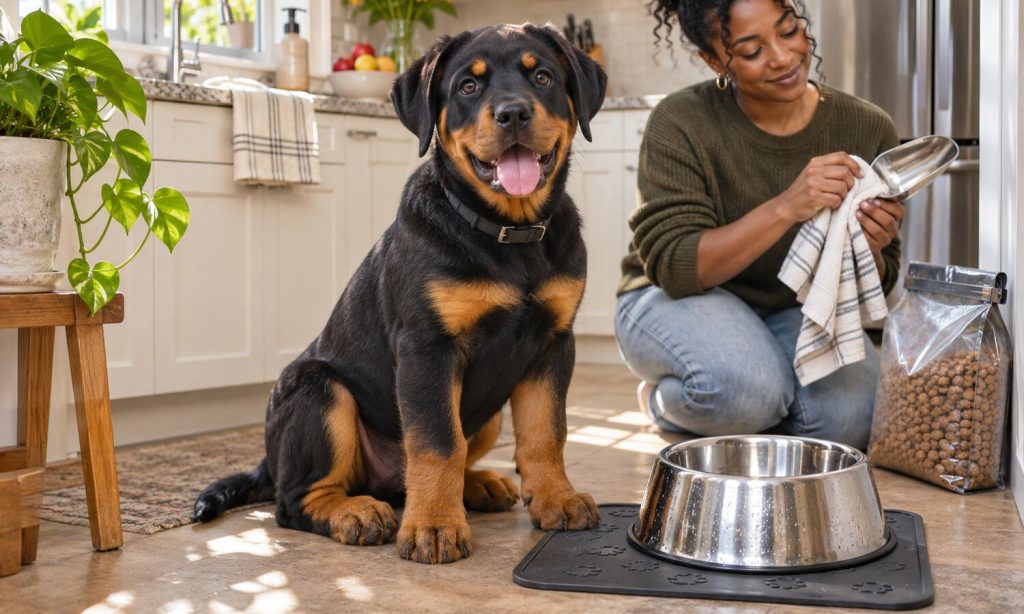
Food does not need a bath. If you are wondering how to clean a dog food for rottweiler puppy and keep it in good condition, the safe task is cleaning the food-handling equipment and storing the food correctly. Washing kibble or adding water to a storage bag can introduce moisture and encourage spoilage. Instead, protect the original food, wash food bowls and utensils, and discard anything that smells spoiled, looks moldy, or comes from damaged packaging.
Rottweiler puppies are growing large dogs, so food handling should protect a properly balanced growth diet. You can use the site’s dog food for rottweiler puppy guide as background on nutritional suitability. This article focuses on hygiene: safe temperatures, dry-food containers, opened wet food, clean scoops, and warning signs. A straightforward routine also helps everyone in the household serve consistent portions and track any problems that might need veterinary attention.
Understand What Should and Should Not Be Cleaned
Never rinse dry kibble with tap water and return it to the bag. Moisture can change texture and promote deterioration, and rinsing does not make contaminated food safe. Do not try to rescue spoiled food by removing a few suspicious pieces, heating it, or mixing it with something fresh. Discard the affected supply safely. A damaged can, swollen pouch, unusual odor, mold, or unexplained moisture are reasons to stop using the package.
The things that do need cleaning are the puppy’s bowl, measuring scoop, feeding mat, storage bin, and surfaces that contact food. Wash bowls and scoops after each use with hot soapy water, rinse, and dry thoroughly. Keep a separate scoop for pet food rather than borrowing a household drinking cup. Wash hands before and after handling the food. These steps reflect FDA pet-food safety guidance and are especially useful when children or vulnerable family members share the home.
Store Dry Puppy Food in the Original Bag
The original packaging preserves important information: expiration or best-by date, ingredient details, lot code, and feeding directions. Fold it closed tightly after every use. To protect against pests, place the entire bag inside a clean, dry container with a secure lid. Avoid pouring loose kibble directly into a bin that still contains crumbs or oil from an older batch. Those residues can become stale and transfer odors to new food.
Choose a cool, dry storage area away from direct sunlight, heaters, damp garages, and cleaning chemicals. FDA advice recommends keeping unopened dry pet food below 80°F. Heat and moisture can reduce quality over time. Do not store food where a curious puppy can tear into it. Food bags and empty containers must stay inaccessible to prevent overeating, choking on packaging, and scavenging. Record the opening date if several household members share feeding duties.
Handle Opened Wet Food Promptly
Unopened cans and pouches belong in a cool, dry space unless the label says otherwise. Once opened, serve a measured amount and promptly refrigerate or discard what remains. Keep refrigerated food covered and the refrigerator at 40°F or below. Do not assume a can left out overnight is safe because it still looks normal. Follow the package’s specific storage limits if they are shorter, and discard any food that smells off or has unusual texture.
Use a clean spoon to transfer wet food, not a finger repeatedly dipped into the container. Keep the feeding dish out only as long as necessary and remove leftovers after mealtime, especially in hot weather. Wash the bowl before the next serving. If your puppy prefers food slightly less cold, warm only the amount being served using safe handling techniques, then check for hot spots before offering it. Never return warmed leftovers to the storage container.
Keep Feeding Tools and Containers Sanitary
Set a simple cleaning schedule. After each meal, remove residue from the bowl, wash with dish soap, rinse, and let it dry. Clean measuring utensils too. Wash a reusable bin when a bag is replaced, then dry it completely before inserting a new bag. Moisture trapped under plastic liners or inside hinges is easy to overlook. If a food-storage container has scratches or worn seals that cannot be cleaned, consider whether it still protects the food adequately.
Feeding mats and nearby flooring collect drool, crumbs, and spilled water. Clean those surfaces regularly, particularly when a puppy eats enthusiastically. Avoid spraying strong cleaners close to exposed food. Store household disinfectants separately, use them only according to their labels, and let surfaces dry before contact with a bowl. FYI, a sparkling bowl placed on a dirty mat is only half a cleanup job. Hygiene works best when the entire feeding area is managed together.
Measure Portions and Monitor the Puppy
Food safety and feeding amounts go together. Rottweiler puppies need complete nutrition appropriate for growth of large-size dogs, not extra food simply because they are growing fast. Read the nutritional-adequacy statement and measure portions consistently. The site’s guidance on large-breed feeding routines and portions can help frame the discussion, but your veterinarian should assess the puppy’s body condition and growth rate.
Log meals, leftovers, stool changes, and any sudden appetite shift. If your puppy vomits repeatedly, has bloody diarrhea, becomes weak, or refuses food, call a veterinarian promptly. Contaminated food is one possibility among many, so preserve the package details and report what was fed rather than guessing. Do not keep feeding a suspect batch to see if the symptoms recur. A clear record of lot number, purchase date, and storage conditions can be useful during a food-safety investigation.
Avoid Cross-Contamination and Common Mistakes
Do not mix a new bag into stale crumbs from an older bag. Use up the older supply appropriately before opening another, and clean the container between batches. Keep pet food away from raw meat preparation areas and avoid sharing utensils without washing. If the package has been exposed to flooding, pests, or chemical spills, discard it rather than trying to clean the outside and hoping the contents are unaffected. A well-sealed bag still requires sensible inspection.
Another mistake is leaving all-day food for a puppy that needs measured meals. Free access can obscure calorie intake, complicate toilet training, and make it harder to spot reduced appetite. Meal frequency should suit age and veterinary guidance. Maintain fresh water, wash its bowl daily, and supervise access. A simple weekly check of expiration dates, storage temperature, and cleaning supplies takes little time and prevents many avoidable problems.
Frequently Asked Questions
Safe puppy feeding starts with clean equipment and intact, properly stored food. The following questions cover common misunderstandings about food hygiene.
Use the product label for handling instructions and contact your veterinarian when a puppy becomes unwell after eating. General storage advice cannot diagnose the cause of illness.
Should I wash dry dog food before feeding it?
No. Washing kibble does not disinfect it and adds moisture. Clean the bowl and scoop instead; discard food that appears contaminated.
How often should the food bowl be washed?
Wash and dry the food bowl after each use. Clean the water bowl daily and keep the surrounding feeding area tidy.
Can I leave kibble loose in a plastic bin?
The safer practical approach is to keep kibble in its original bag inside a dry, secure bin so packaging details remain available.
How cold should the fridge be for opened wet food?
Keep refrigerated leftovers tightly covered at 40°F or below, and follow the food label’s handling instructions.
What if my puppy becomes sick after a meal?
Stop using suspect food and contact the veterinarian promptly, especially for repeated vomiting, diarrhea, lethargy, or dehydration.
Final Words
The meaningful answer to how to clean a dog food for rottweiler puppy and keep it in good condition is to clean the equipment, not the food itself. Keep dry food in its original sealed bag, refrigerate opened wet food promptly, wash tools and bowls, and discard questionable supplies. Consistent portions and simple records support a healthy feeding routine.
For nutrition rather than sanitation, revisit the Rottweiler puppy food guide and discuss large-breed growth requirements with your veterinarian. Food safety is not glamorous, but a dry bin, clean bowl, and intact package can make everyday puppy care much more reliable.









