
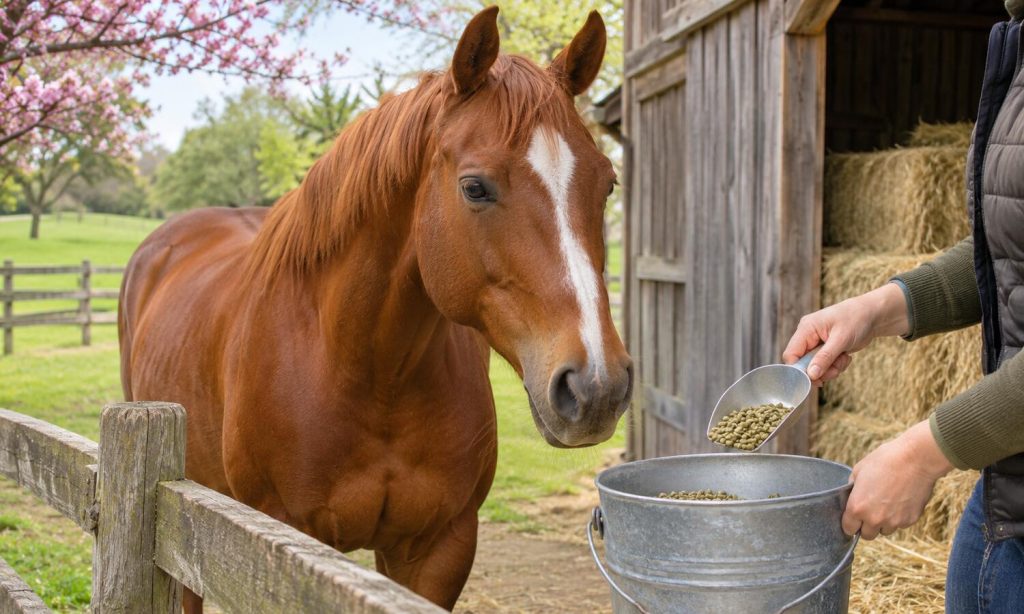
Itching, insect irritation, coughing and seasonal respiratory signs in a horse may have different causes. That makes the best allergy supplement for horses a more complicated choice than picking a product with the strongest label claim. We compare seven verified equine products marketed for skin, seasonal or airway support, including powders, pellets and a syringe. The purpose is to distinguish ingredients, serving formats and limitations, not to suggest a supplement can diagnose allergies or treat respiratory disease. Dust control, ventilation, hay quality and insect management may be just as important as feed additions. A horse with a persistent cough, hives or difficult breathing needs veterinary assessment. Use the Quick Picks to understand the options, then compare actual labels, possible medication interactions and competition restrictions.
For more practical background, see our guide to veterinarians diagnosing itchy horse skin.
Quick Picks
These 7 options cover different uses within seasonal horse care. The quick comparison is a starting point; detailed limits appear below.
| Product | Best For | Key Advantage | Buy | |
|---|---|---|---|---|
| UltraCruz Equine Skin and Allergy | powder labeled for equine skin and allergy support | Skin-support formulation | View on Amazon | Jump to Review |
| SU-PER Aller-G Powder | powder marketed for respiratory and allergy support | Respiratory-focused powder | View on Amazon | Jump to Review |
| MVP Air-Way EQ | larger serving tub positioned for lung comfort | Airway-support large tub | View on Amazon | Jump to Review |
| Stop Cough Horse Supplement Powder | powder sold for stable cough and seasonal breathing complaints | Stable-cough marketed powder | View on Amazon | Jump to Review |
| Equi-Breeze Equine Respiratory Support | herbal airway-support powder marketed for horses | Herbal respiratory blend | View on Amazon | Jump to Review |
| Critter Corner Respiratory Support Powder | powder for routine respiratory wellness | Powdered airway wellness formula | View on Amazon | Jump to Review |
| Ramard Total Respiratory and Endurance Syringe | portable syringe labeled for respiratory support | Syringe-based equine format | View on Amazon | Jump to Review |
Our Picks: Best Allergy Supplement For Horses
Each pick below has a different intended use. Compare its stated features and drawbacks with your own seasonal horse care needs.
1. UltraCruz Equine Skin and Allergy

- DHA and quercetin listed
- Seasonal skin-support positioning
- Easy-feed pellet form
- Four-pound pack
- Does not replace dermatology diagnosis
UltraCruz Equine Skin and Allergy deserves a closer look when you need powder labeled for equine skin and allergy support. The formula includes ingredients such as DHA and quercetin. It is marketed for seasonal skin and allergy concerns. Respiratory signs and itchy skin can have unrelated causes. An ‘allergy’ label cannot identify what is affecting a horse. Your horse’s behavior and care needs should determine whether the listed features matter.
The four-pound product is offered as feed pellets. Compare how the powder or pellets fit the horse’s feeding routine. Palatability and daily serving size affect whether use is practical. Compare this with powder marketed for respiratory and allergy support. The two options address different preferences or setup requirements. Inspect the current label, package quantity and directions before buying. A cough at rest, labored breathing or recurring nasal discharge warrants veterinary assessment. Supplements should not delay a diagnosis. Set expectations around nutritional support, not disease treatment. Work with the veterinarian on dust control, allergy investigation and appropriate medication.
A practical limitation: does not replace dermatology diagnosis. If the horse competes, verify ingredient restrictions with the governing organization. A natural extract is not automatically competition-safe. Choose for the specific function shown on the label, not because a similar product helped another household. Read the ingredient profile, serving size and competition rules first. Herbal and immune-support claims may lack strong equine trial evidence.
My Recommendation
Consider this option if you prefer powder labeled for equine skin and allergy support. The formula includes ingredients such as DHA and quercetin. A limitation to weigh: does not replace dermatology diagnosis. Check the current directions and compare practical fit, safety and serving requirements before ordering for your animal.
2. SU-PER Aller-G Powder

- Flaxseed and herbal extracts
- Respiratory-support positioning
- 2.5-pound powder pack
- Feed-mixed delivery
- Marketing claims do not establish clinical benefit
SU-PER Aller-G Powder deserves a closer look when you need powder marketed for respiratory and allergy support. The powder blends flaxseed meal and herbal extracts. The seller markets normal respiratory support. Stable dust, hay quality, insects and ventilation often matter more than a supplement bottle. Investigate exposure alongside any product comparison. Your horse’s behavior and care needs should determine whether the listed features matter.
The package is listed at 2.5 pounds. A cough at rest, labored breathing or recurring nasal discharge warrants veterinary assessment. Supplements should not delay a diagnosis. Compare this with larger serving tub positioned for lung comfort. The two options address different preferences or setup requirements. Inspect the current label, package quantity and directions before buying. For skin concerns, inspect the coat and look for insects or irritation. Product choice depends on the underlying problem. If the horse competes, verify ingredient restrictions with the governing organization. A natural extract is not automatically competition-safe.
A practical limitation: marketing claims do not establish clinical benefit. An apparent improvement after changing several things does not prove the supplement caused it. Track symptoms and environmental changes separately. Look at what you will do every day: measuring, cleaning, supervision and the time required all influence value. Respiratory signs and itchy skin can have unrelated causes. An ‘allergy’ label cannot identify what is affecting a horse. A careful match will matter more than a broad claim of universal suitability.
My Recommendation
Consider this option if you prefer powder marketed for respiratory and allergy support. The powder blends flaxseed meal and herbal extracts. A limitation to weigh: marketing claims do not establish clinical benefit. Check the current directions and compare practical fit, safety and serving requirements before ordering for your animal.
3. MVP Air-Way EQ

- Five-pound support tub
- Forty advertised servings
- Seasonal respiratory positioning
- Soft-tissue support claims
- Large servings affect recurring cost
MVP Air-Way EQ deserves a closer look when you need larger serving tub positioned for lung comfort. This larger tub is positioned for lung and seasonal support. The listing advertises 40 servings in five pounds. Read the ingredient profile, serving size and competition rules first. Herbal and immune-support claims may lack strong equine trial evidence. Your horse’s behavior and care needs should determine whether the listed features matter.
The formula focuses on soft tissue and respiratory comfort. For skin concerns, inspect the coat and look for insects or irritation. Product choice depends on the underlying problem. Compare this with powder sold for stable cough and seasonal breathing complaints. The two options address different preferences or setup requirements. Inspect the current label, package quantity and directions before buying. Compare how the powder or pellets fit the horse’s feeding routine. Palatability and daily serving size affect whether use is practical. An apparent improvement after changing several things does not prove the supplement caused it. Track symptoms and environmental changes separately.
A practical limitation: large servings affect recurring cost. Set expectations around nutritional support, not disease treatment. Work with the veterinarian on dust control, allergy investigation and appropriate medication. Make a purchase decision based on the documented design and practical fit, not a promise of instant results. Stable dust, hay quality, insects and ventilation often matter more than a supplement bottle. Investigate exposure alongside any product comparison.
My Recommendation
Consider this option if you prefer larger serving tub positioned for lung comfort. This larger tub is positioned for lung and seasonal support. A limitation to weigh: large servings affect recurring cost. Check the current directions and compare practical fit, safety and serving requirements before ordering for your animal.
4. Stop Cough Horse Supplement Powder

- Stable-cough support positioning
- Powder for feed mixing
- Airway-comfort focus
- Seasonal symptom marketing
- Coughs still require medical examination
Stop Cough Horse Supplement Powder deserves a closer look when you need powder sold for stable cough and seasonal breathing complaints. The powdered product is marketed for stable-related coughing. Its label focuses on airway comfort. Respiratory signs and itchy skin can have unrelated causes. An ‘allergy’ label cannot identify what is affecting a horse. Your horse’s behavior and care needs should determine whether the listed features matter.
It is designed as a feed-added supplement. Compare how the powder or pellets fit the horse’s feeding routine. Palatability and daily serving size affect whether use is practical. Compare this with herbal airway-support powder marketed for horses. The two options address different preferences or setup requirements. Inspect the current label, package quantity and directions before buying. A cough at rest, labored breathing or recurring nasal discharge warrants veterinary assessment. Supplements should not delay a diagnosis. Set expectations around nutritional support, not disease treatment. Work with the veterinarian on dust control, allergy investigation and appropriate medication.
A practical limitation: coughs still require medical examination. If the horse competes, verify ingredient restrictions with the governing organization. A natural extract is not automatically competition-safe. Keep a record of how your horse responds, and stop using a product that causes discomfort or concern. Read the ingredient profile, serving size and competition rules first. Herbal and immune-support claims may lack strong equine trial evidence. Everyday maintenance and safe handling are part of the actual cost of ownership.
My Recommendation
Consider this option if you prefer powder sold for stable cough and seasonal breathing complaints. The powdered product is marketed for stable-related coughing. A limitation to weigh: coughs still require medical examination. Check the current directions and compare practical fit, safety and serving requirements before ordering for your animal.
5. Equi-Breeze Equine Respiratory Support

- Vet-formulated marketing
- Herbal powder format
- Dust-exposure positioning
- Respiratory-support focus
- Herbal ingredients can affect medications or competition rules
Equi-Breeze Equine Respiratory Support deserves a closer look when you need herbal airway-support powder marketed for horses. The formula is advertised as veterinarian-formulated. It uses a herbal powder delivery format. Stable dust, hay quality, insects and ventilation often matter more than a supplement bottle. Investigate exposure alongside any product comparison. Your horse’s behavior and care needs should determine whether the listed features matter.
Dust and seasonal exposure are named use contexts. A cough at rest, labored breathing or recurring nasal discharge warrants veterinary assessment. Supplements should not delay a diagnosis. Compare this with powder for routine respiratory wellness. The two options address different preferences or setup requirements. Inspect the current label, package quantity and directions before buying. For skin concerns, inspect the coat and look for insects or irritation. Product choice depends on the underlying problem. If the horse competes, verify ingredient restrictions with the governing organization. A natural extract is not automatically competition-safe.
A practical limitation: herbal ingredients can affect medications or competition rules. An apparent improvement after changing several things does not prove the supplement caused it. Track symptoms and environmental changes separately. The best fit should solve one identifiable problem in your routine while remaining safe for the animal. Respiratory signs and itchy skin can have unrelated causes. An ‘allergy’ label cannot identify what is affecting a horse. A careful match will matter more than a broad claim of universal suitability.
My Recommendation
Consider this option if you prefer herbal airway-support powder marketed for horses. The formula is advertised as veterinarian-formulated. A limitation to weigh: herbal ingredients can affect medications or competition rules. Check the current directions and compare practical fit, safety and serving requirements before ordering for your animal.
6. Critter Corner Respiratory Support Powder

- Respiratory wellness positioning
- Feed-added powder format
- Lung-and-airway support claims
- Daily routine format
- Unknown triggers demand environmental investigation
Critter Corner Respiratory Support Powder deserves a closer look when you need powder for routine respiratory wellness. This powder is positioned as routine respiratory support. The maker describes lung and airway nourishment. Read the ingredient profile, serving size and competition rules first. Herbal and immune-support claims may lack strong equine trial evidence. Your horse’s behavior and care needs should determine whether the listed features matter.
It is not an environmental dust-control tool. For skin concerns, inspect the coat and look for insects or irritation. Product choice depends on the underlying problem. Compare this with portable syringe labeled for respiratory support. The two options address different preferences or setup requirements. Inspect the current label, package quantity and directions before buying. Compare how the powder or pellets fit the horse’s feeding routine. Palatability and daily serving size affect whether use is practical. An apparent improvement after changing several things does not prove the supplement caused it. Track symptoms and environmental changes separately.
A practical limitation: unknown triggers demand environmental investigation. Set expectations around nutritional support, not disease treatment. Work with the veterinarian on dust control, allergy investigation and appropriate medication. Choose for the specific function shown on the label, not because a similar product helped another household. Stable dust, hay quality, insects and ventilation often matter more than a supplement bottle. Investigate exposure alongside any product comparison. The final decision should reflect the animal’s behavior and the realities of daily use.
My Recommendation
Consider this option if you prefer powder for routine respiratory wellness. This powder is positioned as routine respiratory support. A limitation to weigh: unknown triggers demand environmental investigation. Check the current directions and compare practical fit, safety and serving requirements before ordering for your animal.
7. Ramard Total Respiratory and Endurance Syringe

- Portable dosing syringe
- Endurance-support marketing
- Seasonal use marketing
- Not a feed-mixed powder
- Syringe format needs stress-free safe administration
Ramard Total Respiratory and Endurance Syringe deserves a closer look when you need portable syringe labeled for respiratory support. The product comes in a dosing syringe. The label markets seasonal respiratory and endurance support. Respiratory signs and itchy skin can have unrelated causes. An ‘allergy’ label cannot identify what is affecting a horse. Your horse’s behavior and care needs should determine whether the listed features matter.
Its format differs from everyday feed-mixed powders. Compare how the powder or pellets fit the horse’s feeding routine. Palatability and daily serving size affect whether use is practical. Compare this with powder labeled for equine skin and allergy support. The two options address different preferences or setup requirements. Inspect the current label, package quantity and directions before buying. A cough at rest, labored breathing or recurring nasal discharge warrants veterinary assessment. Supplements should not delay a diagnosis. Set expectations around nutritional support, not disease treatment. Work with the veterinarian on dust control, allergy investigation and appropriate medication.
A practical limitation: syringe format needs stress-free safe administration. If the horse competes, verify ingredient restrictions with the governing organization. A natural extract is not automatically competition-safe. Look at what you will do every day: measuring, cleaning, supervision and the time required all influence value. Read the ingredient profile, serving size and competition rules first. Herbal and immune-support claims may lack strong equine trial evidence. Everyday maintenance and safe handling are part of the actual cost of ownership.
My Recommendation
Consider this option if you prefer portable syringe labeled for respiratory support. The product comes in a dosing syringe. A limitation to weigh: syringe format needs stress-free safe administration. Check the current directions and compare practical fit, safety and serving requirements before ordering for your animal.
For a related practical routine, see our guide to reading horse feed labels.
How to choose best allergy supplement for horses
The best match for seasonal horse care depends on purpose, clear directions, and practical limits. Compare verified product features, then use the checks below to avoid misleading claims and prevent a poor fit.
Identify the symptom before shopping
Start by defining the exact buying task. Coughing, rubbing, hives, and breathing trouble can have different causes. Supplements cannot diagnose allergy or replace veterinary treatment, dust control, or proper stable ventilation. The first check is what the package actually says, not the most dramatic benefit claimed in an advertisement. Describe the actual problem: itching, seasonal rub marks, nasal discharge or coughing. Those signs call for different diagnostic questions and may have non-allergic causes. Then narrow your options to products whose intended use lines up with that list. If the product category touches medical care, ask your veterinarian before making a change. A careful choice is usually a specific choice: it matches a real routine instead of solving an imaginary problem. Keep notes about fit and usability so you can compare two candidates honestly.
Audit actual ingredients and overlapping feeds
Look beyond the front label to the details you can verify. Read active ingredients, herbs, serving sizes and potential interactions with medication. Check competition restrictions before feeding botanical formulas. Check whether the named listing has variations and whether the exact option you select has the same features. Calculate daily servings and ongoing monthly cost from the measured horse dose. Larger tubs are not necessarily cheaper per day. Think about cleaning, storing, handling, and monitoring over a month, not only a single day. When specifications are missing, do not guess. Contact the maker or select a product with better documentation. The goal is to understand what is really being purchased and whether its conditions of use are realistic.
Combine safe routine changes with veterinary care
A sound buying decision includes a plan for first use and follow-up. Coughing, rubbing, hives, and breathing trouble can have different causes. Supplements cannot diagnose allergy or replace veterinary treatment, dust control, or proper stable ventilation. If the animal reacts poorly or the product is inconvenient, stop and reassess rather than pushing through. Keep the original package and instructions. Improve ventilation, hay quality and insect control where appropriate. Veterinary examination is important for persistent cough, breathing difficulty or serious skin inflammation. Treat promotional outcomes as uncertain. The best value is a suitable option that you can use correctly and maintain without creating new safety problems. Practical follow-through matters more than a flashy feature list.
For related reading
Useful related guides include introducing a horse supplement safely, stable management for fly control.
Frequently Asked Questions
These answers address common decisions about seasonal horse care.
Do allergy supplements cure itchy skin in horses?
No. Itching may involve insects, infection, or other causes. A veterinarian should investigate persistent symptoms.
Can a supplement treat a horse’s cough?
Do not rely on one. Coughing may indicate serious airway disease that needs veterinary examination and environmental changes.
Is a herbal blend always safe?
No. Ingredients can interact with medication or competition rules. Discuss the full ingredient list with your veterinarian.
Should I change stable ventilation?
Dust reduction and appropriate ventilation can matter for airway comfort. A vet can help identify relevant triggers.
How long should I wait for a result?
Use the veterinary care plan and track symptoms. Avoid delaying treatment while waiting for a supplement effect.
Final Verdict
An equine allergy supplement should follow a clear diagnosis and management plan. UltraCruz focuses on skin and seasonal support, while SU-PER Aller-G and several other products are positioned more toward airway comfort. These are not interchangeable treatments, and the available product claims do not prove relief for a particular horse. Compare ingredients, feeding amounts and competition rules, and address dust, insects and ventilation. Persistent coughing, breathing difficulty or severe skin reactions warrant veterinary assessment before adding another supplement.
Affiliate disclosure: This article contains Amazon affiliate links. If you purchase through them, PetAdvisorPro may earn a commission. As an Amazon Associate I earn from qualifying purchases.









