
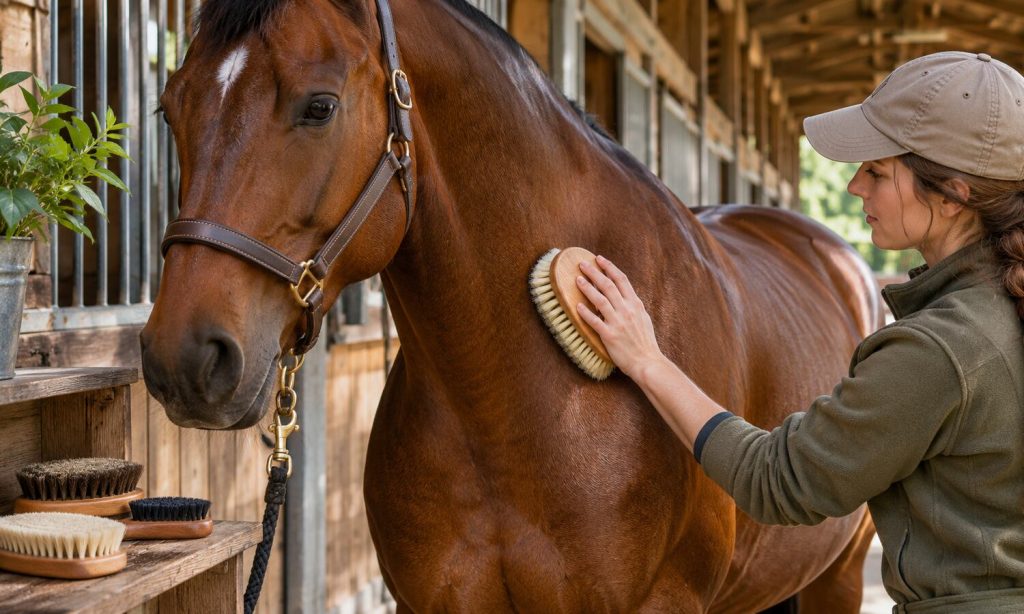
A good grooming session does more than tidy a horse before a ride. It removes loose hair and dried dirt, gives you time to notice changes in the skin, and can make daily handling more comfortable. The best grooming brushes for horses are rarely one universal tool. A rubber curry loosens debris, a dandy brush sweeps it away, a body brush handles finer dust, and a shedding blade targets seasonal coat changes. We compared seven Amazon-listed options, from a full thirteen-piece kit to individual brushes with distinct jobs. This guide explains where each tool fits, which surfaces deserve a gentler touch, and when to stop brushing and investigate tenderness. Choose a routine around your horse’s coat, sensitivity, and turnout conditions instead of buying solely by the size of a grooming kit. For help with the related decision, see the best mane and tail brushes for horses.
Quick Picks
The seven picks cover a complete kit, sweeping brushes, rubber curries, and a seasonal shedding tool. Match the brush to the job and your horse’s comfort.
| Product | Best For | Key Advantage | Buy | |
|---|---|---|---|---|
| 13-Piece Horse Grooming Kit with Tote | New owners needing several tools | Complete multi-tool kit | View on Amazon | Jump to Review |
| Weaver Leather Medium Dandy Brush | Sweeping away loosened dirt | Dedicated medium dandy format | View on Amazon | Jump to Review |
| Jeffers Equine Seven-Inch Wooden Body Brush | Firm dirt and hair removal | Wooden block with hand strap | View on Amazon | Jump to Review |
| Intrepid International Bedford Green Nine-Inch Brush | Medium-to-soft coat brushing | Long wood block and nylon bristles | View on Amazon | Jump to Review |
| Two-Pack Large Rubber Curry Combs | Loosening dried dirt before brushing | Flexible rubber curry pair | View on Amazon | Jump to Review |
| SleekEZ Ten-Inch Horse Shedding Blade | Seasonal loose coat removal | Purpose-designed shedding blade | View on Amazon | Jump to Review |
| Weaver Equine Palm-Held Fine Curry | Controlled, lighter curry grooming | Small rubber bristles and palm grip | View on Amazon | Jump to Review |
1. 13-Piece Horse Grooming Kit with Tote

What We Like
- Thirteen-piece set listed
- Curry and body brushes included
- Includes hoof pick and scraper
- Tote for stable organization
What We Don’t Like
- More pieces to clean and store
- Some components may be redundant
This thirteen-piece grooming kit is the broadest option in the lineup. Its product listing names curry, dandy, and body brushes alongside a mane-and-tail brush, sweat scraper, sponge, hoof pick, and small accessories in a tote. That makes it a practical starting point for a new horse owner assembling basic stable equipment. It is a collection rather than a specialist brush. A kit is convenient only when its included brush types suit the horse. Start with a short trial on a muscular area, and watch the horse’s ears, posture, and willingness to stand before increasing pressure.
Use the curry on suitable muscular areas to loosen embedded dust, switch to a dandy brush to sweep debris away, then finish with a softer body brush as appropriate. Keep the hoof pick separate from coat work. The tote helps gather pieces before a lesson or show. Choose individual tools from the set according to the horse’s tolerance rather than reaching for every item each day. Store each item where it can dry after use. A useful brush must feel comfortable in the hand and work with the direction of hair growth, especially over sensitive coat regions.
A multi-piece kit may not match a horse’s individual coat sensitivity as precisely as thoughtfully selected standalone brushes. Inspect edges, bristles, and seams when the kit arrives. Replace a tool that feels rough, sheds pieces, or is awkward to hold. Beginners should learn safe hoof handling and avoid aggressive work over legs, face, and sore skin. Compare the cost against purchasing only the two or three tools you truly need.
My Recommendation
This kit makes the most sense when you genuinely need several grooming basics at once. I would begin with the curry, dandy, and body brushes, learn how the horse reacts, and add the other pieces gradually. Experienced owners with good existing tools may get better value from one targeted replacement.
2. Weaver Leather Medium Dandy Brush

What We Like
- Purpose-built dandy brush
- Medium size identified
- Purple-and-black design
- Simple one-brush purchase
What We Don’t Like
- Not a substitute for soft face brush
- Single tool lacks full kit versatility
The Weaver Leather Dandy Brush is a dedicated brush for sweeping loosened dirt and debris after a curry-comb pass. The selected listing identifies the purple-and-black model as medium, distinguishing it from tiny finishing brushes and elaborate kit bundles. A dandy brush is an everyday stable staple when a horse returns from dusty turnout or has dried mud on a broad coat area. Its strength is a straightforward sweeping role after loosened dirt. A useful brush must feel comfortable in the hand and work with the direction of hair growth, especially over sensitive coat regions.
Begin with light, deliberate strokes in the direction of hair growth, increasing firmness only if the horse is comfortable. A curry can loosen embedded dust first, making the dandy pass more efficient. Pay attention to mane edges, legs, and clipped regions, where a medium dandy may feel too assertive. Tap out accumulated hair and rinse or clean the brush using appropriate care instructions. One sturdy-feeling brush can earn daily use when appropriately matched to the coat. Brushes cannot treat a rash, parasite problem, or painful skin condition. Ask a veterinarian about persistent flaking, sores, or marked sensitivity.
The product name alone does not establish that its bristles are suitable for every sensitive horse. Check the actual stiffness once received and test on a tolerant area. A horse that flinches, pins ears, or shifts away is telling you to stop. For fine dust on the face, a softer, purpose-designed brush is a safer comparison. Inspect bristle condition periodically because wear changes how the brush contacts skin.
My Recommendation
Choose this Weaver dandy when you already own a curry comb and want a straightforward follow-up brush for routine debris removal. The medium size may suit daily stable work, but let your horse’s response determine pressure and coverage. I would not treat it as the only brush for delicate skin.
3. Jeffers Equine Seven-Inch Wooden Body Brush

What We Like
- Seven-inch wooden handle
- Hand strap for grip
- Stiff bristles listed
- Useful around barn and travel
What We Don’t Like
- Firm feel may bother sensitive horses
- Wood needs appropriate drying
The Jeffers Equine wooden brush is a seven-inch model with a hand strap. Its verified listing describes stiff bristles for removing dirt, dust, and loose hair from horses and other livestock. Although the product name includes body brush, the advertised firmness places it closer to a robust cleaning option than a delicate final-polish brush. Grip and intended pressure matter here. The hand strap is part of the handling design, not a reason to apply extra force. Brushes cannot treat a rash, parasite problem, or painful skin condition. Ask a veterinarian about persistent flaking, sores, or marked sensitivity.
Slide a hand securely beneath the strap and work over broad, muscular coat areas using measured strokes. The wooden block may feel familiar to people who prefer traditional stable tools. Loosen packed mud gently before sweeping it off, and remove hair from the bristles between sessions. Keep the wood dry after cleaning so the handle remains comfortable to use. Select another brush for any area where the horse appears uncomfortable. Rinse or clean grooming tools regularly and allow them to dry. Sharing dirty equipment between horses can spread unwanted debris and skin problems.
A stiff-bristled tool is not the first choice for thin skin, clipped coats, wounds, or an easily irritated horse. Never dig the brush into the body to speed up cleaning. The seven-inch length is a handling preference, not proof of better performance. If the horse shows discomfort, switch to a softer brush and check for an underlying skin problem. The product is best compared by grip and working feel rather than a performance claim.
My Recommendation
The Jeffers brush is worth considering when firm debris removal and a secure hand strap are your priorities. I would reserve it for broad coat areas that tolerate its listed stiffness. Owners seeking a soft finishing brush or a gentle face tool should look elsewhere in the grooming routine.
4. Intrepid International Bedford Green Nine-Inch Brush

What We Like
- Nine-inch wood block
- Nylon bristles listed
- Medium-to-soft description
- Single-purpose coat brush
What We Don’t Like
- Nine-inch length may feel bulky
- Still requires a curry for packed debris
The Bedford Green horse brush from Intrepid International is a nine-inch wooden-block brush with nylon bristles. Its product listing calls the bristle feel medium to soft, placing it in a different comparison position from the stiffer Jeffers option. The longer block can appeal to handlers who prefer a broad brush, although reach and comfort vary with hand size. The nylon bristle specification helps distinguish it from rubber curry designs. Rinse or clean grooming tools regularly and allow them to dry. Sharing dirty equipment between horses can spread unwanted debris and skin problems.
Try the brush after initial curry work to lift finer debris from the horse’s coat. Use unhurried strokes in the direction of hair growth, and change tools when moving to particularly sensitive areas. A long handle may help cover a large shoulder or barrel, but check that you can control pressure precisely. Clean out trapped hair and dry the wood thoughtfully after washing. A broader brush face can be useful when the barrel is dusty but not packed with mud. The order of grooming matters: loosen dried dirt first, sweep it away next, and reserve delicate areas for an appropriately gentle tool.
Medium-to-soft is a seller description, not a guarantee that every horse will enjoy the sensation. Check the bristle ends for roughness and avoid scrubbing abrasions or inflamed skin. The nine-inch shape could be cumbersome for younger handlers or small hands. Horse cooperation and skin comfort are more important than finishing a grooming job quickly. Brush size should follow controllability for the human and comfort for the animal.
My Recommendation
Consider the Bedford Green model when you want a traditional larger brush with a listed gentler feel than a firm dandy. I would pair it with a separate curry for substantial dried dirt and keep an even softer option for delicate areas. Choose by hand fit as much as brush length.
5. Two-Pack Large Rubber Curry Combs

What We Like
- Two curry combs included
- Flexible rubber construction
- Large 5.7-by-3.7-inch size
- Suitable for a preliminary pass
What We Don’t Like
- Not a fine finishing brush
- Use cautiously over bony areas
This two-pack contains large rubber curry combs marketed for horses and other short-haired animals. The listing gives approximate dimensions of 5.7 by 3.7 inches and emphasizes loose hair and mud removal. A rubber curry is usually the first step of a grooming routine because it loosens surface dirt for another brush to carry away. Two pieces can be convenient for separate tack areas. Rubber material makes the pair a different tool class from standard bristle brushes. The order of grooming matters: loosen dried dirt first, sweep it away next, and reserve delicate areas for an appropriately gentle tool.
Use small, gentle circular motions on the neck, shoulder, and barrel where the horse tolerates curry work. Follow with a dandy or body brush to remove what the rubber has lifted. The flexible material may conform to broad muscles, but it still requires careful pressure. Clean grit from the rubber before each session to avoid rubbing debris across the coat. Two tools can be useful if family members groom separately at the barn. Compare the real task, handle shape, and cleaning effort before spending more on a large grooming collection with overlapping pieces.
Rubber curries are not universal massage tools. Avoid pressing them over the spine, face, joints, wounds, or thin-skinned areas. Two curries do not eliminate the need for other brush types in a complete routine. If a horse is itchy, sore, or covered in unusual scabs, address the cause rather than increasing scrubbing intensity. Clean the grooves between uses, especially after sandy turnout conditions. For horses that resent vigorous grooming, shorter sessions with lighter contact can be more useful than a heavy-duty brush used harder.
My Recommendation
This pair is a practical buy for owners whose existing brushes struggle to loosen dried dirt. I would keep one clean and use it before a separate dandy brush, working lightly over muscular areas. If your horse dislikes circular curry movements, try a softer tool or a shorter session instead.
6. SleekEZ Ten-Inch Horse Shedding Blade

What We Like
- Ten-inch grooming size
- Made-in-USA listing claim
- Designed to lift loose undercoat
- Useful during seasonal shedding
What We Don’t Like
- Not needed for every daily groom
- Technique matters on sensitive skin
The SleekEZ ten-inch horse brush is a specialized shedding blade rather than a traditional bristle brush. Its Amazon listing emphasizes removal of loose coat and undercoat during seasonal shedding, with use also noted for other large animals. That narrow job is helpful to understand: a shedding blade can speed loose-hair collection at the right time, but it does not replace gentle daily grooming. It belongs in the seasonal shedding category rather than general finishing care. Compare the real task, handle shape, and cleaning effort before spending more on a large grooming collection with overlapping pieces.
Start with a very light pass over a muscular section when the horse is actively shedding. Watch whether loose hair comes away freely rather than pulling attached coat. Work methodically and stop if the skin reddens or the horse reacts. Follow with a softer body brush to clear residual dust and keep the blade free of trapped hair between uses. Coat release should be easy and not accompanied by skin dragging. For horses that resent vigorous grooming, shorter sessions with lighter contact can be more useful than a heavy-duty brush used harder.
A metal-edged shedding tool requires more care than a soft finishing brush, even when described as horse-safe. Avoid the face, bony legs, and irritated or damaged skin. Do not use it to scrape through tangles or forcefully remove a coat that is not ready to shed. A clipped or thin-coated horse may need a much gentler tool. Store the edge securely where it cannot snag tack or other grooming tools. Start with a short trial on a muscular area, and watch the horse’s ears, posture, and willingness to stand before increasing pressure.
My Recommendation
I would choose SleekEZ specifically for a horse with a genuinely heavy seasonal shed, not as an all-purpose everyday brush. The ten-inch size suits broad coat areas when used with a light hand. If your horse has sensitive skin or a short clipped coat, start with gentler grooming equipment.
7. Weaver Equine Palm-Held Fine Curry

What We Like
- Palm-held shape
- Small rubber bristles
- Fine curry designation
- Compact single-tool design
What We Don’t Like
- Less sweeping action than a dandy
- Grip preference varies by handler
The Weaver Equine Palm-Held Fine Curry has a compact grip and small rubber bristles, according to its selected listing. Compared with the large two-pack curry, this is a more focused palm tool intended for controlled contact while loosening dust and coat debris. The fine-curry designation makes it an interesting comparison for owners who prefer a smaller brush in hand. Its compact design may help the handler notice pressure in close contact. For horses that resent vigorous grooming, shorter sessions with lighter contact can be more useful than a heavy-duty brush used harder.
Hold the curry flat against a tolerant muscular area and use a light, slow motion. The palm-held form can make pressure changes easy to notice, but individual hands will fit differently. Follow with a soft body or dandy brush to take away material loosened by the rubber bristles. Check that no grit is lodged between bristles before moving to the next part of the horse. Keep movements small and controlled rather than scrubbing hard. Start with a short trial on a muscular area, and watch the horse’s ears, posture, and willingness to stand before increasing pressure.
Fine rubber bristles do not automatically make a curry appropriate for the face, joints, or open sores. Let the horse’s behavior guide pressure. It also will not sweep away a cloud of loosened dust as efficiently as a bristle brush. A small handle can be comfortable for some handlers but awkward for others with different grip needs. After the curry pass, a conventional brush still handles the finishing work. A useful brush must feel comfortable in the hand and work with the direction of hair growth, especially over sensitive coat regions.
My Recommendation
This Weaver fine curry is my comparison for someone who likes a compact palm grip and a more controlled first grooming pass. I would pair it with a conventional brush, keep pressure light, and assess the horse’s reaction. It is a targeted alternative to a larger rubber curry, not a complete kit.
How to choose best grooming brushes for horses
Choose by grooming job first, then by coat sensitivity and the handler’s grip. A combination of curry and bristle brush is often more useful than seven interchangeable brushes. Seasonal shedding creates another separate need. Check the horse’s response throughout the process.
Match curry, dandy, body brush, and shedding blade to the coat
Brush labels describe different purposes. A rubber curry loosens trapped debris over large, muscular areas with gentle movements. A dandy brush then sweeps away dust, dried dirt, and loose hair. A body brush generally handles finer finishing work, although the exact bristle firmness depends on the model. A shedding blade is a seasonal specialist for loose coat, not the answer to every grooming job. If you start with a kit, identify which pieces you will genuinely use rather than counting accessories. Consider turnout conditions: a muddy pasture may call for more dirt-loosening work, while a clean clipped horse may tolerate only gentle finishing strokes. The best grooming brushes for horses should help the coat without creating friction, irritation, or resistance. Always groom in a safe area with a securely handled horse and a clear route for the handler to move. A comfortable routine and an appropriate sequence matter more than vigorous scrubbing. For more context, explore sensitive-horse curry comb choices.
Check pressure, skin comfort, hand fit, and equipment hygiene
A horse’s response is your best immediate feedback. Ears pinned back, tail swishing, muscle tension, flinching, or repeated steps away can mean the tool or pressure is unpleasant. Begin on a broad shoulder and work with the direction of hair growth. Avoid using harsh tools on the face, prominent bones, joints, wounds, or areas rubbed by tack. A palm-held curry may suit one person’s grip; someone else may prefer a long wooden block or strap. Try a natural wrist position and a tool that can be held securely without pressing too hard. Remove accumulated hair from every brush and wash or disinfect according to the tool’s material and veterinary advice. Let wood and bristles dry properly before storage. Do not share grooming equipment between horses with suspected infectious skin problems. Regular grooming also lets you notice tenderness, heat, swelling, bald patches, and unusual skin lesions early. Stop and consult your veterinarian when the coat issue seems medical rather than cosmetic. For more context, explore portable horse grooming vacuums.
Frequently Asked Questions
These common questions help you build a comfortable and practical grooming routine.
What brush should I use first on a muddy horse?
Once mud is suitably dry, start gently with a curry on appropriate muscular areas, then use a dandy brush to sweep debris away.
Is a dandy brush safe for every horse?
No. Bristle stiffness and pressure vary. Use a gentler tool on sensitive, clipped, bony, or irritated areas and watch the horse’s response.
Can a shedding blade replace a body brush?
Not usually. A shedding blade targets loose seasonal coat, whereas a body brush helps remove finer dust during ordinary grooming.
How often should I clean horse grooming brushes?
Remove loose hair and debris after use, clean regularly as appropriate to the material, and avoid sharing dirty equipment among horses.
What if brushing reveals sores or painful skin?
Stop grooming the affected area and ask your veterinarian to assess persistent sores, itching, swelling, or unusual sensitivity.
Final Verdict
The best grooming brushes for horses are a small combination chosen for specific jobs. The thirteen-piece kit suits an owner building a starter set; Weaver’s dandy and the Bedford Green brush offer different sweeping feels; Jeffers has a firmer listed bristle profile. The large rubber pair and Weaver fine curry loosen debris, while SleekEZ is designed for seasonal shedding. Begin lightly, prioritize the horse’s comfort, and keep equipment clean. No brush substitutes for veterinary attention when the skin is painful, inflamed, or unusually itchy.
You may also find horse hoof brush options useful while making your decision.
Affiliate disclosure: This article contains Amazon affiliate links. If you purchase through them, PetAdvisorPro may earn a commission. As an Amazon Associate I earn from qualifying purchases.









