
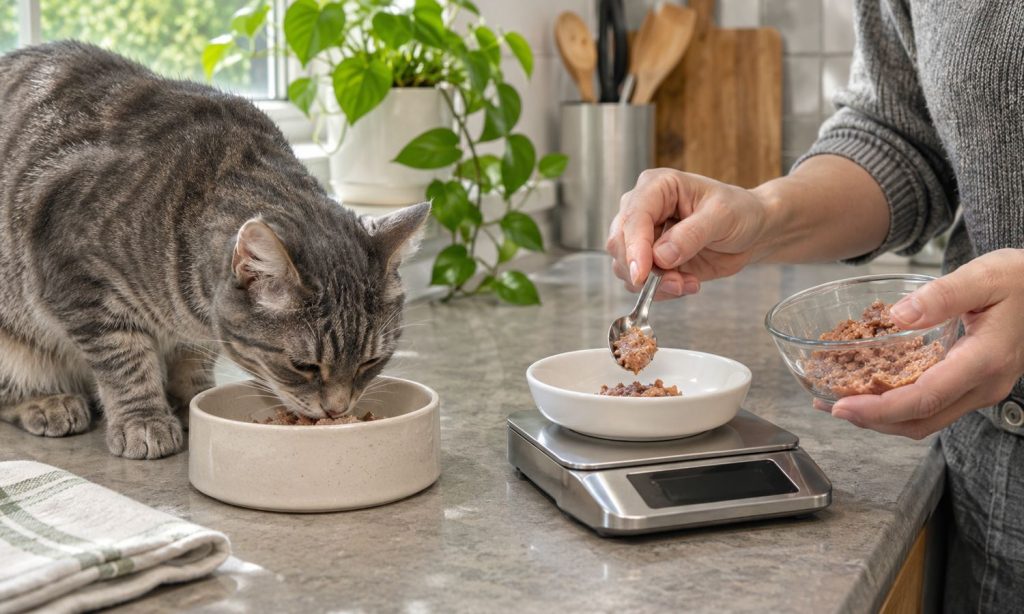
Portion size matters for any cat, but a cat with diabetes needs a feeding plan coordinated with glucose management. How to size a cat food for feline diabetes is best understood as how to measure the right daily calories and meal portions without disrupting treatment. The answer cannot come from a generic scoop chart alone. Body condition, weight trends, the chosen diet, appetite, activity, and prescribed diabetes medication all affect the plan.
This guide explains how to read calorie information, measure servings, record intake, and communicate changes to the veterinarian. Our best cat food for feline diabetes overview provides related diet context, but your cat's care team should set the actual nutritional goals. Never reduce insulin, change a dose, or skip a prescribed treatment based on an online portion calculation.
Start With an Individual Veterinary Nutrition Plan
Ask the veterinarian to establish a target weight or body condition and a daily calorie allowance. The plan may change as the cat responds to treatment or gains or loses weight. Obesity can affect diabetes management, but unplanned rapid weight loss can be dangerous in cats. A pet that is already thin, ill, or eating inconsistently needs a different approach from an overweight, stable patient. The primary goal is reliable nutrition alongside safe glucose control.
Discuss the exact food, total daily calories, meal timing, and any treats or supplements. The veterinarian can explain whether the cat should eat before medication, what to do when a meal is refused, and when glucose should be checked. Do not assume every diabetic cat follows the same feeding schedule or insulin protocol. Cornell's feline diabetes guidance emphasizes veterinary monitoring and individualized therapy. How to size a cat food for feline diabetes therefore begins with the clinician's plan, not a kitchen scale reading in isolation.
Read Calories Correctly From the Food Label
Look for calories per can, pouch, cup, or kilogram, usually stated as kilocalories. Determine how many calories the cat receives from the measured amount. For example, if a hypothetical food contains 90 calories per container and the veterinarian's plan assigns 180 calories from that food daily, that would equal two containers before considering treats. This illustrates arithmetic only; it is not a recommended intake. Real targets vary by cat and must come from the care plan.
Compare units carefully. A food measured by weight is not equivalent to one measured by volume. Recipes with different moisture contents can have very different calories per gram. If using several foods, account for the total calories and any differences in carbohydrate content that the veterinarian considers relevant. Keep the package until you have recorded the nutritional data. When assessing how to size a cat food for feline diabetes, the safest calculation is the one based on the exact formulation the cat actually eats.
Use a Kitchen Scale and Consistent Portions
A small digital kitchen scale can help measure wet or dry food more consistently than estimating by eye. Place a clean dish on the scale, tare it to zero, then add the amount specified by the plan. For canned food, divide the day's allotment into the approved meal schedule, measuring actual servings rather than assuming every spoonful is equal. Wash the dish and scale contact areas appropriately. Label any prepared portions clearly so another caregiver cannot feed the cat twice by mistake.
Keep a simple food log: date, food name, grams offered, amount eaten, treats, and any vomiting or refusal. Record weight and body condition at the frequency recommended by the veterinarian. The log gives context to glucose readings and clinical signs. It also helps identify when a food has changed packaging or formulation. How to size a cat food for feline diabetes should produce a repeatable feeding process that every caregiver can follow, especially in a multi-person household.
Coordinate Feeding With Diabetes Medication
Diabetes management often includes insulin or another veterinarian-prescribed treatment, and food intake can affect the safety of that plan. Ask for explicit instructions about meal timing, what to do if the cat eats only part of a meal, and when to call before administering a scheduled dose. Hypoglycemia can be dangerous. Never guess at insulin adjustments because a cat has eaten less or more than expected. Follow the emergency plan supplied by the veterinary team.
Changes to carbohydrate intake or diet may alter the cat's insulin requirements. A switch to a different wet food should therefore be coordinated with the veterinarian and accompanied by appropriate monitoring. Your clinic may recommend home glucose checks or follow-up tests. Our guide to caring for a blood glucose meter covers device maintenance. Meter handling and interpretation should follow veterinary training. Food measurement is a support for medical care, not a replacement for glucose evaluation.
Make Changes Gradually and Monitor Appetite
If a new food is recommended, ask how to transition safely while coordinating glucose monitoring. A sudden diet change can cause gastrointestinal upset or reduce food intake. For many cats, a gradual transition improves acceptance, but a medically necessary change may require a specific schedule. Record which food is given at each meal. Do not create a 'diet day' by withholding food from a diabetic cat without veterinary instruction, and do not force-feed without professional guidance.
If the cat refuses food, vomits repeatedly, or seems weak or unusually sleepy, contact the veterinary team promptly. A cat with diabetes may develop emergencies, including hypoglycemia or diabetic ketoacidosis, that cannot be managed by changing a bowl size. Increased thirst, urination, weight loss, or declining appetite should be documented and discussed. Our guide to transitioning older cats to a new food offers general transition principles, but a diabetic cat's plan has additional treatment considerations.
Track Weight and Glucose Without Overcorrecting
Use a consistent scale and method to track weight, ideally with veterinary guidance on frequency. An occasional small variation may reflect timing or scale differences. Focus on trends across measurements and the full clinical picture. The veterinarian may adjust calorie targets as body condition changes, but owners should not rapidly restrict food to chase a particular number. Adequate protein, moisture, and other nutrients remain important as well as carbohydrate management.
Discuss glucose logs with the clinician rather than changing a prescription based on one reading. Check the meter's strips, storage, cleanliness, and instructions, and ask how to recognize faulty results. Our article on blood glucose meter setup problems for cats may help with routine equipment checks. A reliable diary includes time of feeding, medicine, and symptoms as well as values. How to size a cat food for feline diabetes is an iterative task guided by veterinary findings, not a one-time calculation.
Account for Treats and Multiple Cats
Treats count toward the calorie budget and may affect carbohydrate intake. Ask the veterinarian which treats and quantities fit the prescribed diet. Keep everyone in the household informed so the cat does not collect extra snacks from several well-meaning people. Do not use food deprivation to enforce a feeding schedule. If the cat receives medication hidden in food, discuss that method with the veterinarian and count the calories of any extra food used.
In multi-cat homes, feed the diabetic cat where you can confirm what it eats. Another cat may steal prescribed food, or the diabetic cat may eat a companion's different ration. Separate feeding spaces and measured portions make intake more reliable. Observe meals rather than assuming an empty bowl means the intended cat ate it. A clear chart on the refrigerator can record portions and administration times. Good organization protects against accidental double feeding or missed meals during busy days.
Watch for Signs That Need Immediate Help
Weakness, collapse, seizures, severe lethargy, or abnormal coordination may indicate an urgent problem, including low blood glucose. Vomiting, profound loss of appetite, dehydration, or rapid breathing can also signal serious illness. Follow the emergency instructions given by your veterinarian and seek urgent veterinary care. Do not attempt to manage these signs by merely increasing or decreasing food portions at home. Tell the clinic when the cat last ate and received medication.
If the cat's appetite is persistently unpredictable, ask the veterinarian to reassess the whole treatment plan. Pain, dental disease, infection, and other medical conditions can complicate eating and glucose control. A feeding schedule that works only when a cat is perfectly hungry may not be practical. How to size a cat food for feline diabetes includes having a documented contingency plan for missed meals, unusual symptoms, and temporary changes in appetite.
Frequently Asked Questions
Portion calculations are most useful when tied to a medical plan and accurate food labels. The questions below address routine decisions, not dosing instructions for diabetes medication. Ask the prescribing veterinarian for written directions about meals and any response to low appetite or low blood glucose.
Consistency matters more than a perfect-looking bowl. Use the same scale, record intake, and review trends with your cat's care team. When the diet or treatment changes, revisit the measurements instead of assuming the old calorie target is permanent.
Can I measure diabetic cat food with a household cup?
A measuring cup can be inconsistent, especially for wet food. A digital scale and calorie information from the exact food label generally give more repeatable measurements.
Should every diabetic cat eat the same portion?
No. Portion targets depend on body weight, condition, diet, activity, health, and treatment. Ask the veterinarian to set and periodically reassess the calorie allowance.
Can I change insulin if my cat eats less?
Do not adjust prescribed medication on your own. Follow the veterinarian's written missed-meal plan and contact the clinic promptly if the cat refuses food or seems unwell.
Are wet foods always suitable for diabetic cats?
Not automatically. Nutrient profiles and medical needs differ. Some wet diets may be useful, but the exact food and transition should be approved by the veterinarian.
How do I know when to change the portion size?
Review weight trends, body condition, actual food intake, and glucose information with the care team. They can determine whether the nutrition plan needs adjustment.
Final Words
How to size a cat food for feline diabetes means measuring a veterinarian-approved calorie allowance with accurate food-label information and a consistent serving method. Record what the cat actually eats, coordinate mealtimes with medication, and monitor weight and clinical signs. Never make unsupervised insulin changes or rely on a generic feeding chart for an individual diabetic patient.
The best cat food for feline diabetes guide can support general research, but the final diet and serving plan belong with your cat's veterinary team. A small kitchen scale, careful records, and clear contingency instructions can make everyday care more reliable and safer.
Reference
These veterinary and educational resources support the importance of consistent nutrition, weight management, monitoring, and coordinated medical treatment for diabetic cats. They do not replace an individualized calorie calculation, feeding schedule, or prescription plan. Discuss the information with the clinician who knows your cat's current condition.
The care team should also advise on emergency responses and the handling of missed meals or suspected hypoglycemia. General articles cannot safely specify medication changes for an individual cat. Review the latest educational guidance alongside your cat's current glucose monitoring and examination findings.









