
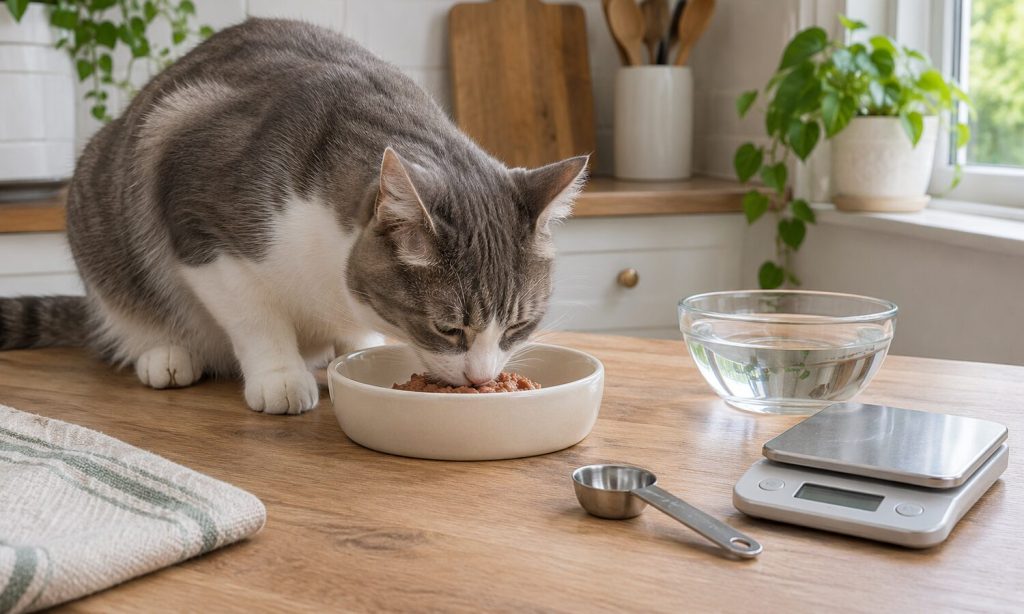
How to size a cat food for urinary issues is best understood as calculating a safe serving portion, not measuring kibble pieces. Cats with urinary symptoms need a veterinary diagnosis before a diet is chosen. Straining to urinate, repeated unproductive litter-box visits, or distress can signal a dangerous blockage. A male cat that cannot pass urine needs emergency veterinary care. Changing portion sizes cannot treat that emergency.
Once a veterinarian recommends a diet, the amount should be based on the cat’s calorie needs, current body condition, and the specific food’s energy density. A general guide to cat food for urinary issues may explain available nutritional approaches, but it cannot replace an individual treatment plan. This article shows how to read serving information, measure portions, monitor weight, account for wet food, and recognize when to contact the veterinary team.
Determine the Diagnosis Before Calculating Portions
Urinary signs can arise from several conditions, including feline idiopathic cystitis, urinary stones, infection, or urethral obstruction. These conditions require different management. A veterinarian may examine the cat, analyze urine, and recommend imaging or other tests. Do not assume every cat that urinates outside the box needs the same urinary formula. Some diets are designed for specific crystal or stone types and are inappropriate for other situations.
If a diet is prescribed, ask whether it must be fed exclusively, how long it should continue, and what monitoring is planned. Mixing large amounts of other food can alter a therapeutic diet’s intended nutrient balance. How to size a cat food for urinary issues starts with the correct food and treatment goal, not a generic chart found online.
Know the Emergency Warning Signs
A cat making frequent trips to the litter box but producing little or no urine may have an obstruction. Crying, vomiting, lethargy, a painful abdomen, and hiding can accompany serious illness. Seek emergency veterinary care immediately if an obstruction is suspected. Do not wait for a special meal to work. Urinary blockage can quickly become life-threatening.
Find the Daily Calorie Target
Your veterinarian can estimate daily energy needs from body weight, body condition, age, neuter status, and health. The calorie target may change during recovery or weight management. Package feeding charts are broad starting points, not individualized prescriptions. A cat that is overweight may need a carefully supervised calorie reduction, while an underweight or recovering cat may require a different plan.
Ask for a daily calorie target in kilocalories, commonly written as kcal. Next, locate the energy content of the chosen food on the label, such as kcal per can, cup, kilogram, or other stated unit. How to size a cat food for urinary issues means matching these two numbers consistently. Do not copy the portion from a different formula because calorie densities can vary considerably.
A Calculation Example, Not a Prescription
Suppose a veterinarian sets a hypothetical target of 200 kcal per day and the prescribed food provides 100 kcal per can. Dividing 200 by 100 gives two cans per day, before accounting for any other approved food. If a different food provides 80 kcal per can, the quantity changes. These numbers illustrate arithmetic only; they are not feeding instructions for a particular cat. Follow the actual prescribed target.
Measure Portions With Consistent Tools
For wet food, read the can’s calorie figure and measure the prescribed fraction of a can. For dry food, use a kitchen scale if grams or ounces provide more reliable repeatability than a cup. Level scoops vary with kibble size and packing. Keep a written record so other household members do not provide duplicate meals. A neat system reduces accidental overfeeding and underfeeding.
Divide the total daily amount into a suitable number of meals, considering appetite and the veterinarian’s instructions. Do not decrease portions so aggressively that a cat stops eating. Cats can develop serious health problems after inadequate intake. How to size a cat food for urinary issues also includes watching actual consumption, especially when a cat is recovering from painful urinary symptoms.
Count Every Approved Calorie Source
Treats, toppers, flavored medication carriers, and table scraps add calories. Some may also interfere with the intended effects of a therapeutic urinary diet. Ask the veterinary team what additions are allowed and how they affect the day’s total. Never assume a small amount is automatically harmless for a cat on a tightly managed feeding plan.
Consider Water Intake and Food Moisture
Water intake influences urine concentration. Wet food contributes moisture, and many cats benefit from easily accessible fresh water. Cornell’s feline health guidance discusses hydration and urinary health, but the amount and method should be tailored to the cat. Do not force water into a struggling cat’s mouth. If your veterinarian advises adding water to a meal, follow their instructions for preparation and freshness.
A dry urinary diet and a wet urinary diet can have different calorie densities and moisture profiles. You cannot compare portions by appearance alone. How to size a cat food for urinary issues requires calculating calories from the exact form being fed. For context, our site also discusses dry urinary-support cat foods; that overview is separate from medical diagnosis.
Make Water Easy to Reach
Place fresh water in more than one quiet location if the cat prefers it. Wash bowls regularly and avoid blocking access with dominant pets. Ask your vet whether a fountain, wet-food strategy, or another method suits the cat. Changes in drinking or urination deserve attention rather than automatic adjustments to the calorie plan.
Monitor Weight, Appetite, and Litter-Box Changes
Weigh the cat at consistent intervals using the same scale when possible. Record body weight, appetite, food intake, and litter-box observations. A trend is more useful than a single day’s fluctuation. If weight drops unexpectedly, the cat refuses food, or the urine pattern changes, contact the veterinarian. Do not independently double or halve a prescribed diet.
Follow-up testing may be needed to monitor urine concentration, crystal type, stones, or other aspects of the diagnosed condition. Feeding too little may affect body condition, while feeding too much can worsen obesity. How to size a cat food for urinary issues remains an ongoing process because health status, food formulation, and activity can change.
Ask Before Switching Products or Mixing Diets
Even foods labeled for urinary health are not interchangeable treatments. A change in diet, protein, mineral profile, or moisture content should be discussed with the treating veterinarian. For cats with cystitis, consistency in routine can help reduce stress. A related PetAdvisorPro guide to cat food considerations for cystitis discusses the context, but specific medical choices remain individualized.
Common Mistakes When Calculating the Amount
A frequent mistake is treating the number of cups as the goal rather than the number of calories. Another is using a portion recommendation based on an idealized breed weight, without assessing the actual cat. Other problems include allowing free access to extra food, forgetting treats, misreading a kcal-per-kilogram figure as kcal-per-cup, or continuing an outdated plan after major weight change.
Do not use a food label’s serving quantity as a substitute for diagnosis. Watch for a cat that eats too little because the new diet is unappealing. How to size a cat food for urinary issues should support steady, sufficient intake and the veterinarian’s goals. If you cannot reconcile the label units, ask the clinic to write the portion in a clear measure such as grams or can fractions.
A Simple Question List for the Clinic
Ask: What diagnosis is being treated? Is this the only food allowed? What daily kcal target and measurable portion should I provide? How many meals are appropriate? Which treats or supplements are permitted? When should weight and urine be rechecked? What urinary signs require urgent care? Keeping answers together helps every caregiver follow the same plan.
Frequently Asked Questions
Portioning questions are especially important when a urinary diet is prescribed. These short answers help clarify measurement, diet consistency, and the difference between feeding adjustments and medical emergencies.
These principles do not replace veterinary judgment. If your cat strains or cannot urinate, seek emergency care immediately instead of trying a different amount of food.
Can I use a regular measuring cup for dry urinary food?
You can start with the label’s cup measure, but weighing a measured portion is often more consistent. Ask the veterinarian which gram amount corresponds to the prescribed daily calories.
Should an overweight cat eat less urinary food?
Weight management may be appropriate, but ask your veterinarian for a safe calorie target. Abrupt or excessive restriction can be dangerous for cats.
Can I mix a prescription urinary diet with ordinary food?
Only if the treating veterinarian approves it. Mixing can change the therapeutic diet’s intended nutrient balance and may compromise the plan.
Is wet food always the right choice for urinary problems?
Wet food can increase moisture intake, but the correct treatment depends on the diagnosed condition. Discuss format and water strategies with the veterinarian.
What if my cat suddenly stops eating the prescribed food?
Contact the veterinary team promptly. Cats should not be left without adequate food intake. Do not force-feed or substitute another diet without guidance.
Final Words
How to size a cat food for urinary issues means calculating the correct portion from a veterinary calorie target and the exact diet’s label. Weigh or measure meals consistently, count approved extras, and track weight and appetite. Feeding alone cannot diagnose or treat every urinary problem. If a cat cannot pass urine, emergency care comes first.
When reviewing cat food for urinary issues, keep the animal’s actual diagnosis at the center. Ask the veterinarian to translate kcal goals into simple grams or can fractions your household can follow. Recheck the plan when health or weight changes, and never replace urgent medical care with diet experimentation.
Reference
Clinical background: Cornell University College of Veterinary Medicine — Feline Lower Urinary Tract Disease; and American College of Veterinary Surgeons — Urinary Obstruction in Male Cats.
Nutrition and moisture context: Cornell Feline Health Center — Hydration; and Cornell Feline Health Center — Feeding Your Cat.









