
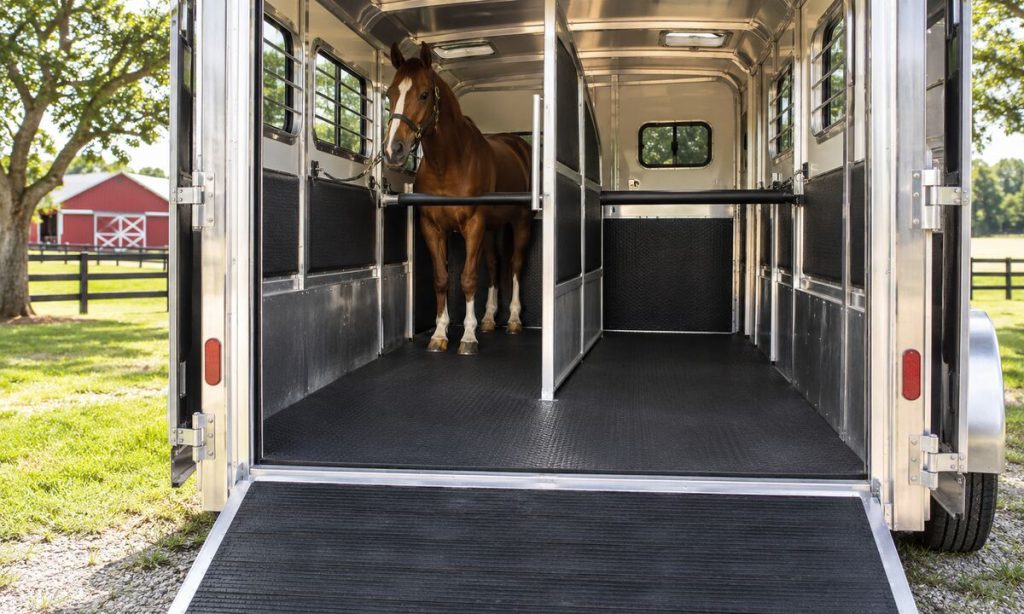
Rubber flooring can improve comfort and grip inside a horse trailer, but the wrong mat can create dangerous edges, trapped moisture, and unexpected weight. The best rubber mats for horse trailer use should match the trailer manufacturer’s approved flooring specifications, support hoof traffic, and remain firmly secured throughout transport. Material thickness alone never guarantees a safe installation.
We reviewed seven horse- and utility-oriented rubber mats spanning thicker stall-style slabs, a narrower floor panel, and lower-profile rubber alternatives. Even when a seller mentions trailers, a product still needs vehicle-specific suitability checks before installation. Use the comparison to shortlist materials, then confirm your trailer’s measurements, ramp design, load limits, fasteners, and drainage requirements before buying or modifying the floor.
Quick Picks
Seven rubber mats with different thickness, sizing, and handling tradeoffs. All require trailer-specific approval before equine transport use.
| Product | Best For | Key Advantage | Buy | |
|---|---|---|---|---|
| Boomerang Rubber Heavy-Duty 3/4-Inch Stall Mat | Thick rubber floor coverage | 4-by-6-foot 3/4-inch rubber | View on Amazon | Jump to Review |
| Maasechs 4-by-6-Foot Horse Trailer Rubber Mat | Trailer-oriented textured rubber | Cut-to-fit treaded surface | View on Amazon | Jump to Review |
| American Floor Mats Heavy-Duty 3/4-Inch Horse Mat | Dense stall-grade floor protection | Solid 4-by-6-foot rubber slab | View on Amazon | Jump to Review |
| MSI Heavy-Duty 0.75-Inch Utility Rubber Mat | Narrower floor-area coverage | 42-by-72-inch dimensions | View on Amazon | Jump to Review |
| Dilunave Heavy-Duty 4-by-6-Foot Horse Stall Mat | General equine mat comparison | Washable textured rubber | View on Amazon | Jump to Review |
| Boomerang Rubber Recycled 5/16-Inch Utility Mat Two-Pack | Lower-profile rubber sheet comparison | Two 4-by-6-foot 5/16-inch mats | View on Amazon | Jump to Review |
| American Floor Mats Half-Inch Heavy-Duty Horse Mat | Mid-thickness horse rubber flooring | 4-by-6-foot 1/2-inch rubber | View on Amazon | Jump to Review |
Boomerang Rubber Heavy-Duty 3/4-Inch Stall Mat

- Substantial rubber thickness
- Textured walking surface
- Explicit trailer-use positioning
- Washable durable material
- Large coverage per mat
- Significant added weight
- May require precise fitting
Boomerang Rubber’s heavy-duty stall mat measures four by six feet and is listed at three-quarters of an inch thick. The manufacturer markets it for equine stalls, barns, trailers, and similar demanding utility areas. That makes it a relevant starting point for a trailer owner whose manufacturer accepts substantial stall-style rubber mats. The textured surface is intended to improve grip and the thick material offers more cushioning than a thin decorative liner. However, the right thickness is determined by the trailer’s original specifications.
The large size may cover significant floor area with fewer seams, but it can be awkward to transport, trim, and position. Measure around divider posts, door hardware, and wheel wells rather than assuming a rectangular piece will fit. Confirm the mat’s exact weight with the seller and include it in your hauling calculations. Do not cut into structural components or cover drainage openings to make a mat fit. An approved restraint system is essential because a heavy mat can still creep or curl during travel.
Routine maintenance is straightforward at the surface: sweep, wipe, or hose off as allowed, and dry before the next trip. The less visible underside also needs attention according to the trailer service manual. The manufacturer’s trailer-use wording is helpful, but it does not replace vehicle-specific approval. This is a solid candidate for owners seeking a thick floor mat who can verify loading limits, secure installation, and removal access for inspection. It is not an automatic solution for a deteriorating trailer floor.
My Recommendation
I would shortlist Boomerang’s 3/4-inch mat for a trailer that specifically accommodates heavy stall-style rubber flooring. Its thickness and large footprint are appealing when seams can be minimized. Confirm weight, edge retention, and drainage with the trailer maker before ordering. If door clearance is tight, a different approved thickness may be necessary.
Maasechs 4-by-6-Foot Horse Trailer Rubber Mat

- Trailer-focused listing
- Textured tread pattern
- Four-by-six-foot coverage
- Trimmable material
- Washable surface
- Thickness not clearly listed
- Securement must be verified
The Maasechs mat is marketed directly for horse trailers and livestock environments, with a four-by-six-foot rubber surface and a textured tread pattern. Its listing emphasizes grip, cushioning, and the option to trim to a particular space. Those are useful features to investigate when an old trailer mat no longer fits properly. Still, product marketing cannot establish compatibility with your exact floor structure or ramp. Verify thickness and weight before purchase, especially if the listing does not present those measurements clearly.
A cut-to-fit sheet offers flexibility around a trailer’s irregular outline, but every cut creates an edge that must lie flat and stay secured. Check the trailer manufacturer’s permitted cutting, bonding, and fastening instructions. Do not attach material with improvised hardware that could protrude into the horse’s standing area or damage floor supports. Ask whether the tread faces a particular direction and whether the sheet needs an additional edge strip. Measure the loading threshold to avoid raising the floor above a safe level.
The rubber surface is promoted as washable, which is useful after hauling muddy horses. Cleaning should include checking the area beneath the mat for trapped moisture, not merely rinsing the top. A textured surface also loses practical traction if packed with bedding or manure, so clean it before each journey. This is a relevant option for owners who want a product specifically described for horse trailers. I would verify specifications and securement details in writing before treating it as a safe replacement mat.
My Recommendation
Maasechs is the clearest trailer-positioned pick in this roundup, but I would verify its actual thickness, weight, and required mounting method before buying. Its ability to be trimmed is useful only when the final edges remain secure. Have a trailer professional confirm suitability if you are replacing original floor material.
American Floor Mats Heavy-Duty 3/4-Inch Horse Mat

- True rubber material
- Published 3/4-inch thickness
- Large rectangular coverage
- Simple wipe-down care
- Made in the United States
- Heavy installation effort
- Not a shaped trailer kit
American Floor Mats offers a thick solid rubber mat sold for horse and stable flooring. This listed version measures four by six feet at three-quarters of an inch thick. The manufacturer also mentions protection around horse trailers and farm equipment. It is a substantial flooring material to compare when your trailer maker allows a removable dense-rubber surface. However, a barn stall is a stationary environment, so you still need confirmation that this exact product and installation satisfy transport requirements.
Solid rectangular mats are relatively straightforward to measure, but the trailer floor might have dividers, drains, and contours that complicate fitting. Avoid overlapping edges or creating raised seams beneath a horse’s hoof. Confirm the mat weight, how it is meant to be restrained, and whether door or ramp clearance will change. A professional can advise whether a single large piece or multiple approved pieces is safer in the specific trailer. Never use rubber as a cover for damaged supporting boards or metal.
The uncomplicated rubber surface can be wiped or brushed after travel. Thorough maintenance should also include periodic inspection of the floor below, following the trailer manufacturer’s instructions. Moisture trapped beneath an apparently clean mat can create problems that are difficult to spot from above. This option appeals to buyers seeking a thick, traditional horse-stall material with published dimensions. Its greatest limitation is that it is not a purpose-cut kit for your model of trailer, so installation judgment matters.
My Recommendation
American Floor Mats is worth comparing for owners whose trailer manufacturer allows solid 3/4-inch equine rubber mats. I like the clearly stated thickness and plain construction. Measure carefully, verify overall weight, and use only approved restraints. If installation requires guessing around drains or dividers, ask a trailer service professional to fit it.
MSI Heavy-Duty 0.75-Inch Utility Rubber Mat

- Three-quarter-inch thickness
- Narrower 42-inch width
- Horse-stall positioning
- Easy surface cleaning
- Dense protective material
- May leave more seams
- Heavy to maneuver alone
The MSI Utility Rubber Flooring Mat measures 42 by 72 inches and is listed at 0.75 inches thick. That makes it narrower than a standard four-by-six-foot slab, potentially useful when a trailer compartment or floor bay has limited width. The listing identifies horse stalls and related heavy-duty applications, and it references horse trailers among equipment-protection uses. Those descriptions justify considering it as a material candidate, but do not confirm it is appropriate beneath a traveling horse in every trailer.
Compare the actual width to your trailer’s measured floor bay and account for all walls, partitions, and drainage openings. A narrower sheet may reduce trimming, or it may create an extra seam that needs careful treatment. Never leave a gap into which a hoof can catch, and do not overlap pieces to avoid cutting. Ask the trailer manufacturer whether mats can be removed for inspection or require a particular fastening system. The considerable thickness also affects threshold height and total trailer weight.
The mat’s surface is designed for practical cleaning, with solids brushed off and liquid residue wiped away. That is useful in a utility setting, but the installer must still address moisture between rubber and the actual trailer floor. Before each trip, check for movement, ripples, damaged corners, or slipping after the surface gets wet. This mat is a dimension-specific alternative for an appropriately designed floor bay, not a universal solution. The slightly narrower format is its most meaningful difference.
My Recommendation
Consider MSI when a 42-inch width better matches your approved trailer floor layout than a 48-inch piece. The 0.75-inch thickness warrants a careful weight and clearance check. I would not create an uncovered gap simply to avoid trimming; prioritize a properly fitted, secured surface and regular access to inspect the floor.
Dilunave Heavy-Duty 4-by-6-Foot Horse Stall Mat

- Four-by-six-foot footprint
- Rubber construction
- Textured non-slip positioning
- Washable finish
- Suitable for barn environments
- Trailer approval uncertain
- Thickness should be confirmed
Dilunave’s heavy-duty horse stall mat is a four-by-six-foot rubber sheet described for the demands of stable flooring. Its textured surface and washable material make it relevant to owners comparing equine rubber products. However, the listing is chiefly stall-oriented, and the absence of a clearly verified trailer-specific installation specification is important. You should not place it in a moving horse trailer merely because it withstands stationary hoof traffic. Ask both the mat seller and trailer manufacturer about transport suitability.
The product’s large coverage area may look convenient, but exact measurements are only a first step. Verify thickness, sheet weight, hardness, and any requirements for fixing or trimming the edges. A trailer may need special drainage paths or removable sections to inspect its subfloor. Do not assume the product’s generic advice about tape or nails is appropriate for vehicle flooring. A qualified installer should follow the trailer manufacturer’s method and keep all fasteners away from contact with hooves.
Cleaning the upper surface is simple in principle: clear debris, wash as permitted, and allow the area to dry. The condition underneath is equally important because a stable-style mat can hide moisture after a wet journey. If you cannot verify appropriate securement and maintenance access, choose a trailer-approved alternative instead. Dilunave earns a comparison slot because it is a distinct equine rubber mat, but its transport application remains conditional rather than a blanket recommendation. Safety should overrule price or convenience.
My Recommendation
I would treat Dilunave as a potential material only after confirming your trailer maker approves this exact stall-type mat. Its equine construction and large size are useful comparison points, but its trailer suitability is not established by appearance. If the manufacturer cannot supply thickness and fitting guidance, I would pass on it.
Boomerang Rubber Recycled 5/16-Inch Utility Mat Two-Pack

- Lower-profile rubber thickness
- Two mats per package
- Textured recycled rubber
- Horse stall and trailer listing
- Washable utility surface
- Less cushioning than thick slabs
- May be too thin for many trailers
Boomerang’s recycled-rubber utility mat package includes two four-by-six-foot sheets that measure five-sixteenths of an inch thick. The listing mentions barns, horse stalls, and trailers among potential uses, making it relevant when comparing a lower-profile rubber material with the heavier three-quarter-inch options. It is a distinct product configuration from the thicker Boomerang mat above, with two pieces and significantly less material per sheet. However, a thinner sheet is not necessarily appropriate under a horse’s concentrated hoof load during transport.
The lower profile may reduce door-clearance problems and overall weight, but those possible advantages matter only if the trailer manufacturer explicitly allows that thickness and construction. Check exact product weight, how the sheets must be secured, and whether the surface is designed for standing horses or mainly for protecting utility equipment. Do not overlap the two sheets to create makeshift cushioning; that can produce a raised seam. Any exposed edge or unsupported section can become a trip hazard, even with rubber advertised as non-slip.
Both mats are described as textured and washable. Clean the surface after hauling, but also follow the trailer maker’s directions for lifting removable mats and checking moisture beneath them. A lighter utility sheet can sometimes be easier to handle, but can also move or curl if it is not properly restrained. This two-pack is useful as a dimension and thickness comparison, not an unconditional recommendation for a horse’s travel compartment. Verify the exact application before purchasing, and do not substitute it for original-equipment floor components without approval.
My Recommendation
I would compare Boomerang’s 5/16-inch two-pack only if your trailer manufacturer accepts lower-profile rubber sheets in the relevant floor area. The package and reduced thickness may be convenient, but it provides less padding than a 3/4-inch slab. Securement, structural load suitability, and edge treatment must be confirmed before equine use.
American Floor Mats Half-Inch Heavy-Duty Horse Mat
- Published half-inch thickness
- Dense horse-stall rubber
- Large four-by-six-foot sheet
- Simple cleaning routine
- Intermediate thickness option
- Requires trailer-specific restraint
- Same base design family as thick model
The American Floor Mats half-inch horse mat is a thinner material variant within the same heavy-duty equine flooring line as the three-quarter-inch selection above. The listing gives a four-by-six-foot solid rubber sheet intended for horse and stable environments, and it also refers to equipment and trailer protection. Its one-half-inch thickness creates a meaningful comparison point for trailers where a manufacturer permits a different rubber profile. Nevertheless, the two American Floor Mats products are variants of one general design, not separate guarantees of horse-transport suitability.
Compare how the half-inch dimension affects trailer loading capacity, floor height, ramp clearance, and movement at the threshold. A thinner slab may be easier to handle than a three-quarter-inch model, yet the difference can change cushioning and edge behavior. Do not install it simply to make a closed door clear an otherwise incompatible mat. Measure the entire floor compartment and determine whether the trailer maker requires a specific pad thickness or restraint system. A qualified installer should also assess drainage and access to inspect the subfloor.
The manufacturer describes straightforward wipe-down cleaning, but surface hygiene is only one requirement. Regularly inspect beneath removable mats as directed, particularly after washing or rain. Watch for curling, shifting, or damaged edges before placing a horse inside. This material is a useful alternative to discuss when you have already narrowed the required rubber type and can choose an approved thickness. If the trailer was engineered for another system, stay with the original-equipment specification rather than extrapolating from a barn-stall product.
My Recommendation
The half-inch American Floor Mats option merits consideration only where your trailer specifications allow that exact type and thickness. It offers a mid-profile comparison to the thicker model from the same product line. I would choose between them based on approved installation, weight, door clearance, and traction—not on presumed cushioning alone.
How to choose best rubber mats for horse trailer
Choosing the best rubber mats for horse trailer applications begins with the trailer, not the product photo. Measure and inspect the current floor and ask the trailer manufacturer which mat types and attachment methods are appropriate.
Check trailer floor structure, fit, and added weight
Inspect the trailer’s floor boards, metal supports, drainage channels, and existing mats before ordering. A rubber covering can conceal corrosion, rot, or loose fasteners, so repair structural problems first. Measure every bay, divider, wheel well, door threshold, and ramp separately; nominal 4-by-6-foot dimensions rarely guarantee drop-in fit. Thick 3/4-inch mats are heavy, and every additional pound affects the trailer’s cargo capacity and tow balance. Calculate the required total coverage and weight from the manufacturer’s specification, not guesswork. Check whether the trailer requires a specific original-equipment mat or installation system. Improvised seams and curled edges can catch hooves or make the surface unstable. A floor that feels cushioned in a barn is not necessarily approved for the movement and vibration of hauling. Have a qualified trailer service professional assess uncertain configurations.
Choose traction appropriate to floors and ramps
A stationary trailer floor and a steep loading ramp have different traction demands. Thick rubber mats can help protect floors from wear, but they must stay level and firmly restrained. Ramps may require a bonded or mechanically secured textured covering designed for a wet incline, not a loose rubber runner. Compare rib direction, drainage, material hardness, and the manufacturer’s stated intended application. Thin household or garage flooring should never be assumed safe under horse hooves merely because it looks grippy. Ask about compatibility with your trailer’s ramp hinges, door clearance, threshold strips, and any traction cleats already installed. Test a proposed surface without the horse first, using the specific installer’s procedure. Watch for lifted corners and slippery conditions after washing. Never make a structural or fastening alteration without approval from the trailer builder or an experienced professional.
Plan hygiene and inspection before each trip
Rubber does not eliminate the need to clean underneath. Urine and wash water can enter mat seams, potentially accelerating floor damage when drainage is obstructed. Follow the trailer manufacturer’s recommended cleaning schedule, lifting removable mats safely when specified. Let both surfaces dry fully, clear drainage openings, and inspect for deterioration before reinstalling. Check edges, joints, and any adhesive or mechanical attachment for movement. Replace mats that crack, curl, shift, or lose meaningful traction. Remember that broad heavy mats can be difficult to handle alone; use appropriate lifting assistance rather than straining to move them. A quality mat is one part of transport safety alongside correctly maintained brakes, tires, partitions, flooring, and safe loading practices. If the trailer floor has an unusual construction, consult its maker rather than improvising with generic stall flooring.
Frequently Asked Questions
Here are practical answers to the questions owners often ask before choosing.
Can I use ordinary horse stall mats in a trailer?
Sometimes, but only if the trailer manufacturer permits that mat type, thickness, attachment, and weight. Stall suitability does not automatically establish transport suitability.
How thick should horse trailer rubber mats be?
There is no universal safe thickness. Many listed stall mats are around 3/4 inch, but your trailer’s floor, ramp, door clearance, and loading limits determine what is appropriate.
Are thin ribbed runners safe on trailer ramps?
Do not assume so. A thin runner may be intended for pedestrian walkways only. Use it with horses only if the surface and installation are explicitly approved for equine ramp use.
How do I stop a horse trailer mat from moving?
Follow the trailer maker’s approved edge restraint or installation method. Loose tape, improvised nails, and unapproved adhesives can damage the trailer or create hazards.
Should I lift horse trailer mats to clean underneath?
Follow the trailer’s maintenance guidance. When removable, inspect and dry the subfloor regularly, especially after washing or wet travel, because trapped moisture can hide corrosion or rot.
Final Verdict
For thicker trailer-floor candidates, the Boomerang 3/4-inch, Maasechs Horse Trailer Mat, American Floor Mats 3/4-inch, MSI Utility Mat, and Dilunave Heavy-Duty Mat are worth comparing after verifying fit and approval. They differ in dimensions, published specifications, and intended applications. None should be installed over an unsafe or uninspected floor.
Boomerang’s thinner 5/16-inch utility two-pack and American Floor Mats’ 1/2-inch variant offer different thickness and weight tradeoffs, but the correct choice is specified by your trailer—not by the lowest price or easiest sheet to move. The best rubber mats for horse trailer needs are manufacturer-approved and securely fitted.
Affiliate disclosure: This article contains Amazon affiliate links. If you purchase through them, PetAdvisorPro may earn a commission. As an Amazon Associate I earn from qualifying purchases.









