
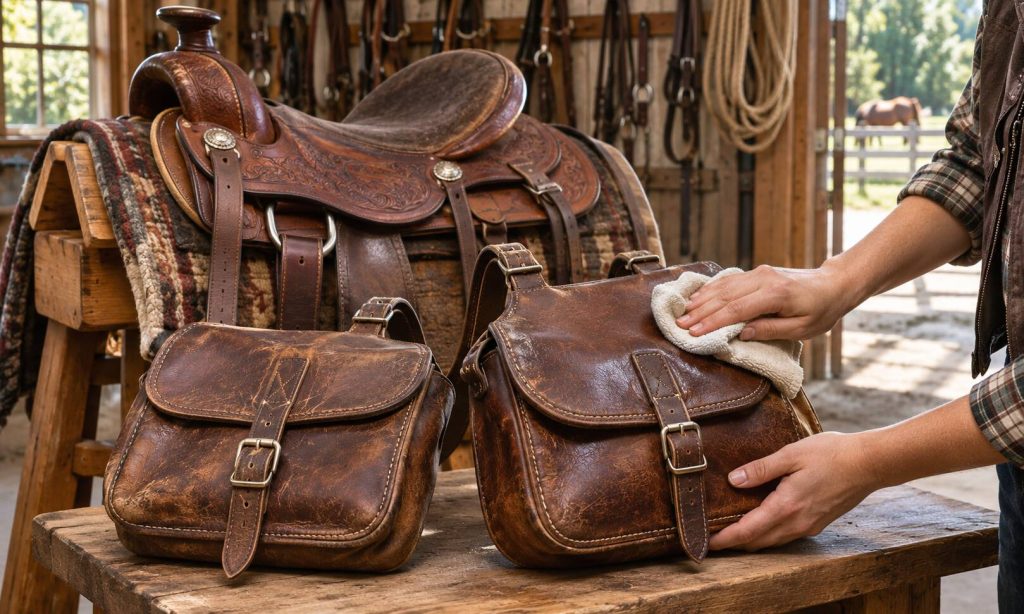
Trail riding can leave saddle bags dusty, sweaty, damp, and sometimes packed with forgotten snacks. Knowing how to clean saddle bags for horses helps protect their seams and hardware while keeping equipment comfortable and dependable. The right method depends on whether the bags are leather, canvas, coated fabric, or a combination. Harsh cleaning, soaking, and storing them while wet can shorten their useful life. Start with the care label and the material, not a random cleaner under the sink.
This guide covers routine cleaning, stain checks, safe drying, leather care, strap inspection, and storage after riding. It does not assume every bag can go in a washing machine. If you are choosing a different style for your riding routine, our saddle bags for horses guide explains common shapes and carrying arrangements. For the bags already in your tack room, a little preventive care is usually easier than a major repair.
Empty the Bags and Inspect Their Condition
Remove everything before adding water or cleaner. Check side pockets, small zipper compartments, lining folds, and the bottom corners where crumbs and dust collect. Shake loose debris outside and use a soft brush or a low-suction vacuum attachment when suitable for the fabric. Look for damp food packaging, salt from sweat, sand, and leaves. If a bag carried veterinary supplies or a leaking bottle, assess contamination separately rather than treating it as ordinary trail dust.
Examine both sides for stretched stitching, soft or cracked leather, torn lining, frayed attachment loops, and bent clips. Work the zipper gently rather than forcing a jam. A buckle that no longer closes securely may be a more urgent problem than a surface stain. Check whether the bag rubbed the horse or saddle while riding. Uneven wear can indicate incorrect attachment or overload. Photograph a damaged area if you need advice from a tack repair professional.
Identify Leather, Canvas, or Synthetic Construction
Smooth finished leather, suede, waxed canvas, nylon, and waterproof-coated textiles need different care. A waterproof fabric may lose its protective finish if it is scrubbed aggressively or soaked in unsuitable chemicals. Suede and unfinished leather may darken or stain when wet. Mixed-material saddle bags are especially easy to damage with an all-purpose treatment. Read the manufacturer’s instructions first and test an approved cleaner on a hidden area before touching a visible panel.
Do not assume a product safe for a leather saddle is also suitable for fabric lining or coated straps. Leather generally needs controlled surface cleaning and compatible conditioning, while washable textiles may tolerate mild soap and water when the label permits it. For a heavily stained or moldy item, seek professional cleaning guidance. Repeatedly soaking a structured bag can weaken adhesives and distort its shape. When in doubt, use the least aggressive method that removes ordinary dirt.
Clean the Exterior Without Overwetting It
Begin with dry dirt removal. Wipe compatible smooth surfaces with a lightly damp, clean cloth, working along seams rather than grinding grit into them. For washable fabric, follow the care instructions for any mild detergent, brushing, and rinsing. Keep zippers open when appropriate so trapped debris can be removed. If a bag has waterproof lining, avoid puncturing or scraping it. Never immerse a bag solely because the outside looks dusty.
For finished leather, use an appropriate leather-cleaning method according to the material’s care guidance, then remove residue and allow gentle drying. Avoid saturating the leather, blasting it with hot air, or leaving it in strong sun. Do not pour oil or conditioner over buckles, stitching, or suede. A small amount of a compatible conditioner may be useful for certain cleaned leathers, but too much can leave them soft, sticky, or prone to attracting dirt. The label and leather finish decide the method.
Treat Stains and Odors Carefully
Address fresh spills promptly by blotting rather than rubbing. Identify the source: water, sweat, mud, food, grease, or mold require different responses. Dried mud on fabric may brush away after it dries; grease may need a manufacturer-approved treatment. Never combine household chemicals to attack an unknown mark. Strong bleach, solvents, or fragrances can damage materials and leave residues near horse tack. If color transfers to your test cloth, stop and reassess the cleaning method.
A musty smell deserves investigation. Check the lining and stitching for persistent moisture or visible mold, and inspect the storage space. University textile guidance stresses material-specific cleaning and avoiding careless treatment of mildew stains. Wear suitable protection and consider professional help for extensive contamination. A bag that cannot be cleaned safely or has weakened structural components should be retired. Covering an odor with perfume is not the same as fixing the underlying problem.
Dry, Condition, and Protect the Attachment Hardware
Open compartments and allow air to circulate until every part is completely dry. Reshape soft bags gently and keep them away from heaters, direct flames, and prolonged harsh sunlight. Never seal damp tack in plastic storage. As it dries, check whether corners trap moisture or whether the lining has separated. A bag that feels dry on the surface may still contain wet padding or seams, especially after heavy rain.
Once the correct material is dry, apply any approved leather care sparingly where needed. Wipe dust from buckles and inspect stitching, rivets, rings, hooks, and zippers. Do not attach a bag with a compromised clip and hope it lasts one more ride. Repair or replace loose hardware through an appropriate professional process. If you carry insulated compartments or food, see our insulated horse saddle-bag overview for design context; insulation makes thorough drying especially important.
Store the Bags Ready for the Next Ride
Empty the bags after each trip, even if you expect to ride again tomorrow. Let the material air out, then store it in a dry, ventilated place away from rodents, direct ground moisture, and heavy equipment that could crush its shape. Support straps without sharp folds. Keep cleaning chemicals, feed, and edible supplies away from tack that may be handled near a horse’s skin or mouth. A breathable protective cover can help where the material’s care guidance permits it.
Before packing again, test each zipper and closure. Distribute weight evenly between both sides and attach the bags according to the saddle and bag instructions. Keep heavy items secure so they do not swing, and check clearance around the horse’s flank. For planning realistic outings, our guide to safe riding distances offers related context. FYI, discovering a broken buckle ten miles into a trail ride is a very expensive way to skip a two-minute check.
Frequently Asked Questions
Material and storage questions are often more important than the choice of cleaner. These answers cover practical decisions for ordinary trail saddle bags without assuming every construction is identical.
Always follow the care information for your specific equipment. Stop using bags with structural defects or attachment problems until the issue is safely repaired.
Can I machine-wash saddle bags for horses?
Only when the manufacturer explicitly permits it. Leather, structured padding, buckles, adhesives, and waterproof coatings may not tolerate machine washing. Hand cleaning is often more appropriate.
How should I clean leather saddle bags?
Remove loose dirt, follow leather-specific cleaning instructions, wipe away residue, and let the leather dry naturally. Use only compatible conditioner in modest amounts if the finish calls for it.
What should I do if a saddle bag smells moldy?
Empty it, inspect for dampness and visible growth, and assess the storage conditions. Extensive mold or weakened material may require professional treatment or replacement rather than routine wiping.
Can I dry wet bags in direct sunlight?
Prolonged intense sun and heat can damage some leather and fabrics. Choose a ventilated, shaded location unless the material instructions say otherwise. Open all compartments to release trapped moisture.
When should I replace rather than repair a saddle bag?
Replace a bag when critical straps, stitching, closures, or attachment points cannot be made reliably secure. Severe cracking, torn load-bearing panels, and damage that causes rubbing are also warning signs.
Final Words
Cleaning saddle bags for horses begins with matching the care method to the material. Empty and inspect the bags, remove dirt gently, treat stains cautiously, and dry every compartment before storage. Examine straps and metal fittings as carefully as the fabric. A beautiful surface cannot compensate for a weak attachment point.
Keep the bags clean, correctly packed, and ready for a short safety check before each ride. Our saddle bags for horses resource may help when you are reviewing carrying styles, but sound maintenance makes the most of the equipment you already own. Comfort, reliability, and a dry tack room matter far more than a perfect shine.









