
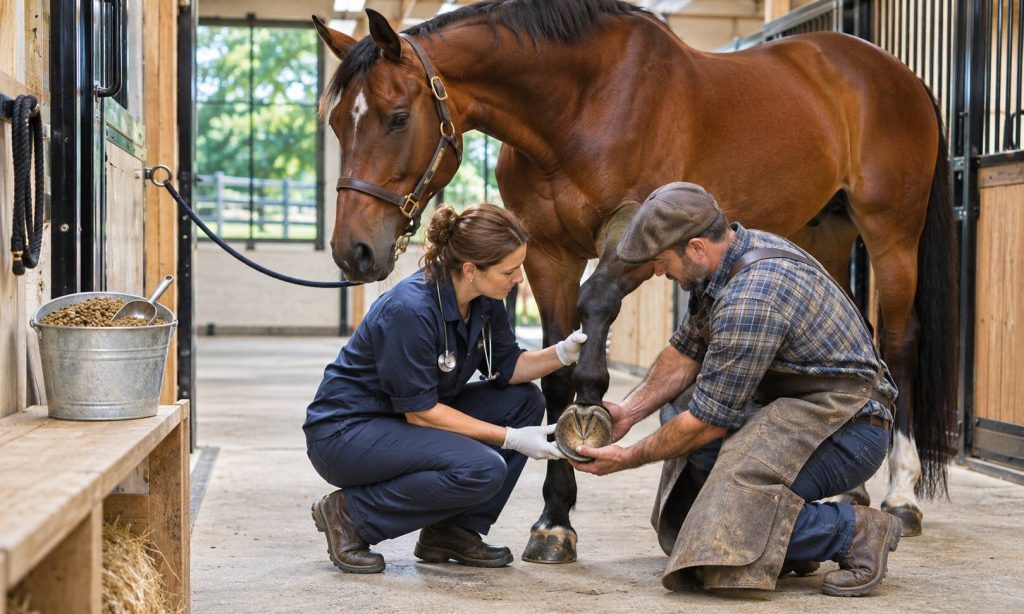
Navicular syndrome is a complex cause of pain in a horse’s front feet, and nutritional supplements are sometimes discussed alongside veterinary care. Knowing how to use supplements for navicular horses starts with understanding their limits. No feed additive can replace diagnosis, appropriate farriery, pain management, or follow-up examination. A supplement may support a documented nutritional need, but there is not reliable evidence that an ordinary hoof or joint supplement reverses navicular disease.
This guide explains how to review a supplement with your veterinarian, check the total ration, introduce and measure it safely, store it correctly, and monitor the horse without mistaking coincidence for treatment success. Our supplements for navicular horses overview provides category context, while this article addresses responsible everyday use. The horse’s clinical plan must remain the foundation of decisions.
Confirm the Diagnosis and Treatment Plan First
Navicular syndrome can involve the navicular bone and several surrounding structures, including ligaments, the bursa, and deep digital flexor tendon. A horse may show a shortened stride, stumbling, or persistent front-foot lameness. These signs are not enough for an owner to diagnose the condition. Veterinarians use examination and, when appropriate, diagnostic imaging to distinguish possible causes of heel pain. A correct diagnosis matters because different lesions and stages may require different approaches.
Management commonly involves veterinary-directed hoof and shoeing changes, medication, workload decisions, and ongoing review. Supplements should not displace those measures. If lameness worsens, new swelling appears, the horse struggles to bear weight, or signs change abruptly, contact the veterinarian promptly. Do not test a new additive by asking a painful horse to perform more work. Use our navicular feeding discussion guide to prepare questions for the clinical visit.
Review the Full Diet Before Adding Anything
Start with forage quality, the concentrate or ration balancer, pasture intake, existing supplements, body condition, and any medical restrictions. Many feeds already supply vitamins and minerals. Layering several products can create unnecessary overlap. University extension guidance warns that excess minerals can cause toxicity, with selenium requiring particular care because the safe nutritional margin is limited. Neither a hoof-support label nor a joint-health claim tells you what the total diet contains.
Ask an equine veterinarian or nutritionist to compare the feed labels and forage analysis with the horse’s actual needs. Our horse feed-label interpretation guide helps explain how to read the information. If no deficiency or plausible nutritional gap exists, adding more nutrients may not help. Record all ingredients, not only those printed in large letters on the front of a package. A carefully balanced ration is more important than a crowded supplement shelf.
Check Ingredients, Claims, and Veterinary Compatibility
Look for a complete ingredient list, stated quantities, feeding directions, manufacturer information, expiration date, and clear storage requirements. Distinguish nutritional support claims from evidence of disease treatment. Glucosamine, biotin, minerals, and other components have different purposes and levels of supporting evidence. A hoof-quality supplement is not the same as a treatment for pain in the navicular apparatus. Do not interpret a general joint-support claim as proof of benefit for this specific condition.
Tell your veterinarian about every product and medication your horse receives. Some ingredients may be redundant, inappropriate, or relevant to medical management or competition rules. Ask what outcome the supplement is intended to support and how long a fair review should take. If the label lacks usable quantities or makes sweeping cure claims, treat that as a reason for caution. Avoid combining multiple formulas simply because they appear to target the same body part.
Introduce the Supplement Without Guessing a Dose
Use the amount and administration schedule approved for the individual horse by the veterinarian and consistent with the product’s directions. Never extrapolate a dose from a different animal, an online testimonial, or a human supplement label. Confirm whether the scoop measures volume or a specified weight and whether it must be leveled. Different powders have different densities, so an unverified scoop can be misleading. Do not double the amount after a missed feeding without professional guidance.
When a new nutritional supplement is appropriate, introduce it as advised while keeping the rest of the feeding routine consistent. Mix into a suitable feed only as directed and confirm the horse actually consumes the full portion. Watch for feed refusal, digestive upset, skin reactions, or unusual behavior. If the supplement is refused, do not hide large amounts in a different ration without checking compatibility. Record the first date used and any change in appetite or manure.
Store and Handle the Product Safely
Read the storage instructions for the actual formulation. Many dry powders and pellets need a cool, dry location in a tightly closed original container. Liquids may have different temperature and shelf-life requirements, especially after opening. Keep products away from direct sunlight, moisture, rodents, feed contamination, and chemicals. Label every scoop and avoid using one scoop between supplements if residue might alter the dose. Do not transfer powders to unmarked jars.
Check expiration dates and signs of clumping, unusual odor, discoloration, leaking, or damaged seals. Discard questionable material according to the package and local disposal guidance rather than feeding it to use up the remainder. Maintain a simple log showing lot number, opening date, veterinary instructions, and daily administration. This makes it easier to identify changes or report a concern. Do not assume a product remains stable indefinitely just because it is dry.
Monitor the Horse Without Attributing Every Change to a Supplement
Track lameness, comfort at rest, hoof care appointments, workload, body condition, and feed intake as directed by the veterinarian. Keep notes on any supplement changes so the clinical team can evaluate the overall plan. If several treatments begin simultaneously, it may be impossible to credit one specific component for improvement. Changes in terrain, shoeing, exercise, and medication can affect signs too. A horse appearing brighter for one day does not establish that the disease has improved.
Schedule reassessment based on veterinary guidance. Document adverse effects promptly and stop or change a supplement only in consultation with the care team when there are medical concerns. A supplement is not a substitute for a needed lameness exam or imaging. Avoid equating a smoother stride with structural healing. The meaningful goal is a humane management plan tailored to the horse’s diagnosis and response over time.
Frequently Asked Questions
These questions address the boundary between nutritional supplementation and medical treatment for horses with navicular-related pain. The answers are deliberately conservative because individual diagnoses differ.
Use them to prepare for a discussion with your veterinarian and nutritionist. They cannot establish which supplement, if any, is appropriate for a particular horse.
Can supplements cure navicular syndrome?
No ordinary nutritional supplement has been shown to cure navicular syndrome. Management is veterinarian-directed and often involves hoof balance, medication, workload changes, and ongoing assessment.
Should I give extra biotin or minerals automatically?
Not automatically. Hoof-quality nutrition may matter when the ration is inadequate, but excess nutrients can cause harm. Have the full diet evaluated before adding more.
How can I measure a supplement dose correctly?
Follow the specific product directions and the veterinary-approved plan. Check whether the scoop is calibrated by weight or volume, and do not borrow dosing instructions from other products.
Can I give several joint and hoof supplements together?
Only after a qualified professional checks overlapping ingredients and the complete ration. Combining products can multiply mineral or additive exposure without clear added benefit.
When should a supplement be stopped?
Seek veterinary advice for feed refusal, digestive upset, suspected reactions, or worsening lameness. Review expired or damaged products immediately and do not continue using them.
Final Words
Responsible use of supplements for navicular horses begins with a real diagnosis and a coherent treatment plan. Review the full ration, confirm what the formula actually provides, follow individualized administration advice, and store the product correctly. Keep records of feeding and clinical changes. Do not let a supplement displace farriery or veterinary follow-up.
Use our supplements for navicular horses resource only for background on supplement categories, not as a replacement for medical advice. The most valuable next step is often a careful conversation with the veterinarian about what the horse truly needs.
Reference
The following veterinary manual and university extension sources informed the discussion of navicular syndrome, hoof care, nutrient balance, and supplement safety. They distinguish established clinical management from general nutritional support.
They do not establish that a specific supplement treats navicular syndrome. Treatment choices and ration corrections should be individualized by qualified professionals.
- Merck Veterinary Manual. Navicular Syndrome in Horses (reviewed 2024).
- University of Minnesota Extension. Caring for Your Horse’s Hooves.
- University of Minnesota Extension. Providing Your Horse Vitamins and Minerals.
- Penn State Extension. Horse Feed and Nutrition.









