
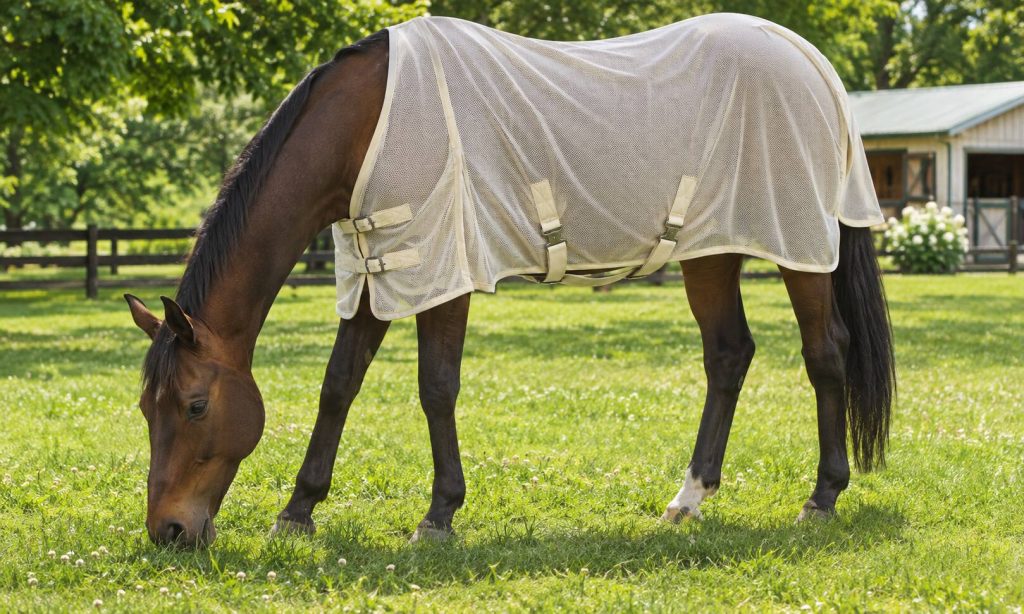
A horse fly sheet is a lightweight physical barrier intended to reduce contact from biting insects. Choosing the right fly sheet for horses takes more than finding a size that fits around the chest. Mesh construction, airflow, shoulder freedom, closures, belly coverage, and the horse’s behavior all influence whether the sheet is comfortable. A poor fit can rub, trap a leg, or shift during turnout. A well-fitting sheet should never make a horse overheat or interfere with normal movement.
This guide explains the practical features to evaluate, how to check the sheet during turnout, and when to remove it. It avoids individual product rankings. For a broad introduction to available designs, see our fly sheet for horses overview. Start by deciding what kind of insect protection your horse needs and how the sheet will be used on real summer days.
Match the Design to the Insects and Turnout Conditions
Fly pressure changes with the season, property, weather, and nearby breeding habitats. Horse flies, stable flies, and house flies behave differently. A sheet can reduce direct contact over covered skin but cannot protect every body region or remove flies from a barn. Consider whether the horse spends most of the day in open pasture, in a shaded paddock, or moving between turnout and a stall. Choose coverage that makes sense for that routine.
Do not rely on fabric alone when poor manure management or standing wet organic material continues to attract insects. Clean feeding areas and manage manure promptly. Our horse barn fly-management guide explains the environmental side. For persistent bite reactions, skin damage, or unusual distress, consult your veterinarian. A sheet can support a control plan, but it is not medical treatment and does not guarantee complete protection.
Compare Mesh Weight, Breathability, and Durability
Look for a fabric that allows air to circulate while remaining strong enough for the horse’s environment. Very fine mesh may offer more barrier coverage but differ in ventilation, weight, and resistance to snagging. A rugged weave may tolerate rough pasture use better, yet feel less flexible. Evaluate the real material rather than assuming thicker or denser is always safer. Inspect stitching and reinforced areas because those points often bear tension from movement and closures.
Hot and humid weather deserves special attention. Horses can struggle with heat stress, particularly when poorly acclimated, ill, or carrying a thick coat. Do not add a sheet simply because the calendar says fly season. Monitor breathing, sweating, body temperature concerns, and behavior. University extension guidance advises removing coverings during active cooling of an overheated horse. If the animal seems distressed or excessively hot, remove the sheet safely and get appropriate veterinary advice.
Check Neck, Shoulder, Chest, and Wither Freedom
A fly sheet must let the horse lower its head, graze, walk, trot, and turn without pulling hard across the shoulders or neck. Examine the neckline, front closures, wither area, and seams. The sheet should neither choke the chest nor slide backward into pressure points. Deep shoulder gussets or shaping may change movement freedom, but the actual fit matters more than advertised construction details.
Pay attention to the length along the back and the amount of drop at the sides. An overly loose sheet can rotate, while a tight one may pull across the point of the shoulder. Measure the horse according to the particular sizing instructions instead of guessing from breed labels. For the detailed measurement process, use our fly sheet sizing guide. Recheck fit after the horse moves, because a stationary fitting can hide slipping.
Assess Belly Coverage and Closure Security
Under-belly panels can cover areas exposed to insects, but straps and surcingles must be fitted so they do not hang loose or restrict movement. Check that buckles, clips, and hook-and-loop sections remain secure. Avoid excess strap length where a hind leg could become caught. The best arrangement varies with the sheet’s construction, so follow the manufacturer’s fitting directions and observe the horse in normal movement.
Look for smooth stitching at the belly and girth area. A horse that reacts sharply when walking or repeatedly kicks at the sheet may be experiencing a pinch, rub, or entanglement risk. Remove and inspect the sheet instead of tightening everything blindly. If the horse is turned out with companions, watch for others grabbing or pulling the fabric. No closure is safe when it is damaged or adjusted without regard for movement.
Consider Coverage Around the Tail, Mane, and Legs
Some designs include a tail flap, neck cover, or more extended side panels. Added coverage may be useful for certain insects, but each attachment introduces seams, straps, and opportunities for shifting. Check whether the tail can move freely and whether the neck piece stays correctly positioned when grazing. More coverage is not automatically better if the horse overheats, rubs, or attempts to remove the sheet.
Leg protection is usually handled separately with correctly fitted fly boots or other veterinary-approved measures. Do not improvise by tying loose fabric around limbs. For facial protection, a correctly fitted fly mask may be appropriate, but it requires independent cleaning and checks. Our horse fly-mask care guide describes related maintenance considerations. Coordinate all coverings so they do not overlap awkwardly or create trapped straps.
Inspect Fit and Skin During Everyday Use
Introduce a new sheet during a period when you can observe the horse. Check the shoulders, withers, chest, belly, and hip area after the first session for hair disturbance, heat, rubbing, or swelling. Watch the horse graze and move. Recheck closures later, especially after rolling or social turnout. A sheet may begin well positioned and migrate after several hours. Remove it promptly if a strap loosens or fabric tears.
Keep the sheet clean, dry, and in good repair. Remove accumulated hair and dirt following the care label, and let it dry thoroughly before storage. Consider having a safe, clean alternative available when one sheet is wet or being repaired, but do not use a poorly fitting spare. A horse’s weight and muscle condition can change across the season, so the fit should be reassessed periodically rather than treated as permanent.
Know When a Sheet Is the Wrong Choice
Some horses dislike coverings, rub themselves against fences, or become overheated in certain weather. An individual with sensitive skin, a wound, or a medical problem may need a different protection plan. Consult a veterinarian when fly-bite hypersensitivity or skin lesions persist. Avoid leaving a horse in a damaged sheet simply because flies are present. You can use appropriate environmental management and other well-fitted barriers while reassessing options.
Consider the practical cost of daily handling and repair too. A heavily snagged sheet that repeatedly twists can become unsafe. A design requiring constant tightening may not suit that horse’s shape or turnout routine. IMO, the useful test is whether the horse moves freely, stays comfortable, and benefits from the barrier—not whether the sheet looks perfect for a photograph.
Frequently Asked Questions
These questions address common choices between fly sheet coverage, fit, and summer comfort. The answers are general and should be checked against the particular product’s instructions.
Observe your own horse closely because weather, insect pressure, body shape, and tolerance vary. Remove any covering that creates a safety concern.
Is a fly sheet necessary for every horse?
No. Need varies with insect pressure, skin sensitivity, turnout, and other management measures. Some horses do well with environmental control and targeted protective gear.
Should the fly sheet fit tightly to stop insects?
No. It should fit securely without restricting shoulder, chest, belly, or neck movement. Over-tightening can create pressure and rubbing.
Can a horse wear a fly sheet in very hot weather?
Breathable construction matters, but any covering requires observation. If the horse shows heat distress, remove the sheet safely and follow veterinary cooling guidance.
How often should I check a fly sheet?
Inspect before turnout, after the horse has moved in it, and during routine care. Look for slippage, damaged buckles, rubbing, and loose straps.
When should I replace a fly sheet?
Replace or repair one with torn load-bearing seams, stretched straps, sharp hardware, distorted fit, or repeated rubbing that cannot be corrected safely.
Final Words
Choosing the right fly sheet for horses means balancing useful coverage with airflow, secure fastening, and freedom of movement. Evaluate the actual insect problem, measure carefully, check skin contact points, and observe the horse during turnout. Do not rely on a sheet to replace stable hygiene or veterinary help for severe bite reactions.
Review our fly sheet for horses guide for broader design context, and recheck fit as the horse and weather change. A comfortable horse, rather than a completely covered one, is the best indication that the setup makes sense.









