
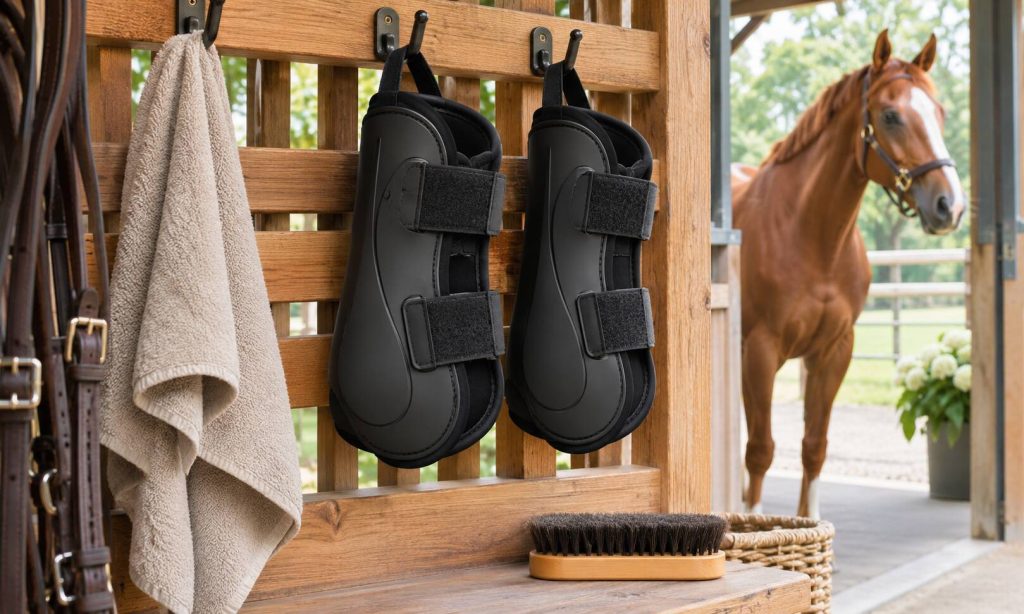
Tendon boots can protect a horse’s lower legs from certain knocks during appropriate activities, but a damp or distorted pair may create new rubbing problems. Learning how to store tendon boots for horses safely begins before they reach the tack-room shelf. Remove grit, check the lining and closures, allow complete drying, and choose a place that preserves the boot’s shape. Storing them wet or crushed under heavy equipment can shorten their working life and make the next fitting less reliable.
This guide focuses on practical storage, hygiene, inspection, and when to retire damaged protective boots. It does not assume that every boot material should be washed the same way. For general category context, see our tendon boots for horses overview. Good storage starts with clean equipment and ends with a quick fit check before every use.
Remove Dirt and Sweat Before Putting Boots Away
After riding, remove the boots carefully and examine the horse’s skin for rubbing, heat, swelling, or trapped debris. Brush loose mud and sand from the outer shell and closures when dry enough to avoid grinding grit into the lining. Dirt left beneath a boot can become abrasive during the next session. If the boot became soaked or carried wet arena footing, set it aside for cleaning rather than tossing it directly into a closed tack trunk.
Follow the maker’s material instructions for rinsing, hand washing, or any machine-washable components. Some boots combine hard shells, synthetic leather, neoprene, fleece, or elastic, and those layers may react differently to detergents and heat. Avoid bleach or strong solvents unless instructions specifically permit them. Clean straps and hook-and-loop surfaces gently, as grit caught in fasteners can reduce holding strength. Our horse boot cleaning and inspection guide explains related maintenance checks.
Dry the Lining and Closure Areas Thoroughly
Ventilation matters more than speed. Open straps and position the boots so air can reach the lining, seams, and any padding. Use a clean, shaded, dry area rather than setting them against a heater or leaving them in intense sun. High heat can affect adhesives, elastic, and molded materials. A dry outer shell does not guarantee that the padding underneath is dry, especially after a muddy or rainy ride.
Do not seal a damp pair in plastic bags or an airtight box. Persistent moisture encourages odors and can degrade some materials. If the lining still feels cool and wet, extend the drying time. Keep the boots separated so the inner surfaces are not pressed together. Check for unusual odor, staining, or visible deterioration before putting them away. Routine thorough drying also helps prevent the next day’s equipment from starting with damp contact against the horse’s skin.
Choose Storage That Protects the Boot’s Shape
A clean tack rack, open shelf, or ventilated gear organizer can keep boots accessible without crushing them. Support each pair in a way that preserves its natural curve and avoids sharp folds in stiff panels. Do not pile heavy saddles or containers on top. If boots are designed for a particular leg, keep the pair together and label the storage position rather than writing on a surface that touches the horse.
Arrange straps loosely so they do not tangle with nearby tack or collect dust on exposed adhesive surfaces. Fastening hook-and-loop closures lightly can reduce lint buildup, but do not pull elastic tight during long storage. Keep the boots off a damp floor and away from direct sunlight, insects, rodents, and household chemicals. A simple dedicated compartment is better than a crowded box where metal hardware and sharp objects rub against the lining.
Control Moisture, Dust, and Shared-Equipment Hygiene
Choose a reasonably dry, ventilated tack area. In humid climates, inspect stored equipment more frequently and address leaks or condensation promptly. Avoid storing boots next to wet blankets or heavily soiled grooming tools. If another horse has a skin infection or unexplained lesions, do not move the same uncleaned boots between animals. University extension guidance recognizes contaminated tack and protective gear as possible contributors to disease spread.
When sharing equipment is unavoidable, follow appropriate cleaning and disinfection advice for the specific situation and material. Disinfectants may damage some linings, and a surface covered in dirt may not be effectively disinfected. Ask a veterinarian for biosecurity guidance if infectious skin disease is suspected. For ordinary nonmedical use, basic clean-and-dry storage reduces avoidable contamination and makes the boots easier to inspect before fitting.
Inspect Straps, Shells, and Linings Before Seasonal Storage
Use the end of a riding season to inspect each boot closely. Examine the hook-and-loop grip, buckles, seams, binding, elastic, and molded shell. The lining should feel smooth and evenly attached. Look for hard grit embedded in padding or a sharp edge where plastic has cracked. A boot with weakened closures or a deformed shell may shift during movement. Do not store it with the intention of forgetting the damage until spring.
Clean and dry the pair, then leave it accessible enough for periodic inspection. Do not pack a boot tightly in a vacuum-sealed bag if that would deform its shape. If the manufacturer recommends a particular storage position, follow it. Check that replacement straps or components are compatible and correctly installed. Our horse boot fit and rubbing checklist explains why retained shape and reliable fastening matter.
Recheck Fit After Storage Before Putting Boots Back On
A boot can look clean on the shelf yet fit differently after weeks of compression or material aging. Before the next ride, compare the two boots, feel for rough spots, and check that straps still close securely. Put them on a clean, dry leg following the design’s instructions. The fit should be stable without pinching, rolling, or trapping hairs. Recheck after a short period of movement when appropriate.
Any recurring rubbing, slipping, or altered movement means the setup needs reassessment. Do not tighten a distorted boot excessively to compensate. If the horse shows pain, swelling, heat, or skin lesions, seek veterinary guidance rather than continuing to use the equipment. Our horse leg boot fit and use guide discusses related differences in design and intended activity.
Know When Storage Will Not Save a Damaged Pair
Storage preserves equipment; it cannot restore strength that has already been lost. Retire or professionally repair boots with cracked load-bearing shells, sharp edges, torn linings, unreliable closures, or permanently stretched elastic. Avoid homemade repairs that leave exposed adhesive, knots, hard seams, or projecting wire near the horse’s leg. A boot’s protective purpose depends on predictable placement, and failing hardware may create its own hazard.
Consider replacing a pair if it repeatedly causes rubbing despite correct fitting checks. Horse leg size, conditioning, and intended activity may change, making old equipment inappropriate. Do not keep a defective pair as a backup simply because it is expensive to replace. FYI, a tidy tack box is not the same thing as a safe one. Remove unsafe gear from active storage so it cannot be used accidentally.
Frequently Asked Questions
These practical questions cover what to do immediately after a ride and how to keep protective leg equipment usable between seasons. The answers depend on the boot’s actual materials and care instructions.
Storage advice is not a substitute for assessing the horse’s skin or movement. Stop using a boot that causes injury or cannot be secured reliably.
Can I store tendon boots while they are slightly damp?
No. Let the lining, shell, seams, and straps dry fully before closed storage. Residual moisture can cause odors and damage some materials.
Should I keep hook-and-loop straps open or closed?
Follow the manufacturer’s directions. Lightly securing closures may reduce lint and snagging, but do not stretch elastic or compress the boot unnaturally.
Can tendon boots be machine washed?
Only when the product’s care instructions clearly permit it. Many mixed-material or molded boots require gentler cleaning.
How can I tell if stored boots are too worn?
Look for cracking, rough lining, frayed straps, reduced fastening grip, distortion, or repeated rubbing. Damaged protective gear should not remain in service.
Can the same boots be shared between horses?
Avoid sharing dirty boots, especially when skin disease is suspected. Clean, assess fit, and follow veterinary biosecurity guidance when appropriate.
Final Words
Store tendon boots for horses only after cleaning, thorough drying, and a careful inspection. Choose a ventilated area that protects the shell and lining from crushing, heat, moisture, and contamination. Keep pairs together and closures in good condition. A quick check now can prevent a rushed fitting problem later.
Before each use, recheck the horse’s leg, boot shape, and fastening security. Our tendon boots for horses resource offers broader design context. The safest stored pair is not merely clean; it is dry, structurally sound, and ready to fit properly.









