
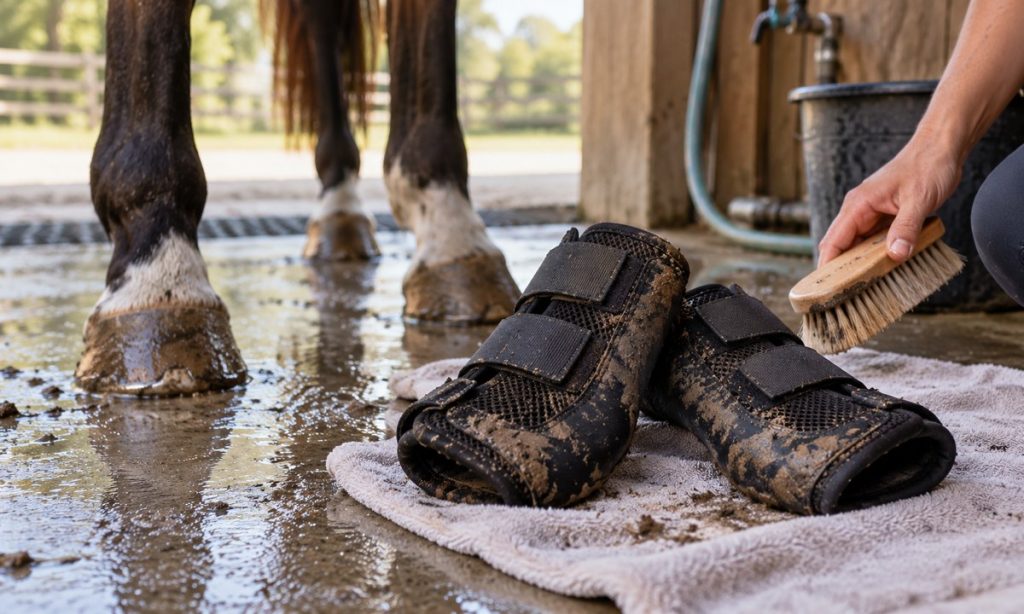
Protective boots can help shield a horse’s lower legs from some knocks and brushing, but they do not make tendons injury-proof. The best tendon boots for horses depend on the discipline, the shape of the leg, and the kind of contact you want to protect against. Here we compare seven Amazon-verified products, including open-front jumping shells, tendon-and-fetlock sets, and wraparound sport boots. Those designs offer different coverage, and front and hind versions cannot always be interchanged. Check size charts and strap placement before buying, then monitor how the boots sit when the horse moves. Dirt beneath a strap can cause rubbing, and some materials hold heat. Remove boots after activity and inspect each leg for swelling, irritation, or warmth. If your horse is recovering from tendon or suspensory injury, follow veterinary rehabilitation instructions rather than assuming ordinary retail protective boots provide medical support.
Quick Picks
| Product | Best For | Key Advantage | Buy | |
|---|---|---|---|---|
| Harrison Howard Tendon and Fetlock Set | Four-piece jumping protection | PU shell tendon guards with padded lining and matching fetlock boots | View on Amazon | Jump to Review |
| LeMieux Impact Responsive Tendon Boots | Tendon-focused jumping guards | an impact-responsive LeMieux tendon boot format | View on Amazon | Jump to Review |
| MAYiT Tendon and Fetlock Boots | Budget front-and-hind sets | PU and neoprene front and hind guards with elastic fastenings | View on Amazon | Jump to Review |
| Kavallerie PRO-K Support Boots | Wraparound flexor-region protection | an anatomically shaped strike pad and protective lower-leg wrap | View on Amazon | Jump to Review |
| Harrison Howard Four-Pack Sport Boots | General training leg coverage | a four-pack of contoured wraparound sport boots | View on Amazon | Jump to Review |
| Tough 1 Extreme Vented Sport Boots | Vented sport-boot format | vented inner and outer layers with a suspensory sling-style strap | View on Amazon | Jump to Review |
| LeMieux Derby Tendon Boots | Simple tendon-boot design | a Derby-style LeMieux tendon protector | View on Amazon | Jump to Review |
1. Harrison Howard Tendon and Fetlock Set

- PU outer shells
- Padded inner lining
- Fetlock guards included
- Four-piece set
- Incorrect sizing can make a rigid boot rub
Harrison Howard Tendon and Fetlock Set provides four pieces rather than only front tendon boots. Its listing identifies PU protective shells with padded inner surfaces and matching fetlock guards. That combination makes the set a reasonable comparison for jumping riders who want coordinated front and hind protection. The hard exterior is intended to manage external contact, not to strengthen a damaged ligament. The design should be evaluated against the exact horse’s lower-leg shape, discipline rules, and likelihood of interference during movement.
A matching set is convenient, but the presence of four boots does not guarantee that the front and hind pieces will fit equally well. Measure each relevant area and check the maker’s size guidance before relying on a generic horse-size description. Rigid edges can rub if the shell twists or the straps are adjusted unevenly. Compare this four-piece configuration with a single open-front LeMieux design if only front-limb protection is needed. More coverage is not automatically better, particularly when heat and moisture accumulate under boots.
Try the Harrison Howard guards on a clean, dry horse and watch the fit in motion before a demanding schooling session. A boot should stay in place without compressing the skin or restricting normal movement. Inspect the inner padding after every ride for grit, sweat buildup, and signs of abrasion. Keep the equipment dry between uses, especially if it has been worn through mud. If the horse already has tendon pain or swelling, seek a veterinary diagnosis rather than assuming the protective shell provides treatment.
My Recommendation
Harrison Howard’s four-piece set makes sense for a jumping rider who wants matching tendon and fetlock protection without shopping for the hind guards separately. I like the clear distinction between the harder PU outer shells and padded interiors, but those edges still need careful fitting. Check each front and hind boot independently rather than assuming one labeled size works across all four legs. If your horse only interferes at the front, a simpler front-only set may be easier to manage. Remove the guards after schooling and inspect the skin for pressure or rubbing.
2. LeMieux Impact Responsive Tendon Boots

- LeMieux tendon format
- Impact-oriented design
- Jumping equipment profile
- Medium-size variation
- Its specialized open-front style is not suitable for every discipline
LeMieux Impact Responsive Tendon Boots are positioned for specialized tendon protection during jumping, rather than for every type of riding or turnout. The verified listing identifies an impact-oriented LeMieux tendon-boot design, including a medium-size variation. A jumping-focused guard may expose some areas intentionally while covering others, so its value depends on the sport and the horse’s interference pattern. It is not interchangeable with a wraparound sport boot or a medical support device, even if all three products mention the lower leg.
Before buying this pair, ask which surfaces are meant to be protected and whether the open-front configuration fits your discipline’s equipment rules. The cut of the shell may help a rider prioritize one contact region but leave a different region uncovered. Measure the horse according to LeMieux guidance and compare the fit with bulkier Harrison Howard sets. A sleek shell can still create friction at a strap or edge. Do not assume that a premium brand or impact-focused marketing establishes injury prevention in an individual horse.
During the first schooling sessions, check for shifting after trotting, cantering, and jumping rather than judging fit while the horse is standing. Remove the boots promptly and examine the skin for rubbing or trapped heat. The medium variation should be confirmed against the actual leg measurement, not selected from breed alone. Clean the lining so sweat and sand do not harden against the skin. Tendon swelling, lameness, or a recent injury requires veterinary assessment, even if the horse seems comfortable while wearing the guards.
My Recommendation
LeMieux Impact Responsive Tendon Boots deserve a look when front-leg strike protection is the priority during jumping. The more specialized tendon-guard design may appeal to riders who want a focused front pair rather than a full collection of wraps. However, a named impact feature does not prove a particular level of injury prevention, and individual fit matters more than marketing language. Compare the actual shell coverage and closure placement with the horse’s anatomy and your discipline’s rules. Choose a broader sport boot instead when all-around lower-leg coverage, rather than open-front jumping use, is the goal.
3. MAYiT Tendon and Fetlock Boots
- PU protective exterior
- Neoprene lining
- Front and hind pieces
- Elastic strap sections
- Straps and shells need careful fit checks
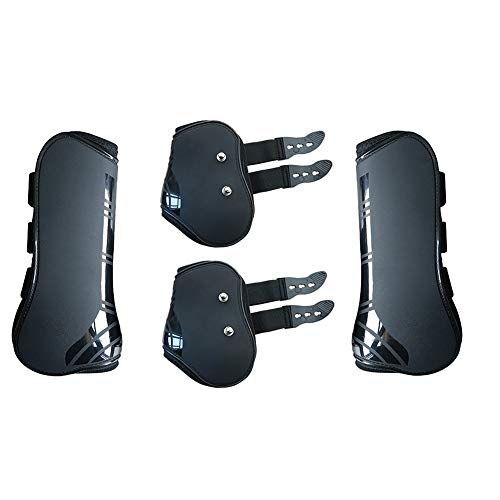
MAYiT Tendon and Fetlock Boots offer a budget-oriented front-and-hind format, with PU outer protection, neoprene lining, and elastic fastening sections described in the listing. That construction makes it an accessible comparison for riders who need several guards rather than a single premium front pair. Neoprene can help cushion contact, but it can also hold warmth and moisture if boots remain on too long. The value of this set lies in its identified materials and coverage, not a claim that it prevents tendon damage.
Elastic straps create a practical sizing challenge. They must be secure enough to prevent rotation without producing pressure marks around the cannon or fetlock. Check for stitching quality, edge finish, and the way each strap lies when the leg flexes. Compared with a rigid, open-front tendon boot, this MAYiT set offers different coverage and may suit a different riding routine. Neither style is a universal answer for horses that brush, overreach, or strike their own legs, so a fit assessment remains essential.
Use these boots for activities where their actual coverage and fastenings make sense, then remove them at the end of work rather than leaving damp equipment against the skin. After a ride, feel for excessive heat, inspect for rubs, and clean off mud from the neoprene. Retest the fit as the material stretches or wears. If a strap begins loosening, replace or repair the equipment before using it again. Horses with existing tendon injuries need a rehabilitation plan provided by a veterinarian.
My Recommendation
MAYiT is the budget-oriented option I would compare for a rider who needs both tendon and fetlock guards in one purchase. The PU and neoprene construction offers a different feel from premium molded designs, while elastic fastenings may be convenient during routine tacking up. The risk is inconsistent strap tension or a shell that shifts on a horse with a difficult-to-fit leg shape. Measure carefully and observe movement before using the whole set for a long session. If the straps need excessive tightening to stay put, look at another shape instead of forcing the fit.
4. Kavallerie PRO-K Support Boots
- Anatomical strike pad
- Flexor-region coverage
- Protective wrap design
- Impact-absorbing material
- Support marketing does not establish medical treatment
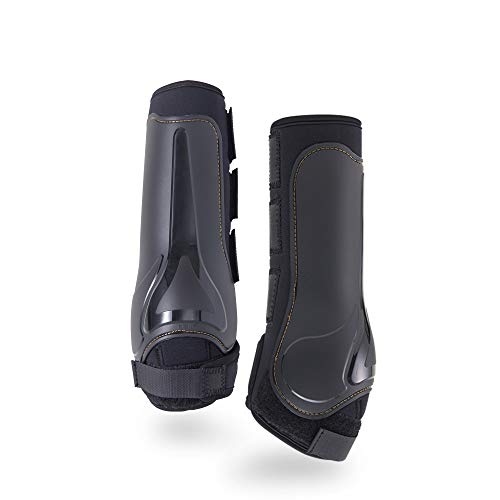
Kavallerie PRO-K Support Boots use a different design from traditional open-front jumping guards. The verified listing describes an anatomically shaped strike pad and a wraparound lower-leg construction, with attention to the flexor-region area. That makes the product more relevant to riders seeking broad contact protection than to those specifically choosing a hard-front jumping shell. The term support in the product name should be interpreted cautiously: protective contact coverage does not prove that an injured tendon receives the medical stability it needs.
A wraparound pattern can cover more skin and may change how quickly the leg warms during exercise. Check whether the closure overlaps correctly, whether the strike pad remains positioned over the intended region, and whether the boot twists after a turn. The right size is not simply the one that closes; the pad and seams must line up with the horse’s anatomy. Compare Kavallerie against the vented Tough 1 design when heat management is a priority. Both require individual fit checks rather than assumptions from marketing diagrams.
I would use this style only after confirming that the broad coverage matches the actual risk of brushing or external knocks in the horse’s normal work. During an initial session, remove and inspect the boot midway through the ride if the weather is hot. Look for sweat concentration, uneven strap impressions, and any changes in gait. Wash and dry the wrap as instructed before the next use. If the horse has a diagnosed tendon or suspensory injury, follow the veterinarian’s rehabilitation instructions instead of relying on a commercial support label.
My Recommendation
Kavallerie PRO-K Support Boots interest me most for horses whose owners want wraparound coverage of the lower leg, including a shaped strike area. That is a different purchase decision from choosing rigid open-front tendon shells for jumping. The wrap may be easier to position around some leg contours, but broad coverage can also hold sweat and heat during exercise. Do not interpret the word support as proof that it treats a tendon or suspensory injury. Compare coverage, flexibility, and fastening security with a more ventilated boot when the horse works in warm conditions.
5. Harrison Howard Four-Pack Sport Boots

- Front and hind coverage
- Wraparound lower-leg design
- Padded strike protection
- Four-pack configuration
- Wide coverage can retain additional warmth
Harrison Howard Four-Pack Sport Boots are described as contoured wraparound guards with padded strike protection for both front and hind legs. Unlike the brand’s hard-shell tendon-and-fetlock set, this listing emphasizes broader sport-boot coverage and a four-piece configuration. That makes the product useful to compare for everyday schooling or general interference concerns when the rider wants similar coverage on multiple limbs. The difference is not cosmetic: a flexible wrap may fit and ventilate differently from rigid jumping shells.
The additional coverage needs deliberate sizing because front and hind legs can have different circumferences and shapes. Make sure each boot sits on the correct limb, closes evenly, and does not wrinkle where the horse bends. A wide padded panel can hold moisture in warm weather, potentially making friction more noticeable after prolonged use. Compare the extent of coverage with Kavallerie’s focused strike pad if the concern is contact in one location. A horse that never brushes may not benefit from wearing four boots routinely.
Before deciding these are the best tendon boots for your horse, trial the set during a short, supervised ride. Check that the boots stay aligned through turns and do not creep downward when the leg flexes. Remove them, examine the skin, and allow equipment to dry fully; dried grit under padding can create rubs even when the original fit was correct. Replace stretched straps or damaged lining promptly. Protective sport boots are not a substitute for evaluating unexplained swelling, heat, or soreness in the lower limb.
My Recommendation
The Harrison Howard Four-Pack Sport Boots would be my practical comparison for general schooling when a rider wants similar wraparound protection on four legs. A four-pack simplifies matching the set, and the contoured padded format differs from rigid jumping shells. I would check whether the material creases behind the fetlock and whether the straps remain evenly placed after walking and trotting. Because more fabric may mean more retained warmth, take the boots off promptly after use. For discipline-specific open-front protection, compare the brand’s tendon-and-fetlock shell set instead.
6. Tough 1 Extreme Vented Sport Boots

- Vented inner layer
- Vented outer layer
- Sling-style strap
- Sport boot set
- A sling strap does not replace veterinary rehabilitation
Tough 1 Extreme Vented Sport Boots stand out for their vented inner and outer layers and suspensory sling-style strap, according to the listing. This is a sport-boot configuration rather than a traditional rigid open-front jumping guard. The design is worth examining when a rider wants broad lower-leg coverage but is concerned about trapped warmth. Ventilation features may help move air through a product, yet the listing does not establish that the horse’s tissues stay at a particular temperature during all riding conditions.
The sling-style strap deserves careful interpretation. Its presence does not mean the boot will rehabilitate a strained suspensory ligament or prevent a new injury. The position of the strap, the wrap overlap, and the overall circumference must suit the individual leg. Compare the boot with a simpler non-vented wrap to decide whether its construction answers a real need. If a horse is recovering from a tendon problem, ask the veterinarian what protective equipment, if any, is appropriate for each phase of rehabilitation.
For routine use, follow the sizing chart, check the fasteners under movement, and remove the boots soon after exercise so the legs can cool. Look for skin rubbing beneath the sling area, particularly if the horse works in sand or fine arena footing. Rinse away debris and let both inner and outer surfaces dry before storage. The main reason to consider Tough 1 here is its identifiable vented construction. I would not buy it on the theory that an extra support strap can replace clinical care.
My Recommendation
Tough 1 Extreme Vented Sport Boots are worth examining if you want a wrap-style boot with venting details rather than a solid shell. The listed inner and outer vents and sling-style strap set it apart from basic padded wraps, although vents cannot guarantee a cool leg under every workload. The sling should be positioned according to the maker’s directions and must not be pulled excessively tight. I would compare these with smaller tendon guards if a horse heats up easily under broad coverage. Swelling, pain, or lameness calls for a veterinarian, not a different boot.
7. LeMieux Derby Tendon Boots

- Derby tendon design
- Riding protection focus
- LeMieux brand construction
- Large-size listed variant
- Confirm exact size and closure compatibility
LeMieux Derby Tendon Boots are a comparatively straightforward tendon-guard option. Their verified listing identifies a Derby-style LeMieux protector, including a large-size variation. That simplicity may suit a rider who wants a specialized lower-leg shell without investing in a full set of matching hind guards. The exact protective area, closure arrangement, and compatibility with the horse’s movement remain more important than the familiar manufacturer name. A generic description of tendon protection is not enough to select the correct size.
Compare the Derby cut with the Impact Responsive model before choosing between two LeMieux products. The shapes and intended contact areas may differ even when both are sold for riding. Verify which version the retailer is offering, inspect closure photographs, and check the measurements for the current variation. If the material cannot be confirmed in the listing, avoid assuming a particular shell stiffness or level of ventilation. A too-large boot can rotate, while a tight one may create concentrated pressure or rubs.
I would treat the Derby option as a fit-and-purpose decision for a horse whose rider understands why this style is needed. Fit both legs separately, observe the guards during warm-up, and inspect the inner surfaces for sweat, trapped sand, and scuffing after work. Review your discipline’s current rules before using the model in competition. A simple design may make cleaning and routine checks easier, but no boot makes a lame horse sound. Any unexplained tendon-area heat or swelling needs veterinary assessment before further riding.
My Recommendation
LeMieux Derby Tendon Boots suit a rider looking for a straightforward tendon-boot design without paying for an entire front-and-hind matching set. I would verify the exact listed size, closure configuration, and discipline suitability before deciding that a large Derby model fits this horse. Even a well-known brand cannot compensate for a boot that rotates or touches sensitive skin at the edges. Compare the Derby style against the Impact Responsive model if protective coverage details differ for your jumping routine. Make the final choice from secure movement and comfort, not appearance alone.
How to choose best tendon boots for horses
Choose lower-leg protection by the riding task, not the strongest advertising claim. Tendon shells, fetlock guards, and wraparound sport boots cover different areas. The following checks help match fit, ventilation, and maintenance needs to your horse while keeping veterinary care separate from equipment shopping.
Match protection to riding
Open-front boots are widely used for jumping but leave part of the front of the leg uncovered. Wraparound sport boots give a different type of coverage for other activities. Choose protection by identifying the likely contact hazards, not by assuming that more material is always safer. Consider whether you need front boots only, separate fetlock guards, or a complete set. If competing, check the equipment rules for the relevant discipline. A retail boot may protect against knocks without preventing tendon strain or tears. The latter depends on many factors beyond footwear.
Check measurements and closures
Use the manufacturer’s size chart rather than selecting a size from breed or height alone. The boot should stay in position without twisting or pressing into soft tissue. Pay particular attention to the edges around the fetlock and any strap crossing the cannon bone. Harder shells can shield against contact yet rub if shaped incorrectly. Neoprene and thick padding may alter heat retention during work. Try the correct front and hind pieces independently, and inspect the horse after moving rather than relying on a standing fit check. Tightening an unsuitable boot is not a solution.
Keep equipment clean and assess the skin
Dust, mud, grit, and dampness can turn a comfortable boot into a source of friction. Brush or wash the equipment as directed and let it dry before the next use. Replace damaged straps, worn linings, and cracked shells. Remove boots after exercise and look for skin marks, unusual warmth, swelling, or changes in movement. Different seasons and workloads can change whether a particular boot design is comfortable. If the horse becomes lame or has an existing injury, consult a veterinarian instead of buying more supportive-looking wraps.
Check whether the product contains a pair or four pieces and whether the rear boots have different dimensions. A set is good value only if every piece fits securely. A clear care and sizing guide is more useful than an attractive color scheme. Always prioritize correct coverage and normal leg movement over a claim that a retail boot can prevent all injuries. Keeping a written equipment checklist helps prevent repeated purchases of products that never fit properly. Review the manufacturer advice and reassess after changes in workload or leg condition.
Related PetAdvisorPro Guides
For useful context, read how to clean and maintain horse boots; and horse boot fit and rubbing checks; and different lower-leg boot designs; and horse cooling boots. These explain practical leg-care and equipment differences.
Frequently Asked Questions
Can tendon boots prevent ligament tears?
No. They may shield against some external knocks but cannot guarantee protection from tendon or ligament injuries.
Are open-front tendon boots suitable for all sports?
No. They leave areas uncovered and should be chosen for the discipline’s needs and rules.
Can boots make a horse’s legs hot?
Some materials retain heat. Inspect the legs and remove boots promptly after activity.
How tight should horse tendon boots be?
They should stay secure without sliding, pinching, or restricting motion. Follow the specific maker’s sizing instructions.
Can I use these boots to rehabilitate a tendon injury?
Only with veterinary guidance. Ordinary protective riding boots are not necessarily therapeutic devices.
Final Verdict
For jumping, compare the open-front Harrison Howard and LeMieux tendon boots, checking closure positions and leg dimensions. If broader sport protection fits the job, Tough 1 and Harrison Howard wraparound styles offer different coverage. None should be relied upon as a substitute for veterinary diagnosis or injury rehabilitation. A well-fitted boot that stays clean and does not overheat the leg is more valuable than the strongest-sounding claim.
Affiliate disclosure: This article contains Amazon affiliate links. If you purchase through them, PetAdvisorPro may earn a commission. As an Amazon Associate I earn from qualifying purchases.









