
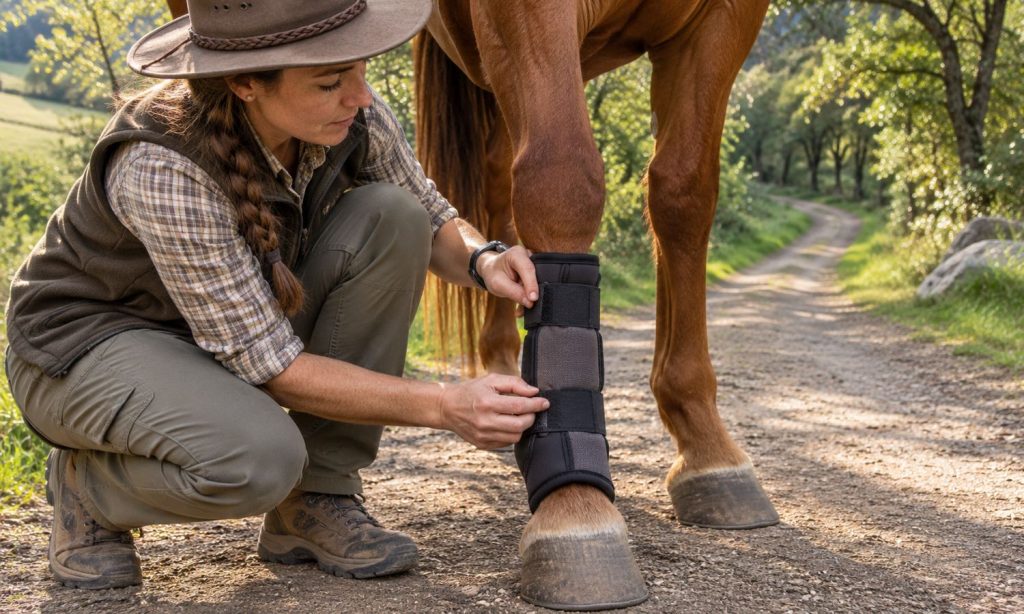
Trail riding exposes a horse's lower legs to brush, grit, mud, and the occasional awkward step. Leg boots may reduce some knocks, but a poorly fitted boot can create heat, rubbing, or restriction. Learning how to compare horse leg boots for trail riding options by fit and use starts with the terrain and the individual horse. Before buying anything, decide what needs protection and whether the horse has previously had rub marks or movement problems.
The best horse leg boots for trail riding guide covers the broader category. This article focuses on evaluation: identifying boot types, measuring accurately, checking material and closures, and testing comfort before a full ride. There is no universal trail boot. An occasional woodland ride and a long rocky route place different demands on equipment, and boots should never conceal a new lameness concern.
Define the Protection Job Before Comparing Boots
Begin by asking where contact is likely. Brushing boots cover vulnerable areas along the cannon bone and fetlock, while tendon-style boots focus on different structures. Bell boots protect heel bulbs and the upper hoof area from some overreach strikes. Hoof boots perform another job entirely: they cover the hoof for traction or hoof protection in suitable circumstances. Combining them into one generic category confuses coverage and fit. The aim is to match the protective area to an actual risk, not to cover every inch of the leg.
Trail conditions matter. Dense brush may expose legs to scrapes, while uneven rocky routes require careful hoof management. A horse with a history of interfering or overreaching may need an individualized approach from a farrier or veterinarian. Booting cannot make a lame horse sound or replace appropriate trimming and shoeing. For a broader checklist, review trail riding leg safety checks for horses. How to compare horse leg boots for trail riding should always begin with the horse's normal movement and the purpose of protection.
Measure Fit Rather Than Guessing From Breed or Height
Measure each leg according to the particular boot's sizing directions. Common measurements include circumference around the cannon area, fetlock, and length of the section to be covered. Use a flexible tape on a clean, relaxed leg, and compare results with the manufacturer's chart. One horse may need different sizes in front and behind. Breed labels and estimates such as 'large horse' are weak substitutes for measurement. Record the numbers so you can recheck them after a change in condition.
A correctly placed boot should lie smoothly and allow normal joint motion. Closures must secure the boot without cutting into tissue, and the lower edge must not interfere with the hoof. Too loose can mean twisting or sliding; too tight can cause pressure. When trying boots, follow our fit and rubbing check before a trail ride and observe the horse at a walk. The most reliable fit test is the horse's movement and skin response, not how tidy the straps look from a distance.
Compare Materials With Heat, Water, and Grit in Mind
Protective boots may use neoprene, mesh, molded shells, fleece, or layered fabrics. Each construction has tradeoffs. A solid panel can resist some contact but may trap heat. A breathable design may improve airflow while offering less barrier against sharp vegetation. Wet fabric may hold moisture against skin, and seams can collect grit. Look at where the material bends and whether a rigid edge sits beside a moving joint. A boot that feels soft on the outside may still have an irritating inner seam.
Inspect lining and drainage, not only the external finish. For frequent wet rides, consider whether the boot can be rinsed and dried thoroughly between uses. Never put damp, gritty equipment back on a leg simply because the next outing is short. Our guide to cleaning and drying horse boots after a muddy ride explains a sensible routine. How to compare horse leg boots for trail riding options by fit and use includes maintenance because cleanliness affects comfort just as much as material choice.
Test Closures and Stay-Put Performance
Straps, hook-and-loop closures, and pull-on designs differ in their adjustment range. A closure should be easy for the handler to operate yet secure under ordinary movement. Check whether loose ends can catch on brush and whether the closure is placed where it might rub the opposite leg. Take time to look at the underside of each strap. Sand and hay can collect there without being obvious from the front. Any closure that needs excessive tightening to stay in place signals a fit problem.
Introduce new boots in a controlled setting. Put them on clean, dry legs, walk the horse by hand, then inspect after a brief period. Progress to a short easy ride only when movement remains normal and the skin stays comfortable. Recheck after dismounting. This staged test is worth the effort; the first time a boot shifts should not be several miles from the trailer. If a closure fails repeatedly, stop and reassess rather than wrapping it tighter. IMO, simple inspection access is an underrated feature of practical trail gear.
Assess Compatibility With Terrain and Riding Duration
For a short dry track, a lightweight and correctly fitted boot might be adequate when a specific need exists. Long rides bring more chances for accumulated sweat, heat, or debris. Mud can increase weight and make materials slip. On rocky routes, a horse may need separate hoof evaluation and farrier input. The leg boot itself should not be expected to solve hoof soreness. The correct plan depends on individual conformation, riding speed, terrain, and any clinical history, not on a generic 'all-terrain' claim.
Evaluate whether the horse actually needs boots. Some sound horses travel comfortably without leg protection, and unnecessary equipment brings its own risks. Watch for changes in stride, stumbling, reluctance to move, or sensitivity around the leg. Remove equipment to inspect if anything seems wrong. When a horse has swelling, heat, or lameness, contact a veterinarian before continuing. How to compare horse leg boots for trail riding is partly about recognizing the point at which equipment selection stops and medical assessment begins.
Inspect Before, During, and After Every Ride
Before setting out, brush dirt from the legs and inspect for cuts, swelling, or sensitive areas. Confirm matching boots are placed on the correct legs and are not reversed if orientation matters. Fasten each one according to its directions, then walk a few steps and check alignment. On longer routes, pause in a safe place to look for sliding straps or packed mud. Avoid reaching near a hoof without controlling the horse and positioning yourself safely.
After the ride, remove boots promptly and feel for unusual heat or pressure points. A faint mark from fabric may occur, but persistent indentation, soreness, rubbed hair, or broken skin needs attention. Clean and dry both the equipment and the horse's lower legs. Inspect stitching, mesh holes, worn edges, and lost fastener strength. Small failures grow quickly on trails. Consult how to clean, inspect, and maintain horse boots when setting a regular maintenance routine. Replace damaged pieces rather than hoping the next ride will be gentler.
Avoid Common Selection Errors
Buying solely by color, horse height, or generalized 'support' promises is a recurring mistake. So is assuming that a thick boot automatically protects more effectively. Too much material may restrict movement or retain heat, while a poorly placed closure can rub. Measure carefully and assess how the design covers the relevant area. Do not confuse protective impact coverage with clinically effective tendon support; those are different claims and require evidence.
Another mistake is skipping the first short trial. A boot that stays in place while a horse stands still may rotate during movement. Muddy boots should not be left in a trailer until the next weekend. Store them dry and inspect them again before use. For horses with previous tendon, ligament, or joint problems, obtain veterinary guidance about exercise and equipment. A protective boot is not a treatment plan, and it cannot guarantee that no injury will occur.
Frequently Asked Questions
Boot selection usually comes down to a small set of practical questions: what needs covering, which size fits, and how the equipment behaves after movement. The answers below help separate those decisions. They do not replace a clinical examination when a horse is sore, swollen, or moving abnormally.
Follow the individual boot's measurement and care directions. Different designs use different size charts, so a label from one style may not transfer directly to another. If you cannot obtain a stable, comfortable fit, do not use that boot for a long ride.
Are bell boots and leg boots the same thing?
No. Bell boots mainly cover heel bulbs and part of the hoof. Other leg boots protect portions of the cannon bone, fetlock, or related areas. Choose by the location and nature of the risk.
Should trail boots be tight enough to leave a mark?
No. Secure fit should not produce painful indentation, restricted motion, or rubbed skin. Check after a short walk and follow the fitting instructions for that specific design.
Can boots replace treatment for a tendon injury?
No. Equipment may offer limited external protection, but it does not diagnose or treat tendon injuries. A veterinarian should assess lameness or swelling and advise on activity and support.
Do horses need boots on every trail ride?
Not necessarily. Some horses do well without them. The decision depends on gait, conformation, terrain, interference history, and prior injury. Unnecessary or poorly fitted boots can introduce risk.
How often should I wash trail boots?
Remove debris after every use and clean according to the material's instructions. Dry fully before storage. Inspect closures, seams, and inner surfaces each time, especially after muddy or sandy rides.
Final Words
To understand how to compare horse leg boots for trail riding options by fit and use, first identify the protection job, then measure the horse. Check coverage, material, closures, movement, and post-ride skin condition. A short controlled test tells you more than a promising package description. The right setup should remain unobtrusive while helping manage a specific trail risk.
The best horse leg boots for trail riding article provides related category context. Balance that information with careful fit checks and your horse's individual needs. If swelling, rubbing, or altered movement appears, remove the boots and investigate before the next ride. A comfortable horse matters more than a fully accessorized one.









