
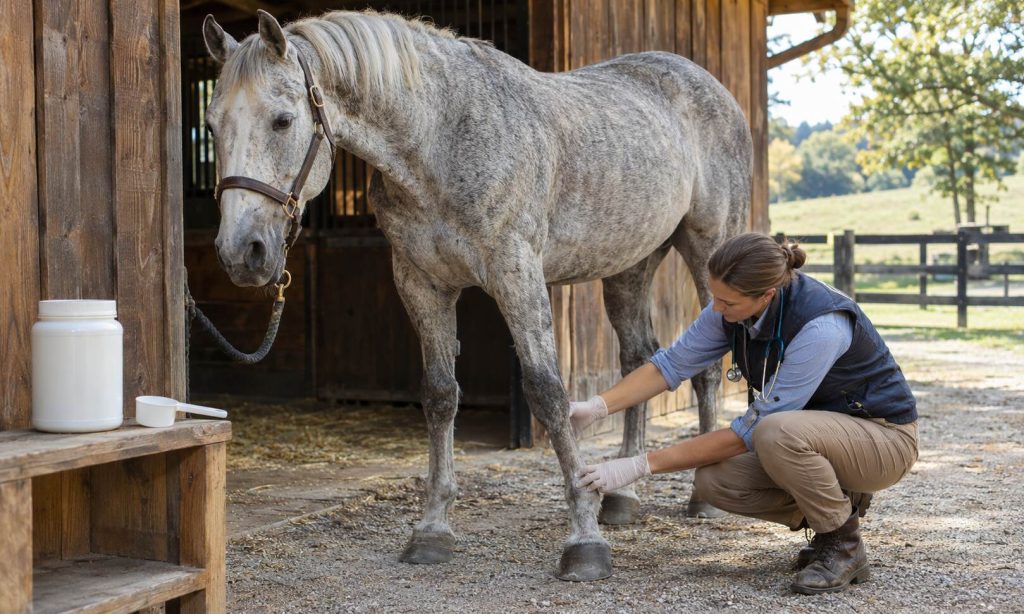
Joint supplements are common in barns with aging horses, but staying on the same formula forever is not always sensible. Deciding when to replace supplements for older horses with arthritis means asking two different questions: is the product still safe to use, and does the supplement remain appropriate for the horse’s current care plan? Changes in mobility, medication, appetite, and nutrition can all prompt a fresh review. A supplement should never substitute for diagnosing pain or arranging veterinary treatment.
This guide explains signs that a supplement needs reassessment, the difference between spoilage and lack of benefit, and how to discuss changes with your veterinarian. It does not recommend a particular formula. For category background, see our joint supplements for older horses with arthritis overview. The most useful goal is a comfortable horse with a coordinated care plan, not a permanently full supplement shelf.
Reassess the Horse Before Replacing the Formula
Arthritis can affect movement, willingness to turn, comfort after rest, and day-to-day activity. Yet stiffness can also result from hoof problems, injuries, or other health conditions. A new limp should not be blamed on the supplement’s age or assumed to mean the horse needs a stronger product. Schedule a veterinary evaluation if mobility declines, a joint becomes hot or swollen, or the horse shows persistent pain. Sudden severe lameness requires prompt professional attention.
Discuss how the horse is managed overall: turnout, footing, exercise, weight, farrier care, medication, and any joint therapies. University extension sources note that some older horses may benefit from joint-support nutrients, but individual results vary. The treating veterinarian should decide whether a nutritional approach is reasonable in the context of confirmed disease. Our senior-horse joint supplement evaluation guide offers related criteria for discussing a formulation, not a reason to delay clinical care.
Replace Products That Are Expired, Spoiled, or Unreliable
Check the printed expiration date and storage directions. A dry powder can absorb moisture, clump, develop an abnormal odor, or become contaminated even before its expected date. Liquids may separate or spoil depending on their formulation. Damaged seals, leaking containers, pests, and poorly labeled storage jars create additional uncertainty. If a product is questionable, do not keep feeding it to avoid waste. Follow safe disposal instructions and obtain fresh advice about any needed replacement.
Store supplements in their original containers, away from heat, humidity, feed spills, and chemicals. Keep the lot number and purchase record available in case of a quality concern. Use a clean, dedicated scoop to avoid mixing different ingredients. When a product is replaced because of expiry or contamination, do not assume the new container has the same scoop calibration. Confirm the current label and approved daily amount before resuming.
Review Benefits Without Assuming Supplements Treat Arthritis
Some oral joint supplements are widely used, but the evidence and clinical response vary by ingredient and horse. A general claim about lubrication or cartilage support does not prove that a supplement reverses established joint disease. Distinguish improved comfort from repair of damaged tissue. Mobility may also change with weather, exercise, farrier care, medication, or natural fluctuations. A brief good day is not enough to credit a formula, and one stiff morning is not proof it failed.
Agree with the veterinarian on realistic outcomes and a reasonable review period. Record how readily the horse rises, walks, turns, and participates in approved exercise. Note changes in appetite, manure, and adverse signs. Do not use strenuous work as a supplement test. If there is no meaningful benefit after an appropriate monitored period, ask whether to discontinue, adjust, or pursue a different part of the medical plan. The decision should fit the horse’s needs and evidence.
Check Ingredient Overlap and Diet Changes
Older horses may receive a ration balancer, senior feed, vitamin/mineral blend, joint formula, and other additives. Those products can contain overlapping nutrients. Extra is not automatically better; excess mineral intake can be harmful. When switching supplements, compare complete ingredient quantities instead of reading only the highlighted active ingredient. Ask an equine nutritionist to assess forage, feeding amounts, body condition, and any metabolic disease. Dietary needs can change with dental health and workload.
Some horses with age-related conditions also take prescribed medications. Tell the veterinarian about every supplement and herbal ingredient, including those you consider minor. Do not stop or change prescribed arthritis medication because a supplement label promises stronger relief. If a formula changes ingredients or concentration, treat it as a new item needing review. Our guide to glucosamine supplement label features explains one common ingredient category and its limitations.
Introduce a Change With a Measurable Plan
Before replacing a formula, write down why you are changing it: expiry, feed refusal, an adverse effect, altered nutritional needs, or a veterinary recommendation. Keep a list of the old and new ingredients, administration directions, and dates. If the veterinarian recommends a replacement, follow the transition schedule for that particular formulation and horse. Do not double doses, combine products during a transition without approval, or assume all scoops hold equal weights.
Observe the horse’s appetite, gastrointestinal comfort, and willingness to consume the feed after the change. Keep other parts of the ration stable where practical so a problem can be identified. A horse that refuses a new powder may not be eating its normal meal either. Record any new signs and call the veterinarian for concerning symptoms. If you suspect a serious reaction, withhold the questionable supplement and obtain prompt professional guidance.
Know When Veterinary Treatment Needs a Fresh Look
Pain, repeated stumbling, marked reluctance to move, worsening lameness, loss of condition, or a sudden change in temperament warrants more than shopping for another additive. A veterinarian may need to reassess the joint disease, other sources of pain, hoof balance, and medication. Chronic arthritis care often includes appropriate exercise, weight management, environmental adjustments, and medically indicated therapies. Nutrition is only one supporting part.
Do not wait for a container to run out before seeking care for a deteriorating horse. Conversely, do not discontinue a supplement that is part of an approved nutrition plan without checking whether it supplies nutrients that would otherwise be missing. Schedule review points and maintain a written plan with the veterinary team. The most important replacement may be a change in management or treatment, not a different supplement jar.
Frequently Asked Questions
These questions help distinguish a product that is physically unusable from a care plan that needs medical review. Both situations matter, but they call for different decisions.
The answers are general educational guidance for senior horses. Arthritis severity, diet, and medication vary widely, so discuss individual changes with the treating veterinarian.
Should I change joint supplements every few months?
Not automatically. Replace an expired or spoiled product, but change a medically appropriate formula only after reviewing its role, response, and current nutritional needs with your veterinarian.
Can a joint supplement cure arthritis in an older horse?
No nutritional supplement should be presented as a cure for established arthritis. Veterinarian-directed management aims to control pain and preserve function.
What if the horse becomes stiffer while taking a supplement?
Arrange veterinary assessment instead of simply increasing the dose. Stiffness may reflect disease progression or another condition, and the whole treatment plan may need adjustment.
Is it safe to combine two joint supplements during a switch?
Only if the veterinarian has checked ingredient overlap and approved the transition. Combining formulas may duplicate minerals or other additives.
When should I throw away an open supplement?
Follow its expiry and post-opening guidance. Discard products with contamination, unexplained odor, moisture damage, leaking, or compromised packaging.
Final Words
Replace supplements for older horses with arthritis when the product is unsafe, expired, poorly tolerated, or no longer fits an evidence-informed care plan. Avoid changing formulas solely because a label promises faster relief. Monitor mobility and appetite, compare complete ingredients, and keep veterinary follow-up at the center of arthritis management.
Our senior horse joint supplement overview can provide category context while you prepare questions. The decisive measure is the horse’s welfare and function, not whether a new container claims to be more advanced.
Reference
These veterinary and university sources informed the discussion of arthritis in older horses, evidence limits for supplements, nutrition, and the need for regular reassessment. They support careful management rather than one-size-fits-all claims.
These references cannot determine which supplement should be continued or replaced for an individual animal. Your veterinarian can help integrate any nutritional change with the full treatment plan.
- University of Minnesota Extension. Caring for Your Senior Horse.
- University of Minnesota Extension. Ingredients in Horse Joint Supplements.
- Merck Veterinary Manual. Arthritis in Large Animals.
- Merck Veterinary Manual. Chronic Pain in Animals.









